SONAR Sightings for June 23: Atlanta to Columbus, Ohio, carrier update, more
Spot market rates from Atlanta to Columbus, Ohio, have increased 3.2% in the last month, and the railways struggle with labor issues.


Outbound tender volumes for Green Bay are increasing 4.8% week-over-week, and costs per forty-foot container from Germany rise more than $400 since March.
Outbound tender volumes for New Orleans are rising 12% week-over-week, and linehaul rates continue to drop despite the rise in fuel costs.
Denver’s outbound tender rejections rise to 10.9%, and Market Dashboard now has new features for better visibility.
Tender rejections out of Chicago drop to 6.3%, while El Paso sees a boom of 25% in outbound volume and 28.6% increase in rejections.
The Freightos Baltic Index (FBX) is the world’s leading—and most accurate—index of market rates for 40′ containers.
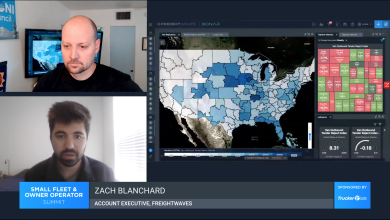
Eric Larsen and Zach Blanchard discuss tender rejection rates, which are the leading indicator in finding a profitable market to be in.
Tender rejections out of Ontario are at their lowest point since 2020, and import volume from Japan has increased 90% in the last year.
Trucker Tools is utilizing FreightWaves’ SONAR to provide rate visibility to the carriers that need it most.
Daily national average of spot rates drops, and tender rejections across the country tell the story of the current condition of the market.
FreightWaves SONAR data can be indispensable, particularly in this environment.
Truckload spot rates from Chicago to Dallas continue to drop, and overall volume shipped from China to the US drops 36% in the last year.
Tender rejections out of LA hit the floor at 3.4%, while out of Jacksonville they are reaching 17%.
Rejection rates soar out of Atlanta, and manufacturing is expected to be on the rise.
Spot rates from Atlanta to Chicago are up 9%, while national intermodal contract rates continue to rise.
A combination of rising fuel prices, lowering spot rates and falling imports makes for a freight market in transition.
Los altos precios del combustible y las tarifas spot más bajas, junto con el 17% de los volúmenes de carga de camiones relacionados con las importaciones, significa que el mercado está en transición