




Alyssa Sporrer
Monday, August 8, 2022
Extreme weather and transportation — Net-Zero Carbon
Convoy and FreightWaves experts discuss the effects that extreme weather conditions such as flash flooding have on truckers.
Convoy and FreightWaves experts discuss the effects that extreme weather conditions such as flash flooding have on truckers.
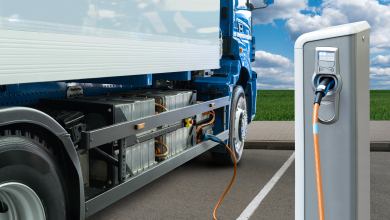
AskWaves dives into the different sources of emissions for electric vehicles compared to fossil fuel-powered vehicles.
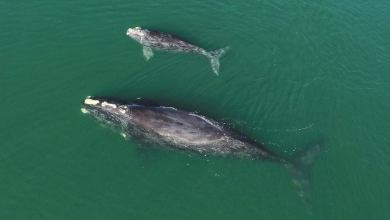
NOAA Fisheries aims to reduce whale strikes on the East Coast of the United States with new vessel speed regulations.
Sustainability experts discuss how the transition to net-zero emissions in trucking will not look the same for every company.

Volvo recently announced its plan to construct an electric charging corridor in California.

A multistate initiative focused on cutting emissions from medium- and heavy-duty vehicles released an action plan for transitioning to zero-emission vehicles.
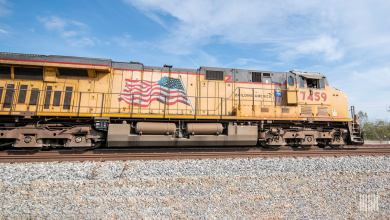
Union Pacific on Wednesday enlisted Wabtec to modernize 600 locomotives to improve fuel efficiency, reliability and haulage ability.
A recent report shows how far the transportation industry remains from the net-zero goal.
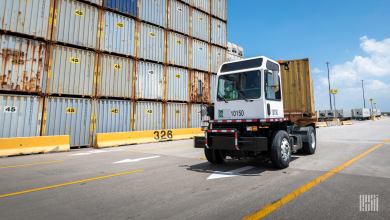
California companies may be able to get up to $500,000 per purchase of a qualified zero-emission terminal tractor, refrigeration unit or forklift.
Sam Stockdale discusses Link Logistics’ decarbonizing strategy for logistics infrastructure on FreightWavesTV’s Net-Zero Carbon.
“Oil and gas money is so embedded in many local budgets, it’s difficult to imagine a future without it,” a recent New York Times article said.
While companies generally support the Securities and Exchange Commission’s goals of providing climate data to investors, they have apprehension about the burden the rules could place on small carriers.
Congress introduced a bill to protect the health of port communities and address climate and environmental justice issues.
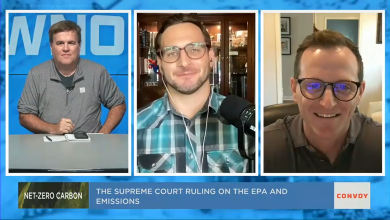
Last week, the U.S. Supreme Court issued a ruling that limits the Environmental Protection Agency’s ability to enforce regulations that aimed at reducing carbon emissions from power plants.

FreightWaves’ Mary O’Connell and TraxGroup’s Chris Cassidy sit down to talk about sustainability and the future of freight audit and payment.
By making smaller investments in your people and technologies, fleet owners can start making significant progress toward their sustainability and fuel-saving goals today — while preparing for an EV future.
commitments to cut their carbon footprint—such as becoming net zero by 2030.
Gathering data for accurate emissions calculations is complicated and time consuming. Standardization could make it easier.
Many argue that the disposal of electric vehicles’ lithium-ion batteries after maximizing their use could potentially be just as harmful to the environment as carbon emissions.
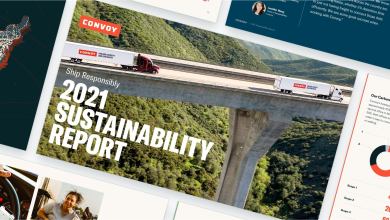
Convoy released a sustainability report Tuesday conveying its goal to reach net-zero emissions by 2040.