Environmental group targets retailers’ ‘shady’ shipping routes
An environmental coalition urges Target, Walmart, Amazon and Ikea to clean up their maritime emissions and shipping routes.
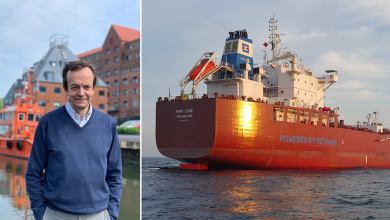
“The customer demand will change so much faster than the industrial processes, and I think that to be early might be challenging, but to be too late will be devastating,” said Anna Borg, president and CEO of Vattenfall.
The transportation industry needs to transition to cleaner fuels to keep global temperature rise below 1.5 degrees Celsius. Green hydrogen-based fuels have potential to decarbonize shipping, aviation and long-haul trucking, according to recent reports.
Captured carbon dioxide and green hydrogen are combined to make e-methanol. Sweden-based Liquid Wind has big plans for this alternative shipping fuel.
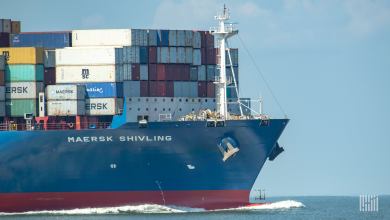
Can collecting carbon dioxide from ambient air combined with renewable energy create a cost-competitive, scalable, carbon-neutral fuel? Maersk is betting on it.
Green shipping technology and fuels are costly and could remain that way until economies of scale and innovation advance — something that many shipping companies say will require government regulations.
“We believe that every sector has to make a contribution toward global decarbonization,” Fernando Rangel Villasana, senior technical manager at SBTi, told FreightWaves.
Maersk is adding bio-methanol to its portfolio of green marine fuels after making e-methanol and methanol-powered vessel agreements in August.
Sustainable fuels and technologies are up against decades of perfecting the efficiency and economies of scale of the fossil fuel industry.
Even environmentally indifferent consumers want sustainable shipping options
As businesses struggle to keep up with consumers’ growing demand for sustainability, 81% of respondents in a recent survey said companies use excessive packaging when shipping products.
What happens to ocean vessels when they’re retired? AskWaves explores how this initiative is striving for transparent ship supply chains.
The push to deliver items to the consumer faster is hampering efforts to create a more sustainable supply chain.
FreightWaves’ Zach Strickland and Loadsmart Vice President of Operations Jim Nicholson chat about mode optimization, truckload consolidation and technology’s role in sustainable shipping.
Relying on fossil fuels to move people and goods creates a massive carbon footprint that the transportation industry is only starting to address.
The Sustainable Shipping Initiative’s road map to sustainability includes financial, social and environmental sustainability factors.
Last mile may be the final stop, but it needs to be front of mind for shippers, according to two industry experts.
In an interview with FreightWaves, SSI Executive Director Andrew Stephens talks about zero-emission shipping fuel and sustainability challenges.