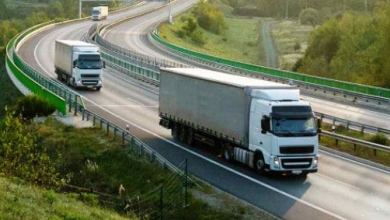
Most fleets will not survive the driverless truck revolution
Larger fleet owners that have been looking forward to autonomous trucks to solve the pesky driver shortage may find themselves unemployed too


The ongoing and future transformation in the industry will not only benefit the carriers, truckers and shippers, but also the controlling authorities as well as positively impact other industries in the market and the economy at large. Here are a few of the technologies already impacting the industry.
Blockchain has taken center stage in 2017, and we are only at the beginning. But before everyone declares blockchain the solution to all the world’s problems, two authors note that there needs to be standards and governance to make it work.
Delphi CTO says that autonomous vehicles will come to cities and ports long before they will ever go into the highway or over-the-road trucking markets
One of the biggest trends in the field of freight logistics is the digitization of the trucking industry, which has a market of over $700 billion every year.
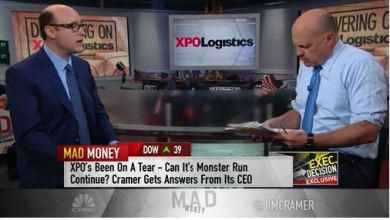
Brad Jacobs sits down with Jim Cramer and talks trucking, XPO, and the state of the economy. He makes a provocative prediction that will turn some heads that we could see fully autonomous trucks in less than a decade.
TMW acquires truckload visibility aggregator, 10-4, continuing a trend of FreightTech acquisitions in the market transparency space.
There are certain practices in trucking that are not above board and cause a lot of strain on the companies in the space. Will the implementation of blockchain smart contracts, these practices could be ended, ushering in transparency and fairness for all involved.
In the future, blockchain infrastructure will help mitigate the effect and scope of cyberattacks through its two fundamental characteristics: decentralization and cryptography so events such as last week’s Equifax breach don’t happen.
FreightWaves adds a startup directory to the site to help startups identify partners, investors, and talent in the emerging FreightTech space.
Blockchain has become the latest buzzword to enter industry lexicon. While many still may not know what it is, it is likely to be a technology that transforms trucking and the way it operates. Fleet Complete is one of the companies that has recognized its potential.
Blockchain is the perfect way to store maintence records, providing fleets with a complete record on everything that has happened to the vehicle from the time that it rolled off the factory floor to the time it is sold off.
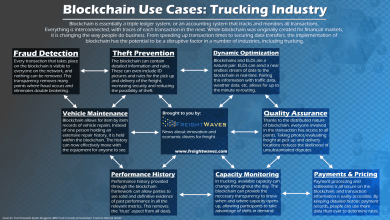
Blockchain is expected to be a massive part of the economy in the near future- but what exactly is blockchain and why should I care? FreightWaves takes a look at this emerging technology.
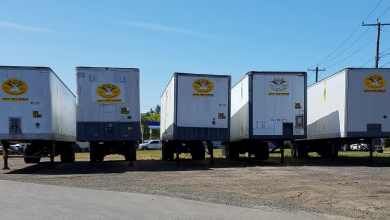
Is a trailer just a box on wheels or potentially a portable battery charger? That is one of the questions that could be answered through the continued innovation of commercial vehicles.
Blockchain is predicted to radically change the financial services sector. Deloitte Tweeted that 10% of global GDP will be stored in blockchain. For companies like Deloitte, staying ahead of the curve in blockchain technology is paramount. But what about for logistics companies?
There is growing talk of a possible bill in Congress that would kill the upcoming electronic logging device (ELD) rule that goes into effect on Dec. 18 of this year due to the cost to individual truckers, sources have told FreightWaves.
It seems as though all new platforms these days feature two common denominators – create transparency and streamline processes. Many of them are now being developed with blockchain.
With consumers buying more online and more based on promotions, it has become less about brand loyalty and more about the benefits earned from digital purchases. All that is left is for shipping companies to provide app-assisted delivery.
Graphics processing unit (GPU) manufacturer Nvidia has invested into automated trucking company TuSimple, TechCrunch reports.
Talk about disruptive companies. Every startup in the transportation space these days is touting itself as a disruptive company. A few will become just that. Many, if not most, will not. But few are also introducing a technology, let alone a service, that is disruptive.