TMW hopes to have blockchain product available in 2018
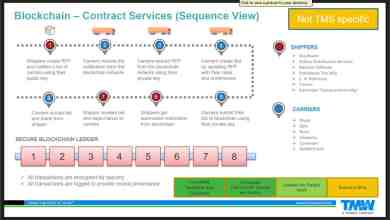
TMW Systems is working on blockchain-enabled products and gave a demonstration and update on how that work is progressing on Friday.


Ever since Bitcoin gatecrashed into the financial market scenes in late 2009, the technology underlying the virtual currency has had people talking. Blockchain, a ledger of records arranged in data blocks, uses cryptographic validation to link themselves together, resembling an unending chain, and it is disrupting the way FinTech market works.
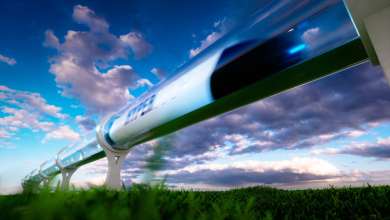
Hyperloop companies have raised hundreds of millions of dollars to develop a new, high-speed form of transportation, but regulatory frameworks haven’t yet caught up with their technology.
Paper Transport, Inc. has been accepted as a member of the Blockchain in Transportation Alliance. Paper Transport, Inc. choose BiTA because of the alliance’s commitment to building a standard communication framework for the next generation of logistics providers.
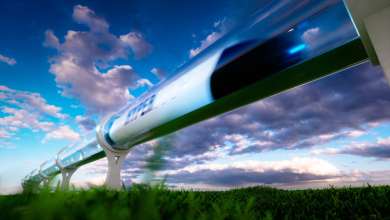
Hyperloop has been touted as a way to move passengers long distances quickly, but it is most likely going to find its footing first in the freight world, according to those working to develop the technology.
While not new to the supply chain, technology is lowering barriers and offering new opportunities for 4PLs to move in and control entire supply chains, creating greater efficiency for all involved.
While the Federal Motor Carriers Safety Administration (FMCSA) has issued an exemption to the electronic logging device (ELD) rule for certain rental vehicles, the exemption has opened up several questions, including whether there is a potential loophole in the rule.
With the freight industry being one of the largest contributors to the U.S. economy, it is imperative that it makes way for technology infusion. San Diego-based startup LoadExpress is looking to disrupt the way logistics is handled in the industry right now.
Protests on both coasts in the past few days have placed truckers in the spotlight. Truck drivers in California and Washington, DC, staged protests to highlight the implementation of the electronic logging device (ELD) rule.
For the uninitiated, systems built on cryptocurrency can be unfathomably complex, with confusion exacerbated by their constantly changing nature. Unfortunately, in the world’s modern business climate, understanding these intricacies is critical to nurturing a thriving business. There may be no aspect of technology that is more greatly tied to this truth than that of smart contracts.
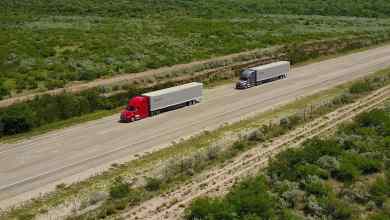
Daimler has been given permission by the Oregon Department of Transportation to test truck platooning on the roads of Oregon following successful trials in Madras, OR. The company has said it will first test the platooning technology on two connected heavy-duty Cascadias in the first step called “pairing.”
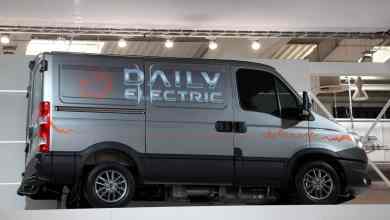
The world is going electric, and according to a McKinsey Energy Insights report, it is leaving the U.S. behind. According to the report authored by Chrsiter Tryggestand, Namit Sharma, Jasper van de Staaij and Arjan Keizer, because of market dynamics, the U.S. and China are lagging in the development and cost parity needed to make electric trucks viable.
An entirely new generation of technological change is now occurring in the transportation industry, and it’s called the autonomous truck, or what design specialists refer to as “intelligent engineering.” But what are some of the benefits, and risks, associated with the technology?
Chris Burruss, formerly with the Truckload Carriers Association (TCA), is the Blockchain in Trucking Alliance (BiTA)’s first President. The Alliance was launched in September 2017 to develop blockchain standard and certifications for the freight industry, has 160+ applicants, and 85% of the truckload transactions can be represented in the space.
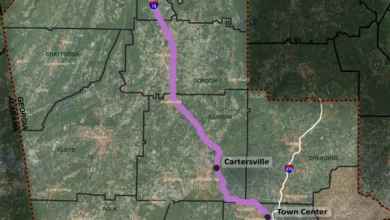
The US Department of Transportation’s Federal Railroad Administration announced a completion of an environmental impact study that highlights a proposed route for an Atlanta to Chattanooga rail line.
The potential for the hyperloop technology to take the world by storm is growing. Silicon Valley start-up Hyperloop One has finally chosen what the company views as the best areas to build its first hyperloop tracks.
Wabco’s acquisition of the remaining 50% ownership stake Meritor held in the Meritor Wabco joint venture, which began 27 years ago, a few weeks ago is one of the steps Wabco is taking to ensure its continued growth and positioning for the future.
Artificial intelligence (AI) is creating both hope and fear in the transportation industry; hope for the wealth of efficiency, cost savings, and safety improvement that AI promises, and fear that the ever-changing job market that accompanies the AI movement may put the careers of thousands in the transportation industry in jeopardy.
Businesses who trade internationally typically rely on freight forwarders to act on their behalf to transport product. The process of locating and arranging a forwarder is no easy task and extremely time-consuming, and over many decades this process has barely changed.
In recent years, players in the transportation industry have embraced technology and this has greatly helped in solving the many challenges associated with manual operations, and the future is even brighter in the years to come.