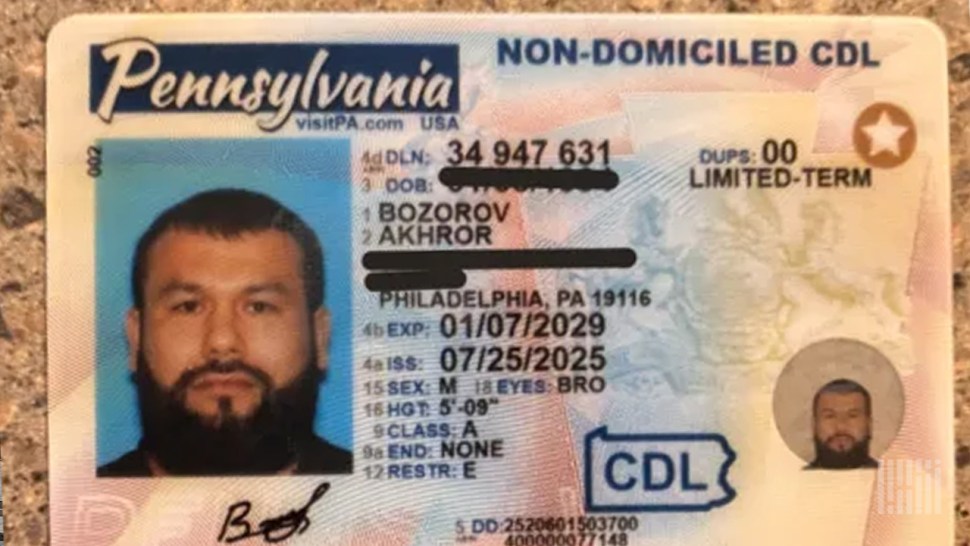
On March 6, California cancelled 13,000 CDLs in a single day. On March 16, a new FMCSA final rule took effect nationally, limiting CDL eligibility for foreign-domiciled drivers to H-2A agricultural visas, H-2B seasonal non-agricultural visas, and E-2 treaty investor visas. DACA recipients, asylum seekers, EAD holders and refugees no longer qualify. Up to 200,000 drivers, approximately 5% of the entire U.S. truck driver workforce, could lose CDL eligibility as licenses expire under the new framework.
The press covered it as an immigration story. That is the least interesting part of it for the people who move freight for a living.
The liability trap is retroactive.
The rule’s effective date does not retroactively cleanse the crash exposure that existed before March 16. If a carrier employed a foreign-domiciled driver whose CDL was improperly issued, and that driver was involved in a crash in 2024 or early 2025, the post-crash litigation has not been resolved by a new federal rule. What has changed is the information available to plaintiff attorneys.
The legal theory is negligent hiring and retention. It does not require that the carrier knew the CDL was improperly issued. It requires that the carrier failed to conduct the level of pre-employment screening that a reasonable, safety-conscious motor carrier would have conducted. The new rule and the California cancellations have now put the industry on formal notice that non-domiciled CDL issuance was a systemic problem. Defense attorneys in active litigation involving crashes that predate March 16 are going to spend the next six months figuring out how plaintiff attorneys are going to use that notice. The ones who are already losing sleep over it are right to be.
For fleets with clean files, this is manageable. For fleets that ran a state MVR, confirmed the license was valid, and moved on, the driver qualification file may not support the defense that adequate vetting was performed.
Freight rates are up, but not for a good reason.
Spot rates for dry van and refrigerated freight are running more than 20% above year-ago levels. That sounds like a market recovery. It is not a demand recovery. It is a capacity story, and the distinction matters enormously for carriers trying to price strategy around the rate environment.
When rates rise as freight volumes increase, the underlying economics support sustained carrier growth. Shippers need capacity, carriers can price to cost, and the market rewards investment in equipment and compliance infrastructure. When rates rise because capacity is being removed from the road, whether through carrier exits, regulatory action or economic pressure on small operators, the rate increase is structurally fragile. One demand-side shock, a tariff-driven import slowdown, a consumer spending pullback, a recession signal, and the capacity that was removed does not come back fast enough to matter. The rates collapse back toward their floor before the carriers who were counting on the rate environment to fund their growth have recovered their investment.
Flatbed is the hardest-hit segment right now, with tender rejection rates approaching 50%. Nearly half of all flatbed loads are getting turned down at the offered rate. That is not a picture of an industry with excess capacity. But it is also not a picture of structural demand growth. It is a picture of what happens when regulatory pressure, operator financial distress and tightening insurance availability all converge on the same supply pool at the same time.
The CDL crackdown removes more trucks from that supply pool. That adds short-term upward pressure on rates in the segments most dependent on the affected driver population. The carriers positioned to benefit are those with compliant driver files and can take the freight that displaced capacity was hauling. Those losing capacity because of the rule are the ones who were most exposed to it.
The legal situation is an active contradiction.
The rule is in effect. It is simultaneously being challenged in federal court. The AFL-CIO, the American Federation of Teachers and Public Citizen have filed suit to block the rule, and a stay remains possible. That creates a compliance paradox with no clear resolution.
Carriers who take the rule at face value, audit their driver pool and terminate drivers who no longer meet the H-2A, H-2B or E-2 visa requirements are exposing themselves to wrongful termination liability if a federal court issues a stay. Carriers who wait for litigation to resolve are operating with drivers who, under the current federal rule, should not be behind the wheel, which creates regulatory exposure and reinforces the negligent retention argument in any crash litigation that occurs during the wait.
The standard advice in a situation like this is to document everything and make defensible decisions. In practice, that means carriers should be talking to employment counsel about termination risk, to safety counsel about retention risk, and to their insurer about what their coverage position is if a driver whose eligibility is in question is involved in a crash before the litigation resolves. The carriers who do none of those things and wait for clarity are the ones who will be managing the consequences of whichever way the court rules without having prepared for either outcome.
The insurance exposure creates nuclear verdict conditions.
FMCSA has signaled that insurance companies are expected to take a hard stance on non-domiciled CDLs. That signal has real mechanics behind it. A carrier with a driver whose CDL was improperly issued and facing a post-accident claim may receive a reservation of rights letter from its insurer. That letter does not immediately deny coverage. It tells the carrier that the insurer is defending the claim, with a reservation of the right to later deny coverage based on a policy exclusion. In practice, it means the carrier is being represented by a lawyer with instructions from the insurer that may conflict with the carrier’s own interests, while the coverage question remains unresolved.
If the insurer ultimately denies coverage after a verdict, the carrier holds the judgment. In a case involving a crash attributed to a driver whose CDL the carrier failed to properly vet, where the plaintiff attorney can now point to a national regulatory framework the carrier ignored, the verdict is not going to be in the range the $750,000 federal minimum insurance was designed to address. Plaintiff attorneys call them nuclear verdicts for a reason. These are eight-figure outcomes. The carriers who audit their driver pool now are the ones who control the fact pattern that determines how that deposition goes. The ones who wait are the ones financing a trial.
Brokerage Compliance Symposium
The day before F3. Every compliance issue you face - fraud exposure, carrier liability, FMCSA rules, cargo theft, insurance gaps - navigated by attorneys and operators defining best practices in a changing industry.
F3 Awards Dinner
The night before F3. FreightTech100 companies honored. FreightTech 25 and Shipper of Choice winners revealed live. Cocktail reception into dinner and live music - 300 industry leaders in one purpose-built room.
F3: Future of Freight Festival
Industry-defining keynotes, rapid-fire technology demos, and industry leaders networking in experiences across Chattanooga - plus the inaugural F3 Awards Dinner featuring the FreightTech and Shipper of Choice reveals.
The day before F3. Every compliance issue you face - fraud exposure, carrier liability, FMCSA rules, cargo theft, insurance gaps - navigated by attorneys and operators defining best practices in a changing industry.
The Signal at Chattanooga Choo Choo • Chattanooga, TN Register NowThe night before F3. FreightTech100 companies honored. FreightTech 25 and Shipper of Choice winners revealed live. Cocktail reception into dinner and live music - 300 industry leaders in one purpose-built room.
The Signal at Chattanooga Choo Choo • Chattanooga, TN Register NowIndustry-defining keynotes, rapid-fire technology demos, and industry leaders networking in experiences across Chattanooga - plus the inaugural F3 Awards Dinner featuring the FreightTech and Shipper of Choice reveals.
The Signal at Chattanooga Choo Choo • Chattanooga, TN Register Now