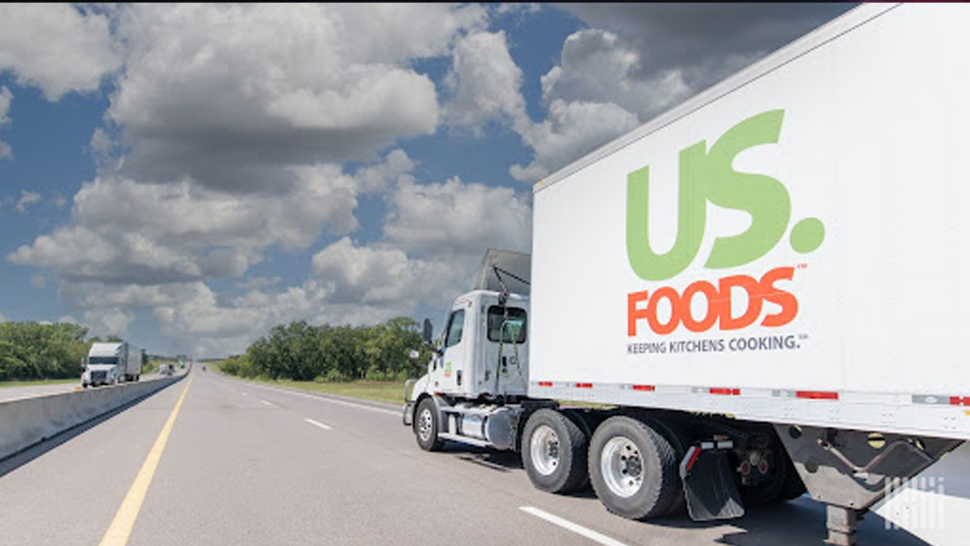
When many drivers hear “local route,” they picture early starts, dinner at home, and steady pay. But when it comes to local food service trucking, that image misses a lot of what it really takes. This isn’t dry van drop-and-hook. This is backbreaking work, punishing schedules, constant hustle, and hours behind the wheel — all in a day cab.
And if you’re new? You’re not just lifting thousands of pounds a day. You’re earning every route, every Friday off, and every ounce of seniority one case at a time.
Let’s break down what it really means to work in food service delivery — from key drops to 2-day hauls, and everything in between.
The Extra Board: Where Some New Drivers Start
In many food service companies, seniority runs the show. That means if you’re new, you’re not getting a dedicated route. You’ll be assigned to what’s called the Extra Board — covering for other drivers who are sick, on vacation, or out on leave.
Depending on the company, some days you might deliver to grocery stores. Other days, it’s schools, hospitals, fast food joints, or family restaurants. You don’t really know until dispatch tells you — and even then, the stops can change last minute. Sometimes, the extra board also means you are “on call” meaning you must be available at a moment’s noticed, so are you really even “off”?
- You could be routed 30 miles away one day… and 300 miles the next.
- You could be starting at 3:00 AM on Monday… and 10:00 PM on Wednesday.
- And weekends off? Those are earned, not given. The weekend-friendly, low-touch, tight-stop-count routes? They’re for the drivers who’ve been there 10+ years.
Two-Day Routes in a Day Cab
If your run is far enough away, you’ll be put on a 2-day route. That means:
- You drive hundreds of miles out, typically to rural or small-town accounts.
- You hammer out as many stops as are on your dispatch on Day 1 — often doing 10+ stops depending on distance.
- When your clock runs out, the company pays for a hotel stay.
- Day 2, you wake up early, finish your route, and possibly pick up a backhaul — warehouse returns or inventory from nearby vendors — on your way back to the main terminal.
This isn’t a vacation. You’re still running full stops. And if you’re not quick, you might be dealing with roll-over time issues that could cost you hours — or your next day’s assignment.
What Unloading Really Looks Like
Let’s talk about the unload — the part that separates food service from every other kind of trucking.
Here’s how a typical stop works:
- You park on the street or in the parking lot if there is enough room. Sometimes in the dark. Sometimes in a sketchy part of town.
- You set up your ramp off the truck. Hope it’s not icy.
- You grab a hand truck, ideally one with working brakes.
- You load as many boxes at a time. They’re not always evenly balanced.
- Then you head down the ramp, over the curb ramp, and into the building — sometimes into a tight freezer, down a hallway, or through a back kitchen.
Oh, and you do this in rain, snow, heat, and everything in between. Restaurants don’t care that there’s a thunderstorm. They still need their chicken tenders.
Key Drops and Closed-Restaurant Routes
One of the most unique aspects of food service trucking is the key drop — delivering to a closed business with no staff on site. This is a huge responsibility. You’re:
- Unlocking the business (usually a restaurant),
- Delivering frozen, dry, and refrigerated goods to the correct storage areas,
- Locking up behind yourself,
- And leaving proof of delivery with detailed notes.
Mistakes here — like putting frozen items in the dry room — can cost the company thousands and damage trust with the customer. It’s just you, the dark kitchen, and the stop clock ticking.
The Pay: Mileage + Piece Count
Food service jobs generally don’t run on hourly wages. Instead, they’re typically structured like this:
| Pay Component | Description |
| Mileage Pay | Paid for every mile driven (loaded + empty) |
| Stop Pay | Paid per stop made (some pay more for harder locations) |
| Piece Count Pay | Paid per case delivered — the more cases on the trailer, the more you earn |
Top drivers can clear some good money, but you earn it. You’re burning calories, busting your back, and racing the clock.
The Pros and Cons – Real Talk
Let’s break it down honestly:
Pros:
- High earning potential if you’re fast, consistent, and reliable
- Local routes (eventually), so you can be home more often
- Great exercise — you’ll stay in shape, guaranteed
- Stability — restaurants always need food
Cons:
- Physically demanding — not a job you “ease into”
- Extra Board stress — no route stability until you earn it
- Tight deadlines — you’re on the clock all day
- Rough environments — dark alleys, icy sidewalks, sketchy neighborhoods
Example: A Day in the Life
Driver: Marcus, age 32
Company: Regional Food Distributor
Route: 2-Day route to rural South Carolina
Day 1:
- 10:30 PM start
- 340 miles to first stop
- 11 stops across 4 towns
- 1,726 total pieces delivered
- Hotel stay by 9:45 AM
Day 2:
- 10:00 PM start
- 4 stops to finish route
- Backhaul from poultry plant
- Return to yard by 10:00 AM
Final Thoughts
Local food service trucking is not for everyone. It’s not just about driving — it’s about delivering. Literally.
It’s loading, unloading, hauling through tight spaces, sweating through uniforms, and earning your spot on a better route through hustle and consistency.
But if you’ve got the work ethic, the stamina, and the willingness to grind through your early months, it can be one of the most rewarding local gigs in trucking — both financially and personally.
Brokerage Compliance Symposium
The day before F3. Every compliance issue you face - fraud exposure, carrier liability, FMCSA rules, cargo theft, insurance gaps - navigated by attorneys and operators defining best practices in a changing industry.
F3 Awards Dinner
The night before F3. FreightTech100 companies honored. FreightTech 25 and Shipper of Choice winners revealed live. Cocktail reception into dinner and live music - 300 industry leaders in one purpose-built room.
F3: Future of Freight Festival
Industry-defining keynotes, rapid-fire technology demos, and industry leaders networking in experiences across Chattanooga - plus the inaugural F3 Awards Dinner featuring the FreightTech and Shipper of Choice reveals.
The day before F3. Every compliance issue you face - fraud exposure, carrier liability, FMCSA rules, cargo theft, insurance gaps - navigated by attorneys and operators defining best practices in a changing industry.
The Signal at Chattanooga Choo Choo • Chattanooga, TN Register NowThe night before F3. FreightTech100 companies honored. FreightTech 25 and Shipper of Choice winners revealed live. Cocktail reception into dinner and live music - 300 industry leaders in one purpose-built room.
The Signal at Chattanooga Choo Choo • Chattanooga, TN Register NowIndustry-defining keynotes, rapid-fire technology demos, and industry leaders networking in experiences across Chattanooga - plus the inaugural F3 Awards Dinner featuring the FreightTech and Shipper of Choice reveals.
The Signal at Chattanooga Choo Choo • Chattanooga, TN Register Now