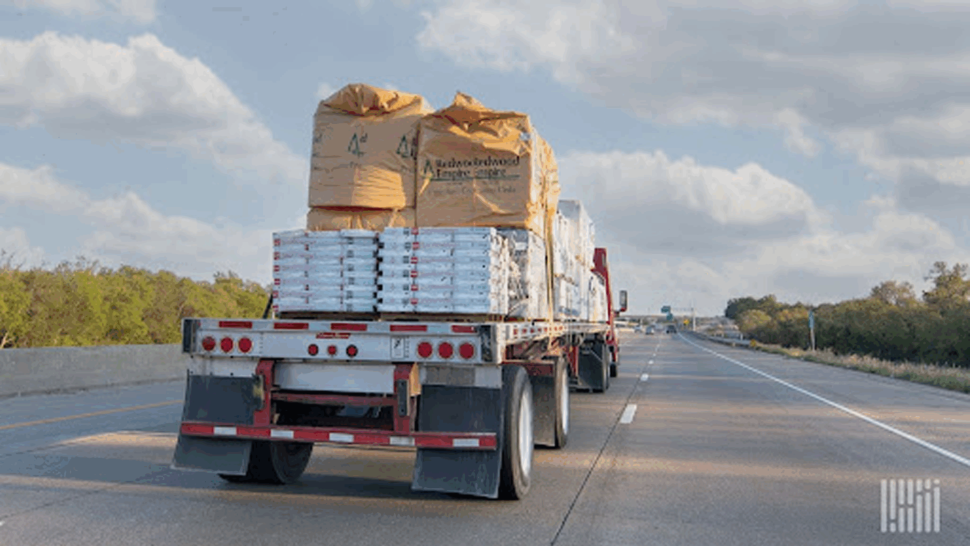
Flatbedding ain’t just freight without walls. It’s a completely different beast, and if you’ve never pulled open deck before, you need to check your assumptions at the door. There’s more money in it sometimes, sure—but there’s also more responsibility, more exposure, and more prep. And if your truck isn’t already set up for it? You’re not ready yet.
This isn’t to scare you. It’s to prepare you. Because there are many van and reefer drivers chase the flatbed hustle thinking it’s just “more freight and fewer wait times.” But it’s not just a new type of load—it’s a new way of operating. And it will expose every weakness you’ve got—equipment-wise, knowledge-wise, or work ethic-wise.
So if you’re thinking about making the switch to open deck as an owner-operator, here’s what you need to know before you bolt that first chain.
It Starts With the Setup – You Can’t Pull Open Deck Freight Without the Right Gear
Let’s talk about your tractor first—because if you’re coming from a dry van or reefer background, odds are your truck isn’t outfitted for flatbed work.
Here’s what you’re going to need:
1. Headache Rack (Not Optional)
This isn’t just a shiny backboard to mount lights on—it’s a safety barrier between your head and a 6,000 lb coil of steel if it comes loose.
Flatbed freight is exposed. If you slam the brakes and that load shifts forward, a properly mounted headache rack can literally save your life. Do not pull flatbed without one.
You can go with a standard rack or an enclosed version that doubles as storage, but either way—install it correctly and don’t skip it.
2. Side Boxes for Storage
Flatbedders don’t get a toolbox handed to them at the dock. You need storage for:
- Chains
- Binders
- Straps
- Edge protectors
- Dunnage
- Tarps
- Gloves, boots, vests, bungees—the list doesn’t stop
If your tractor doesn’t have built-in sideboxes or deck plates with lockable tool storage, you’ll have to add them. Because you can’t throw 25+ straps and chains in the sleeper and call it a day. You need gear, and you need it organized.
3. The Right Trailer (or a Solid Lease-On Situation)
Not all flatbed trailers are created equal. Regular flatbeds, step decks, conestogas—they all have different freight applications. Make sure you know what your trailer can legally and safely haul.
And if you’re leasing on to a carrier, find out exactly what equipment they require. Some provide trailers, some don’t. Some expect you to carry every tarp type under the sun (lumber tarps, steel tarps, 8’ drop, 6’ drop, etc.), others run primarily no-tarp freight.
The Workload is Real – And So Are the Risks
Flatbedding is manual work. Don’t let the paychecks fool you—there’s labor involved in every single load.
You’re not just bumping a dock and watching lumper services handle freight anymore. You’re climbing up and down trailer decks, crawling on the deck, slinging chains in the heat, tarping in the rain, and tightening binders in 10-degree wind chills.
And the responsibility? It’s all yours.
- If your strap tears?
- If you don’t use edge protectors and the strap slices the load?
- If a piece of tubing rolls?
- If DOT catches a bad securement job?
That’s all on you, not the broker. Not the shipper. Not the load board.
One mistake could damage $100,000 worth of steel. Or worse, cause a fatal accident. There is no half-stepping in flatbed.
The Freight Itself Moves Different
Let’s compare for a second:
| Factor | Dry Van / Refer | Flatbed |
| Load Time | Dock appointments, wait times | Faster, but self-secured |
| Unload Time | Hands-off, dock crew handles it | Self-untarp and unstrap |
| Cargo Sensitivity | Temperature or damage concerns | Securement and weather exposure |
| Responsibility | Moderate | High |
| Broker Expectations | Standard communication | Detailed load photos, securement confirmations |
| Inspection Risk | Moderate DOT exposure | High DOT scrutiny on securement and safety |
Flatbed pays more in a lot of cases—but the bar is also higher. You earn every penny by being safe, fast, and reliable with gear and securement knowledge.
The Gear Costs More Than You Think
Here’s a reality check for first-timers: getting into flatbedding ain’t cheap.
Initial cost for your essential gear:
- Chains & Binders: $800–$1,200
- Straps (4″ heavy duty): $300–$500
- Edge Protectors: $100
- Tarps (steel & lumber): $800–$1,500
- Bungees, Vests, PPE: $150–$300
- Storage Boxes or Rack: $700–$1,000
You’re looking at $3,000 to $5,000 out of the gate before you even haul your first load.
If you don’t have that capital ready, you’re not ready for flatbed. Period. Here is a listing of what we recommend in total, to ensure you are ready to roll:
Flatbed Securement Inventory
| Item | Recommended Quantity | Purpose |
| Headache Rack (Installed) | 1 | Storage for chains, binders, tools — protects cab from shifting cargo |
| Side Boxes / Underbody Boxes | 2–4 | Stores extra gear, PPE, and smaller tools securely |
| Edge Protectors with V-Grooves | 8–12 | For pipes, poles, and coils to prevent rolling or shifting |
| Mega Strap Winch Bar | 1 | Provides leverage for tightening winch straps |
| Chain Rack (on headache rack) | 1 | Keeps chains stored safely and accessibly |
| Toolbox for Misc. Tools | 1 | Carries gloves, hammer, duct tape, WD-40, etc. |
| Hi-Vis Reflective Tape | As needed | Required for visibility and DOT compliance |
| Work Gloves (Heavy Duty) | 2–3 pairs | Essential for handling chains, tarps, and securement gear |
| Safety Glasses / Hard Hat | 1 each | Required at many shipper/receiver sites |
| Steel Toe Boots | 1 pair | Safety footwear often mandatory for flatbed deliveries |
| Ladder (folding or step) | 1 | Helps with tarp placement and securing high loads |
| Measuring Tape (at least 25’) | 1 | Verifying load dimensions for compliance |
| Load Flags and Oversize Banner | As needed | Required for wide/long loads (check DOT/state regulations) |
| 4-inch Winch Straps (30–40’) | 10–20 | General freight securement; used with rub rail winches |
| 4-inch Ratchet Straps | 4–6 | For quick securement and loads without winches |
| 2-inch Ratchet Straps | 6–8 | For lighter items, pallets, or additional securement |
| 4-inch Strap Winders | 2 | For coiling straps quickly and cleanly |
| Corner Protectors | 12–20 | Prevents strap wear and load damage |
| Grade 70 Transport Chain (3/8”) | 8–12 feet sections × 10–12 | Steel, pipe, and machinery securement |
| Lever Binders | 6–10 | Used with chains to tighten and secure loads |
| Ratchet Binders (optional) | 4–6 | Easier to tighten under load than lever binders |
| Coil Racks | 2–4 sets | Required for hauling metal coils |
| Rubber Friction Mats | 4–6 pieces | Increases grip under loads and prevents shifting |
| Tarps (Steel & Lumber) | 2–4 (various sizes) | Required for weather protection and load coverage |
| Tarp Straps (Rubber Bungees) | 50–100 | To secure tarp edges and protect against wind flap |
| Bungee Cord Holders / Tarp Bag | 1 | Keeps straps and cords organized and protected from sun/weather |
This list reflects a starter loadout that covers most general flatbed freight scenarios. Specialized freight like glass, coils, heavy equipment, or building materials may require additional gear (e.g. coil bunks, dunnage, V-boards, bulkheads).
Weather and Exposure Are Real Challenges
Van and reefer drivers get to live in climate control and rarely get dirty.
Flatbedders? You’re tarping freight on the blacktop in July. You’re throwing chains in February wind. You’re walking on slick decks in the rain. And yes—sometimes your freight gets dirty, and so do you.
If you don’t like the elements, flatbedding is not your lane. But if you’re hands-on, detail-oriented, and like the idea of being more than a steering wheel holder—this could be the challenge that fits you.
Is It Worth It?
Yes… if you’re built for it.
Flatbed freight pays better on average, and the load availability is often wider when van/reefer markets get tight. There’s less competition too—because fewer drivers are willing to do the work.
But the tradeoff is:
- Higher start-up cost
- Greater physical effort
- More gear to manage
- More DOT visibility
- More responsibility overall
If you’re not afraid of the work, and you’re willing to invest in the right setup, flatbedding can be one of the most resilient niches in trucking.
FAQ – Your Flatbed Questions, Answered
Q: Can I pull flatbed loads with a standard dry van tractor?
A: Technically yes—but not safely. You’ll need a headache rack and storage for chains and gear. Otherwise, you’re asking for violations (or worse).
Q: What kind of physical shape do I need to be in?
A: You don’t need to be an athlete, but you will be climbing, lifting, bending, and working in all weather. Flatbed isn’t for folks who want to stay in the cab all day.
Q: What’s the learning curve like for securement?
A: Steep at first. You’ll need to know weight distribution, working load limits, angle of tie-downs, and the difference between “legal” and “safe.” But once you learn it, it becomes second nature.
Q: Can I make more money than pulling vans?
A: Often yes, but it depends on how you run. Flatbed rates are usually higher—but you’ll also spend more on gear, tarping time, and maintenance.
Q: Do I have to tarp every load?
A: Not always. Some carriers run “no tarp” freight, or use conestogas (rolling tarp systems). But expect to tarp at least 50% of the time unless your carrier guarantees otherwise.
Final Word
Flatbedding isn’t a “better” type of trucking—it’s a different kind. And if you’re not ready for the grind, the gear, or the grind-it-out hustle that comes with it, you’ll hate it by week two.
But if you are built for it—if you like doing more than just holding a wheel, and you want to be in control of your freight, your gear, and your paycheck—flatbed can open doors that van and reefer never will.
Just don’t walk into it blind. Get the right setup. Learn the ropes. Respect the load. And remember: in flatbed, it’s your name on the line every time a strap gets thrown.
You ready?
Brokerage Compliance Symposium
The day before F3. Every compliance issue you face - fraud exposure, carrier liability, FMCSA rules, cargo theft, insurance gaps - navigated by attorneys and operators defining best practices in a changing industry.
F3 Awards Dinner
The night before F3. FreightTech100 companies honored. FreightTech 25 and Shipper of Choice winners revealed live. Cocktail reception into dinner and live music - 300 industry leaders in one purpose-built room.
F3: Future of Freight Festival
Industry-defining keynotes, rapid-fire technology demos, and industry leaders networking in experiences across Chattanooga - plus the inaugural F3 Awards Dinner featuring the FreightTech and Shipper of Choice reveals.
The day before F3. Every compliance issue you face - fraud exposure, carrier liability, FMCSA rules, cargo theft, insurance gaps - navigated by attorneys and operators defining best practices in a changing industry.
The Signal at Chattanooga Choo Choo • Chattanooga, TN Register NowThe night before F3. FreightTech100 companies honored. FreightTech 25 and Shipper of Choice winners revealed live. Cocktail reception into dinner and live music - 300 industry leaders in one purpose-built room.
The Signal at Chattanooga Choo Choo • Chattanooga, TN Register NowIndustry-defining keynotes, rapid-fire technology demos, and industry leaders networking in experiences across Chattanooga - plus the inaugural F3 Awards Dinner featuring the FreightTech and Shipper of Choice reveals.
The Signal at Chattanooga Choo Choo • Chattanooga, TN Register Now