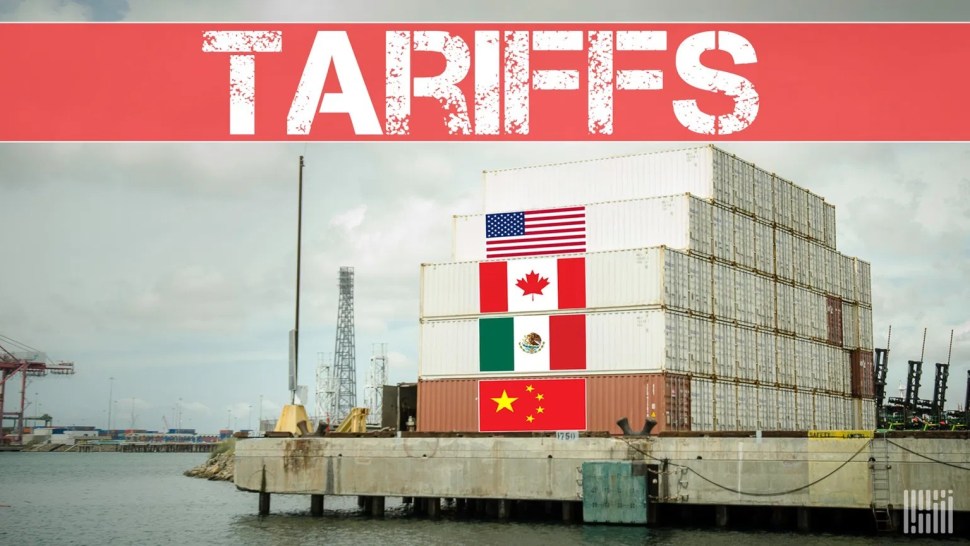
The Department of Commerce announced that President Donald Trump’s 50% tariff on imported steel and aluminum products has been expanded to cover more than 400 additional categories.
The expanded tariff list, published Friday by U.S. Customs and Border Protection and entered into the Federal Register on Tuesday, took effect Monday.
The new duties now apply to a wide range of goods, including auto parts, electric vehicle components, railcars, marine engines, construction equipment, wind turbines, cranes, chemicals, plastics, and household items such as refrigerators, freezers, dryers, and furniture components.
“Today’s action expands the reach of the steel and aluminum tariffs and shuts down avenues for circumvention — supporting the continued revitalization of the American steel and aluminum industries,” Jeffrey Kessler, Commerce Department Secretary for Industry and Security, said in a news release.
The move follows petitions from U.S. steelmakers, including Cleveland-Cliffs and Nucor, urging the administration to broaden import duties to cover more derivative products.
Industry experts said the expansion marks a significant shift in how steel and aluminum imports are regulated.
“Auto parts, chemicals, plastics, furniture components — basically, if it’s shiny, metallic, or remotely related to steel or aluminum, it’s probably on the list,” Brian Baldwin, vice president of customs at Kuehne + Nagel International AG, wrote on LinkedIn.
In 2024, the U.S. imported nearly $33 billion worth of steel and aluminum, according to SteelRadar. Canada remains the largest supplier, followed by Brazil and Mexico.
The Mexican Institute for Competitiveness (IMCO) estimates the tariffs will affect 4.7% of Mexican exports to the U.S.
“Aluminum and steel are vital for the manufacture of products ranging from utensils to airplanes and railroad equipment,” IMCO researcher Isaac Cruz wrote earlier this year. “U.S. manufacturers benefit from competitive prices that would be lost if tariffs were implemented; the same is true for American consumers and families.”
Mexico has requested an exemption from the new tariffs.
“We’re discussing the application of tariffs on steel products because they’re stretching the boundaries and adding more things, and that could hurt us,” Marcelo Ebrard, Mexico’s economy secretary, said on Saturday, according to Opportimes. “But, at the end of the day, what do we want to achieve? A position (on tariffs) for Mexico that’s better than any other country.”
F3: Future of Freight Festival
Industry-defining keynotes, rapid-fire technology demos, and industry leaders networking in experiences across Chattanooga - plus the inaugural F3 Awards Dinner featuring the FreightTech and Shipper of Choice reveals.
Industry-defining keynotes, rapid-fire technology demos, and industry leaders networking in experiences across Chattanooga - plus the inaugural F3 Awards Dinner featuring the FreightTech and Shipper of Choice reveals.
The Signal at Chattanooga Choo Choo • Chattanooga, TN Register Now