




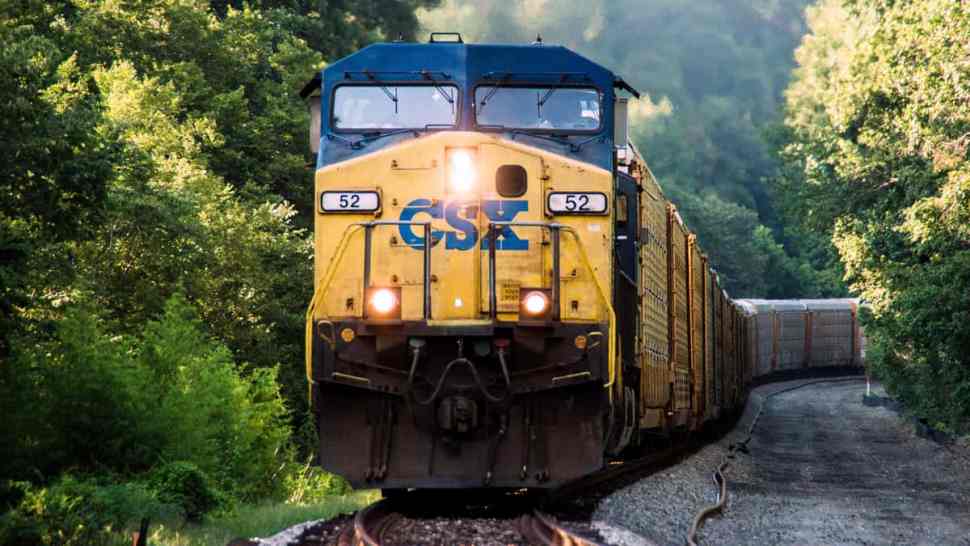
Year-to-date U.S. rail volumes continue to be lower compared with the same period in 2018 amid persistent economic uncertainty.
For the week ending October 12, the U.S. operations of the Class I railroads originated 21.3 million carloads and intermodal units year-to-date, which is a 4.1% drop from the same period a year ago, according to weekly data released by the Association of American Railroads. Of that, U.S. carloads fell 4% to nearly 10.4 million units while U.S. intermodal containers and trailers fell 4.2% to 10.9 million units.
On a weekly basis, U.S. rail volumes tumbled 7% to 510,820 carloads and intermodal units.
Looking at North America overall, year-to-date rail volumes totaled nearly 29.1 million carloads and intermodal units, a 2.9% drop compared with the same period in 2018. Carloads slipped 2.9% to 14.5 million units, while intermodal containers and trailers fell 3% to 14.5 million intermodal units.
The Class I railroads started to report their third-quarter earnings this week, with both CSX (NYSE: CSX) and Union Pacific (NYSE: UNP) saying that they reached record low operating ratios. When the operating ratio percentage gets lower, it implies that the company has increased its profitability.
But despite these records, both railroads are cautious in how they view 2020 because there is still plenty of uncertainty over how the North American economy will fare next year and how that state of health will affect rail volumes, which have been trending lower practically all year compared with 2018.
“As we get nearer to the end of the year, hopefully we can have a little more light shown on the pathway beyond the end of this year, and we’ll be better [able] to opine on it,” said CSX chief executive officer Jim Foote in describing CSX’s guidance and expectations for 2020. Foote made his remarks during CSX’s third-quarter earnings call on October 16.
Meanwhile, the broader freight transportation market is also seeking clarity over how 2020 might go. The U.S. industrial economy’s weakness may persist until the second quarter of 2020, although that could change depending on how companies cut costs between now and then, analysts with Goldman Sachs said earlier this week.
Brokerage Compliance Symposium
The day before F3. Every compliance issue you face - fraud exposure, carrier liability, FMCSA rules, cargo theft, insurance gaps - navigated by attorneys and operators defining best practices in a changing industry.
F3 Awards Dinner
The night before F3. FreightTech100 companies honored. FreightTech 25 and Shipper of Choice winners revealed live. Cocktail reception into dinner and live music - 300 industry leaders in one purpose-built room.
F3: Future of Freight Festival
Industry-defining keynotes, rapid-fire technology demos, and industry leaders networking in experiences across Chattanooga - plus the inaugural F3 Awards Dinner featuring the FreightTech and Shipper of Choice reveals.
The day before F3. Every compliance issue you face - fraud exposure, carrier liability, FMCSA rules, cargo theft, insurance gaps - navigated by attorneys and operators defining best practices in a changing industry.
The Signal at Chattanooga Choo Choo • Chattanooga, TN Register NowThe night before F3. FreightTech100 companies honored. FreightTech 25 and Shipper of Choice winners revealed live. Cocktail reception into dinner and live music - 300 industry leaders in one purpose-built room.
The Signal at Chattanooga Choo Choo • Chattanooga, TN Register NowIndustry-defining keynotes, rapid-fire technology demos, and industry leaders networking in experiences across Chattanooga - plus the inaugural F3 Awards Dinner featuring the FreightTech and Shipper of Choice reveals.
The Signal at Chattanooga Choo Choo • Chattanooga, TN Register Now