




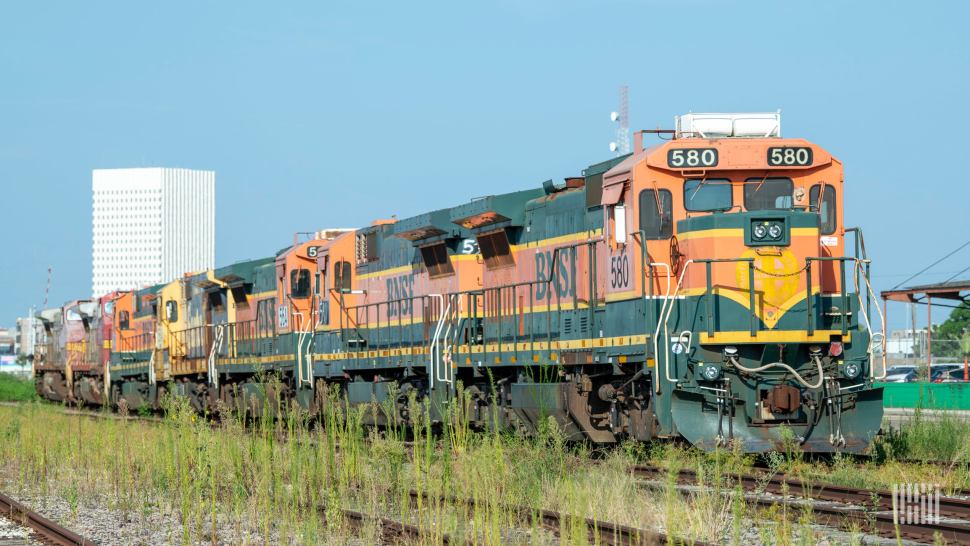
Two rail labor unions have decided to pursue arbitration over their objections with BNSF’s new attendance policy versus pursuing the issue before a federal appeals court.
The Brotherhood of Locomotive Engineers and Trainmen (BLET) and the International Union of Sheet Metal, Air, Rail and Transportation Workers (SMART-TD) said they have decided to pursue arbitration because of the potential lengthiness of the appeals process and also because it appears unlikely that an appeals court would overturn a February lower court decision. In that decision, Judge Mark T. Pittman with the federal district court in Fort Worth, Texas, ruled that the unions’ objections would be considered a “minor” dispute and not a “major” dispute, per the Railway Labor Act.
“It was determined that an appeal could take another one to two years and likely not result in a different decision. An appeal would not be the quickest, or most effective way, to stop the BNSF policy,” the unions said.
Instead, the unions will notify BNSF (NYSE: BRK.B) of their plans to move the dispute to go before a Public Law Board or Special Board of Adjustment, per section 3 of the Railway Labor Act.
“That board will have the authority to strike down either the entire policy or the most egregious parts of the policy much more quickly. The time frame will be months as opposed to years,” the unions said.
The unions and BNSF have disagreed over the merits of BNSF’s new “Hi Viz” attendance policy that BNSF implemented last February. The Hi Viz policy, which stands for high visibility, calls for assigning varying “points” to different types of absences (weekday, weekend, holiday, a missed call, etc.), according to a BNSF court filing. Progressive discipline occurs if an employee’s points go to zero. The program includes a dashboard where employees could check their points totals and see how particular events subtracted or added to those totals. The change was made in part because it was unclear under the previous attendance program when employees would exceed the threshold that subjects them to progressive discipline.
But the unions have contended that the policy forces employees to work even though they might be sick with COVID-19 or other ailments for fear of losing their jobs. The unions threatened to strike over the policy, but the February court decision prevented them from striking because that type of action can only occur if the dispute is considered a major dispute under the Railway Labor Act.
In response to the unions’ decision, BNSF said, “We look forward to continuing to work with our employees to gather input and refine the program if needed. BNSF team members drive our success and we couldn’t deliver the nation’s goods without them. We understand that change can be an adjustment, but we believe we can adapt together to meet today’s competitive freight environment.”
Subscribe to FreightWaves’ e-newsletters and get the latest insights on freight right in your inbox.
Click here for more FreightWaves articles by Joanna Marsh.
Related links:
Brokerage Compliance Symposium
The day before F3. Every compliance issue you face - fraud exposure, carrier liability, FMCSA rules, cargo theft, insurance gaps - navigated by attorneys and operators defining best practices in a changing industry.
F3 Awards Dinner
The night before F3. FreightTech100 companies honored. FreightTech 25 and Shipper of Choice winners revealed live. Cocktail reception into dinner and live music - 300 industry leaders in one purpose-built room.
F3: Future of Freight Festival
Industry-defining keynotes, rapid-fire technology demos, and industry leaders networking in experiences across Chattanooga - plus the inaugural F3 Awards Dinner featuring the FreightTech and Shipper of Choice reveals.
The day before F3. Every compliance issue you face - fraud exposure, carrier liability, FMCSA rules, cargo theft, insurance gaps - navigated by attorneys and operators defining best practices in a changing industry.
The Signal at Chattanooga Choo Choo • Chattanooga, TN Register NowThe night before F3. FreightTech100 companies honored. FreightTech 25 and Shipper of Choice winners revealed live. Cocktail reception into dinner and live music - 300 industry leaders in one purpose-built room.
The Signal at Chattanooga Choo Choo • Chattanooga, TN Register NowIndustry-defining keynotes, rapid-fire technology demos, and industry leaders networking in experiences across Chattanooga - plus the inaugural F3 Awards Dinner featuring the FreightTech and Shipper of Choice reveals.
The Signal at Chattanooga Choo Choo • Chattanooga, TN Register Now