




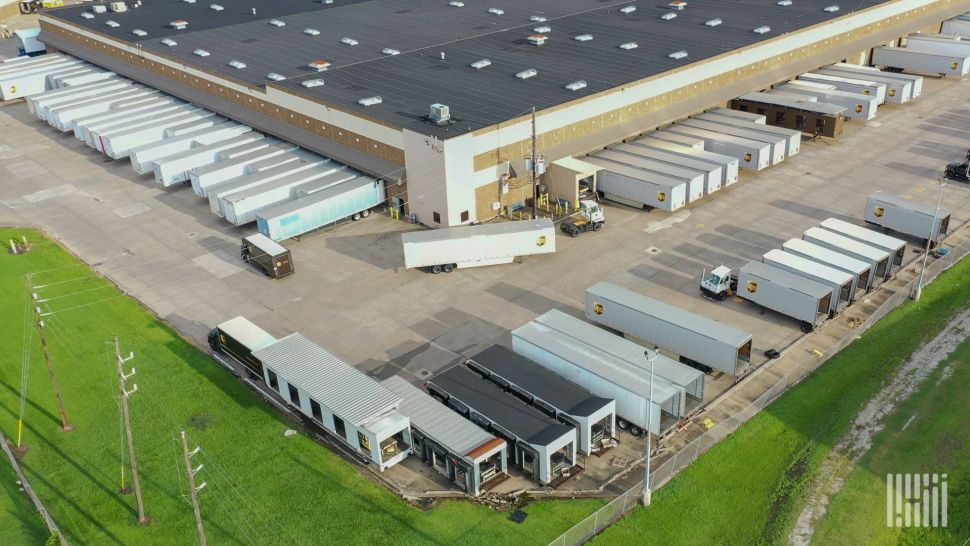
United Parcel Service has completed the conversion of four more conventional package sortation centers into automated facilities just in time for the busy holiday shipping season.
New or enhanced automated facilities are now operating in Denver, St. Paul, Minnesota; Syracuse, New York; and Portland, Oregon, UPS (NYSE: UPS) said this month in a news release highlighting how it has prepared for peak season.
Automation projects are part of a multiyear initiative to re-architect how parcels move through UPS’s distribution system in an effort to lower structural costs and restore margins. The strategy is to improve efficiency and focus on higher-yield segments over lightweight B2C shipments from large retailers as parcel volume growth slows from pandemic-era highs.
The network transformation involves closing 200 manual sort facilities over five years and consolidating activity into larger, modern facilities able to handle more shipments from larger catchment zones. The downsizing also has led to the elimination of 30,000 positions.
Warehouses outfitted with smart package technologies – autonomous guided vehicles, automated sort systems and systems that prioritize processing for specific customer requirements without manual intervention – improve sorting speed, package flow, accuracy and capacity. The automated systems reduce manual touches and help simplify the movement of packages through the facility, according to management.
The company is targeting about $3 billion in annual cost savings by 2028 from the restructuring.
As of July 1, 68.5% of U.S. volume flowed through an automated facility compared to 64% the year prior. The cost per piece in an automated handling facility is about 28% lower than a conventional facility with mechanical systems, which spreads out unit costs and drives operating leverage, executives said during a presentation on the company’s second-quarter results.
The facilities in Denver, St. Paul and Syracuse continued to operate while modernization upgrades were completed in phases, UPS spokeswoman Karen Tomaszewski Hill explained in an email. UPS temporarily closed the Portland facility on Swan Island and shifted operations to other locations during construction.
UPS also announced it is hiring 100,000 seasonal employees nationwide, as it does each year to ensure smooth operations during peak season. Amazon, by comparison, this week said it is hiring over 300,000 people for seasonal, part-time, and full-time roles across its U.S. core logistics network nationwide this holiday season. Amazon is now the largest parcel delivery company in the United States.
The parcel freight giant said it expects to deliver more than four billion RFID-enabled packages by the end of 2026 after completing the installation of sensors in all package delivery vehicles in the spring. The technology was previously rolled out to U.S. delivery stations and UPS Stores. RFID labels are on every package shipped from The UPS Store.
Radio frequency identification is a tracking technology suited for closed-loop environments, like an integrated package network controlled by a single company. RFID tags are cheap, but the infrastructure to read the signals is expensive. UPS previously reported it has invested more than $100 million so far to deploy RFID.
UPS is working with many customers to add RFID printers at their facilities and in the process of adding RFID readers at regional hubs. It also plans to equip aircraft with the devices.
Click here for more FreightWaves/American Shipper stories by Eric Kulisch.
Write to Eric Kulisch at ekulisch@freightwaves.com.
