The conversation around Right to Repair has been floating around trucking for years, but it’s usually talked about in vague terms. More access. More fairness. More competition.
What Owner-Operator Independent Drivers Association (OOIDA) is pushing for right now is much more specific — and much more urgent.
At its core, this is about who controls your truck after you buy it.
The Core Issue in Simple Terms
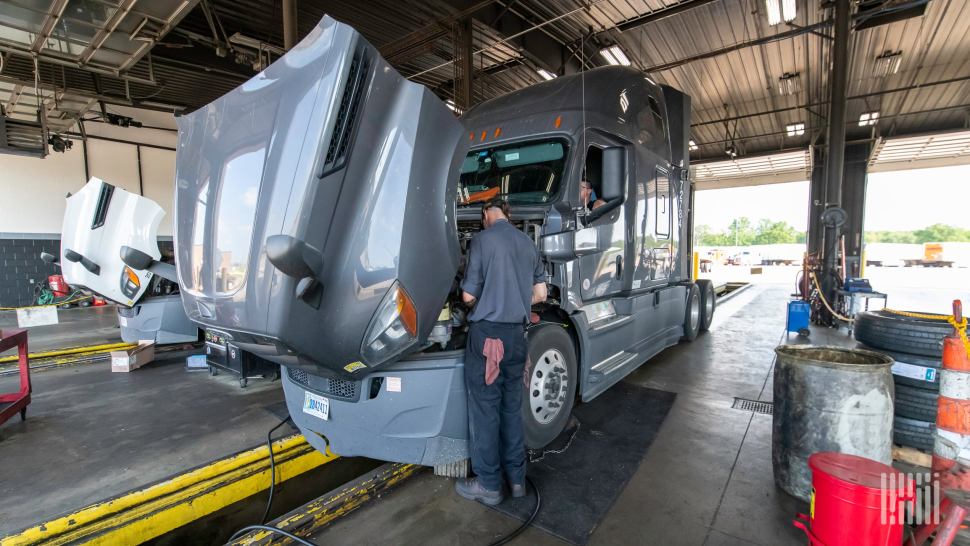
Modern trucks are no longer just mechanical machines. They are rolling computers.
OEMs now control:
- Diagnostic software
- Fault codes
- Repair instructions
- Calibration tools
- Software updates
- Emissions-related resets
In many cases, only dealerships or OEM-approved repair facilities can legally or practically access this information.
That means even if:
- You own the truck
- You pay the note
- You pay the insurance
- You pay the maintenance
You may still not be allowed to fully repair it yourself or take it to an independent shop of your choosing.
OOIDA’s position is straightforward: If you own the truck, you should own the right to fix it.
What OOIDA Is Pushing For — Clearly and Directly
OOIDA is advocating for enforceable federal protections that guarantee truck owners and independent repair shops access to the same tools, data, and software that dealerships have.
Specifically, they are pushing for:
1. Equal Access to Diagnostic Data
Not delayed access.
Not partial access.
Not “pay-per-use” access.
The same fault codes, repair instructions, and system data that OEM dealerships receive should be available to:
- Owner-operators
- Small fleets
- Independent repair shops
Without that access, the repair market is not competitive — it’s controlled.
2. The Right to Choose Where You Repair
When OEMs restrict access to software and diagnostics, they effectively force repairs into dealership networks, even when:
- The dealer is backed up for weeks
- The repair is minor
- The truck is out of route
- The cost is significantly higher
OOIDA is pushing back on that control.
This isn’t about hating dealerships. It’s about not being trapped by them.
3. Protection Against Forced Downtime
Every hour a truck sits is lost revenue.
When only certain facilities can perform:
- Emissions resets
- Software reprogramming
- Aftertreatment diagnostics
Small carriers lose leverage, flexibility, and time.
OOIDA’s message is that downtime caused by restricted access is not a technical problem — it’s a policy problem.
4. Preventing OEM Lock-In Long-Term
The deeper concern is where this trend leads.
If unchecked, the industry risks moving toward a future where:
- Trucks can only be serviced by OEM networks
- Repairs require recurring subscriptions
- Software updates dictate where and how trucks operate
- Ownership becomes conditional, not absolute
OOIDA is pushing to stop that trajectory now — before it becomes normalized.
Why This Matters More for Small Carriers Than Anyone Else
Large fleets can absorb:
- Dealer wait times
- Higher labor rates
- Redundant equipment
- Dedicated maintenance contracts
Small carriers cannot.
For a one- to five-truck operation:
- One unexpected dealer-only repair can wipe out a week
- One forced tow can erase a month of margin
- One locked diagnostic can turn a minor issue into a major shutdown
Right to Repair isn’t an abstract consumer issue in trucking. It’s an operational survival issue.
This Isn’t About Avoiding Safety or Emissions Rules
OOIDA has been clear on this point, and it matters.
This is not about:
- Bypassing emissions systems
- Skipping safety requirements
- Disabling compliance technology
It’s about who has access to the tools required to comply.
When access is restricted, compliance becomes more expensive, slower, and harder — especially for small operators trying to do things the right way.
The Bigger Picture OOIDA Is Warning About
This fight isn’t isolated.
It connects directly to:
- Rising maintenance costs
- Extended downtime
- Shrinking margins
- Reduced independence for owner-operators
- Increasing consolidation pressure in trucking
When repair control is centralized, power shifts away from small carriers — quietly, gradually, and permanently.
OOIDA’s message is that this is one of those moments where the industry has to decide: Are truckers owners — or just operators of OEM-controlled assets?
Why This Conversation Isn’t Going Away
Technology is only going deeper into trucks. Software control is only increasing. OEM influence is only expanding.
That makes Right to Repair one of the most important long-term structural issues in trucking — even if it doesn’t feel urgent on a day-to-day basis.
OOIDA is pushing for clarity now, because once control is lost, it’s rarely given back.
Final Thought
Right to Repair isn’t about rebellion. It’s about balance.
OOIDA is asking a simple question the industry needs to answer honestly: “If a trucker pays for the truck, the fuel, the insurance, the maintenance, and the risk — shouldn’t they also control how it gets fixed?”
That’s the message. And it’s one the industry can’t afford to ignore.
Brokerage Compliance Symposium
The day before F3. Every compliance issue you face - fraud exposure, carrier liability, FMCSA rules, cargo theft, insurance gaps - navigated by attorneys and operators defining best practices in a changing industry.
F3 Awards Dinner
The night before F3. FreightTech100 companies honored. FreightTech 25 and Shipper of Choice winners revealed live. Cocktail reception into dinner and live music - 300 industry leaders in one purpose-built room.
F3: Future of Freight Festival
Industry-defining keynotes, rapid-fire technology demos, and industry leaders networking in experiences across Chattanooga - plus the inaugural F3 Awards Dinner featuring the FreightTech and Shipper of Choice reveals.
The day before F3. Every compliance issue you face - fraud exposure, carrier liability, FMCSA rules, cargo theft, insurance gaps - navigated by attorneys and operators defining best practices in a changing industry.
The Signal at Chattanooga Choo Choo • Chattanooga, TN Register NowThe night before F3. FreightTech100 companies honored. FreightTech 25 and Shipper of Choice winners revealed live. Cocktail reception into dinner and live music - 300 industry leaders in one purpose-built room.
The Signal at Chattanooga Choo Choo • Chattanooga, TN Register NowIndustry-defining keynotes, rapid-fire technology demos, and industry leaders networking in experiences across Chattanooga - plus the inaugural F3 Awards Dinner featuring the FreightTech and Shipper of Choice reveals.
The Signal at Chattanooga Choo Choo • Chattanooga, TN Register Now