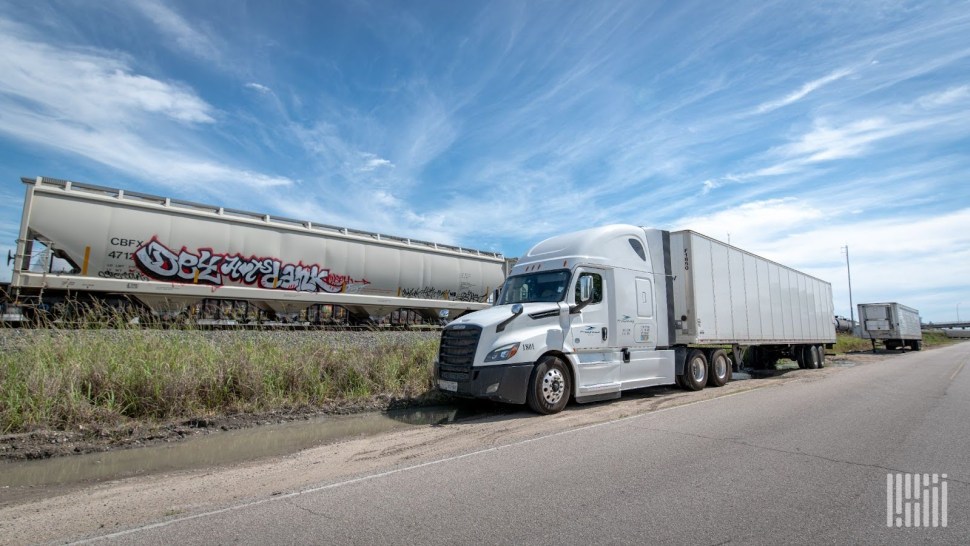
Some small fleet owners measure success by how many trucks they can add. One truck becomes three, three becomes five, and before long, the whole focus is on truck count. But here’s the truth the industry rarely talks about: trucks are not the business. They are tools. Adding more of them doesn’t automatically mean you’re growing smarter—it just means you’re multiplying expenses, exposure, and complexity. If your foundation isn’t solid, each new truck doesn’t represent growth—it represents risk. That’s why the fleets that last don’t just chase more wheels on the road. They explore other growth lanes—brokerage services, warehousing operations, and government contracting. Each of these creates leverage, stability, and resilience without strapping another truck payment to your balance sheet.
Why Truck Count Doesn’t Equal Growth
Scaling assets is the default mindset because it’s visible. A bigger yard full of trucks looks like progress. But what matters isn’t what sits in your yard—it’s how much revenue you can generate per customer, how diversified your income is, and how resilient your business model is during downturns.
Think about the math: each new truck adds insurance, fuel, driver payroll, maintenance, and compliance costs. If your revenue per truck doesn’t outpace those expenses, you’re just running harder to stay in the same place. And if your freight pipeline isn’t locked in, those new trucks can sit idle or run cheap spot freight, draining your bottom line.
Growth doesn’t come from chasing numbers. It comes from controlling more pieces of the supply chain. That’s where alternative plays like brokerage, warehousing, and GovCon enter the picture. They let you expand revenue streams without multiplying the same risks.
Brokerage – Controlling Freight Without Adding Trucks
A carrier who becomes a broker instantly changes the playing field. As a carrier, you’re limited by how many trucks you own and how far they can run. As a broker, you’re limited only by your customer base and the network of carriers you can partner with.
Here’s the reality: every carrier has faced the call from a shipper asking for more capacity than you can cover. Without a brokerage, you say no. With a brokerage, you say yes—and then go to your network to cover the excess. That flexibility cements you as the go-to partner for your shippers.
Basic Requirements to Start a Brokerage:
- Get Your Brokerage Authority – File with FMCSA, get your broker authority (MC number), and secure your $75,000 surety bond.
- Set Up TMS Software – A Transportation Management System helps you manage loads, billing, and carrier relationships. Without it, you’ll get buried in spreadsheets.
- Build Carrier Partnerships – Use your existing network and expand with local carriers. Build trust by paying on time and treating them fairly.
- Leverage Your Carrier Knowledge – You know what a bad broker looks like. Use that knowledge to be the opposite. Offer clear communication, realistic rates, and quick payment terms.
The key advantage is scalability. Brokerage allows you to keep freight relationships without adding trucks. Instead of turning away 10 loads because you only have 2 trucks, you can service all 10 by brokering 8. That’s growth without overhead.
Warehousing – Owning the Middle of the Supply Chain
Freight doesn’t just appear on a dock and immediately hit a truck. It sits. It gets staged. It gets broken down, reloaded, or stored. That’s the hidden space where value gets created, and most small carriers ignore it.
Warehousing flips the script. Instead of only being the transportation provider, you become part of the infrastructure your customers rely on. Even a small facility—10,000 to 20,000 square feet—can open up opportunities. Cross-docking, short-term storage, drayage support, or last-mile staging all provide value.
Why Warehousing Matters:
- Stickier Contracts – A customer who stores freight with you is far less likely to switch carriers. You’ve tied yourself into their supply chain.
- Predictable Revenue – Instead of chasing rates that swing weekly, you have monthly recurring revenue from space rentals and service fees.
- Leverage With Shippers – When you provide storage, you can often win the transportation side of the contract, too.
Execution Steps to Explore Warehousing:
- Start Small – You don’t need a mega facility. A modest space with dock doors can serve as a start.
- Target Niche Services – Cross-docking for last-mile, cold storage, or staging space for e-commerce companies.
- Partner First – If buying or leasing space feels too heavy, partner with an existing warehouse to resell their space while testing the market.
When you control freight on the ground before it hits the road, you gain leverage over competitors. You’re no longer a replaceable trucking company—you’re the logistics partner that owns part of the customer’s supply chain.
Government Contracting – A Lane Most Carriers Ignore
The U.S. government is the single largest buyer of freight transportation services. But most small carriers never touch this lane. Why? Because they assume it’s too complicated, too competitive, or not worth the effort. That’s a mistake.
Government contracting (GovCon) can provide steady freight when the commercial market is unstable. Agencies at the federal, state, and local level all move goods, from military equipment to disaster relief supplies. And unlike spot market brokers, the government doesn’t ghost you on payment—they’re required to pay.
How to Break Into GovCon:
- Register in SAM.gov – This is the official government database for vendors. You can’t win contracts without it.
- Certify Your Business – Small, minority-owned, women-owned, and veteran-owned businesses get priority access to set-aside contracts.
- Start Local – City and state-level contracts are often less competitive than federal. Think about hauling for schools, municipalities, or state agencies.
- Build Relationships – Just like with commercial freight, networking matters. Attend procurement events, meet with contracting officers, and position yourself as a reliable provider.
The opportunity is wide open. Billions of dollars move through GovCon every year, and a disciplined small fleet can carve out steady revenue. It’s not about being the biggest carrier—it’s about being the most reliable.
Why These Moves Matter Right Now
Market volatility isn’t slowing down. Rates swing, capacity floods the market, and shippers re-bid contracts constantly. If your only play is adding trucks, you’re exposed. One downturn can wipe out your margins.
Diversification gives you insulation. Brokerage revenue keeps money flowing even if your trucks are parked. Warehousing revenue stabilizes cash flow with monthly contracts. GovCon provides steady lanes when commercial freight dries up. Together, these create resilience. You stop being at the mercy of one market cycle and start building a business that weathers storms.
Think of it like this: a one-dimensional business is fragile. A multi-dimensional business is durable. Trucking alone is fragile. Trucking + brokerage + warehousing + GovCon is durable.
Shifting From Operator to Business Builder
The hardest transition for small fleet owners isn’t paperwork or permits—it’s mindset. If you define growth only by truck count, you’ll miss opportunities. Growth is not scale. Growth is depth.
To make the shift:
- Stop Measuring Success by Fleet Size – Your yard doesn’t define you. Your financials do.
- Invest in Learning – Take courses on brokerage. Attend warehousing workshops. Join government contracting sessions. Knowledge expands options.
- Reframe Your Identity – You’re not just a carrier. You’re a logistics business owner. The more problems you solve, the more valuable you become.
This transition requires discipline. It means resisting the urge to expand fleet size until your foundation is strong. It means saying no to quick ego boosts and yes to long-term infrastructure building.
Final Word
Trucks alone don’t build a lasting business. They build overhead. If your growth strategy is limited to adding assets, you’re running blind into the same trap that has taken down countless carriers before you. The smarter move is diversification. Brokerage lets you expand beyond your fleet’s capacity. Warehousing lets you own part of the supply chain and deepen customer ties. Government contracting gives you access to the largest shipper in the country with steady, predictable freight.
Each of these plays requires patience, learning, and discipline—but none require you to take on another truck note. The fleets that win over the next decade won’t be the ones with the most trucks. They’ll be the ones that figured out how to control more revenue streams, provide more solutions, and build stability in a volatile industry. Growth isn’t more trucks—it’s smarter moves.
Brokerage Compliance Symposium
The day before F3. Every compliance issue you face - fraud exposure, carrier liability, FMCSA rules, cargo theft, insurance gaps - navigated by attorneys and operators defining best practices in a changing industry.
F3 Awards Dinner
The night before F3. FreightTech100 companies honored. FreightTech 25 and Shipper of Choice winners revealed live. Cocktail reception into dinner and live music - 300 industry leaders in one purpose-built room.
F3: Future of Freight Festival
Industry-defining keynotes, rapid-fire technology demos, and industry leaders networking in experiences across Chattanooga - plus the inaugural F3 Awards Dinner featuring the FreightTech and Shipper of Choice reveals.
The day before F3. Every compliance issue you face - fraud exposure, carrier liability, FMCSA rules, cargo theft, insurance gaps - navigated by attorneys and operators defining best practices in a changing industry.
The Signal at Chattanooga Choo Choo • Chattanooga, TN Register NowThe night before F3. FreightTech100 companies honored. FreightTech 25 and Shipper of Choice winners revealed live. Cocktail reception into dinner and live music - 300 industry leaders in one purpose-built room.
The Signal at Chattanooga Choo Choo • Chattanooga, TN Register NowIndustry-defining keynotes, rapid-fire technology demos, and industry leaders networking in experiences across Chattanooga - plus the inaugural F3 Awards Dinner featuring the FreightTech and Shipper of Choice reveals.
The Signal at Chattanooga Choo Choo • Chattanooga, TN Register Now