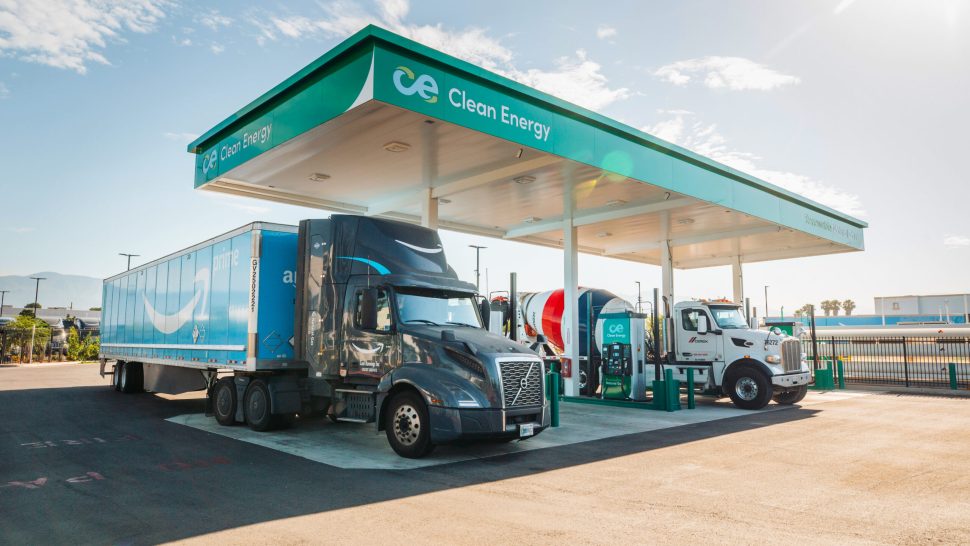

For more than three decades, renewable natural gas (RNG) has occupied a particular lane in the alternative fuel conversation. It’s been respected but never quite mainstream in Class 8 trucking. The engine technology wasn’t there, the fueling network had gaps, and diesel, for all its volatility, was the devil fleet operators knew.
Chad Lindholm, Clean Energy’s Senior Vice President, thinks that calculus has fundamentally changed. In a recent interview with FreightWaves, Lindholm laid out a case built not on projections or pilot programs, but on real-world fleet data, a maturing infrastructure footprint, and an engine platform he says has closed the gap that kept RNG on the sidelines of long-haul trucking.
The conversation started where most fleet procurement discussions do: cost per mile.
There’s a sharp contrast between diesel’s exposure to global disruption and the domestic production profile of RNG.
“With diesel, there is always volatility,” Lindholm said. “It seems like at least every three to five years, there is some event that affects the market, and truck operators pay the price. Conversely, when it comes to natural gas, we use a domestically produced product. There is zero fluctuation due to conflict abroad.”
That stability shows up in the numbers. While diesel pricing swings often move roughly two dollars per gallon in either direction, RNG prices tend to fluctuate by about a dime. The savings are substantial across every region of the country.
“RNG can be found at an average savings of two dollars per gallon, and a bigger delta in some parts of the country,” Lindholm said.
Clean Energy’s own regional pricing data backs that up. And with the current conflict overseas leading to continued diesel fuel pricing volatility at home, fleet customers operating X15N trucks today are seeing savings as high as $5.00 per gallon in certain parts of the country.
There are still areas where RNG asks fleets to make tradeoffs. The upfront premium for a Cummins X15N-equipped tractor runs $80,000 to $100,000 over a comparable diesel unit, though that figure has come down since the engine entered production a year ago. A fleet with high purchasing power can push it lower. Fuel economy, meanwhile, runs about 15% behind diesel in like-for-like lane comparisons.
“Cummins has done a tremendous job closing the gap, but we do want to be up front about that 15%,” Lindholm said.
The previous 12-liter RNG engine carried a significantly higher fuel economy penalty, making the X15N’s improvement a meaningful step forward. Those fleet managers who haven’t examined the data in the past year or so may be unaware just how much of an improvement there has been with the current generation of RNG technology and infrastructure.
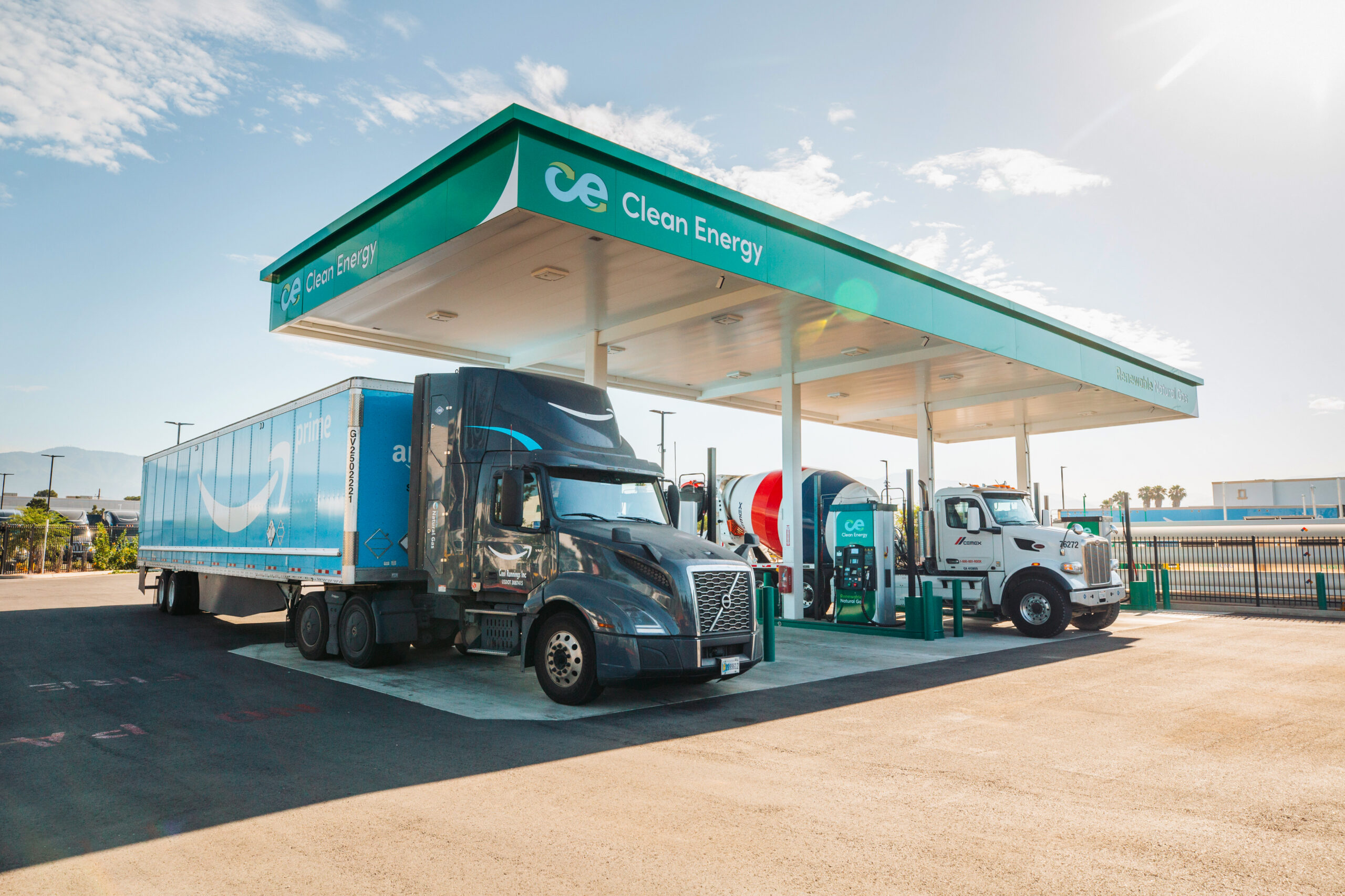
Where the math turns in RNG’s favor, Lindholm said, is in the TCO conversation over time. “Fleets will see return from the Cummins X15N engine in about two years. That resonates for fleets who hold assets for a minimum of five years.”
Clean Energy’s fleet overview materials identify the highest-value deployment scenarios as fleets with high annual mileage, long-term asset holds of five years or more, regional or fixed-route operations with predictable fueling patterns, and proximity to the RNG station network.
Clean Energy deliberately builds its business case without factoring in government incentives.
“All discussions of cost are without the assumption of subsidies,” Lindholm said. “To scale throughout the industry and keep from being a niche market product, we’re serious about providing viable trucks, engines, and fuel without government subsidy programs.”
Grants and incentive programs exist and Clean Energy helps fleets navigate them, but they don’t form the foundation of a pitch for using natural gas.
While fuel pricing has been a rational argument for RNG for some time, the Cummins X15N has also made the transition to a different fuel source positive for drivers behind the wheel.
The most common feedback Clean Energy gets from drivers is that the truck operates like the diesel rig they’re used to.
“We want drivers to know they can expect diesel-like performance,” Lindholm said. “Fleets tell us that the X15N comes with the familiarity that a truck driver is looking for so that they can safely get from point A to point B, meet their routes on time, and return home each night.”
Beyond performance parity, there are ancillary benefits that matter to driver quality of life, including a quieter engine and the absence of diesel fumes.

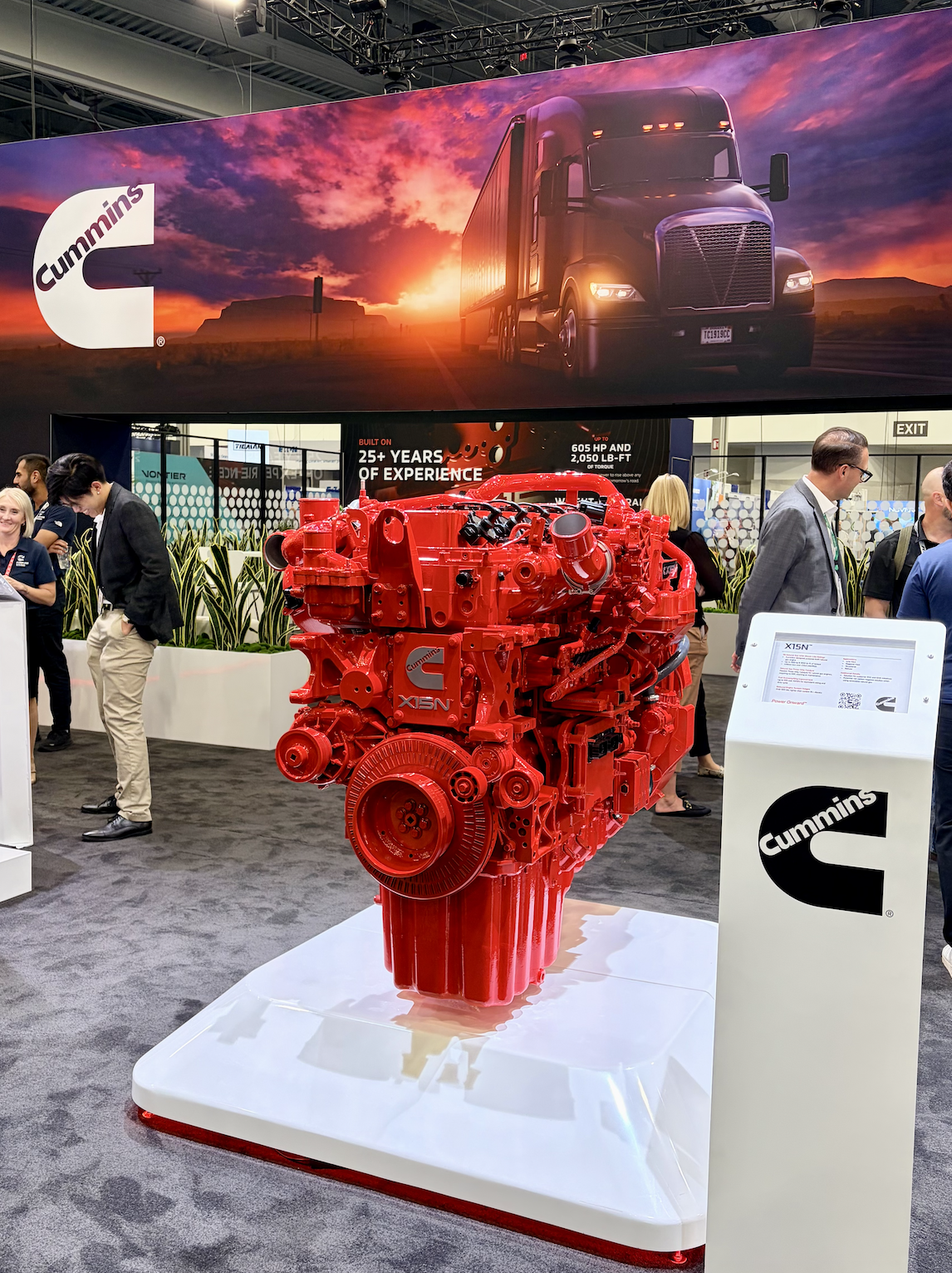
The X15N is the culmination of years of iteration. The industry previously tried to make a 9-liter engine work in Class 8 applications, then spent years learning from the limitations of the 12-liter platform. The current 15-liter engine offers specs up to 500 horsepower and 1,850 foot-pounds of torque, which puts it in competitive range with diesel across for-hire, contracted, LTL, and private fleet applications.
“We’ve cut our teeth over the last ten to fifteen years to ultimately get to the point where this engine is as capable as the standard diesel options,” Lindholm said. The engine is available across three OEM platforms, and built on the same assembly lines as diesel powertrains.
Clean Energy’s station portfolio dispels concerns about availability and infrastructure, according to Lindholm. The company operates more than 600 fueling sites across all segments it serves, including transit, refuse, airports, and over-the-road trucking. More than half of those are private backlot facilities. Roughly 200 of those are open-access, 24/7 card-lock and truck-stop-style stations.
At the moment, there’s a network of more than 100 stations purpose-built for Class 8 trucks with 53-foot trailers. The distinction matters, Lindholm said, because truck-accessible means more than just getting in and out of the lot.
“If you don’t have the capacity to fuel at a reasonable enough fill speed, let’s just say two gallons a minute, you’re going to be there for an hour,” Lindholm said. At Clean Energy’s truck-rated stations, fleets fuel at 8 to 10 gallons per minute, with a total connect-to-disconnect fueling experience of less than 10 minutes.
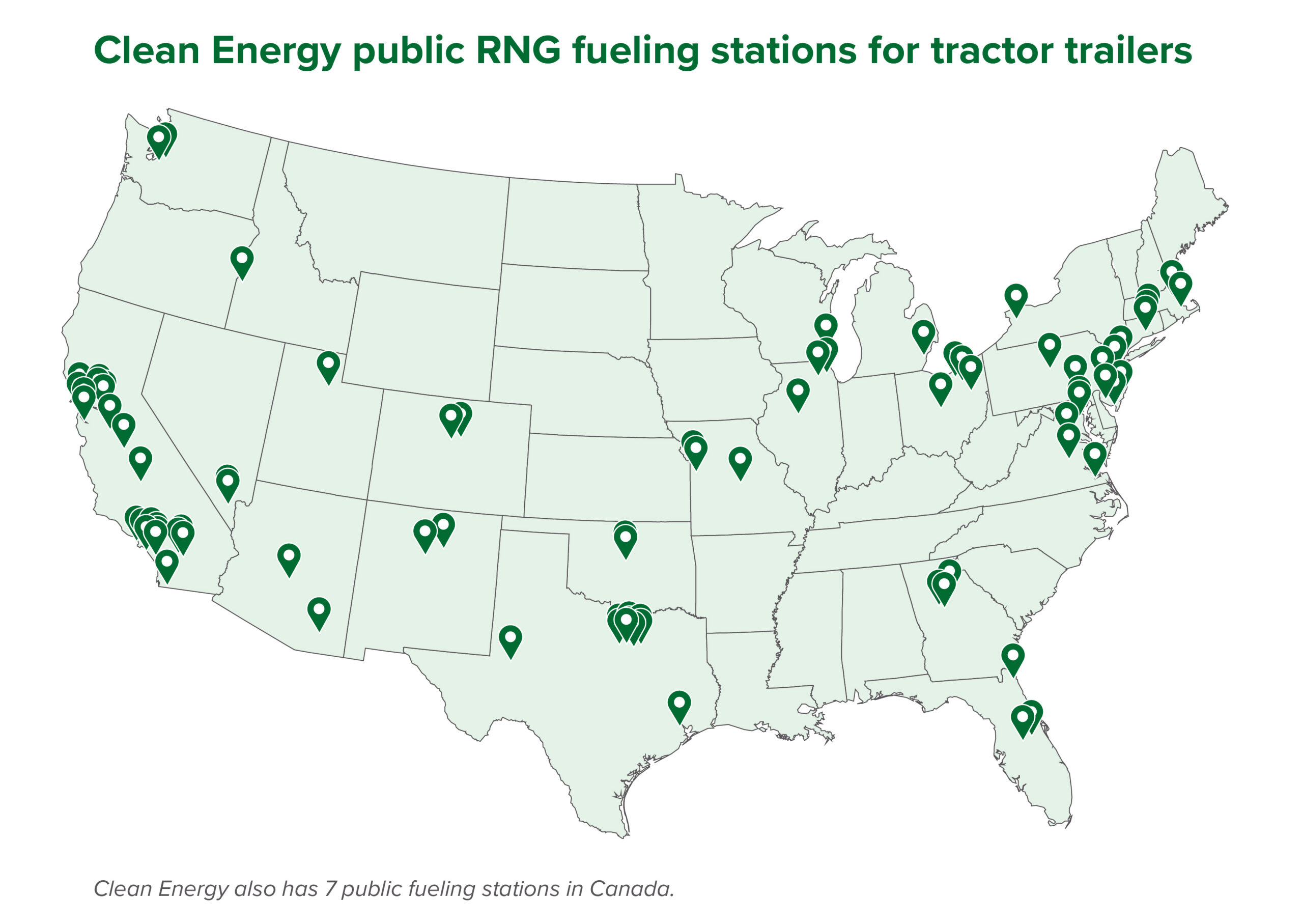
Clean Energy has built more than 20 large-scale, first-class truck fueling facilities in recent years to support the X15N rollout, with more stations being co-located at existing truck stops to give drivers access to the amenities they expect (C-stores, showers, maintenance bays).
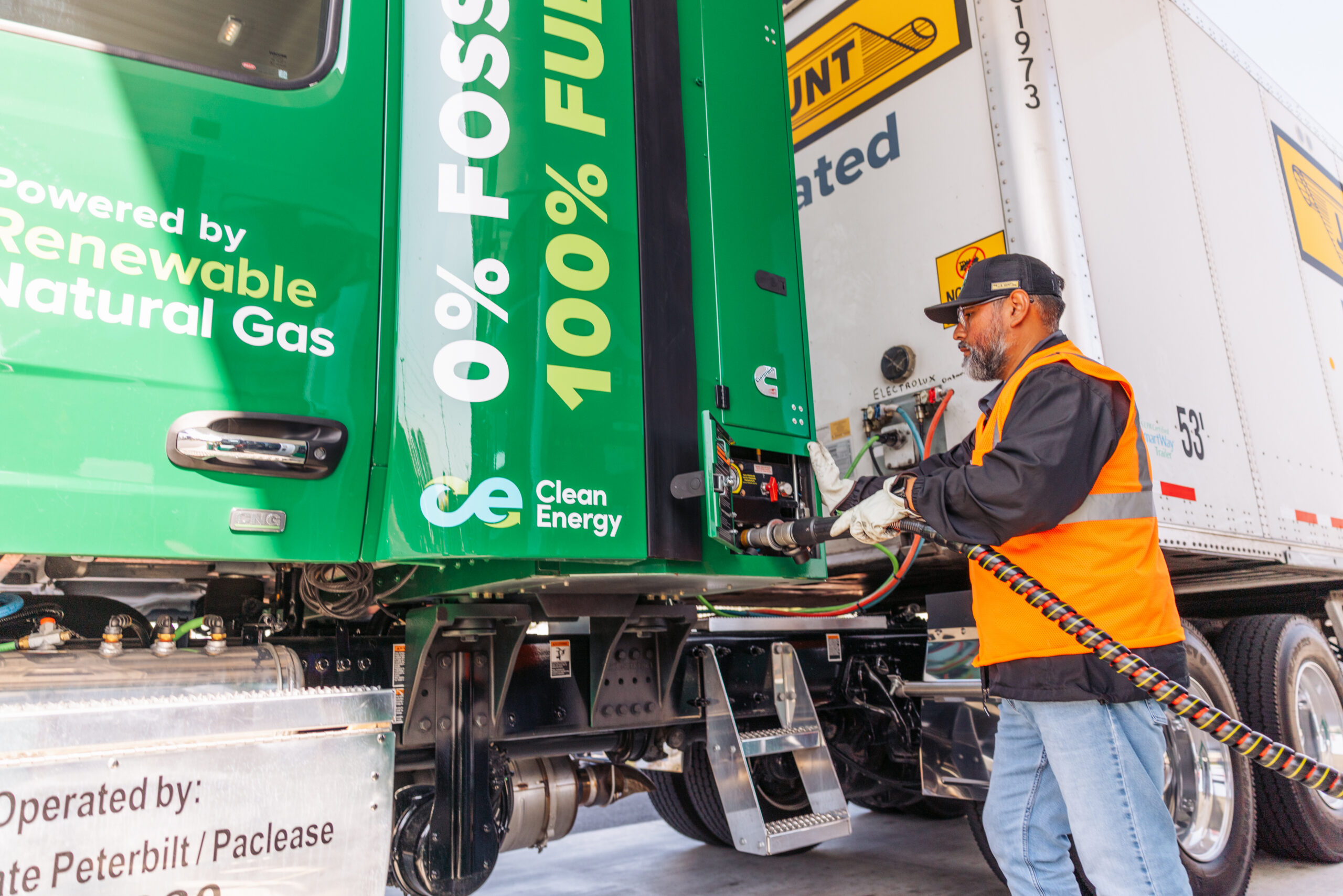
As for the fueling experience itself, the learning curve is essentially nonexistent. The dispenser interface looks identical to a diesel pump. The connection point differs, but a driver can learn the process by watching a 30-second video or the person next to them.
“You’re going to latch on, push start, stand and watch that vehicle fuel at 8 to 10 gallons a minute,” Lindholm said.
The sustainability case for RNG extends well beyond simply being a cleaner-burning fuel, and it’s a story Lindholm said the industry hasn’t told well enough.
RNG is produced by capturing fugitive methane emissions (primarily from landfills and dairy farms) that would otherwise be released into the atmosphere. That methane is scrubbed, upgraded to pipeline quality, and injected into the existing natural gas pipeline network. Clean Energy then nominates those molecules to stations across the country, allowing fleets in states like Texas, Florida, Ohio, or California to receive RNG sourced from a production facility that might be located in Idaho.
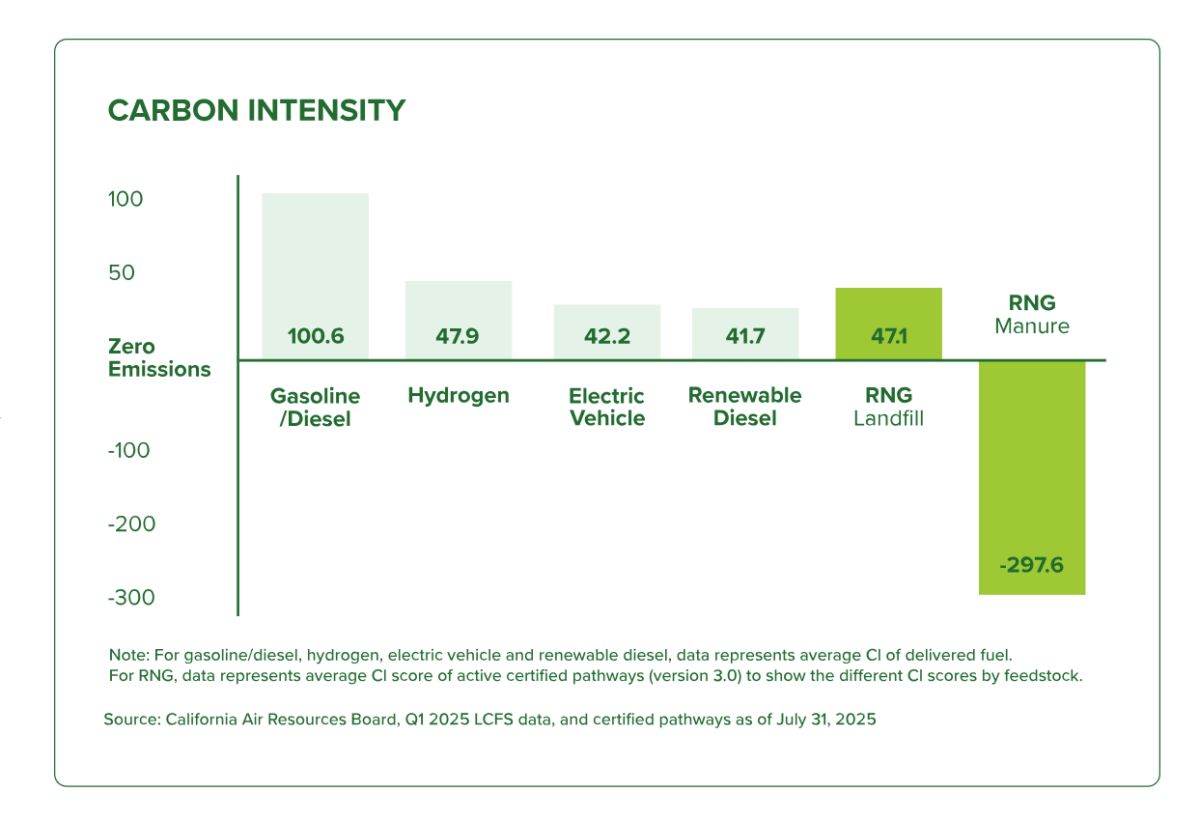
The lifecycle carbon intensity numbers are striking. Clean Energy’s average portfolio CI score across dairy farm and landfill sources currently sits at negative 120, well below the zero line that sustainability professionals target. Certain dairy RNG pathways can achieve CI scores as low as negative 300.
Lindholm said fleets are increasingly receptive to this framing. “We’re telling fleets that we’re not necessarily looking to replace their entire fuel strategy or turn it upside down. We’re trying to enhance it,” he said. “Run diesel where it makes sense. Run renewable diesel where it makes sense. Then look at RNG where it makes sense.”
If your fleet is considering the transition, Lindholm said the typical conversation-to-deployment timeline runs three to six months. Awareness of the product has improved. Most fleet operators today know that natural gas engines exist and that Cummins offers a 15-liter option on three OEM platforms, but the due diligence process still requires working through economics, environmental data, and real-world route testing.
“Fleets ultimately are going to do their own due diligence and reach out to peers in the space,” Lindholm said. “They may get their hands on a demo truck and put a driver behind the wheel to run it on real routes, real lanes, for an extended period of time.”
Looking ahead, Lindholm framed Clean Energy’s growth trajectory in terms first articulated by Cummins: the X15N platform should be capable of capturing 8 to 10% of annual Class 8 truck purchases, potentially reaching 20,000 to 25,000 trucks per year by around 2030. That volume translates to roughly 350 million gallons of RNG annually. Clean Energy is confident that the supply chain and infrastructure can support that demand.
In the nearer term, the goal is more specific. “I think in just a few short years, we should and could be in a space where just Clean Energy alone is fueling 5,000 of these X15N engines across the current network that has more than enough capacity to add demand to, and is complemented by additional station builds,” Lindholm said.
With 2027 emission regulations approaching, the window for fleets to evaluate their fuel strategies is tightening. Lindholm wants to spread awareness that the engine works in real-world applications, the fuel is cheaper and domestically sourced, the stations are in place, and the carbon math is better than most fleet operators realize. The pieces that were missing for RNG in heavy-duty trucking, he argued, have arrived.
“We have this renewable, domestically produced fuel in RNG,” Lindholm said. “You’ve got the right engine and the right fuel that can be tied into any one of these segments in the overall trucking space. And that’s where a lot of the excitement is coming from.”
Click here to learn more about Clean Energy.
Brokerage Compliance Symposium
The day before F3. Every compliance issue you face - fraud exposure, carrier liability, FMCSA rules, cargo theft, insurance gaps - navigated by attorneys and operators defining best practices in a changing industry.
F3 Awards Dinner
The night before F3. FreightTech100 companies honored. FreightTech 25 and Shipper of Choice winners revealed live. Cocktail reception into dinner and live music - 300 industry leaders in one purpose-built room.
F3: Future of Freight Festival
Industry-defining keynotes, rapid-fire technology demos, and industry leaders networking in experiences across Chattanooga - plus the inaugural F3 Awards Dinner featuring the FreightTech and Shipper of Choice reveals.
The day before F3. Every compliance issue you face - fraud exposure, carrier liability, FMCSA rules, cargo theft, insurance gaps - navigated by attorneys and operators defining best practices in a changing industry.
The Signal at Chattanooga Choo Choo • Chattanooga, TN Register NowThe night before F3. FreightTech100 companies honored. FreightTech 25 and Shipper of Choice winners revealed live. Cocktail reception into dinner and live music - 300 industry leaders in one purpose-built room.
The Signal at Chattanooga Choo Choo • Chattanooga, TN Register NowIndustry-defining keynotes, rapid-fire technology demos, and industry leaders networking in experiences across Chattanooga - plus the inaugural F3 Awards Dinner featuring the FreightTech and Shipper of Choice reveals.
The Signal at Chattanooga Choo Choo • Chattanooga, TN Register Now