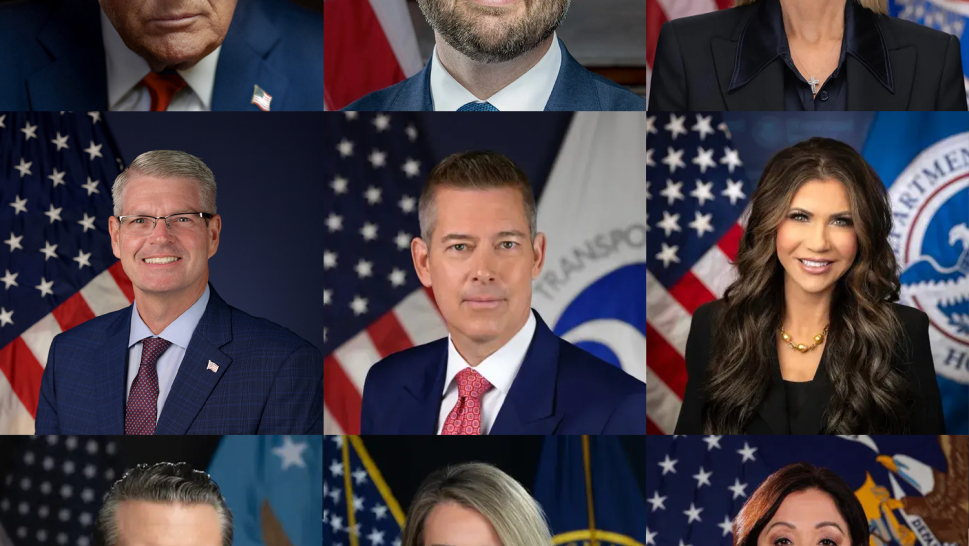
Executive orders, rulemakings, legislation, and court challenges all operate on different timelines with different powers and different guardrails. Yesterday’s historic Duffy-Barrs press conference was the biggest enforcement announcement in a generation, and it still has to survive the process. Here’s why, and what comes next.
It happens every single day. In the comments. In the DMs. On X. On LinkedIn. Somebody tags the Secretary of Transportation or the FMCSA administrator or a member of Congress and demands that they close every CDL mill in America by Friday, remove every non-domiciled driver from the highway by Monday, mandate English proficiency testing at every weigh station, and fix 40 years of regulatory neglect before the next news cycle.
The frustration is understandable. So is the impatience. But this is a government, not a sedan; you cannot just turn the wheel and expect it to change direction at 70 miles an hour. There are branches. There are processes. There are legal guardrails that exist for a reason. Miss that, and a lot of energy gets wasted being angry at the wrong people for the wrong reasons while the people who actually caused this mess sit in a conference room advising the government on what to do next.
On February 20, 2026, Secretary Sean Duffy and FMCSA Administrator Derek Barrs stood at a podium in Washington and delivered the most aggressive enforcement announcement the trucking industry has seen in a generation. Yesterday was not the finish line; it was the opening bell for a process that still has years to run. And if history is any guide, the legal challenges are already being drafted.
What follows is a breakdown of what was announced, why even historic action takes longer than a news cycle, and what is coming next, and when.
“Yesterday’s announcement was historic. It was also the beginning, not the end. The process doesn’t stop because the press conference happened.”
WHAT HAPPENED YESTERDAY: The February 20 Announcement, By the Numbers
In a joint press conference at DOT headquarters, Secretary Duffy and Administrator Barrs outlined a sweeping enforcement action and a set of forthcoming rulemakings that represent the most comprehensive trucking safety initiative in at least a decade. Here is what was announced.
The CDL Mill Sting Operation
Over five days, FMCSA mobilized more than 300 investigators across all 50 states to conduct over 1,400 on-site inspections of driver training providers. The results were not subtle:
448 CDL training providers issued notices of proposed removal from the Training Provider Registry
109 schools voluntarily removed themselves upon learning that investigators were coming
557 total CDL training programs removed or facing removal
97 additional providers are still under active investigation
The violations ranged from unqualified instructors who did not hold the correct licenses to operate the vehicles they were teaching students to drive, to improper vehicles that did not match the type of training being offered, to fake addresses, and to schools that existed on paper but not on the ground. One school that was removed had been training school bus drivers.
DUFFY: “For too long, the trucking industry has operated like the Wild, Wild West, where anything goes, and nobody asks any questions.”
BARRS: “If a school isn’t using the right vehicles or if their instructors aren’t qualified, they have no business training the next generation of truckers or school bus drivers.”
The Forthcoming Rulemakings
Beyond the enforcement action on CDL schools, Duffy and Barrs announced a package of regulatory proposals that, when finalized, would represent a fundamental restructuring of how motor carriers enter and are monitored in the federal system. These are proposals, not final rules. That distinction is everything, and we’ll return to it. But here is what is on the table:
Ending self-certification for entry-level driver training schools. The current self-certification model created the CDL mill explosion. Schools entered the Training Provider Registry with minimal verification and no real accountability until they were caught. The proposed rule would require active verification before a school can be listed, not after the damage is done.
Revamping Motus, the new federal motor carrier registration system, into a rigorous identity verification and matching platform. Motus is already in soft launch for supporting companies. Duffy and Barrs want it weaponized against chameleon carriers, entities that cycle through DOT numbers to evade enforcement. The administration’s goal is to tie DOT numbers to verified individuals, not legal fictions.
DUFFY: “One individual can get 100 different DOT numbers. We want to make sure that the DOT number is connected to an actual individual.”
Enhanced procedures for suspending or revoking federal approval for noncompliant carriers or schools. The current process for pulling a carrier’s authority is cumbersome. The proposal would create faster off-ramps for enforcement action.
Requiring state motor vehicle departments to conduct all CDL testing. This is a significant structural change. Currently, third-party examiners, including, in some states, the training schools themselves, can administer CDL skills tests. That conflict of interest is a primary driver of fraudulent licensing. Moving testing exclusively to state MVDs eliminates the foxes from the henhouse.
Adding qualification and testing requirements for brokers during registration. Brokers have largely operated under an honor system. A baseline competency requirement at the registration stage would represent the first meaningful gatekeeping in the history of broker licensing.
Sharper verification of the principal place of business using AI tools. DOT announced it would use artificial intelligence to verify that carriers maintain actual physical addresses, not P.O. boxes, UPS Stores, or virtual offices. The regulation already prohibits those arrangements. What has been missing is the detection. The AI component is new, and in the context of hundreds of entities sharing one small building at a single address, it cannot arrive soon enough.
The Non-Dom and ELP Scorecard
Barrs confirmed that approximately 14,000 truck drivers have been placed out of service for English Language Proficiency violations since the administration reinstated enforcement last year. The non-domiciled CDL final rule, published February 13, takes effect March 15 and is expected to affect approximately 194,000 non-domiciled CDL holders. The administration also confirmed that $160 million in federal highway funds has been withheld from California for failing to cancel over 17,000 illegally issued CDLs by the agreed-upon deadline. New York faces similar pressure. Duffy gave California a ‘kudos’ for beginning to enforce English language requirements once the funding threat became real.
THE PROCESS: Why Announcements Are Not Laws and Laws Are Not Enforcement
Now that the announcement is on the record, the more important question is what it means for the timeline and legal durability. The reaction on social media to a press conference like yesterday’s invariably splits into two equally wrong camps: those who think everything just got fixed, and those who dismiss it as political theater that will never result in action. The truth requires understanding how the federal government actually works.
The org chart
There are three levels of federal authority that matter for trucking regulation, and they do not have the same powers. The President of the United States can issue executive orders, sign legislation, nominate agency heads, and set policy direction. What the president cannot do is write regulations unilaterally. Executive orders direct federal agencies to take action within their existing statutory authority. They do not create new law.
Below the president sits the Secretary of Transportation, currently Sean Duffy. The secretary can direct policy, issue departmental orders, allocate enforcement resources, and champion specific regulatory changes. What the secretary cannot do is write federal regulations without going through the rulemaking process established by the Administrative Procedure Act.
Below the secretary sits the FMCSA Administrator, currently Derek Barrs. The administrator runs day-to-day operations, oversees compliance reviews, directs field enforcement, and shepherds rulemakings through the federal process. What the administrator cannot do is snap his fingers and create a new regulation. He has to follow the process. And the process is slow by design.
The process that drives everyone crazy
The Administrative Procedure Act of 1946 governs how federal agencies create regulations. It requires transparency, public participation, and judicial review. Whether that’s a feature or a bug depends on whether the proposed regulation helps or harms you. But it is the law, and it applies to FMCSA the same way it applies to the EPA, the FDA, and every other federal agency.
The standard rulemaking cycle: the agency publishes an Advance Notice of Proposed Rulemaking to gather input on whether a rule is needed. Then it publishes a Notice of Proposed Rulemaking with the proposed regulatory text, a cost-benefit analysis, and a 60- to 90-day comment period. Every substantive comment must be reviewed and addressed. Then the agency publishes a final rule, which typically takes effect 30 to 60 days later. Then, anyone who participated in the comment process can challenge the final rule in the D.C. Circuit Court of Appeals. If the court finds the agency skipped steps, ignored significant objections, or exceeded its authority, the rule gets vacated. Back to zero.
From ANPRM to enforceable final rule, a typical FMCSA regulation takes three to seven years. The ELD mandate took over a decade. The safety fitness determination rule has been in various stages of rulemaking since the 1990s. The speed limiter rule was first proposed in 2016 and still has not been finalized. This is not because FMCSA is lazy. This is because the process exists, takes time, and is deliberately built that way.
THE KEY DISTINCTION: Actions that enforce existing rules can move fast. Actions that create new rules cannot. Everything announced yesterday falls into one or both of those categories , and which one determines when the industry will actually feel it.
What can move fast, and what cannot
The CDL mill enforcement action announced yesterday, the 1,400 sting operations, and the 557 schools removed or facing removal happened within the agency’s existing authority. FMCSA had the power to conduct those investigations. No new rule was required. Those schools got caught because investigators showed up. That is the enforcement of existing regulations, and it moved in five days.
The proposed rulemakings Duffy and Barrs described are a different animal. Ending self-certification, restructuring CDL testing through state MVDs, adding broker qualification requirements, and creating identity verification mandates for carrier registration, those are new regulatory requirements. They require NPRMs. They require comment periods. They require final rules. They require time, and they are vulnerable to challenge.
The English Language Proficiency enforcement is also instructive. ELP has been a federal requirement since 49 CFR 391.11(b)(2) was written. The Obama administration issued guidance in 2016 that effectively neutered enforcement of an existing rule. President Trump’s executive order directed the agency to rescind that guidance and reinstate enforcement. That happened within 60 days because it was not a new regulation; it was a direction to enforce an existing one. Those 14,000 out-of-service actions Barrs cited are the direct result of that distinction.
“Enforcement of existing rules moves at the speed of political will. New rules move at the speed of the Administrative Procedure Act. Know which one you’re watching.”
THE CASE STUDY: How the Non-Dom CDL Rule Became the Perfect Illustration of Why Process Matters
For anyone who wants to understand why every major announcement out of Washington should be followed by the question ‘and then what?’, study the non-domiciled CDL rule. It is the clearest case study available of the consequences of urgency overriding methodology.
FMCSA had legitimate safety concerns. Annual program reviews found widespread non-compliance among state licensing agencies. California alone had an improper issuance rate of 25%. The agency identified 17 fatal crashes in 2025 involving non-domiciled CDL holders whose fitness could not be verified through existing databases. The concern was real. The data was real. The dead were real.
FMCSA issued an emergency interim final rule that skipped the standard notice-and-comment period and the state consultation required by the Commercial Motor Vehicle Safety Act. A coalition of unions and individual drivers challenged the rule in the D.C. Circuit. The court found the petitioners would likely succeed on the claim that FMCSA improperly issued the rule without consulting the states. The rule was stayed within six weeks of issuance.
Rather than litigate, the FMCSA filed for abeyance and returned to do it properly. The agency published a final rule on February 13, 2026, incorporating responses to 8,010 public comments. That rule takes effect March 15. And one day after publication, a new petition for review was filed in the D.C. Circuit by the same coalition.
THE LESSON: Even when the safety justification is strong, skipping the process does not save time. It costs time. The shortcut became the long way around, and the legal fight continues.
The same dynamic should be expected with yesterday’s announcements. The proposed rulemakings will be challenged. The CDL school removals will face administrative appeals. The broker qualification requirements will generate industry pushback during the comment period. The state testing mandate will surface Tenth Amendment questions about federal intrusion into state licensing authority. None of that makes these rules wrong. It makes them subject to the same process that everything else goes through, and the people in that process who benefit from the status quo are very good at using it.
THE LEGISLATIVE LANE: What Only Congress Can Fix
Federal agencies can only regulate within the authority Congress gives them. And some of the most glaring problems in trucking cannot be fixed by FMCSA rulemaking because Congress has not granted the authority, or because the problem is baked into statute.
The minimum liability insurance level for a commercial motor carrier has been $750,000 since 1980. When that number was set, a loaded tractor-trailer cost a fraction of what it costs today, and medical costs were a fraction of what they are today. FMCSA cannot raise that minimum through rulemaking. It is set by statute. Only Congress can change it. Every piece of evidence in the industry, every case involving catastrophic underinsurance, every compliance review where the insurer behind a chameleon carrier had a greater financial stake in keeping the carrier operating than in underwriting its risk, points to insurance reform as essential. And insurance reform requires a bill, a committee, a floor vote, and a signature.
The chameleon carrier problem, which Duffy and Barrs specifically addressed yesterday, is being partially addressed through the SAFE Act currently moving through Congress. That bill has ATA support and bipartisan appeal. It also has to survive the legislative gauntlet. Representative Harriet Hageman’s bill does important work. Whether it survives to signature is a separate question.
The interplay between Congress and the agencies is what makes the timeline even longer. Congress passes a law directing FMCSA to do something. FMCSA then has to issue a rulemaking to implement the Congressional directive. The Bipartisan Infrastructure Law directed FMCSA and NHTSA to issue a rule requiring automatic emergency braking on heavy trucks in 2021. As of February 2026, the AEB rule is still in the supplemental proposed rulemaking stage. Five years after the Congressional mandate, still no final rule. That is not unusual. That is normal.
THE ADVISORY CLASS: When the People Who Built the Problem Advise on the Fix
And then there is the American Trucking Associations.
ATA occupies a unique position in the trucking industry. They are the largest lobbying organization in the industry. They advise Congress. They advise FMCSA. They produce research through their research arm, the American Transportation Research Institute, that federal agencies cite in rulemakings. They have a seat at every table where policy gets made.
And they have been on the wrong side of almost every major safety debate of the last two decades. They championed the driver shortage narrative that OOIDA, academic researchers, and even Secretary Duffy himself have rejected. They pushed the DRIVE Safe Act and the Safe Driver Apprenticeship Pilot Program to allow 18-year-olds to drive interstate trucks, a program so unsuccessful that only 80 apprentice drivers applied out of a capacity of 3,000, and 88 of the 211 carrier applicants were disapproved for failing to meet basic safety standards. They lobbied against meaningful ELDT reform, helping to create the CDL mill explosion that FMCSA spent five days dismantling this week. They pushed for deregulation that contributed to the flood of new entrants during 2020-2022, which included the chameleon carriers and fraudulent operators that this administration is now shutting down.
And now they are issuing press releases praising the very enforcement actions aimed at cleaning up the mess their policy positions helped create. ATA President Chris Spear praised Secretary Duffy’s pro-trucker package. ATA backed the SAFE Act, which targets chameleon carriers. ATA supported the non-domiciled CDL rule. These are the consequences of problems that ATA’s own lobbying positions contributed to. The cycle is consistent: advise the government, produce research to support the advice, the government acts on it, a decade later, when the policy fails, come back to the table to advise on the cleanup while publicly praising whatever direction the political wind is blowing.
This is not a conspiracy theory. This is documented. And it is one of the reasons the regulatory process takes so long and produces such inconsistent results. The loudest advisory voice in the room has institutional incentives that do not always align with safety outcomes.
THE MOST ACTIVE DOT IN A GENERATION, AND WHY THAT STILL TAKES TIME
The word ‘process’ gets used as an excuse for inaction. That is not what is happening here.
What the trucking industry is witnessing from DOT and FMCSA right now is the most aggressive enforcement posture in at least 25 years of industry observation. Carriers with 50 crashes are still operating. Insurers are covering hundreds of high-risk entities with zero meaningful underwriting scrutiny. Chameleon carrier networks that reincarnate faster than the agency can shut them down. These are documented failures, and this is the first administration in memory to have come in knowing what those failures look like and moving against them with real authority.
Consider what has happened in roughly 12 months: an executive order reinstating English Language Proficiency enforcement, resulting in 14,000 drivers placed out of service. A non-domiciled CDL final rule, taking effect March 15, was based on 8,010 public comments after the emergency rule was properly revised. The largest enforcement action ever against CDL training programs, with 557 providers removed or facing removal following 1,400 on-site sting operations across all 50 states. $160 million withheld from California and $40 million from New York for non-compliance. A package of forthcoming rulemakings announced on February 20 targets chameleon carriers, CDL testing, broker qualification, and carrier identity verification. The Motus registration platform is in soft launch, the first major overhaul of FMCSA’s registration infrastructure in decades. Over $275 million allocated for truck parking. HOS reform advancing through an NPRM.
That is not inaction. That is an agency operating at the outer edge of its authority while remaining within the legal guardrails required by the Administrative Procedure Act. The rulemakings announced yesterday will move through the process. They will face comment periods where industry attorneys and advocacy groups will try to dilute them. They will face court challenges once finalized. And they will ultimately make the industry safer if the people demanding change understand that supporting the process is part of that demand.
“These problems did not start with this administration. They will not end with a press conference. But for the first time in a long time, the right people are in the room and they know exactly what they’re looking at.”
These problems did not start here. The ELP enforcement gap goes back to 2016. The non-domiciled CDL compliance failures have been building for decades. The ELDT program, which spawned thousands of questionable CDL schools, was implemented in 2022. The $750,000 minimum insurance level has not changed since 1980. The chameleon carrier problem has been documented since Congress created the Archie program 13 years ago. Attention fades between disasters. The cycle restarts when someone dies. What is different right now is that the administration arrived knowing the cycle and is trying to break it with structural fixes rather than enforcement theater.
WHAT INFORMED ADVOCACY LOOKS LIKE FROM HERE
Effective advocacy requires understanding what you are asking for and who has the power to deliver it.
On CDL school reform: FMCSA is actively cleaning the registry. But the enforcement action announced this week is administrative, involving removals from the Training Provider Registry, and it will face appeals. A permanent fix requires Congressional action to establish minimum training-hour requirements, fund oversight infrastructure, and create penalties that deter fraud at the entry point. The ELDT program, as currently structured, provides the FMCSA with limited tools. Congress needs to provide better ones, and the comment period on the proposed ELDT rulemaking is the opportunity to put that on the record.
On chameleon carrier enforcement: support the SAFE Act. Support FMCSA’s new entrant screening reforms. When the Motus rulemaking on identity verification opens for comment, submit one. Documented experience, specific data, and real-world examples have legal weight when they are in the administrative record. They have zero weight in a social media comment thread.
On principal place of business verification: the AI tools Barrs described are an enforcement capability layered on top of existing regulations that already prohibit mail center addresses and virtual offices. What has been missing is the detection. Support FMCSA’s budget requests for enforcement technology. Contact your representatives and tell them the agency needs resources to use the tools it is building.
On insurance reform: the $750,000 minimum is set by statute. Contact your representative with specific asks tied to specific data, crash costs, medical bills, and what an 80,000-pound truck traveling at highway speed does to a passenger vehicle. And understand that even raising the minimum does not fix the underwriting gap, because no carrier is required to have its safety record verified before a policy is issued. That is separate legislation requiring separate advocacy.
On the non-domiciled CDL rule: the evidentiary record matters for the pending D.C. Circuit challenge. If there is data on crashes, licensing failures, or enforcement gaps involving non-domiciled CDL holders, submit it to the FMCSA. The rule that was built on 8,010 comments is more defensible than the emergency rule that skipped the comment process entirely. That is not an accident; that is how administrative law is supposed to work.
So What Now?
February 20, 2026, was a genuine milestone. The most comprehensive enforcement action against CDL training fraud in the history of the program. A clear-eyed announcement of rulemakings that address the structural vulnerabilities that created the mess. Two officials who clearly understand the industry they are regulating are putting their names on it publicly.
And it is still just the beginning of a process that will take years, face legal challenges, and require Congressional support to fully realize. Criticizing the administration for not moving faster ignores what yesterday represented. Celebrating it as a finished product ignores what it actually is: a very strong opening move in a very long game.
The process is slow. It is frustrating. It is maddening when people are dying on highways, and the legal machinery grinds at a pace that feels disconnected from urgency. But the alternative to the process is what happened with the non-domiciled CDL emergency rule. Action without process gets stayed by the courts. Action without data gets vacated. Action without methodology gets sent back to the starting gate.
The solution is not less scrutiny of the process. The solution is more people who understand it well enough to use it. Comment on NPRMs. Contact your representatives with specific legislative asks. Support the organizations doing actual policy work. And stop demanding that government officials do things they legally cannot do while giving a pass to the advisory organizations that helped build the mess.
It took decades to get here. It will not get fixed overnight. But it is getting fixed. And the people at DOT and FMCSA right now are doing more with the tools they have than this industry has seen in a long time. Give them the time and the legal space to do it right, because doing it fast and doing it wrong is how we got here in the first place.
Brokerage Compliance Symposium
The day before F3. Every compliance issue you face - fraud exposure, carrier liability, FMCSA rules, cargo theft, insurance gaps - navigated by attorneys and operators defining best practices in a changing industry.
F3 Awards Dinner
The night before F3. FreightTech100 companies honored. FreightTech 25 and Shipper of Choice winners revealed live. Cocktail reception into dinner and live music - 300 industry leaders in one purpose-built room.
F3: Future of Freight Festival
Industry-defining keynotes, rapid-fire technology demos, and industry leaders networking in experiences across Chattanooga - plus the inaugural F3 Awards Dinner featuring the FreightTech and Shipper of Choice reveals.
The day before F3. Every compliance issue you face - fraud exposure, carrier liability, FMCSA rules, cargo theft, insurance gaps - navigated by attorneys and operators defining best practices in a changing industry.
The Signal at Chattanooga Choo Choo • Chattanooga, TN Register NowThe night before F3. FreightTech100 companies honored. FreightTech 25 and Shipper of Choice winners revealed live. Cocktail reception into dinner and live music - 300 industry leaders in one purpose-built room.
The Signal at Chattanooga Choo Choo • Chattanooga, TN Register NowIndustry-defining keynotes, rapid-fire technology demos, and industry leaders networking in experiences across Chattanooga - plus the inaugural F3 Awards Dinner featuring the FreightTech and Shipper of Choice reveals.
The Signal at Chattanooga Choo Choo • Chattanooga, TN Register Now