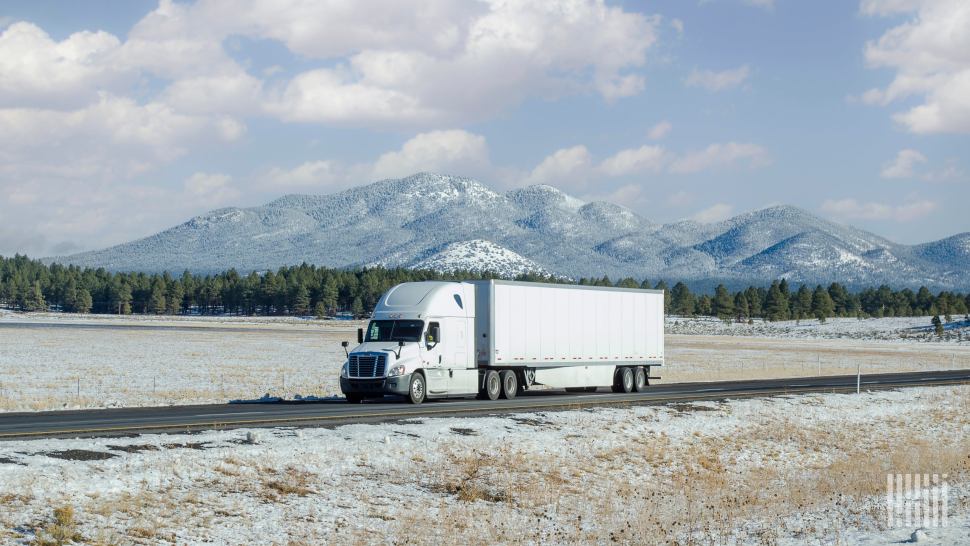
The first real winter as an owner-operator feels a lot like your first year running your own business — the weather just exposes what you didn’t prepare for. Cold doesn’t care how motivated you are, how nice your truck is, or how solid your dispatcher sounds on the phone. When the temps fall below freezing, everything that’s weak — your maintenance plan, your fuel habits, your finances — starts to show.
Every experienced driver can tell you their first-winter story. The gelled fuel in Nebraska. The air line that froze at a Petro in Pennsylvania. The load that sat for 36 hours because ice and snow buried the shipper’s lot. But what separates the driver who barely survives winter from the one who uses winter to get ahead comes down to preparation — and not just the checklist kind.
This is your practical guide to getting through winter 2025 as a new owner-operator — built around real-world lessons, not pulled out of thin air.
1. Build a Cold-Weather Maintenance Plan — Not a Reaction List
Some new operators wait until something breaks to “winterize.” By then, it’s already costing you.
Start by scheduling a winter-specific service interval, not just your next PM. Here’s how that looks in practice:
- Battery load testing: Don’t trust voltage alone. Have them load-tested. Cold batteries lose 30-40% of cranking power when temps hit 0°F. Replace before it fails.
- Alternator output test: A weak alternator won’t keep up with electric heaters, APU draw, or defrosters running full tilt.
- Air-dryer cartridge replacement: Moisture in your air system turns to ice. Replace the cartridge before you get the first freeze warning. It’s a $60 part that can save a $600 road call.
- Inspect coolant concentration: Make sure it’s a 50/50 mix or appropriate for your region. Weak coolant can mean frozen hoses — and cracked blocks.
- Fuel/Water Seperator: Keep an eye on this and check daily. When you need to drain it, drain it. Don’t let the water build up here.
If you lease to a carrier, confirm whether they cover road calls under maintenance programs. If not, budget one yourself — $500 minimum for emergency breakdowns just in case.
2. Fuel Strategy — Beyond “Don’t Run Below Half a Tank”
Winter fuel management isn’t just about avoiding gel. It’s about protecting your injectors, your idle hours, and your wallet.
- Buy regional winter-blend fuel. When you fuel in Minnesota, you’re getting a higher kerosene mix designed for freezing temps. If you fill up in Tennessee before heading north, you may want to plan differently if it is a major temp difference.
- Keep anti-gel additives on hand — but don’t overdo it. Over-treating can thin fuel and hurt lubrication. Use manufacturer-recommended doses (Power Service, Howes, or OEM-specific).
- Never rely on the same station chain. During winter, price isn’t the only variable — quality and blend consistency matter. Rotate between reliable stops in cold regions.
- Fuel filter discipline: Replace your primary and secondary filters every 15-20k miles in winter. Contaminated fuel thickens faster and plugs filters before it gels.
And here’s something most rookies never think about: idle hours. Every extra hour you idle below freezing racks up wear and fuel waste. If you have an APU, check its fuel draw and battery health now.
3. Electrical and Visibility — Where Safety Meets Sanity
Winter electrical issues account for more downtime than engine failures. Cold metal shrinks, vibration increases, and resistance spikes. Here’s what to check before the first freeze:
- Inspect all grounds. Corrosion builds where wires meet frame points. Clean and tighten. Use a wire brush to get the buildup off.
- Upgrade to LED work lights if you haven’t. They pull less power and cut through fog and snow glare better.
- Replace wiper blades — not when they fall apart. And keep an extra set in the cab.
- De-ice the windshield before starting wipers. Running them on ice strips the rubber instantly.
- Carry two gallons of washer fluid in the cab — not on the catwalk. It freezes back there.
- Cabin heater filter: Check and clean it. Restricted airflow means defroster fogs up faster, not less.
If you’ve never had your windshield freeze inside the cab, you haven’t been north in January yet. Keep a microfiber towel handy for interior moisture buildup.
4. Tires, Chains, and Traction Strategy
Most new owner-operators misunderstand tire prep. It’s not just about chains — it’s about pressure, tread, and timing.
- Tire pressure: Cold air drops PSI about 1 lb for every 10°F drop. That means your 100 PSI summer setup could be at 85 PSI when temps hit single digits — increasing wear and decreasing traction.
- Tread depth: Drive tires should have at least 6/32″ in winter regions. Anything less, and your braking distance doubles on ice.
- Chain law prep: If this applies to you, keep chains organized and pre-fitted. Don’t wait until a scale stop. Practice installing them in dry weather — once.
- Air hose treatment: Spray quick-connects with silicone lubricant to prevent freeze-lock.
And don’t forget about your trailer tires. Frozen brakes from moisture buildup cause some of the costliest roadside delays in winter. Drain your air tanks weekly, minimum.
5. Freight Planning — The Business Side of Winter
Winter prep isn’t just mechanical — it’s financial and strategic. You’re going to lose days to weather. The key is planning those losses so they don’t knock you out of business.
Rate Adjustments and Routing
Freight slows after the holidays, and winter storms add unpredictability. Use the “blue to blue” strategy — not national averages — to choose where to run.
Example:
- Chicago to Minneapolis might pay $2.75/mi in November but drops to $2.15/mi in February — and you’re idling in -15°F.
- Dallas to Atlanta may pay less per mile but keeps your truck moving daily.
Know your breakeven. Know when to park instead of chase.
Emergency Fund Rule of Thumb
Set aside at least 5% of every settlement through March as a winter reserve. That covers:
- Tow bills (avg. $800 – $1,200 for freeze-related recoveries)
- Hotel costs if you’re down overnight
- Lost revenue when weather cancels dispatch
Scheduling Smarter
If you’re leased on, communicate early with your dispatch or broker. Ask direct:
“If I’m delayed by 24 hours for weather, does this contract include detention or truck-ordered-not-used protection?”
Many first-year owner-operators skip that conversation until they lose a full day waiting at a frozen warehouse.
6. Cargo and Equipment Winterization
If you haul reefer freight or temperature-sensitive goods, this section is non-negotiable.
- Reefer Pre-Trip: It’s another engine. Make sure to get back there and make all of your pre departure checks, including oil and coolant.
- Fuel for Reefers: Don’t assume your reefer tank burns clean diesel all winter. Use additive-approved blends to prevent gelling there, too.
- Dry-van precautions: Condensation kills freight. Install vented air flow or use desiccant packs for high-humidity cargo.
For flatbed operators:
- Keep anti-slip mats on hand and dry in case you need to hop on the deck — they freeze to the deck otherwise, so be sure to stow away if you aren’t using.
- Store tarps indoors overnight if at all possible before arriving at a pick; frozen tarps rip easily. Not always practical but if you are heading into extremes, this is a tip that can help when you can.
7. Cold-Weather Survival Kit — Not Just for Emergencies
Every rookie driver throws a few items in a duffel bag and calls it a “survival kit.” Here’s what a real one looks like:
Core Essentials:
- Thermal coveralls or bibs
- Insulated gloves + nitrile liners
- Chemical hand warmers (cheap but effective)
- Waterproof boots with traction soles
- Blanket or sleeping bag rated -20°F
- Flashlight + spare batteries
- Non-perishable food and protein (cans, energy bars, jerky)
- 3 gallons of bottled water
- Spare DEF jugs (DEF freezes at 12°F)
- Small propane heater or electric blanket (if APU fails)
Bonus Tip: Keep one set of “dry clothes” sealed in a plastic bag. There’s nothing worse than climbing into the bunk soaked after chaining up in freezing rain.
8. Communication and Contingency Systems
When cell coverage drops or weather locks you in, information becomes your lifeline.
- Weather apps: Use multiple — MyRadar, Weather Channel, and NOAA. Double-verify forecasts.
- CB radio: Old-school, but when LTE fails in Wyoming, it’s the only thing that still works.
- Emergency contacts: Keep carrier safety and roadside numbers written on paper in case your phone dies.
- Satellite messaging (Garmin InReach or Apple Messages): Worth it if you run remote lanes.
Some new operators underestimate how quickly conditions change in high-plains states, especially if they have never ran them. The forecast you saw at 6 a.m. means nothing at 4 p.m.
9. Mental Prep — The Part Nobody Talks About
Winter fatigue is different. The days are shorter, rest areas fill faster, and the stress of chaining up or crawling over black ice wears you down. Here’s how to manage it like a pro:
- Slow your schedule. Add one buffer day per week for weather delays.
- Hydrate. You’ll dehydrate faster in dry, cold air.
- Stay moving. Get out and stretch every 3–4 hours. Cold stiffness leads to back injuries, and other soft tissue stuff..
- Plan parking early. By 5 p.m., northern truck stops are full. Don’t gamble on “just one more hour.”
Remember: your first winter isn’t just about making money — it’s about surviving to see your second.
10. When to Park
Sometimes the best move is no move. If DOT closures hit your route or winds exceed 40 mph on mountain passes, shut it down.
Know where to check:
- 511 apps by state for road conditions
- FMCSA Emergency Declarations for exemptions or closures
- Truck-specific social media groups for real-time updates
The cost of a parked truck for 24 hours is cheaper than a jackknife recovery, an insurance claim, or worse. DO NOT PUSH IT!
Final Thought
Your first winter as an owner-operator will test everything — your truck, your planning, and your patience. But it also builds your identity as a business owner. Winter doesn’t care about ambition, but it respects preparation.
When the temperatures drop this year, think of it like another phase of your business — not an obstacle. Schedule your winter PMs like you schedule loads. Run your fuel plan like a budget, not a guess. Protect your time like freight.
Because once you survive your first winter — not lucky, but ready — you’ll join the ranks of drivers who don’t just chase freight. They master the seasons.
Brokerage Compliance Symposium
The day before F3. Every compliance issue you face - fraud exposure, carrier liability, FMCSA rules, cargo theft, insurance gaps - navigated by attorneys and operators defining best practices in a changing industry.
F3 Awards Dinner
The night before F3. FreightTech100 companies honored. FreightTech 25 and Shipper of Choice winners revealed live. Cocktail reception into dinner and live music - 300 industry leaders in one purpose-built room.
F3: Future of Freight Festival
Industry-defining keynotes, rapid-fire technology demos, and industry leaders networking in experiences across Chattanooga - plus the inaugural F3 Awards Dinner featuring the FreightTech and Shipper of Choice reveals.
The day before F3. Every compliance issue you face - fraud exposure, carrier liability, FMCSA rules, cargo theft, insurance gaps - navigated by attorneys and operators defining best practices in a changing industry.
The Signal at Chattanooga Choo Choo • Chattanooga, TN Register NowThe night before F3. FreightTech100 companies honored. FreightTech 25 and Shipper of Choice winners revealed live. Cocktail reception into dinner and live music - 300 industry leaders in one purpose-built room.
The Signal at Chattanooga Choo Choo • Chattanooga, TN Register NowIndustry-defining keynotes, rapid-fire technology demos, and industry leaders networking in experiences across Chattanooga - plus the inaugural F3 Awards Dinner featuring the FreightTech and Shipper of Choice reveals.
The Signal at Chattanooga Choo Choo • Chattanooga, TN Register Now