Vietnam is the U.S.’s fastest-growing supplier of electronics and apparel
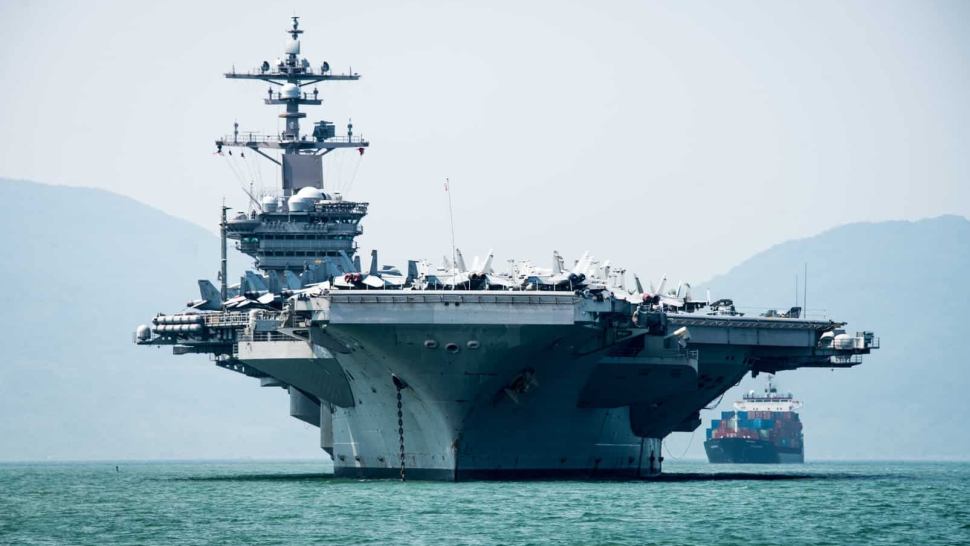
On March 5, the Nimitz-class aircraft carrier USS Carl Vinson (CVN-70) made a port call in Da Nang, Vietnam. Sailors from the Carl Vinson engaged in training alongside personnel from the Vietnamese Navy, as well as onshore cultural activities. That’s perfectly normal. What wasn’t normal was the prestige of the visitor and the destination—though US Navy ships have made port calls to Vietnam since relations were normalized in 2004, the Vinson’s visit marked the first time an American aircraft carrier has docked in Vietnam since the end of the war more than 40 years ago.
“We continue building on the robust partnership that we actually already have,” said Vice Admiral Phillip Sawyer, commander of the US 7th Fleet based in Yokosuka, Japan. “When we talk about what’s in the future, recognize that we have done quite a bit already: we have a continuing engagement with the people here, it’s called Pacific Partnership, that we’ll do again this year. So I look forward to talking with my Vietnamese counterparts to discuss what else we can do going into the future.”
The aircraft carrier’s port call has been planned since President Trump’s state visit to Vietnam last November, but why? One word: trade. Although Trump pulled the United States out of the controversial Trans-Pacific Partnership—but said last week he would reconsider if the U.S. got a “substantially better” deal—he has, by and large, continued the extensive Pacific engagement of previous administrations. That engagement includes strong diplomatic efforts on behalf of American businesses as well as a stepped-up military presence to reassure allies about North Korean missiles and Chinese encroachment on the South China Sea.
Asia-North America trade flows are shifting. The China of the 21st century is no longer the China of the 1980s, when the country’s newly minted membership in the World Trade Organization suddenly opened its dirt-cheap labor force to international capital. Chinese labor costs have risen and firms are looking further abroad to emerging markets for better margins—according to research by the McKinsey Global Institute, the average daily wage for a Vietnamese manufacturing worker is $10.60, while in China that number is now $34.40.
The Economist reported last week that China’s share of global and Asian exports is falling: this process began in 2016, when China’s share of global exports slipped from 13.9% to 13.5%. In 2017, it dropped below 13%. China’s share of Asian exports dropped 2.6% in the same period. The reasons for this are complex: China’s shrinking workforce and shift to a service economy play a role, as do its wealthier competitors like Taiwan, South Korea and Japan, who were better positioned to exploit productivity gains from automation and robotics.
Maersk Line’s North America Trade Report, released February 22, 2018, provides further insight into the United States’ Asian trade. Maersk said that China’s electronics imports to the US grew 2% in 2017; Vietnam’s grew 31.2% in the same year. China’s apparel imports to the US grew 3.1% in 2017; Vietnam’s grew 7.6%. While the absolute volumes coming from China still dwarf Vietnam, it’s clear where the momentum is (South Korea and Hong Kong also grew their US electronics exports faster than China at 3% and 2.3%, respectively).
According to McKinsey’s February 2018 research report “Industry 4.0: Reinvigorating ASEAN Manufacturing for the Future,” Vietnam is the top choice of Industry 4.0 technology suppliers and manufacturers. Industry 4.0 refers to how digitization has revolutionized traditional business models—one of McKinsey’s examples is that Rolls-Royce now sells its aircraft engines at a loss, but recoups the money and generates a profit from its data analytics and predictive maintenance services. While Vietnam’s worker productivity still lags China, accelerating investments from foreign high tech firms will start closing that gap in the near future. Vietnam’s 68th rank on the Ease of Doing Business Index is a full 10 places ahead of China’s.
The United States has also supported Vietnam’s defense of its territory in the petroleum-rich South China Sea, and a heavier naval presence in those waters is intended to deter China from restricting important trade flows. One third of the world’s shipping passes through the South China Sea—including 10M barrels of crude oil through the Malacca Straight every day—representing a value of $5T annually.
Part of the reason why the Carl Vinson paid a visit to Vietnam is regional security. The other part is shifting Asian trade flows that are shrinking China’s importance and elevating the stature of smaller, Southeast Asian economies.
Stay up-to-date with the latest commentary and insights on FreightTech and the impact to the markets by subscribing.
Brokerage Compliance Symposium
The day before F3. Every compliance issue you face - fraud exposure, carrier liability, FMCSA rules, cargo theft, insurance gaps - navigated by attorneys and operators defining best practices in a changing industry.
F3 Awards Dinner
The night before F3. FreightTech100 companies honored. FreightTech 25 and Shipper of Choice winners revealed live. Cocktail reception into dinner and live music - 300 industry leaders in one purpose-built room.
F3: Future of Freight Festival
Industry-defining keynotes, rapid-fire technology demos, and industry leaders networking in experiences across Chattanooga - plus the inaugural F3 Awards Dinner featuring the FreightTech and Shipper of Choice reveals.
The day before F3. Every compliance issue you face - fraud exposure, carrier liability, FMCSA rules, cargo theft, insurance gaps - navigated by attorneys and operators defining best practices in a changing industry.
The Signal at Chattanooga Choo Choo • Chattanooga, TN Register NowThe night before F3. FreightTech100 companies honored. FreightTech 25 and Shipper of Choice winners revealed live. Cocktail reception into dinner and live music - 300 industry leaders in one purpose-built room.
The Signal at Chattanooga Choo Choo • Chattanooga, TN Register NowIndustry-defining keynotes, rapid-fire technology demos, and industry leaders networking in experiences across Chattanooga - plus the inaugural F3 Awards Dinner featuring the FreightTech and Shipper of Choice reveals.
The Signal at Chattanooga Choo Choo • Chattanooga, TN Register Now