




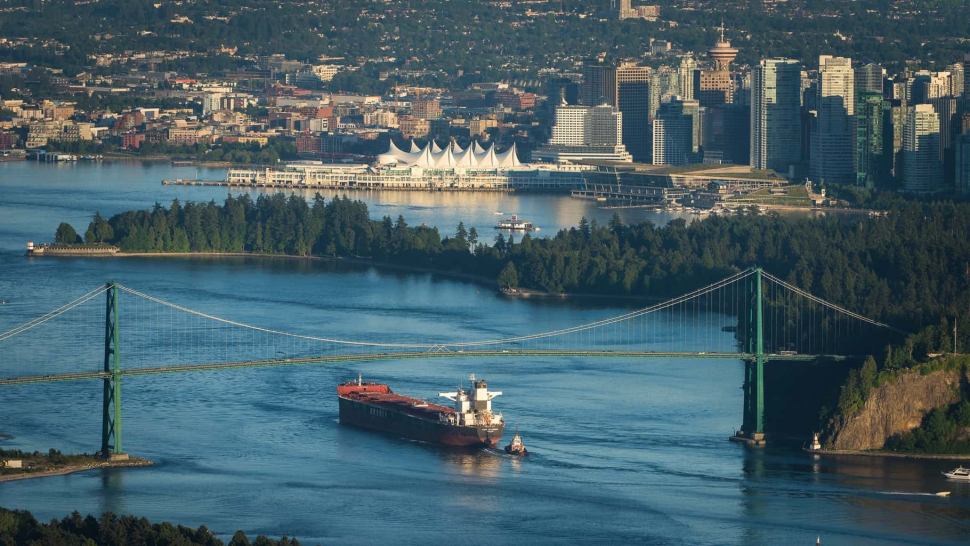
Bill C-48, the Oil Tanker Moratorium Act, was signed into law on June 21 after a contentious approval process in the Canadian Senate. It prohibits tankers transporting more than 12,500 metric tons of crude or persistent oils to or from ports and other facilities north of Vancouver Island to the Alaskan border.
It fulfills “a long-standing objective of protecting the pristine north coast of British Columbia” and ”conserves the unique ecological features of this region and responds to the wishes of coastal Indigenous communities,” Transport Minister Marc Garneau said in a statement.
The ban has few immediate implications, since the port of Port of Vancouver lies just to the south of the exclusion zone. But it precludes the development of other west coast ports, such as Prince Rupert, as oil export hubs for western Canada’s oil sands.
Jason Kenney, the premier of Alberta, vowed to make a legal challenge to the tanker ban, calling it a “prejudicial attack on Alberta.” He also said he would fight another bill, C-69, which passent the Senate on June 20. It would change the environmental assessment of large energy projects. Kenney and other critics argue that it would make it harder to build additional pipelines.
“The passage of these two bills not only undermines Canada’s economy, but also the Canadian federation,” Kenney said.
C-69 would not not affect the forthcoming expansion of the Trans Mountain pipeline (TMX), re-approved by Prime Minister Justin Trudeau’s cabinet on June 18. It will triple the amount of oil flowing from Alberta to British Columbia.
Asia as a destination for Canadian oil
The vast majority of Canada’s oil exports go to the United States. But Asia is emerging as a destination. China bought a record 6.56 million barrels of Canadian crude in 2018, though it has slowed significantly in 2018.
Opponents of the tanker ban have pointed to Prince Rupert as an ideal site for shipping oil to Asia. Vessels from Prince Rupert can reach Shanghai up to 36 hours earlier than from Vancouver.
Still, one of the barriers to getting more oil to Asia is the absence of refineries to process the bitumen produced in Canada’s oil sands.
The tanker ban will likely loom in October’s federal elections. A conservative victory would likely lead to its reversal, along with other Trudeau environmental legislation such as the carbon tax.
Brokerage Compliance Symposium
The day before F3. Every compliance issue you face - fraud exposure, carrier liability, FMCSA rules, cargo theft, insurance gaps - navigated by attorneys and operators defining best practices in a changing industry.
F3 Awards Dinner
The night before F3. FreightTech100 companies honored. FreightTech 25 and Shipper of Choice winners revealed live. Cocktail reception into dinner and live music - 300 industry leaders in one purpose-built room.
F3: Future of Freight Festival
Industry-defining keynotes, rapid-fire technology demos, and industry leaders networking in experiences across Chattanooga - plus the inaugural F3 Awards Dinner featuring the FreightTech and Shipper of Choice reveals.
The day before F3. Every compliance issue you face - fraud exposure, carrier liability, FMCSA rules, cargo theft, insurance gaps - navigated by attorneys and operators defining best practices in a changing industry.
The Signal at Chattanooga Choo Choo • Chattanooga, TN Register NowThe night before F3. FreightTech100 companies honored. FreightTech 25 and Shipper of Choice winners revealed live. Cocktail reception into dinner and live music - 300 industry leaders in one purpose-built room.
The Signal at Chattanooga Choo Choo • Chattanooga, TN Register NowIndustry-defining keynotes, rapid-fire technology demos, and industry leaders networking in experiences across Chattanooga - plus the inaugural F3 Awards Dinner featuring the FreightTech and Shipper of Choice reveals.
The Signal at Chattanooga Choo Choo • Chattanooga, TN Register Now