




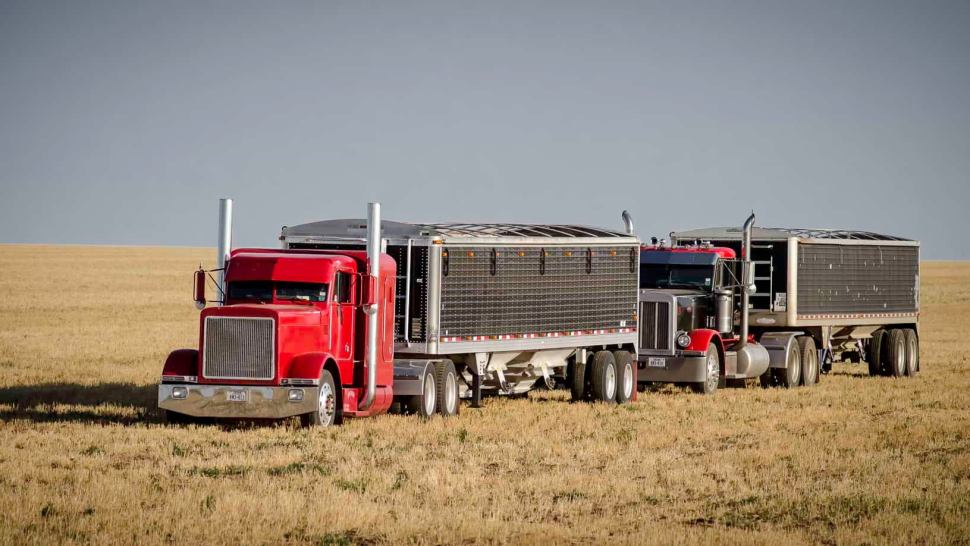
Recently, farmers in the Midwest have been catching a well-deserved break from devastating weather. The 12 months from May 1, 2018 through April 30 of this year was the wettest 12-month period in U.S. history. Major flooding began in mid-March, followed by wave after wave of severe thunderstorms and torrential rains over several months. Millions of acres of crops have drowned in several states, including Illinois, Iowa, Kansas, Missouri, Nebraska and Ohio, and it looks like 2019 could be the worst year for U.S. agriculture in modern American history. But business is picking up for some growers whose crops survived. Although late in the season, more and more loads have been shipped in recent weeks.
Crop Progress
Despite acceleration in recent weeks, planting progress for corn and soybeans has lagged behind the normal pace. At times it has lagged by large margins, according to the U.S. Department of Agriculture (USDA). For the week ending June 23, the percentage of soybeans planted nationally was 85 percent complete, compared to the five-year average of 97 percent. Just three weeks ago (around mid-June), soybean plantings were 40 percentage points behind the five-year average.
Additionally, only 96 percent of the corn acreage had been planted through June 23. This sounds high. But typically the amount of U.S. corn planted by the beginning of June is even closer to 100 percent. Similarly, the “percent emerged” data for corn and soybeans is well below historical figures. Last week, only 55 percent of soybeans and 79 percent of corn had emerged, compared to their respective five-year averages of 84 and 97 percent. Since late May, the share of corn and soybeans emerged has lagged all respective time periods in the previous 20 years. Later-emerging crops increase the risk of problems at harvest, which can impact yields and the derived demand for transportation.
Upcoming Grain Production
The USDA anticipates some effects on agricultural production in marketing year (MY) 2019/20 as a result of the flooding and planting issues, particularly for corn. According to the latest (June) World Agricultural Supply and Demand Estimates (WASDE) report, USDA forecasts U.S. farmers will produce 13.68 billion bushels (bbu) of corn in MY2019/20, down 1.35 bbu (9 percent) from its previous projection in May. If realized, this would be the lowest volume of corn production since MY2015/16, down 7 percent from the three-year average.
The report explains, “Unprecedented planting delays observed through early June are expected to prevent some plantings and reduce yield prospects.” This could translate into lower transportation demand for domestic and export-destined corn movements, as USDA projects use for feed and exports to decline 3 percent from last year and 6 percent from its previous forecast.
In the June WASDE, USDA indicated little change to soybean production, stating: “Although adverse weather has significantly slowed soybean planting progress this year, area and production forecasts are unchanged with several weeks remaining in the planting season.” The next WASDE will be released on July 11.

SONAR ticker: OTVI.OMA
Impact on Freight Movement
Charley Dehoney, CEO of Manning’s Truck Brokerage in Omaha, Nebraska, and a FreightWaves contributor, said thousands of acres of land in Nebraska and Iowa are still unplantable. The recent reopening of I-29 has highlighted the extent of the devastation in the Missouri Valley.
“Now you can drive right through the flooded areas and actually see how many farms are still underwater,” said Dehoney. “Many of the southern Nebraska and Missouri farms have swapped out their plans to grow corn this year in favor of beans, which have a shorter season. Still, many others can’t even plant beans because their farms are still underwater or haven’t been processed by FEMA [Federal Emergency Management Agency] yet.”
Dehoney said that the volume of unplanted seed corn returned to manufacturers this year has been extremely high. It started around early June, Dehoney added, picking up in the last two weeks as the corn planting season came to a close.
“The loads were originating from farms throughout the Corn Belt and go back to warehouses to be resold or unfortunately to landfills if the seed is no longer plantable due to exposure to water, sun, etc.” Dehoney explained. “This has been soaking up trucking capacity and increasing rates in the truckload market.”
However, not all fields were washed away in the floods and some farmers finally played catch up. Because of its location in the nation’s heartland, much of the freight shipped from Omaha in any given year is typically agricultural.The SONAR chart above shows an average month-over-month increase of nearly 19 percent in outbound volume (OTVI.OMA) from the Omaha market, from 61.92 in May to 73.48 in June. This index value move is in proportion to the total observable outbound tender volume (the amount of loads leaving the market). The June spike represents the late push to ship harvested crops that survived the flooding, which delayed planting. Unplanted seed corn that was returned to warehouses or hauled to landfills may have also contributed to the surge.
Additionally, volumes for emergency soybean seed deliveries late in this season have been very high as farmers rush to plant in newly dried ground before missing their window of opportunity. Dehoney said that, overall, optimism is growing as more and more farmers sow their seeds, whatever type they may be. The recent hotter weather is helping dry the fields, and farmers are all back to work in some capacity.
Brokerage Compliance Symposium
The day before F3. Every compliance issue you face - fraud exposure, carrier liability, FMCSA rules, cargo theft, insurance gaps - navigated by attorneys and operators defining best practices in a changing industry.
F3 Awards Dinner
The night before F3. FreightTech100 companies honored. FreightTech 25 and Shipper of Choice winners revealed live. Cocktail reception into dinner and live music - 300 industry leaders in one purpose-built room.
F3: Future of Freight Festival
Industry-defining keynotes, rapid-fire technology demos, and industry leaders networking in experiences across Chattanooga - plus the inaugural F3 Awards Dinner featuring the FreightTech and Shipper of Choice reveals.
The day before F3. Every compliance issue you face - fraud exposure, carrier liability, FMCSA rules, cargo theft, insurance gaps - navigated by attorneys and operators defining best practices in a changing industry.
The Signal at Chattanooga Choo Choo • Chattanooga, TN Register NowThe night before F3. FreightTech100 companies honored. FreightTech 25 and Shipper of Choice winners revealed live. Cocktail reception into dinner and live music - 300 industry leaders in one purpose-built room.
The Signal at Chattanooga Choo Choo • Chattanooga, TN Register NowIndustry-defining keynotes, rapid-fire technology demos, and industry leaders networking in experiences across Chattanooga - plus the inaugural F3 Awards Dinner featuring the FreightTech and Shipper of Choice reveals.
The Signal at Chattanooga Choo Choo • Chattanooga, TN Register Now