




By Eric Johnson
The ocean freight game is often wholly dependent on leverage and balance.
Who has the leverage and how balanced is the relationship between shipper and carrier ' those themes are often dissected.
But another component of the equation is the leverage and balance between large import shippers in North America and Europe, and smaller export shippers in Asia. These two sets are often counterparts, but hardly ever equal.
It's a topic that largely flies under the radar in countries that primarily import. That's because the large importers who dominate the ocean freight market likely aren't aware of what confronts the export shippers on the other end of their supply chain.
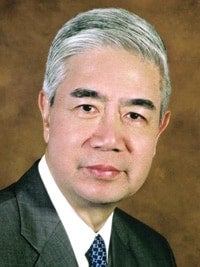
John Lu, chairman of the Asian Shippers' Council, said it is Asia's small export shippers that are bearing an unfair burden because of a lack of communication between the import shippers on one end and export shippers on the other.
Lu contends that because large importers in the West negotiate ocean freight contracts on a 'free on board' basis, exporters are left out of the discussion, leaving liner carriers free to assess export shippers surcharges at origin, which mount quickly.
Even amongst the world's largest gathering of shipper councils, the topic is secondary. At the most recent gathering of the Global Shippers Forum, held in London in mid-September, the topic of better communication between import and export shippers was discussed, but only after more pressing issues like the continued fight against carrier conferences.
That the GSF's declaration after its meeting contained not a word about improved inter-shipper communication is telling.
But Lu said everything is linked. The Asian Shippers' Council is fighting what it calls shipping cartels not just to break up liner carriers' rights to set rates, but also their ability to charge virtually unlimited accessorial fees in areas where regulation is light, like in Asia.
Likewise, he said importers must realize the costs exporters bear eventually will be passed along to them. So he presses the issue behind the scenes, even as other topics, like the Rotterdam Rules and anti-monopoly developments in China and India, get more public attention.
'There is no solution until there is better coordination between export and import shippers,' Lu told American Shipper in early October. 'That has been my dream for some time. Every meeting I bring this issue up for European or American buyers to understand.'
The problem is well understood at the GSF level, he said. The GSF brings together the shippers' councils in Europe, Japan, Asia, Australia and Canada, as well as the National Industrial Transportation League, which represents U.S. shippers.
'At the leadership level, between myself and (NIT League Executive Vice President Peter Gatti) and other leaders, we understand,' he said. 'It's a simple cost calculation. Importers are eventually paying for it without knowing, because Asian shippers have to factor this into their prices. (Export shippers in Asia) suffer like hell, but then they have to pay these costs' so they get passed on.
The problem can be distilled like this: Large-volume import shippers in North America and Europe have leverage in ocean freight rate negotiations with their carriers. This enables them to negotiate attractive rates and terms for ocean carriage, usually on an FOB basis, meaning the importer is paying the freight rate.
That negotiation does not include the export shipper, mainly because the large volume importer is working with many export shippers. Carriers, stung by the relatively low base rate negotiated down by their volume customers, look to recover revenue wherever they can find it.
It is here, Lu contends, that the Asian export shipper suffers.
| 'There is no solution until there is better coordination between export and import shippers. Every meeting I bring this issue up for European or American buyers to understand.' John Lu chairman, Asian Shippers' Council | |
In a scathing review of surcharges that Asian shippers face, the ASC said in August that shippers in Sri Lanka can face a charge of $25 per bill of lading (and $10 per amendment or correction on a bill of lading).
'Even the bill of lading, which is the receipt for goods given by the carrier when cargo is handed over to the carrier or its agent, is also charged as a separate payment,' the ASC said at the time. 'This is unimaginable and unacceptable for shippers. What other trade could you find where a receipt is issued and a separate fee for the receipt is charged?'
The ASC, at its annual meeting in Colombo in August, estimated that Chinese shippers paid $7 billion in surcharges in 2008. And China is one country where anti-competition laws have been revised to try to help shippers.
A law passed last fall in China ruled, for example, that terminal handling charges are to be considered part of the base rate and should not be separated out and assessed to export shippers.
'This finding is very important,' Lu said. 'It's a principle finding. The problem is the implementation. Immunity is allowed under (the U.S. Ocean Shipping Reform Act). Even though the THC is wrong, there is no legal mechanism to find that it is wrong, so the cartels continue to do that. China said last year that THC should be part and parcel of the rate, cannot be separated or double-charged. Why should Asian shippers pay for something that is part of the rate?'
What's more, the export shipper is in no position to fight the charges from carriers. Particularly in the current slow-demand period, export shippers are lining up to do business with importers.
'How can the small guy attack the shipping line and say 'we won't pay the THC?' ' Lu said. 'They will say, 'O.K., we won't pick up your cargo.' If the small shippers don't pay, they breach their contract. They can't afford not to pay. THC is a small amount compared to the total contract, but it makes the small shipper suffer. It has to be the big buyer who understands this. There is no such thing as negotiation for the small shippers in Asia.'
Again, Lu has no qualms at the leadership level. In fact, it was Gatti, of the NIT League, who alerted American Shipper of the discussion on better communication between shippers.
'We were looking not only at regulatory reform, but also at individual shippers looking at mechanisms they can utilize with overseas partners who actually leverage or negotiate the rates,' Gatti told American Shipper after the London GSF meeting. 'There's a recognition that government won't be able to do that because business is entered into by individual shippers. There needs to be more awareness (from importers) of outgoing costs for exporters.'
 |
| van der Jagt |
'It's a very difficult one, the coordination between buyer and seller, and to be honest, I don't have the answer to this,' van der Jagt said to American Shipper in an e-mail. 'We are looking at the incoterms at the moment to see how things can be done in a more balanced way, in particular on the THCs. But clearly Asian shippers are now suffering from an increase of surcharges which could be seen as a result of the removal of conferences in Europe.'
The fact that carriers have sought ways to increase revenue as their ability to collectively set rates was abolished is no surprise to Lu. Two years ago at the GSF meeting in Singapore ' and one year after the European Commission approved an end to rate-setting conferences ' he predicted the battleground would shift to Asia.
Carriers 'can't take advantage of the big buyers, so they take advantage of small shippers,' he said. 'They aren't even part of the discussion. They're not involved in these transportation agreements. Liners don't get the advantage of freight rates from importers, so they bully export shippers on surcharges with no discussion. Surcharges go up and never go down.'
Lu recognizes his 'dream' of better inclusion of export shippers is still a long way off. As he said, most companies in Asia are small- to medium-sized enterprises, while import shippers are largely big buying houses.
'The buyer and seller are not equal parties,' he said. 'Big buyers have muscle, and can negotiate FOB prices. They can negotiate on product because they have many choices.'
Other Topics. There were, of course, more attention-grabbing topics of conversation at the GSF in London, which in a way, came full circle in September. It had been three years since the GSF was officially formed in Antwerp, replacing the former Tripartite Shippers Group.
Discussion this year focused on the effects of Europe's ban on collective rate setting and how similar efforts were proceeding in Asia. There was also a joint message from the GSF that the liner carrier industry's struggles should not be pinned on the conference ban on trades to and from Europe.
'The members of GSF determined that the hardships being realized in recent months and weeks by some within the liner shipping industry were a direct consequence of the economic conditions and could not be attributed to, nor were they exacerbated by, the reform of EU competition law and the consequent outlawing of liner shipping conference cartels on trades to and from Europe,' the GSF said in a joint declaration in mid-September.
'It was widely accepted by GSF members that such liberalization brought about through regulatory reform would enable the liner shipping sector to achieve efficiencies and operating practices which will achieve viable and competitive options for its customers.'
| Peter Gatti executive vice president, National Industrial Transportation League |  |
| 'We were looking not only at regulatory reform, but also at individual shippers looking at mechanisms they can utilize with overseas partners who actually leverage or negotiate the rates.' | |
Gatti reiterated this stance to American Shipper.
'Non-rate making agreements do hold,' he explained. 'There are benefits to being able to rationalize services and retain efficiency enhancing mechanisms. You have to separate that from saying all collaboration between carriers is evil. But carriers need to accept their business is no different from their customers' business. They cannot and would not find like industries able to jointly decide what their prices should be.'
The GSF also said the economic downturn has taken its toll on shippers, and it sounded a warning about protectionism creeping into political agendas as a result of financial hardships.
'The GSF is increasingly concerned that the current economic climate and financial restraints may encourage political decisions which could result in unsustainable solutions to these global issues and reverse the tide of liberalization and competition in trade and international transport,' the GSF declaration said. 'Shippers could be impacted hard by such consequences. The voice of shippers needed to be heard in these debates and have far greater influence with the international, governmental bodies and institutions that determine global policy in these areas.'
As for the Rotterdam Rules, a new global cargo liability convention developed by the United Nations Commission on International Trade Law (UNCITRAL), discussion at the GSF was limited. A well-publicized difference of opinion on the rules between the NIT League (for the rules) and European Shippers' Council (against them) led to an 'agree to disagree' mentality.
Lu said the ASC is studying the rules to determine whether or not to support them. No Asian nations have so far become signatories to the rules, while 15 nations have joined the United States in supporting them.
The rules only come into effect when adopted by the governments of 20 nations, and then only in those countries.
Brokerage Compliance Symposium
The day before F3. Every compliance issue you face - fraud exposure, carrier liability, FMCSA rules, cargo theft, insurance gaps - navigated by attorneys and operators defining best practices in a changing industry.
F3 Awards Dinner
The night before F3. FreightTech100 companies honored. FreightTech 25 and Shipper of Choice winners revealed live. Cocktail reception into dinner and live music - 300 industry leaders in one purpose-built room.
F3: Future of Freight Festival
Industry-defining keynotes, rapid-fire technology demos, and industry leaders networking in experiences across Chattanooga - plus the inaugural F3 Awards Dinner featuring the FreightTech and Shipper of Choice reveals.
The day before F3. Every compliance issue you face - fraud exposure, carrier liability, FMCSA rules, cargo theft, insurance gaps - navigated by attorneys and operators defining best practices in a changing industry.
The Signal at Chattanooga Choo Choo • Chattanooga, TN Register NowThe night before F3. FreightTech100 companies honored. FreightTech 25 and Shipper of Choice winners revealed live. Cocktail reception into dinner and live music - 300 industry leaders in one purpose-built room.
The Signal at Chattanooga Choo Choo • Chattanooga, TN Register NowIndustry-defining keynotes, rapid-fire technology demos, and industry leaders networking in experiences across Chattanooga - plus the inaugural F3 Awards Dinner featuring the FreightTech and Shipper of Choice reveals.
The Signal at Chattanooga Choo Choo • Chattanooga, TN Register Now