




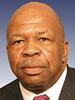
| Cummings |
'Since the 1980s, the U.S.-flagged fleet has been carrying what can only be described as an increasingly miniscule portion of our foreign trade, and this fact has serious implications both for our merchant marine and indeed for our nation's economy,' the Maryland democrat said.
Referencing President Obama's call to double exports in the next five years, Cummings said, 'We should also work to formulate a meaningful U.S. maritime policy that will revitalize our merchant marine and expand the percent of U.S. trade carried in U.S. ships.'
 |
| Matsuda |
The decline has reduced shipboard jobs for Americans and the source of personnel to meet military sealift needs, he added.
Matsuda said the country relies primarily on two programs to motivate ship owners to register ships in the United States and employ U.S. seafarers:
' Cargo preference laws that he said generate about 16 million revenue tons and $1.3 billion of ocean freight annually — with military cargo represent about 64 percent, food aid 29 percent, and other programs 7 percent of the spend.
' The Military Security Program, which provides an annual stipend to partially offset the higher cost of operating a U.S.-flag ship.
A panel of U.S.-flag shipping executives and labor leaders echoed the call by Cummings for a stronger U.S. merchant marine in oral and written testimony.
'U.S.-flag carriers, in particular 'Section 2' companies, and their U.S. mariners and other employees, must be provided a meaningful opportunity to participate in the National Export Initiative,' said Michael R. Dumas, vice president and chief financial officer for Intermarine.
He called for Transportation Department representatives to be added to the Export Promotion Cabinet Obama created to work on the export initiative. 'We all want to continue to create jobs, and the jobs of U.S. merchant mariners are no less sacred than those of U.S. factory workers,' he said.
There was widespread agreement among those testifying of the importance of the Maritime Security Program.
 |
| Shapiro |
But Dumas, Shapiro, and Niels M. Johnsen, chairman of Central Gulf Lines and Waterman Steamship, all said that 'Section 2' U.S. shipping companies that are owned by American citizens should be given preference under the program.
A number of foreign-owned companies, including Maersk Line Ltd., whose Chief Executive Officer John Reinhart also testified at the hearing, participate in the MSP program. While it is a subsidiary of a Danish company, Maersk Line Ltd. is incorporated in the United States, and its board of directors and senior management are composed entirely of U.S. citizens. It also operates and manages ships for the Military Sealift Command because it holds a special security agreement with the Defense Department.
Shapiro complained that MarAd, 'through a series of rulings in the late 1990s, diluted the U.S. citizenship content Congress expected in MSP. Today all but 11 MSP agreements are effectively controlled by foreign citizens. MarAd has been too easily persuaded that vessel documentation trumps all, and has unfortunately lost sight of the key concept of U.S. citizen control and, most particularly, of independent control.'
He urged Congress to 'reserve a majority of the program to U.S. citizens.'
But Reinhardt said Maersk has made a heavy investment in its U.S. flag fleet — $1.6 billion in U.S.-flag tonnage in the past decade including $400 million in 2009 and $320 million in chartered assets over the past two years.
Reinhardt also urged the committee to 'remember that it is not just ocean transportation that both government and commercial shippers demand. Customers want to book and move cargo door-to-door seamlessly from any point in the world to any other point in the world.
'Expertise in supply chain management and global logistics that are a part of our DNA and accessible through our sister companies such as Maersk Line, Maersk Tankers, DAMCO and Hoegh Autoliners,' he said.
Maersk Line delivers military cargo to Afghanistan overland through Latvia, Russia, Uzbekistan as well as Georgia, Armenia, and Azerbaijan in addition to the primary gateway of Pakistan, Reinhardt said.
Shapiro and others called for continued support of cargo preference laws.
'Liberty Maritime, along with many other interests comprising the coalition USA Maritime has been most concerned with efforts to convert the U.S. government's highly successful P.L. 480 international food aid program into a cash giveaway program referred to as local and regional purchase.'
Aid groups like CARE have supported making funding available to purchase food locally or regionally in developing countries to reduce costs, and what they say are market distortions brought about by tying food aid to domestic procurement programs in donor countries. They also say such local and regional purchase programs increase procurement flexibility and provide economic opportunities for small farmers in countries where purchases are made.
Last year the Government Accountability Office said local and regional purchase 'offers donors a tool to reduce food aid costs and delivery time, but cautioned multiple challenges to ensuring cost-savings and timely delivery exist.'
But Shapiro complained critics of in-kind food aid 'create the misleading impression that ocean transportation is an enormous burden,' and said it accounts for only 14.8 percent of the cost of P.L. 480 Title II program; 10.6 percent when MarAd reimbursement of certain costs are taken into account.
Dumas called for support of the U.S. Export-Import Bank, noting his firm is a carrier of so-called 'Public Resolution 17' cargo, which provides for exports funded by Ex-Im loans to be carried in U.S.-flag vessels unless MarAd certifies such vessels are not available.
A similar call for honoring preference laws was made by Donald Keefe of the Marine Engineer's Beneficial Association, who said the Department of Energy has recently concluded that cargo preference rules do not apply to its loan guarantee program under Title 17 of the Energy Policy Act of 2005.
Keefe also called for U.S. seamen to be treated as other citizens working overseas, and that they be able to exclude up to $80,000 in income from federal tax. ' Chris Dupin
Brokerage Compliance Symposium
The day before F3. Every compliance issue you face - fraud exposure, carrier liability, FMCSA rules, cargo theft, insurance gaps - navigated by attorneys and operators defining best practices in a changing industry.
F3 Awards Dinner
The night before F3. FreightTech100 companies honored. FreightTech 25 and Shipper of Choice winners revealed live. Cocktail reception into dinner and live music - 300 industry leaders in one purpose-built room.
F3: Future of Freight Festival
Industry-defining keynotes, rapid-fire technology demos, and industry leaders networking in experiences across Chattanooga - plus the inaugural F3 Awards Dinner featuring the FreightTech and Shipper of Choice reveals.
The day before F3. Every compliance issue you face - fraud exposure, carrier liability, FMCSA rules, cargo theft, insurance gaps - navigated by attorneys and operators defining best practices in a changing industry.
The Signal at Chattanooga Choo Choo • Chattanooga, TN Register NowThe night before F3. FreightTech100 companies honored. FreightTech 25 and Shipper of Choice winners revealed live. Cocktail reception into dinner and live music - 300 industry leaders in one purpose-built room.
The Signal at Chattanooga Choo Choo • Chattanooga, TN Register NowIndustry-defining keynotes, rapid-fire technology demos, and industry leaders networking in experiences across Chattanooga - plus the inaugural F3 Awards Dinner featuring the FreightTech and Shipper of Choice reveals.
The Signal at Chattanooga Choo Choo • Chattanooga, TN Register Now