




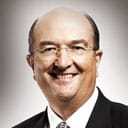
By Eric Johnson
It’s hard to precisely quantify the impact that NOL President and Chief Executive Officer Ron Widdows has had on the industry he’s served for most of the past four decades.
There are 1,018 search results with his name in American Shipper’s online archives. And he’s one of only two liner executives to grace the magazine’s cover in the past decade.
But numbers like that do little to explain the significance of Widdows, who is due to retire from the top post at the Singapore-based global liner shipping and logistics company at year’s end. For the past decade in particular, Widdows has been a calm, yet driving force behind many of the liner carrier industry’s most crucial initiatives.
It can be said that Widdows is the most prominent U.S. voice in liner shipping today (despite being based in Singapore).
 |
| Koch |
Widdows was reluctant to be interviewed for this feature (perhaps wary of it being seen as his post-mortem), and NOL stressed that Widdows will remain as a senior advisor to the company after his retirement. So it’s not as if he’ll be disappearing from the box trade on Dec. 31. But Widdows’ pending departure as CEO is only the most prominent aspect of a changing of the guard underway at NOL, parent company of liner carrier APL.
Within a six-week period in spring, NOL announced that Widdows was retiring, followed by news that longtime U.S. executive Bob Sappio was leaving Aug. 1, and APL president Eng Aik Meng was leaving at the end of August.
The departures are coincidental, the company said. Sappio, currently head of Pan American trades for APL, wanted to remain in the San Francisco Bay Area for family reasons, a task made hard by APL’s decision to relocate its Americas headquarters from Oakland to Phoenix in 2009. Eng is leaving the liner industry, APL said, after rejoining the company in 2008, as a replacement for Widdows, who moved from head of APL to lead the parent company.
Eng is being replaced by 10-year APL veteran Ken Glenn, while Widdows will be replaced by Ng Yat Chung, a senior executive with Temasek Holdings, the Singapore state-owned sovereign wealth fund that owns a majority share of NOL.The executive realignment comes at a time when APL’s financial performance has been mediocre relative to its competitors. It secured sizable 2010 profits, but those profits were smaller than five lines with smaller fleets, according to the most recent Who’s Making Money report (‘The big rebound,’ July American Shipper, pages 28-36 or online at www.AmericanShipper.com/links).
Over the course of 2009 and 2010, APL’s profit performance ranked 10th out of the 15 publicly traded lines analyzed in the report. However, over the last five years, APL has turned in the third-best performance among those same lines.
NOL points out that ‘during his tenure as CEO (2003 through 2007), APL recorded its best ever financial results and cemented its position among the leading companies in the industry.’ That came when Widdows strictly headed the company’s liner operations.
Financial results aside, it’s clear Widdows has carved out a respected place in the global goods movement arena.
‘Clearly most U.S. companies view NOL-APL as a leader in this industry, and that is due in no small part to the contributions and results he made possible,’ said Peter Gatti, executive vice president of the National Industrial Transportation League. ‘I think it is also fair to say that there have been instances where his views and positions were not aligned with shippers, but the fact is these views were always presented in a consistent light.’
Widdows’ influence at APL, which he joined in 1980, has spanned the company’s transition from an innovative laboratory for U.S. transportation ideas and leaders to its present place as a top Asian liner carrier and logistics power. NOL acquired APL in 1997, but kept the APL brand alive.
Credited with driving APL’s modern business model, NOL said Widdows also facilitated development of ‘multiple large ‘gateway’ terminal facilities with integrated ‘on-dock rail’ on the U.S. West Coast ‘ a key step in the advance of multimodalism.’
Gatti added that ‘keeping the APL brand in place after its acquisition by NOL must be recognized among his many accomplishments.’ He said Widdows has been ‘a forceful and persuasive advocate for investment in transportation infrastructure’ while ‘his leadership at the World Shipping Council and other organizations has served the supplier community well and has helped enhance the appreciation that liner transport contributes to national and international economies.’
Among Widdows’ more recent contributions has been urging better transparency in costs among transpacific liner carriers and shippers via TSA, the discussion agreement that governs head-haul trade from Asia to North America. When TSA shifted gears in 2008, moving to a regime where its member lines provided more direct leadership, Widdows was tabbed as chairman.
In that role, he pushed for shipper advisory councils so that TSA lines better understood shipper concerns.
‘As global trade patterns have shifted, supply chains have grown in complexity and the recession has severely tested carrier-shipper relationships, Ron has tirelessly pressed for greater carrier-shipper transparency, a more integrated transportation infrastructure and a more collaborative contracting process,’ said Brian Conrad, TSA’s executive administrator.
 |
| Conrad |
Praise rolled in for Widdows’ ability to calmly explain the nuts and bolts of container shipping, as well as its significance, to outside audiences.
‘For the industry writ larger, Ron has seen value in engaging government, customers and media and he does it well,’ said the WSC’s Koch. ‘Doing factual assessments, he’s excellent at it. He loves the industry and knows the industry and wants everyone else to love it and know it. He loves rolling up his sleeves and explaining how and why it works.’
Koch added that Widdows has been eager to tackle the jobs that others don’t.
‘He’s always willing and energetic to take on jobs that most others don’t relish,’ he said. ‘He was willing to do that and spent a lot of time and was good at it.’
In the mid-2000s, Widdows went on a barnstorming tour of sorts to get U.S. stakeholders to consider the importance of maintaining and expanding goods movement infrastructure.
‘Ron’s purpose was to help make sure that major customers and the U.S. government understood the needs and consequences for modern efficient infrastructure,’ Koch said. ‘He knew he wasn’t the guy to pull the trigger. He was trying to help them understand what was happening with trade flows and corridors.’
Conrad agreed.
‘Where needed, Ron has forcefully represented agreement and broader carrier interests before U.S. and Asian government bodies, always reinforcing the connections between a viable, competitive liner industry; an efficient port, rail and highway infrastructure; and robust global trade supporting jobs and economic growth,’ he said.
While container movement has moved onto the radars of U.S. legislators in the last few years, there’s been little measurable success in developing a cohesive, coordinated plan to develop U.S. cargo infrastructure.
‘He probably did as much as he could,’ Koch said. ‘There was nothing that Ron could do to significantly change things. Funding for infrastructure is part of any regime, and disagreement comes on how much money to spend. Everyone has different priorities.’
Widdows hasn’t shied away from commenting on key dynamics affecting the industry. He’s decried the recent use of container rate derivatives and admitted in early 2009 that carriers were in a fragile state ahead of transpacific contract negotiations. Koch credited Widdows with foretelling the shortage of containers that afflicted the industry in early 2010.
In an April 2005 cover story for American Shipper, he urged shippers to consider shifting their delivery patterns to earlier in the year to avoid peak season congestion ‘ coming off a year when crippling port bottlenecks were strangling supply chains.
Yet Widdows’ impending departure ‘ at least from the bully pulpit of one of the world’s leading carriers ‘ also marks a period in which many top U.S. liner executives have moved out of the spotlight.
In the last couple years, fellow influential U.S. voices like NYK Line’s Peter Keller and Hanjin’s Bill Rooney have similarly left to take up consultancy roles in the goods movement industry. Both Rooney and Keller were products of Sea-Land, which together with APL (known then as American President Line) incubated a generation of leaders that drove U.S. innovation in container shipping.
In the late 1990s, both lines were acquired by foreign competitors, and that’s left a dearth of new U.S.-based voices over the last decade. The powerful voices in the industry are now heard from places like Copenhagen, Marseilles, Shanghai, Singapore and Hong Kong.
Gatti said that vacuum of new emerging U.S. leadership could be problematic for U.S. shippers. He said Widdows was ‘absolutely in the top tier of the most influential’ American voices in world shipping.
‘Clearly it is difficult to replace someone so uniquely talented and skilled as Ron Widdows,’ he said. ‘Generally speaking, there is always a concern that a foreign national based overseas will not completely recognize, appreciate and understand the needs of its U.S.-based customers.’
Whether he agreed with U.S. shippers, Widdows always attempted to understand their needs, Gatti said.
Keller and Rooney remain closely engaged in the industry, as likely will Widdows, but none will be helming the U.S. or global operations of one of the world’s top lines after this year. Dec. 31 may not just be the date that Widdows hangs up his boots as NOL, it may be the last time we see a major U.S. influence at any of the world’s top container lines anytime soon.
Brokerage Compliance Symposium
The day before F3. Every compliance issue you face - fraud exposure, carrier liability, FMCSA rules, cargo theft, insurance gaps - navigated by attorneys and operators defining best practices in a changing industry.
F3 Awards Dinner
The night before F3. FreightTech100 companies honored. FreightTech 25 and Shipper of Choice winners revealed live. Cocktail reception into dinner and live music - 300 industry leaders in one purpose-built room.
F3: Future of Freight Festival
Industry-defining keynotes, rapid-fire technology demos, and industry leaders networking in experiences across Chattanooga - plus the inaugural F3 Awards Dinner featuring the FreightTech and Shipper of Choice reveals.
The day before F3. Every compliance issue you face - fraud exposure, carrier liability, FMCSA rules, cargo theft, insurance gaps - navigated by attorneys and operators defining best practices in a changing industry.
The Signal at Chattanooga Choo Choo • Chattanooga, TN Register NowThe night before F3. FreightTech100 companies honored. FreightTech 25 and Shipper of Choice winners revealed live. Cocktail reception into dinner and live music - 300 industry leaders in one purpose-built room.
The Signal at Chattanooga Choo Choo • Chattanooga, TN Register NowIndustry-defining keynotes, rapid-fire technology demos, and industry leaders networking in experiences across Chattanooga - plus the inaugural F3 Awards Dinner featuring the FreightTech and Shipper of Choice reveals.
The Signal at Chattanooga Choo Choo • Chattanooga, TN Register Now