




The much-acclaimed “Amazon Effect” combined with the rise of the on-demand gig economy is disrupting the way traditional last-mile delivery systems were visualized. Consumers now anticipate delivery services to be much faster than what was the norm a decade ago, and expect to gain more visibility into the movement of their goods across the value chain.
Predictably, this has caused an increase in traffic on the streets, especially in urban settings where traffic bottlenecks are a frequent occurrence. An amalgamation of consumer expectations and taut logistics processes push civil authorities to consider an overhaul of existing transport systems, by rethinking the way last-mile logistics services are managed.
“Consumption trends have multiplied point-of-sale through ecommerce. Every time you order something at home, it becomes a shop where the product arrives and the trade ends. This means that interactions with customers need to be more specific and granular in order to engage with them,” said Javier Esquillor, co-founder of capillar.it, a smart city logistics startup.
Esquillor explained that urban transport infrastructure needs to be restructured to have vehicles that are optimized to suit last-mile delivery, which he called “capillary vehicles” – the ones that are versatile enough to move through restricted traffic conditions while creating minimal impact.
“The more congestion there is on the streets, the more advantageous it is for capillary vehicles. With the proliferation of capillary vehicles, there will be lower emissions on the streets, which will give these vehicles an advantage over conventional vehicles. For instance, a human-powered cycle will pollute less than an electric cargo bike, which in turn is cleaner than an electric van,” said Esquillor.
Breaking down the building blocks of a last-mile logistics delivery process will give cities a clearer perspective on what needs to be tweaked for a sustainable transport system of the future. Esquillor contended that the key indicator to make a choice between different low-to-zero emissions vehicles is the delivery efficiency per unit in terms of traffic conditions and business performance – for both logistics services and original sellers.
“If we put into the mix, all these factors including consumption patterns and traffic conditions linked to congestion and the environment, low-to-zero emissions delivery trend will only keep growing,” said Esquillor.
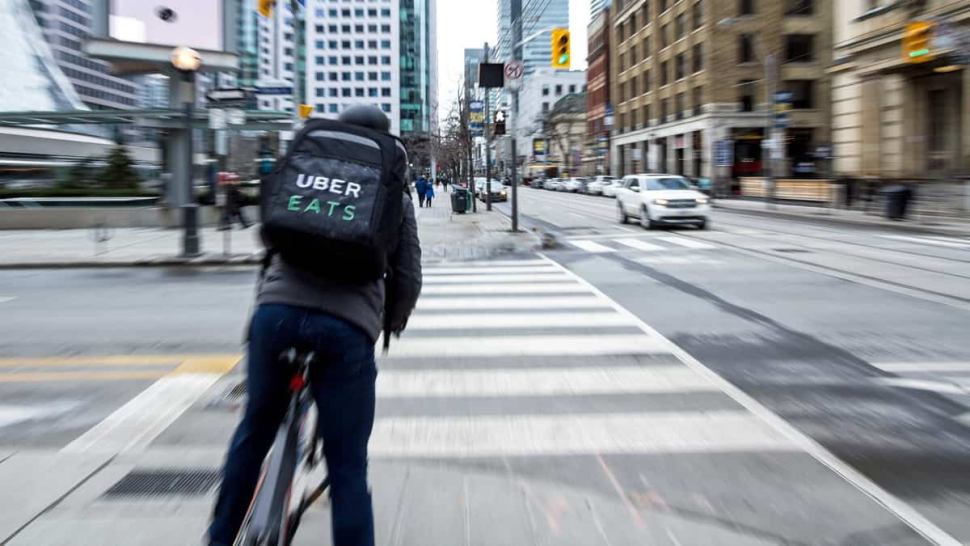
It is here that cargo bikes – be it human-powered or electric – can actually make a difference, as they can bypass lanes and avoid congestion. Two-wheeled vehicles can weave through traffic without disturbing the environment while making deliveries faster, sustainable and safer.
“The combination of speed, size and zero emissions allows cycles to coexist in transit spaces where other vehicles would not be allowed. That apart, there is a second key factor that makes a difference via a very particular mix of body health, mental health and vocation. This factor is what keeps people working in cycle-logistics – as they are more agile and perform better in the challenging scenarios of today’s urban delivery. They are also aware that each mile makes a difference for better living conditions, not only for them but for many,” said Esquillor.
However, Esquillor pointed out that the push is not necessarily targeted at moving freight via cargo bikes, but to make sure delivery methods look to improve utilization rates, and not be a deadweight to urban areas or assets. Cities, for instance, are already dedicating large swathes of their real estate to urban transit and logistics, which if optimized and used efficiently, can bring out tremendous change.
“The U.K. Department of Transport (DfT) has reported that ‘empty running’ increased from 27 percent to 30 percent between 2006 and 2016 in the U.K., with capacity utilization being only 68 percent. This translates to a meager overall freight efficiency of just 47.6 percent,” said Esquillor. “In the case of trucks, considering that vehicles are on the road for barely one-third of their time, with the remaining two-thirds being fallow periods including driver resting times and weekends, it’s asset efficiency translates to about 15-16 percent.”
Collaboration between conventional logistics business models and the contemporary ___ (what?) is critical to plug the utilization holes. Digitization of processes will lead to a scenario where algorithms can be applied through freight-collaboration platforms that can deliver cost efficiency savings.
“Collaboration is the main driver of the freight industry as it can reduce the number of heavy goods vehicles on the road and the frequency of warehouse hubs, and thereby decrease carbon emissions and deadhead miles,” said Esquillor. “The failures and setbacks of certain initiatives in the past should be taken into account and can be used to drive logistics players into updating their business models whilst maintaining control of their value propositions.”
Brokerage Compliance Symposium
The day before F3. Every compliance issue you face - fraud exposure, carrier liability, FMCSA rules, cargo theft, insurance gaps - navigated by attorneys and operators defining best practices in a changing industry.
F3 Awards Dinner
The night before F3. FreightTech100 companies honored. FreightTech 25 and Shipper of Choice winners revealed live. Cocktail reception into dinner and live music - 300 industry leaders in one purpose-built room.
F3: Future of Freight Festival
Industry-defining keynotes, rapid-fire technology demos, and industry leaders networking in experiences across Chattanooga - plus the inaugural F3 Awards Dinner featuring the FreightTech and Shipper of Choice reveals.
The day before F3. Every compliance issue you face - fraud exposure, carrier liability, FMCSA rules, cargo theft, insurance gaps - navigated by attorneys and operators defining best practices in a changing industry.
The Signal at Chattanooga Choo Choo • Chattanooga, TN Register NowThe night before F3. FreightTech100 companies honored. FreightTech 25 and Shipper of Choice winners revealed live. Cocktail reception into dinner and live music - 300 industry leaders in one purpose-built room.
The Signal at Chattanooga Choo Choo • Chattanooga, TN Register NowIndustry-defining keynotes, rapid-fire technology demos, and industry leaders networking in experiences across Chattanooga - plus the inaugural F3 Awards Dinner featuring the FreightTech and Shipper of Choice reveals.
The Signal at Chattanooga Choo Choo • Chattanooga, TN Register Now