
Vast Russian wheat inventories and a weak ruble have conspired to keep prices for the grain low on international markets, depressing American wheat exports and railroad wheat volumes.
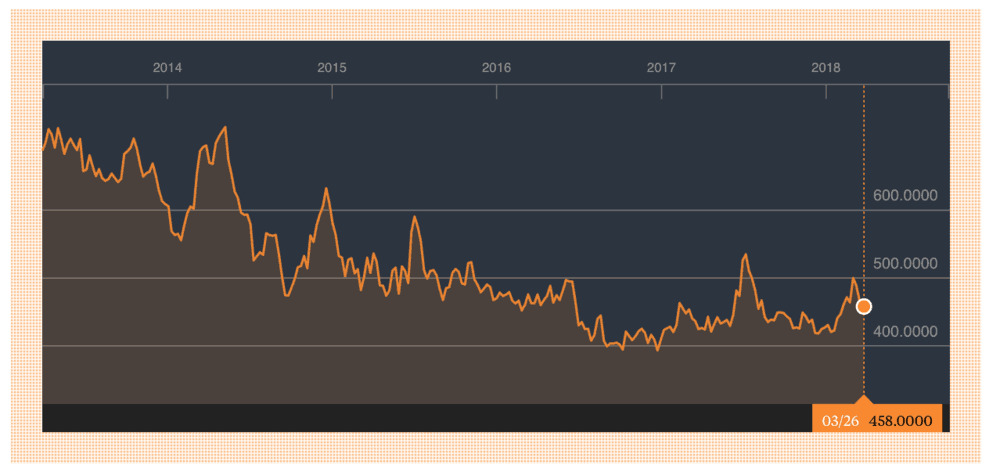
Since May 2014, when wheat was trading at 716 cts per bushel, prices have fallen 36%, to 457 cts per bushel as of Monday. A widely quoted break-even point for American wheat production is $4.89 per bushel. These low prices have pushed the number of acres of winter wheat varieties in the United States to their lowest level in 99 years.
Agriculture.com spoke to wheat farmers and brokers in Kansas about the low prices. “If you add in land payments, the answer is probably no, you can’t make money, not at this price level,” said Larry Glenn, a broker with Prime Ag in Quinter, Kansas. “If you’ve got land that’s paid for and an oil well in the middle of your land, then it probably is.”
“I believe that the U.S. is going to become a marginal wheat producer as time goes on,” said Greg Stone, a farmer in southwest Kansas.
As American winter wheat acreage fell to its lowest level since 1909, and US wheat production is at its lowest since 1978, global wheat production and stockpiles are the highest they’ve ever been. The surge in global wheat production is being led by countries like Russia and Ukraine, who are in the process of capturing Asian and North African markets.
The largest importer of American wheat is Japan; the second largest importer of American wheat is Mexico. Both of those trade relationships have been endangered by the Trump administration’s protectionist moves. The TPP-11 (Trans-Pacific Partnership of the remaining 11 countries) would lower the tariffs Japan paid for imported Australian and Canadian wheat from about $150 per ton to about $85 per ton over nine years, and since the United States has pulled out of the deal, the tariff on American wheat would remain at about $150, making US-origin wheat much less competitive. World-Grain.com estimates that American wheat’s Japanese market share could fall from about 50% to less than 25%. The Mexican export business would be affected by NAFTA renegotiation—if that deal falls through, retaliatory tariffs on agricultural products could hurt the competitiveness of American wheat.
According to a recent Susquehanna Rail Report, every Class 1 railroad in North America is hauling less grain (wheat, corn, soybeans, etc) this year than the corresponding period in 2017 except BNSF. CSX’s grain volume growth for 2018 YTD is at -16.2%; Norfolk Southern’s grain volume growth is -16.7%; Union Pacific is at -16.9%; Canadian National posted negative 11.2% in grain volumes; Canada Pacific logged -3.1% growth; and Kansas City Southern’s grain volumes contracted 8.2% year-to-date.
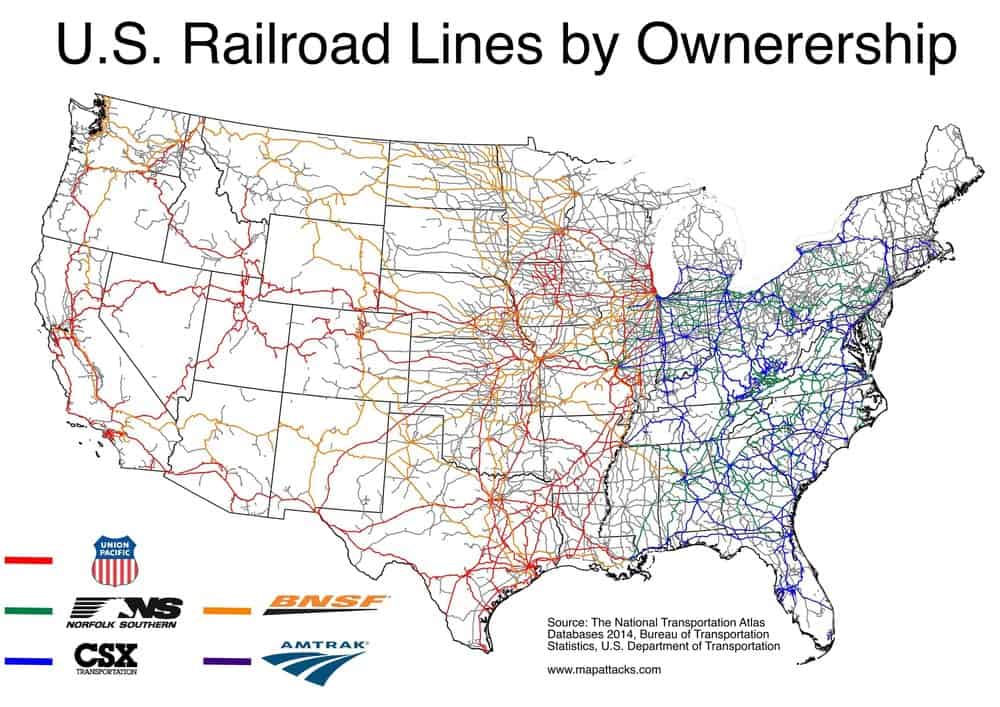
Canada Pacific has the most exposure to the downturn in North American grain exports, with 8.9% of its carloads carrying the crops, but, then again, Canada will see some tariff relief from TPP-11. BNSF and Kansas City Southern are the two other railroads whose grain business is more than 5% of their total carloads (both are at 5.9%), and BNSF managed to grow its grain volume slightly. The map below illustrates BNSF’s network density in Midwest grain-producing regions and its intermodal access to West Coast ports.
Stay up-to-date with the latest commentary and insights on FreightTech and the impact to the markets by subscribing.
Brokerage Compliance Symposium
The day before F3. Every compliance issue you face - fraud exposure, carrier liability, FMCSA rules, cargo theft, insurance gaps - navigated by attorneys and operators defining best practices in a changing industry.
F3 Awards Dinner
The night before F3. FreightTech100 companies honored. FreightTech 25 and Shipper of Choice winners revealed live. Cocktail reception into dinner and live music - 300 industry leaders in one purpose-built room.
F3: Future of Freight Festival
Industry-defining keynotes, rapid-fire technology demos, and industry leaders networking in experiences across Chattanooga - plus the inaugural F3 Awards Dinner featuring the FreightTech and Shipper of Choice reveals.
The day before F3. Every compliance issue you face - fraud exposure, carrier liability, FMCSA rules, cargo theft, insurance gaps - navigated by attorneys and operators defining best practices in a changing industry.
The Signal at Chattanooga Choo Choo • Chattanooga, TN Register NowThe night before F3. FreightTech100 companies honored. FreightTech 25 and Shipper of Choice winners revealed live. Cocktail reception into dinner and live music - 300 industry leaders in one purpose-built room.
The Signal at Chattanooga Choo Choo • Chattanooga, TN Register NowIndustry-defining keynotes, rapid-fire technology demos, and industry leaders networking in experiences across Chattanooga - plus the inaugural F3 Awards Dinner featuring the FreightTech and Shipper of Choice reveals.
The Signal at Chattanooga Choo Choo • Chattanooga, TN Register Now