




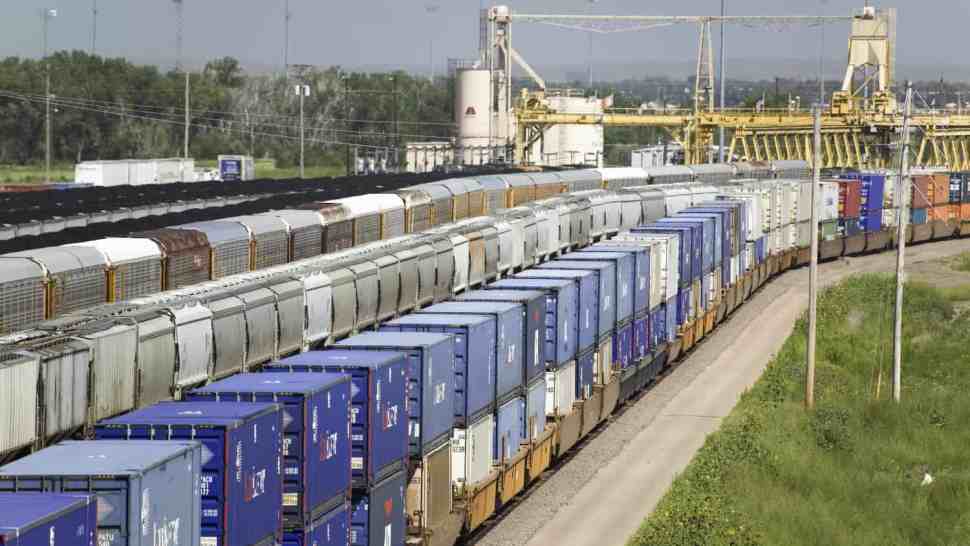
The story of railroads is as old as the independence of the United States. The growth of railroads ran in parallel with the economic surge and transportation expansion of the 19th century. As postulated by the “Take-off Thesis”, theorized by the economist Walt W. Rostow, the railroads lay at the core of the development of local markets and helped grow the industrialization of America.
Fast forward two centuries and the grasp of railroads on the freight transport market has all but waned. This is a subject of fascination, since it is impossible to point fingers at the industry and berate a failing system of freight railroads – which on the contrary, is one of the best networks in the world.
The impact created by railroads on different facets of the economy cannot go unnoticed. The system saves the U.S. government billions of dollars through reduced energy consumption and mitigated air pollution consequences.
The railroad system supports over 170,000 freight rail employees, who incidentally are amongst the country’s most highly compensated workers with an average of $73,300 in annual wages. The major freight railroads supported nearly 1.5 million jobs with an economic output of roughly $274 billion in 2014. Yet, the overall percentage of shipment value being transported through railroads stands at an abysmal 3.2% compared to the long haul trucking industry which accounts for 63.6% of the total value.
Though consciously, the obvious choice for transport could be railroads, it is not so due to a myriad of factors such as last mile delivery that lead shippers to prefer road transport. Nonetheless, railroads are a chosen mode of transport in certain instances, especially if the freight involves massive cargo transit over thousands of miles. For example, heavy bulk goods like coal or oil shipments are generally transported through rail.
But then, in recent times the implosion of coal and oil shipments has created a major blow to railroads. Developed countries are increasingly switching over to natural gas and renewable energy sources, which has significantly reduced coal mining and oil export practices.
The reduction in crude oil rates over the last two years has another ripple effect on the railroad industry. Since fuel costs are coming down, trucks are even more competitive and shippers hold this to their advantage. This further reduces the incentive for shippers to prefer railroads over road freight. The Association of American Railroads (AAR) has estimated that truck freight increased 3.5% over the last year due to the influence of global oil rates.
Another issue within the railroad industry is its need to work with intermodal transport for its survival. Unlike road freight, door-to-door rail services are impractical, leading to a lot of logistical complexities for shippers who prefer railroads. The ease and availability of trucking fleets and the possibility of sending different types of products ranging from food produce to bulkier goods via road, makes it a more attractive option.
In essence, the decisive player who chooses a mode of transport is the shipper and therein lies the difficulty. In the freight framework, the micro-parameters that affect a shipper’s choices are quite complex – being split amongst the attributes of the carrier, the type and value of the shipment, the distance it needs to travel and the flow rate frequency.
Since the parameters are numerous, there exist a lot of trade-offs on the preferred mode of transport. Road transport is ultimately more frequent and accessible, and thus a lot more trustworthy to an average shipper. Road freight also provides last-mile connectivity, which is essential in the case of perishable and consumable goods. Rail freight predominantly involves intermodal transport, and with a logistics meltdown, the fate of perishable freight might be disastrous.
Studies across the world have shown that on-time reliability is a huge factor in a shipper’s mode-choice. The majority of the U.S. shipping community are small-time shippers making frequent low-volume shipments. These shippers generally are on a deadline, and long unexpected delays in the freight flow would be catastrophic to their businesses.
In that vein, the thousands of road fleet companies that exist in the market today have created an environment where fleets with poor performance are pushed out. This leads to a more efficient road freight system that is accountable, shipper-friendly, and easy to navigate.
Credit is due to the road freight industry which has evolved to suit contemporary demands. Technology has made inroads, with startups proliferating in recent years in the form of digital marketplaces, fuel efficiency augmentation, and driver safety systems – thus making road freight easier and more shipper friendly.
In conclusion, it needs to be mentioned that road transport has done a better job at adapting to demand than railroad has, and this has a marked difference in market consolidation. If the railroad freight industry looks to have a resurgence, it has to work on improving its processes and make it conducive and logistically simpler for shippers to operate in.
Government policies that reinforce the railroad system could go a long way in improving its image amongst the shippers. Better coordination policies need to be implemented across intermodal transport and strategies tailored to long-distance bulk transport should be developed to induce railroad freight transport of the future.
Stay up-to-date with the latest commentary and insights on FreightTech and the impact to the markets by subscribing.
Brokerage Compliance Symposium
The day before F3. Every compliance issue you face - fraud exposure, carrier liability, FMCSA rules, cargo theft, insurance gaps - navigated by attorneys and operators defining best practices in a changing industry.
F3 Awards Dinner
The night before F3. FreightTech100 companies honored. FreightTech 25 and Shipper of Choice winners revealed live. Cocktail reception into dinner and live music - 300 industry leaders in one purpose-built room.
F3: Future of Freight Festival
Industry-defining keynotes, rapid-fire technology demos, and industry leaders networking in experiences across Chattanooga - plus the inaugural F3 Awards Dinner featuring the FreightTech and Shipper of Choice reveals.
The day before F3. Every compliance issue you face - fraud exposure, carrier liability, FMCSA rules, cargo theft, insurance gaps - navigated by attorneys and operators defining best practices in a changing industry.
The Signal at Chattanooga Choo Choo • Chattanooga, TN Register NowThe night before F3. FreightTech100 companies honored. FreightTech 25 and Shipper of Choice winners revealed live. Cocktail reception into dinner and live music - 300 industry leaders in one purpose-built room.
The Signal at Chattanooga Choo Choo • Chattanooga, TN Register NowIndustry-defining keynotes, rapid-fire technology demos, and industry leaders networking in experiences across Chattanooga - plus the inaugural F3 Awards Dinner featuring the FreightTech and Shipper of Choice reveals.
The Signal at Chattanooga Choo Choo • Chattanooga, TN Register Now