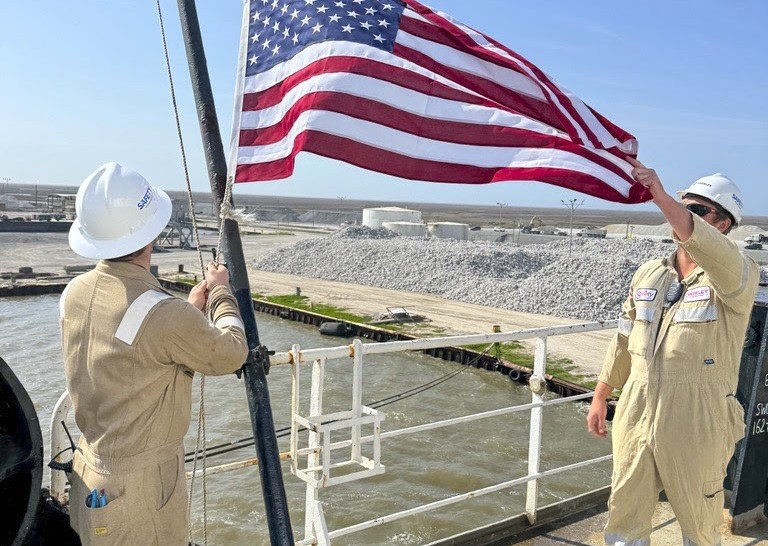
U.S. Energy Secretary Chris Wright said on Tuesday that another temporary extension of the Jones Act waiver is likely and that the existing exemption has already helped lower energy prices in California and on the U.S. East Coast.
Speaking at a press conference in Brownsville, Texas, Wright added that he expects fuel prices to come down in the coming weeks, a message the White House is eager to deliver as President Donald Trump faces political pressure over gasoline costs that continue to average above $4 a gallon nationwide, media reported.
The administration is expected to extend the waiver in the coming days to keep transport flexibility for moving fuel between U.S. ports, according to people familiar with the discussions. The current waiver is set to expire on August 16 and has already become the longest suspension of Jones Act rules in the program’s history.
The Jones Act requires cargo moving between U.S. ports to be carried on ships that are built in the United States, owned by U.S. companies and crewed by American workers. By temporarily waiving those requirements, the White House aims to increase the pool of available tankers and reduce transport costs that can feed through to retail gasoline prices. Industry analysts say the move likely trims prices by only pennies per gallon, but it remains one of the few near-term levers available to the administration ahead of the November midterm elections.
Other industry watchers had graver doubts about the waiver, and how it positions an administration intent on revitalizing the U.S. maritime sector.
“If this occurs, it will be a shameful and nonsensical action,” wrote analyst John McCown, on LinkedIn. “It has had no measurable impact on gasoline prices as the movements result from unsustainable demand driven by traders seeking arbitrage profits. A continuation of what has already been the longest waiver in the history of the Jones Act that strikes at the core of our country’s merchant marine raises concerns about how genuine support for a sector that has served us well in peace and war really is.”
Gas prices have soared as a result of the U.S.-led war with Iran, as Tehran controls access to the Strait of Hormuz through which 20% of the global crude oil supply flows.
Wright framed the policy as consistent with a market-oriented approach that still uses every available tool to encourage lower prices.
“President Trump believes in markets and he believes in capitalism. But he’ll use every tool he has, including the bully pulpit, to try to encourage and put pressure to lower energy prices for Americans,” Wright said when asked about Trump’s recent comments urging major refiners such as Exxon Mobil and Chevron to return money to consumers at the pump.
The president has escalated rhetorical pressure on the companies, accusing them of making too much profit, while the administration has simultaneously pursued measures to increase oil supply and regulatory flexibility.
Key Republican lawmakers, including House Speaker Mike Johnson and House Majority Leader Steve Scalise, have pressed the administration to limit the exemption, warning that broad or repeated waivers could weaken the domestic fleet and undermine the Jones Act’s national security goals. Maritime groups have also intensified their campaign against further extensions.
Inside the White House, discussions over the next step have involved trade adviser Peter Navarro, Office of Management and Budget Director Russell Vought and the White House Energy Dominance Council, according to sources. Officials have met with maritime industry representatives and lawmakers over potential changes to narrow the scope of the waiver while preserving flexibility to move critical fuel supplies. No final decision has been made and details remain subject to change, but the administration has signaled it is continuing to monitor how the waiver is being used and that any further announcements would come directly from the president or the administration.
Read more articles by Stuart Chirls here.
Read more:
New Mideast war front: Indian ship sinks after Red Sea attack
Tragedy at Port of Baltimore: Veteran longshoreman killed in rare equipment accident
Matson profit surges 30% on China shipping demand
Brokerage Compliance Symposium
The day before F3. Every compliance issue you face - fraud exposure, carrier liability, FMCSA rules, cargo theft, insurance gaps - navigated by attorneys and operators defining best practices in a changing industry.
F3 Awards Dinner
The night before F3. FreightTech100 companies honored. FreightTech 25 and Shipper of Choice winners revealed live. Cocktail reception into dinner and live music - 300 industry leaders in one purpose-built room.
F3: Future of Freight Festival
Industry-defining keynotes, rapid-fire technology demos, and industry leaders networking in experiences across Chattanooga - plus the inaugural F3 Awards Dinner featuring the FreightTech and Shipper of Choice reveals.
The day before F3. Every compliance issue you face - fraud exposure, carrier liability, FMCSA rules, cargo theft, insurance gaps - navigated by attorneys and operators defining best practices in a changing industry.
The Signal at Chattanooga Choo Choo • Chattanooga, TN Register NowThe night before F3. FreightTech100 companies honored. FreightTech 25 and Shipper of Choice winners revealed live. Cocktail reception into dinner and live music - 300 industry leaders in one purpose-built room.
The Signal at Chattanooga Choo Choo • Chattanooga, TN Register NowIndustry-defining keynotes, rapid-fire technology demos, and industry leaders networking in experiences across Chattanooga - plus the inaugural F3 Awards Dinner featuring the FreightTech and Shipper of Choice reveals.
The Signal at Chattanooga Choo Choo • Chattanooga, TN Register Now