The pitch for automated gate technology is almost always throughput, and the numbers are genuinely impressive, but a gate that clears a truck in three seconds is also a gate that has removed a human being from the one moment where somebody might have looked at a document and thought something about it felt wrong, which is exactly the moment strategic cargo theft is designed to exploit.
So that is where I started. Does automation make a facility harder or easier to steal from?
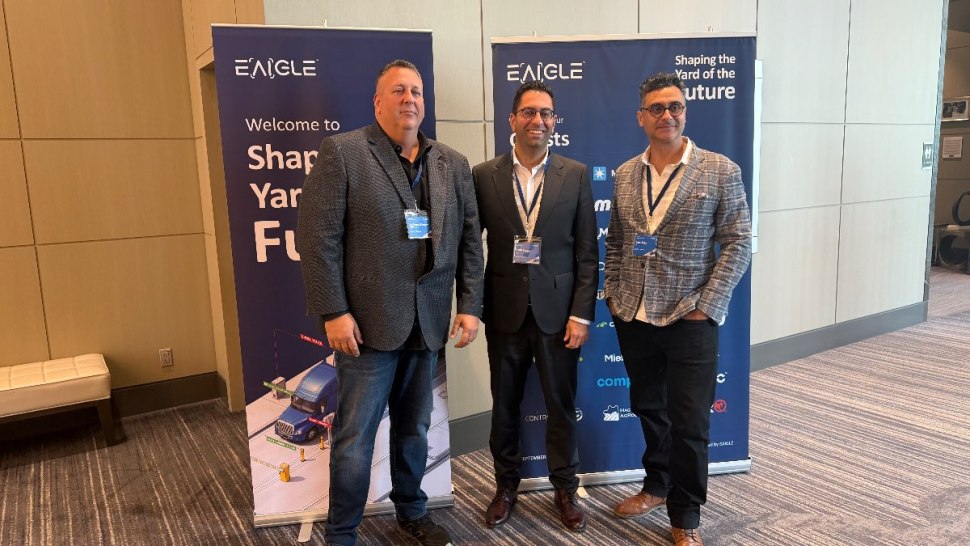
Amir Hoss, EAIGLE’s chief executive, did not hedge. Harder, he said, provided the gate is well integrated, and the qualifier is carrying weight in that sentence.
His reasoning was specific. Fictitious pickups run on fake or expired documentation. A gate that validates only a purchase order is not doing much. A gate that validates the bill of lading, handles shipments with multiple bills, and maps them against each other can catch documents that a person scanning paperwork in a queue would wave through.
He described the pattern the system sees most often. A fraudster uses an expired bill of lading to pick up a different load from the same carrier, paired with a trailer number where four of the five or six digits match the legitimate one and a single digit does not. That is an invisible discrepancy to a human under time pressure. Hoss said the system flags cases like that roughly two to three times a month per site at their higher-volume facilities.
EAIGLE’s team offered a second data point. At a deployment with what they described as a top-five consumer packaged goods customer, the system detected three theft events in the first month, and that result is what drove the expansion to additional sites. All three involved either fake documentation or attempts to take empty trailers.
The framing that stuck with me was about velocity. A gate is a high-throughput environment, and the errors that matter are single-digit ones. Humans miss those but machines do not.
The Carrier Is Also an Identity Problem
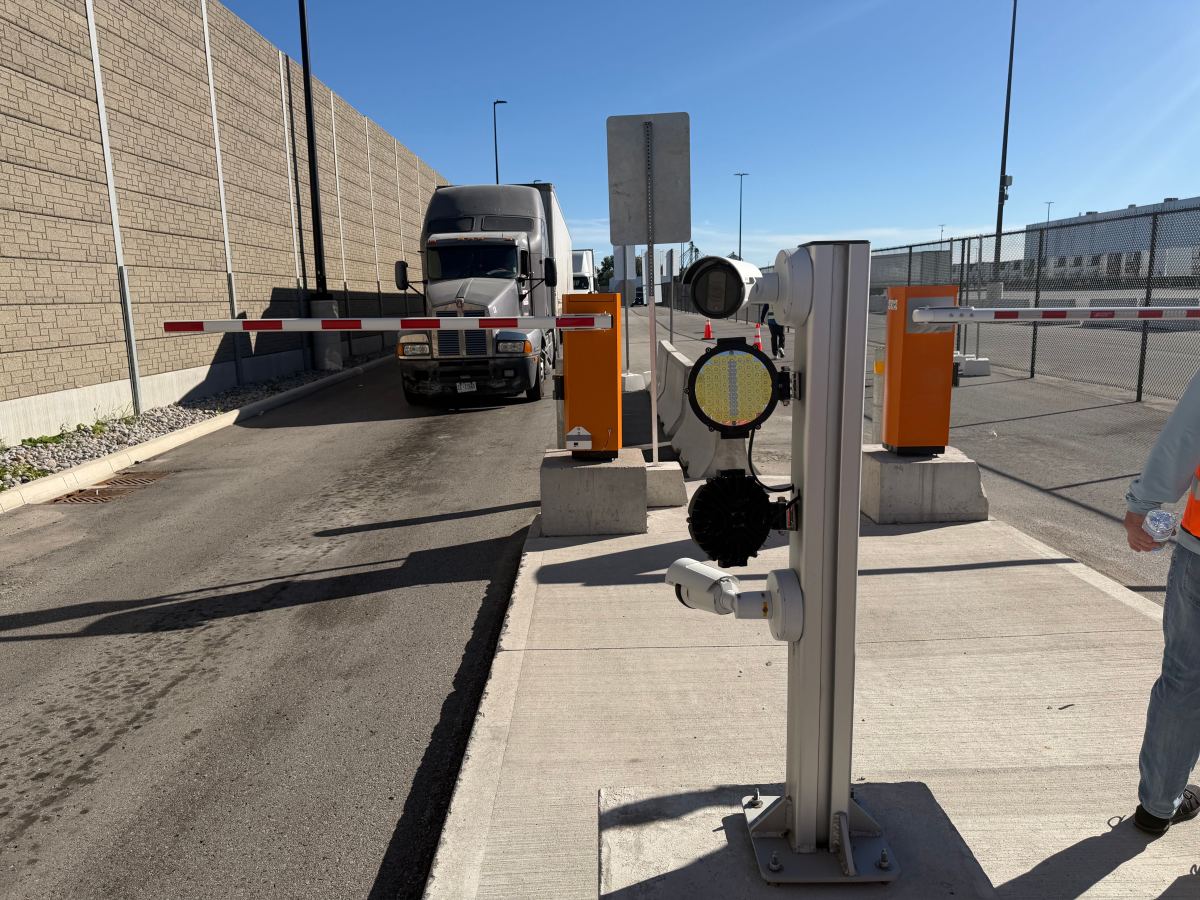
Directly on site I noticed Loblaw does not capture vehicle identification numbers, and I asked whether that becomes necessary at scale.
Hoss said yes, but pointed at something more available. The Department of Transportation number is always visible and always present, which makes it the low-hanging fruit. EAIGLE reads it from camera in real time, and then does the part I had not expected: it pulls the carrier’s history tied to that number, including theft history and claims, and evaluates it against a risk profile the customer has defined in advance. Cross a threshold the customer set, and the transaction becomes an exception regardless of whether the paperwork is clean.
That is a meaningful shift. The gate is no longer validating a transaction, it is scoring a counterparty.
I pushed on the obvious hole. Carrier identity fraud in the United States frequently involves a compromised DOT number, sometimes as crudely as a placard on a truck door.
Hoss’s answer was that a digital identity is not one identifier, it is the collection of everything visible at once. License plate, DOT number, truck number, color, even existing damage, cross-referenced against prior sightings of that equipment across the network. The practical version, he said, is that you can get most of the way there by matching two, the plate and the DOT, and confirming they belong together.
Who Owns the Failure
The question I most wanted answered was contractual. When the system approves a truck that should never have been admitted, who is responsible?
The answer turned on the standard operating procedure, which the customer defines and EAIGLE maps. If the system followed the SOP and everything matched, the company’s position is that it did the job it was contracted to do. If the system checked, nothing matched, and the gate opened anyway, that lands on EAIGLE. Hoss said he could not recall a case where the SOP was followed correctly and the system failed.
A related point came up that I think matters more than it first appears. Risk scoring does not have to be binary. Rather than sending a low-scoring carrier straight to exception, a customer can tier the response. A clean grade proceeds normally. A middling grade triggers a license verification. No information at all can trigger a deeper check where the driver photographs their license, takes a selfie, and the system confirms the two match.
That is identity verification at the gate, and it is the sort of capability that exists quietly until an industry needs it.
The Moat Question
There is nothing proprietary about EAIGLE’s cameras. The company says so plainly, and at Loblaw it taps infrastructure the site already had. So I asked the uncomfortable version: what stops a telematics provider or a yard management vendor from building this natively once the pattern is proven?
Hoss’s answer was that the defensible asset is the computer vision stack itself, the detection, tracking, optical character recognition and segmentation models running on an on-premise server, capable of reading a trailer number in any format in a non-standardized environment from a stream off any camera.
His market argument was more interesting than the technical one. Computer vision at gates is not new, he said, it has existed in intermodal since roughly 2004 to 2008, and other inland players have focused on internal or dedicated fleets. The gap EAIGLE claims is carrier-heavy operations, where the equipment arriving is not yours and does not conform to anything, across multi-lane environments with double trailers and minimal infrastructure.
Whether that is a durable moat or a head start is a question the market will answer. But it is a coherent claim, and it explains the customer list.
Why the Previous Approach Failed
Loblaw built a heavy portal intermodal arc for a different vendor before changing direction, and I wanted to know what EAIGLE learned from watching that.
Three things, according to Hoss. The capital expenditure does not scale, and he used a hypothetical of a company with 400 sites to make the point that no finance organization approves generational infrastructure projects at that multiple. The underlying models were built for intermodal rather than carrier-heavy inland freight, so they fail in the environment. And twenty-year-old technology carries real integration limits at a moment when retailers want a configurable system that talks to everything.
The hardware comparison was blunt. EAIGLE uses off-the-shelf cameras in the range of $800 to $1,200 each. The legacy installation at that site used cameras with optical character recognition built into the hardware costing tens of thousands apiece, plus the arc.
Fragmented Data Is the Business
I asked what a customer looks like when the integration cannot be made to work, and whether EAIGLE has walked away from a deal because the underlying stack was not in shape.
Hoss said the question does not apply to them, and then explained why in a way I found persuasive. Filling that gap is the product. The company brings more value where systems are fragmented and where no data lake exists, because that is the condition creating the problem. Where systems are integrable, they integrate. Where they are not, EAIGLE reads the data and acts as middleware, using flat files if that is what exists. He cited cement plants running programmable logic controllers from the 1960s as the extreme case.
That reframes the sales conversation. The worse your data environment, the more this is worth, which is the opposite of how most enterprise software is sold.
Who Owns the Learning
The company processes more than half a million trailers a month, and improvements from one site can benefit others. I asked whose data that is.
Hoss was clear. The customer owns the data, and the customer owns the per-site model improvements. Those improvements are not shared with other customers by default. A subset of customers do permit sharing, and what moves in those cases is the model itself, the coefficients and weights, rather than the underlying data. He said most customers allow it, with a handful of exceptions.
Pricing, Ports and Autonomy
Pricing has not been discussed publicly, so I asked directly. It is an annual software fee with a one-time hardware cost for kiosks and servers, with security integrators handling installation. Pricing scales by site and volume, because the model has to work for a customer with 400 sites and one with fifteen.
The volume floor was the useful number. The smallest facility EAIGLE serves runs about 50 transactions a day, the largest over 1,500, with an average near 500. The economics work from 50, which is a lower threshold than I expected.
On ports, where automation collides with organized labor in a way retail distribution does not, the approach is augmentation rather than replacement. At a California port customer handling roughly 1,500 to 2,000 trucks a day, guards remain in place. The system pre-populates their tablet, the guard checks the trailer, photographs the seal and uploads it. At that volume, shaving fifteen or twenty seconds per truck is the whole business case.
On autonomy, the numbers were more concrete than I anticipated. About half a dozen of EAIGLE’s thirty-plus clients are testing autonomous operations. Loblaw’s work with Gatik is public. One customer is beginning to test twenty autonomous Class 8 trucks on distribution centre to store runs. Autonomous shunting inside the yard is further along, and the enabling detail is that roughly half of EAIGLE’s customers do not have paved, marked spots, so the system geomaps trailer positions on dirt and gravel rather than reading painted numbers.
One question did not land. Asked what they had built that did not work and had to remove, the answer was that everything currently in market works and the failures live in products that never shipped. Every vendor gives some version of that answer. It was the one moment in an otherwise direct conversation where I did not get anything.
Why It Matters
The most important thing in this conversation was not the throughput, it was that the gate has quietly become the place where a carrier’s identity, documentation and risk history all get evaluated at once, which turns a security checkpoint into the last practical control point against fraud that costs this industry real money. For anyone running facilities, the question is no longer whether to automate the gate but whether the data feeding it is good enough to make the decision it is now being asked to make.
Brokerage Compliance Symposium
The day before F3. Every compliance issue you face - fraud exposure, carrier liability, FMCSA rules, cargo theft, insurance gaps - navigated by attorneys and operators defining best practices in a changing industry.
F3 Awards Dinner
The night before F3. FreightTech100 companies honored. FreightTech 25 and Shipper of Choice winners revealed live. Cocktail reception into dinner and live music - 300 industry leaders in one purpose-built room.
F3: Future of Freight Festival
Industry-defining keynotes, rapid-fire technology demos, and industry leaders networking in experiences across Chattanooga - plus the inaugural F3 Awards Dinner featuring the FreightTech and Shipper of Choice reveals.
The day before F3. Every compliance issue you face - fraud exposure, carrier liability, FMCSA rules, cargo theft, insurance gaps - navigated by attorneys and operators defining best practices in a changing industry.
The Signal at Chattanooga Choo Choo • Chattanooga, TN Register NowThe night before F3. FreightTech100 companies honored. FreightTech 25 and Shipper of Choice winners revealed live. Cocktail reception into dinner and live music - 300 industry leaders in one purpose-built room.
The Signal at Chattanooga Choo Choo • Chattanooga, TN Register NowIndustry-defining keynotes, rapid-fire technology demos, and industry leaders networking in experiences across Chattanooga - plus the inaugural F3 Awards Dinner featuring the FreightTech and Shipper of Choice reveals.
The Signal at Chattanooga Choo Choo • Chattanooga, TN Register Now