JACKSONVILLE, Florida — Knight-Swift Transportation has reduced its approved brokerage carrier pool by approximately 70% over the past two years as the trucking giant tightens carrier vetting standards amid growing concerns over cargo theft, highway safety and potential broker liability.
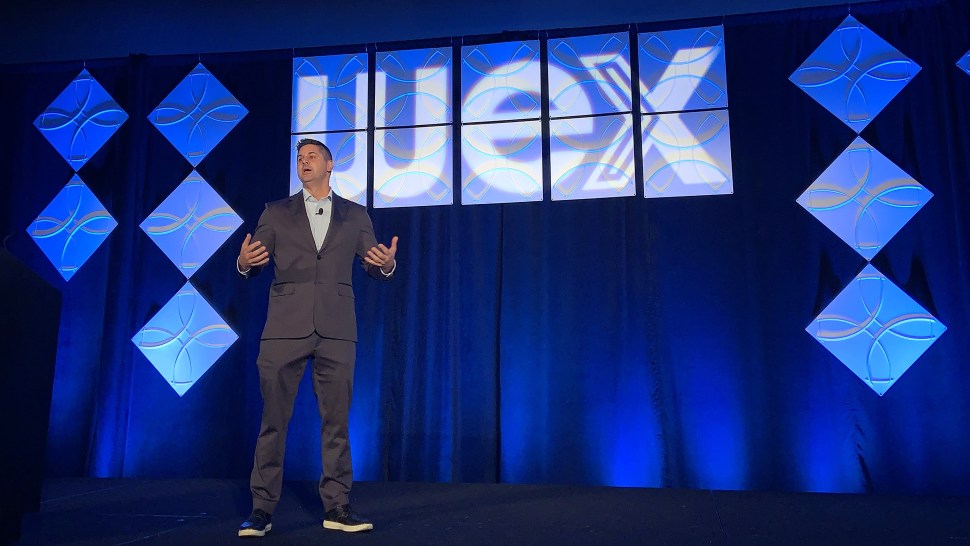
CEO Adam Miller disclosed the reduction Tuesday during his keynote address at the second annual WEX OTR Summit in Jacksonville, Florida, saying the company has become increasingly selective about which motor carriers it allows to transport freight through its brokerage operations.
“We’re down 70% from maybe two years ago,” Miller told attendees. “Because we really vetted the type of carrier that we want.”
Knight-Swift sees opportunity for more durable freight recovery
Miller’s remarks come as Knight-Swift reports improving truckload market conditions despite relatively weak freight demand.
During his keynote, he said available trucking capacity continues to tighten while national tender rejection rates remain elevated.
Miller said stricter federal enforcement and more selective broker-carrier relationships could prevent another rapid influx of trucking capacity during the next freight market upcycle.
He said that those changes could help create a more sustainable recovery rather than the sharp increases and declines in trucking rates experienced in recent years.
The second annual WEX OTR Summit drew more than 115 attendees, including trucking executives, fuel providers, technology companies and other transportation industry representatives.
Miller said Knight-Swift’s brokerage business has strengthened its carrier qualification requirements over the past three years, partly in response to increasingly sophisticated cargo theft schemes.
“Cargo theft went from a couple bad actors to organized crime,” Miller said.
The company requires motor carriers to have been operating for at least one year before they can participate in its brokerage network, according to Miller.
“We wouldn’t allow a carrier to come into our business unless they’ve been active for a year,” he said.
Miller said some large freight brokers have historically allowed newly registered trucking companies to access freight with minimal operating history, creating potential exposure to fraud, cargo theft and safety-related claims.
He said that requiring carriers to establish a longer operating history could help brokers identify potential risks before tendering loads.
Broker liability adds pressure to carrier vetting
Miller said recent developments involving broker liability could accelerate changes in how freight brokers evaluate motor carriers.
He referenced the U.S. Supreme Court ruling in Montgomery v. Caribe Transport II, arguing that brokers could face greater legal exposure when they hire trucking companies with questionable safety records.
“Now you have brokers who have some skin in the game if they’re negligent in the carrier that they hire to move the load,” Miller said.
He suggested that some brokers have historically prioritized lower transportation costs over more stringent carrier qualification requirements.
Miller said potential legal exposure could prompt brokers to more closely examine carrier safety records, operating history and insurance coverage.
“If you’re going to be willing to put in, to engage with a carrier that has an unsafe CSA score that’s over threshold, you’re at risk,” he said.
CSA refers to the Federal Motor Carrier Safety Administration’s Compliance, Safety, Accountability program, which uses inspection, crash and investigation data to identify potential motor carrier safety concerns.
Miller said that CSA scores do not necessarily provide a definitive measure of a carrier’s safety performance but said unfavorable scores could become a significant factor in litigation.
He warned that stricter carrier screening could substantially reduce the number of trucking companies eligible to haul brokered freight.
“When we start dialing in these different criteria you should be using to vet your carriers, the carrier pool you can work with is going to be significantly smaller,” Miller said.
Cargo theft, insurance costs create additional challenges
Miller said the growth of organized cargo theft has forced Knight-Swift to reconsider the risks associated with hiring unfamiliar carriers.
The company uses outside carriers in its brokerage operations, including power-only arrangements in which a contracted motor carrier supplies a tractor to haul a trailer.
Miller said those arrangements make carrier screening particularly important.
The CEO also warned that major trucking accident verdicts and potential broker liability could increase insurance costs for freight brokers.
He suggested insurers may reassess their exposure to claims involving motor carriers hired by brokers and could charge higher premiums to account for that risk.
“Brokers are gonna have to pay multiples of what they’re paying now to keep the same insurance limits,” Miller said.
Miller said shippers are also becoming concerned about whether they could face litigation if a motor carrier’s insurance coverage is insufficient to satisfy a large accident judgment.
“A lot of concern, a lot of discussions with customers around this topic,” he said.
Smaller carriers could face tougher access to freight
Miller said more restrictive broker qualification standards could make it harder for newly established trucking companies to obtain loads, particularly those relying heavily on the spot freight market.
He suggested the changes could reinforce a broader tightening of trucking capacity already underway because of increased federal enforcement of commercial driver’s license requirements and other safety regulations.
Miller said the trucking industry has historically experienced rapid increases in capacity during strong freight markets, followed by steep declines in freight rates when too many carriers enter the market.
More stringent broker screening could create an additional barrier to entry, he said.
“That’s going to eliminate probably the cheapest capacity, the less compliant carriers out there in the market,” Miller said.
Why it matters: Knight-Swift CEO Adam Mille says a supply-driven recovery could lead to higher transportation rates and longer-lasting capacity constraints even without a significant rebound in freight volumes in 2027.
F3: Future of Freight Festival
Industry-defining keynotes, rapid-fire technology demos, and industry leaders networking in experiences across Chattanooga - plus the inaugural F3 Awards Dinner featuring the FreightTech and Shipper of Choice reveals.
Industry-defining keynotes, rapid-fire technology demos, and industry leaders networking in experiences across Chattanooga - plus the inaugural F3 Awards Dinner featuring the FreightTech and Shipper of Choice reveals.
The Signal at Chattanooga Choo Choo • Chattanooga, TN Register Now