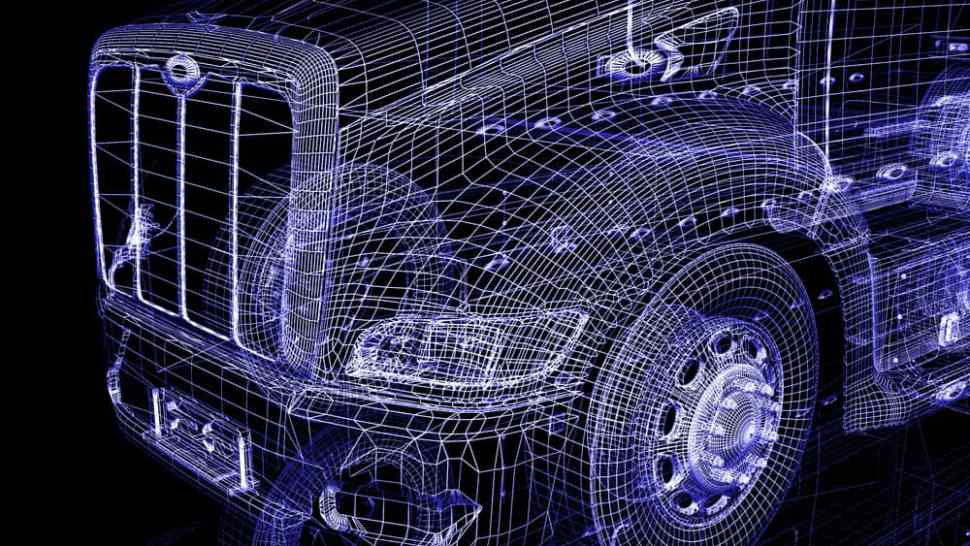
One of the hottest concepts in tech circles is the ‘Internet of Things’ (IoT), a term that refers to the network of physical devices, vehicles, home appliances, and other items embedded with software, sensors, actuators, and wireless connectivity. The 21st century internet does not simply reside on computers, but in security systems, remote sensors, and pieces of equipment—from refrigerators to gearboxes—that can be monitored and controlled via the web.
A case can be made that the IoT started in the mid 1970s, when faculty members of the Carnegie Mellon Computer Science Department installed microswitches in a Coke machine that sensed how many bottles were in each column in the machine and whether they were cold, based on how long ago they had been loaded. Now, of course, the IoT is much larger and more sophisticated, and IHS Markit predicts that the IoT will consist of 30.7 billion objects by 2020.
But what does this have to do with trucking? For starters, the electronic logging devices (ELDs) mandated for every truck beginning next month are part of the Internet of Things—ELDs that connect to the truck’s engine, monitor Hours of Service, and automatically report back are by definition part of the IoT. But some ELDs go beyond those basic functions and monitor speed, acceleration and deceleration, and can help dispatchers keep the driver on the most optimal route.
Upper Lakes Foods, out of Cloquet, MN, implemented a mobile ELD solution so that drivers can use a smartphone or tablet during their pre- and post-trip inspections to immediately document issues and send alerts directly to the carrier’s garage. Trucks connected to the IoT in this way can help asset owners further reduce muda (Japanese for ‘futility, uselessness, wastefulness’) by eliminating unnecessary miles and idle time and optimizing maintenance schedules. “The same as with airplanes and ships, more and more parts will have a pre-determined life cycle which will lead to less downtime,” said Kirk Altrichter, VP of maintenance at Crete Carriers.
“The more efficient we can make our sharing centers, the more we can provide data points to help the owner function more efficiently,” said Bill Dawson, vice president of maintenance operations and engineering for Ryder Systems. “To get to a predictive and efficient maintenance model,” Dawson continued, “as efficient as it can be from one maintenance service to another…requires the OEMs to share their predictive diagnostic data with the end user. So ideally you would have all the data coming from the vehicles’ telematic devices under one umbrella. Detroit, Cummins, Volvo, everybody’s trying to find their place in this data exchange.”
Check out the video below, produced by SAS, a leading developer of analytics software, about how IoT technology is “turning mundane telematics trouble codes into real value in the automotive and trucking industries”:
In addition to ELDs and objects collecting data from the truck’s components themselves, there are other internet-connected objects on the market that offer visibility solutions for supply chain participants. Roambee produces bright yellow devices the size of a few sticks of butter that can attach to shipments or vehicles and monitor condition and location for 90 days on a single battery charge, pinging hourly. If a truck is diverted, or a package opened, an alert immediately gets sent to Roambee’s 24/7 network operations center.
These sorts of visibility solutions, or ‘smart tags’, will allow pallets to talk to trailers, containers to communicate with trucks, and trucks to automatically coordinate with the rest of the fleet. Networks of sensors mounted throughout the truck will monitor everything from tire pressure to load stability. Semi-autonomous and platooned truck systems, like those being developed by Peloton Technology in Mountain View, CA, will generate even more data for carriers and shippers to manage and use to make decisions.
‘The IoT data could then populate a central dashboard that focuses on identifying spare capacity on particular routes or destination pairs and analytics could recommend suggestions for consolidating and optimizing the route. This additional visibility would create fleet efficiencies, improve fuel economy and reduce deadhead miles, which account for up to 10 percent of truck miles,” wrote Gary Wollenhaupt.
Finally, the IoT will be instrumental in implementing blockchain technology through the supply chain and trucking industry. As loads are picked up, transferred from truck to dock and back again, rerouted, and finally delivered, IoT-connected objects will continuously update the blockchain for the shipment so that shippers, carriers, and customers stay on the same page and goods and payment flow without delay or interruption.
Stay up-to-date with the latest commentary and insights on FreightTech and the impact to the markets by subscribing.
Brokerage Compliance Symposium
The day before F3. Every compliance issue you face - fraud exposure, carrier liability, FMCSA rules, cargo theft, insurance gaps - navigated by attorneys and operators defining best practices in a changing industry.
F3 Awards Dinner
The night before F3. FreightTech100 companies honored. FreightTech 25 and Shipper of Choice winners revealed live. Cocktail reception into dinner and live music - 300 industry leaders in one purpose-built room.
F3: Future of Freight Festival
Industry-defining keynotes, rapid-fire technology demos, and industry leaders networking in experiences across Chattanooga - plus the inaugural F3 Awards Dinner featuring the FreightTech and Shipper of Choice reveals.
The day before F3. Every compliance issue you face - fraud exposure, carrier liability, FMCSA rules, cargo theft, insurance gaps - navigated by attorneys and operators defining best practices in a changing industry.
The Signal at Chattanooga Choo Choo • Chattanooga, TN Register NowThe night before F3. FreightTech100 companies honored. FreightTech 25 and Shipper of Choice winners revealed live. Cocktail reception into dinner and live music - 300 industry leaders in one purpose-built room.
The Signal at Chattanooga Choo Choo • Chattanooga, TN Register NowIndustry-defining keynotes, rapid-fire technology demos, and industry leaders networking in experiences across Chattanooga - plus the inaugural F3 Awards Dinner featuring the FreightTech and Shipper of Choice reveals.
The Signal at Chattanooga Choo Choo • Chattanooga, TN Register Now