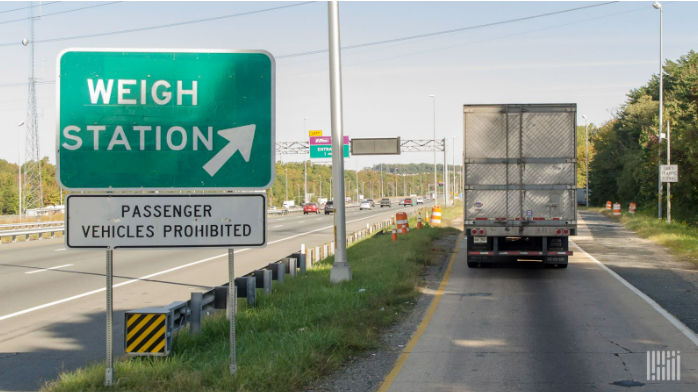
Every two weeks, another headline drops about a new pilot project or infrastructure upgrade—but this one’s worth a closer look. This month, Caltrans and the Solano Transportation Authority officially broke ground on a long-overdue modernization of the westbound truck scales facility on I-80 in Northern California.
The project isn’t just about repaving or re-striping lanes. If it’s executed with the right tech, it could represent a meaningful step toward reducing downtime, increasing safety, and streamlining roadside compliance and be a new standard for weigh stations.
Let’s break down what’s actually being built, why it matters, and where the opportunity for smarter enforcement still hangs in the balance.
Replacing a Choke Point With Real Capacity
The current truck scales facility on I-80 westbound is decades behind. The site was known for outdated infrastructure, limited throughput, and design flaws that forced closures just to prevent freeway gridlock. At times, trucks were turned away simply because the scales couldn’t handle the volume—leading to backups, wasted fuel, and missed deadlines.
The replacement project, located just 0.7 miles east of the current location, is designed to change that.
According to Caltrans, the new facility will:
- Operate 24 hours a day, 7 days a week
- Process up to 1,000 trucks per hour
- Feature improved on- and off-ramp designs to maintain traffic flow
- Be completed by December 2029
At face value, that’s good news. In an industry where time quite literally equals money, any infrastructure that prevents trucks from idling unnecessarily is a step forward. But to move the needle for small carriers and fleets, the real opportunity isn’t in the concrete—it’s in the technology we embed into that concrete.
The Bigger Issue—Enforcement Hasn’t Kept Pace
Modern trucking depends on modern enforcement. And the reality on the ground tells a different story.
Across the U.S., weigh stations often sit closed or underutilized. In South Carolina, ABC News 4 uncovered that several weigh stations along I-26 were either inactive or operating part-time due to staffing or maintenance issues. That’s not an isolated problem—it’s one that repeats from coast to coast.
Weigh stations may be open sporadically, suffer from broken equipment, or lack the technology to provide meaningful enforcement. When enforcement becomes unpredictable or absent, it undermines the system’s credibility. Compliant drivers waste time at dysfunctional checkpoints, while unsafe or overloaded carriers slip through unnoticed.
This is where the conversation shifts. The facility alone won’t solve the problem. But outfitting it with next-generation enforcement tools just might.
What a Modern Truck Scales Facility Should Look Like in 2025
If the new I-80 facility aims to deliver real operational value, it needs to move beyond traditional roadside weighing and incorporate scalable, intelligent systems. Here’s what that looks like in practice:
Weigh-in-Motion (WIM) Systems
Instead of stopping traffic, WIM technology can weigh trucks as they travel at highway speeds. These systems save time, reduce congestion, and allow enforcement to focus on exceptions rather than every truck.
Advanced Load Cells and Real-Time Telemetry
Digital load cells improve accuracy and reduce mechanical failure. When paired with cloud-based software, they generate real-time insights that can be shared with carriers, enforcement, or DOT officials.
RFID/AVI Credentialing Systems
Solutions like PrePass and Drivewyze already allow compliant carriers to bypass scales. Expanding these systems with Automatic Vehicle Identification (AVI) or RFID readers could automate compliance checks even further, reducing unnecessary stops and ensuring efficiency for fleets operating above board.
Imaging and Plate Recognition Cameras
License plate imaging, DOT number capture, and even cargo scans can help validate compliance and flag anomalies instantly. It’s not just about citations—it’s about documentation, audit trails, and safety investigations.
Predictive Maintenance Alerts
Scales outfitted with diagnostic sensors can self-report issues and schedule maintenance proactively—minimizing downtime and keeping the facility operating around the clock.
With the right combination of these tools, a weigh station transforms from a passive enforcement point into an active logistics data node—benefiting carriers, regulators, and the public alike.
Why This Project Could Matter to You
If you’re an owner-operator, fleet owner, or fleet manager, you already know that weigh stations can be a coin toss. One day it’s smooth sailing. Next, your truck may be sitting for 10 hours due to an OOS.
This project could set a bigger stage as to what the next generation of weigh stations will look like:
- Greater consistency: 24/7 operation, smart tech, and scalable enforcement reduces the variability that plagues common operations.
- More predictability: In-motion weighing and automated credentialing make it easier to boast HOS compliance with fewer surprises.
- Improved safety outcomes: Instead of playing enforcement roulette, DOT officials can focus on risk-based targeting—identifying truly unsafe equipment and giving compliant carriers a pass.
- Reduced operating costs: Fewer stops, shorter idle times, and fewer citations all contribute to better margins in a tight-rate environment.
What Still Needs to Happen
While the specs and the intent are promising, the real-world benefit depends on execution. And there are three big factors that still need to line up:
Timelines
The project’s completion target is December 2029. That’s four years of construction and uncertainty. The benefit isn’t immediate—it’s future-focused.
Tech Integration
To truly modernize enforcement, systems like PrePass, Drivewyze, WIM, and imaging must be adopted and operational from day one. That means coordination across agencies, vendors, and fleets—not just installation.
Operational Funding
California’s budget and staffing models must support round-the-clock enforcement with skilled personnel and maintenance support. If stations are built but not staffed or maintained, the result will mirror the issues seen in South Carolina.
Final Thought — If Done Right, This Could Be a Turning Point
This isn’t just about I-80 in Solano County.
If done right, this project can be a model for how trucking infrastructure should evolve—merging safety, efficiency, and technology. Think of it as the next logical step after electronic logs and automated tolling. The industry has modernized on the operations side. Now, infrastructure and enforcement need to catch up.
We’re watching this closely inside The Playbook—and if you’re running a fleet or just trying to stay compliant while keeping wheels turning, this matters more than you think.
Brokerage Compliance Symposium
The day before F3. Every compliance issue you face - fraud exposure, carrier liability, FMCSA rules, cargo theft, insurance gaps - navigated by attorneys and operators defining best practices in a changing industry.
F3 Awards Dinner
The night before F3. FreightTech100 companies honored. FreightTech 25 and Shipper of Choice winners revealed live. Cocktail reception into dinner and live music - 300 industry leaders in one purpose-built room.
F3: Future of Freight Festival
Industry-defining keynotes, rapid-fire technology demos, and industry leaders networking in experiences across Chattanooga - plus the inaugural F3 Awards Dinner featuring the FreightTech and Shipper of Choice reveals.
The day before F3. Every compliance issue you face - fraud exposure, carrier liability, FMCSA rules, cargo theft, insurance gaps - navigated by attorneys and operators defining best practices in a changing industry.
The Signal at Chattanooga Choo Choo • Chattanooga, TN Register NowThe night before F3. FreightTech100 companies honored. FreightTech 25 and Shipper of Choice winners revealed live. Cocktail reception into dinner and live music - 300 industry leaders in one purpose-built room.
The Signal at Chattanooga Choo Choo • Chattanooga, TN Register NowIndustry-defining keynotes, rapid-fire technology demos, and industry leaders networking in experiences across Chattanooga - plus the inaugural F3 Awards Dinner featuring the FreightTech and Shipper of Choice reveals.
The Signal at Chattanooga Choo Choo • Chattanooga, TN Register Now