





Lessons learned during the COVID-19 pandemic
While the COVID-19 crisis has affected the country in deeply profound ways, it has also highlight deficiencies in the current regulatory framework for freight movement.

Hours-of-service changes have arrived
TCA and the larger trucking industry have been anxiously waiting to see what the final hours-of-service rule would include, and the initial reaction to it is positive.

America’s “Magic Money” tree
As the government pumps more money into the economy, many are questioning where the money is coming from? It’s coming from America’s “Magic Money” tree.

Recognizing truckload’s safety stars
Do you know someone who is going above and beyond to advance safety in the trucking community? If so, now is the time to nominate them for the 2020 TCA Safety Professional of the Year – Clare C. Casey Award.
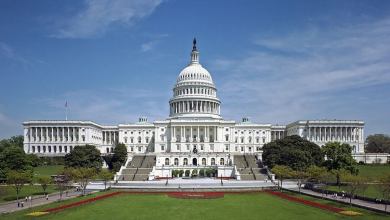
Our government partners are listening to trucking
TCA has seen our positive experiences with the federal government grow exponentially in the last few weeks. In the days that have followed the emergency declaration in response to the coronavirus outbreak, our partners in the federal government have leaped into action

Trucking won’t stand for discriminatory tax
The Truckload Carriers Association continues to push for a broad-based infrastructure funding mechanism rather than a truck-only scheme that would increase taxes on the industry.

Trucking jobs get a boost from congress
TCA supports this legislation as it complements the work already being done from within the trucking community to promote our well-paying jobs to quality candidates.

Talk on independent contractors heating up
The bill would reinforce in federal law the “ABC test” to determine whether an individual is an employee rather than an independent contractor, similar to California’s AB5 law that is currently being challenged in the courts.

First signs of life on infrastructure plans
Washington is abuzz over a renewed push on both sides of the political aisle to advance large-scale infrastructure legislation. Both House Republicans and Democrats have released infrastructure plans to correspond with the renewal of the FAST Act in 2020.

FMCSA 2020 priorities on display
As a part of the Transportation Research Board’s multi-day Annual Meeting, the Federal Motor Carrier Safety Administration (FMCSA) spent a morning session outlining its priorities for 2020.

Top trucking trends for 2020
As 2019 comes to a close and 2020 kicks into gear, now is a good time to prepare for the potential regulatory and legislative action that the trucking industry will see in the new year.

Congress shows impatience with drug testing delays
The Federal Motor Carrier Safety Administration’s Drug and Alcohol Clearinghouse goes live on January 6, providing an online database that will shed light on prospective drivers’ drug and alcohol program violations.

Don’t punch holes in the ELD mandate
TCA will continue to fight against exemptions to the ELD mandate.

Start preparing now for the Drug and Alcohol Clearinghouse
For years, truckload carriers have voiced the need for a centralized repository for the drug testing history of prospective drivers. Without this information, hiring managers have been unable to determine whether the driver failed a drug test just the day before at the neighboring carrier down the street, only to try again at their facility the next day.

Small changes won’t cut it on hours of service
While TCA wholeheartedly agrees that more flexibility should be added to the regulations, we do not believe the addition of a 7/3 split goes far enough to address critical issues being faced by our professional truck drivers every day.

TCA takes on cross-border issues
In our ongoing efforts to educate our members on legislative and regulatory efforts in both Canada and the U.S., TCA will once again be presenting the Bridging Border Barriers (BBB) event to facilitate discussion and learning.

How does your safety program stack up?
For the past several years, the crash statistics for large trucks and buses have been getting worse. While this could be driven by many different factors, from the prevalence of cell phone use and distracted driving to the deteriorating nature of U.S. infrastructure, the trends simply cannot be ignored by the trucking industry.

Congress should stick with fuel tax
The federal fuel tax has not been increased since 1993 and has not kept pace with inflation, with rates set at 18.4 cents per gallon for gasoline and 24.4 cents per gallon for diesel fuel.

Make Washington work for you
One of the most important issues will be the reauthorization of the federal highway bill, also known as the FAST Act.

Potential gap looms for crash preventability proposal
For crashes that occurred after August 1, 2019, carriers will have to wait until the rulemaking process to make this program permanent concludes in order to submit those RDRs to FMCSA.