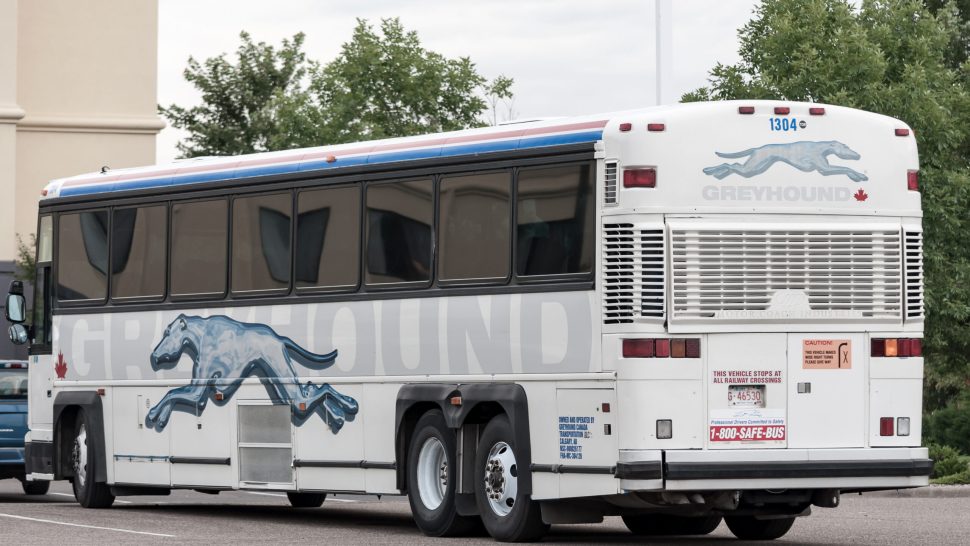
California’s attempt to impose its own meal and rest breaks on drivers–already blocked for truckers several years ago–has taken another hit, this time for bus drivers.
The Ninth Circuit Court of Appeals Thursday said the Hours of Service (HOS) regulations of the Federal Motor Carrier Safety Administration (FMCSA) for bus drivers preempts the meal and rest breaks (MRB) of California.
It’s the second time the Ninth Circuit has struck down a regulation on HOS promulgated by the Golden State. In 2021, in a case brought by the Teamsters, the Ninth Circuit Court of Appeals issued a ruling similar to what was handed down Thursday. But that ruling impacted truck drivers, not those piloting a bus.
In the most recent case, the state of California was the petitioner to the Ninth Circuit.
Differences between truckers and bus drivers
Federal hours of service rules for bus drivers are not identical to those of truck drivers. A “passenger-carrying commercial motor vehicle driver”–which is how the rules describe a bus driver–is limited to no more than 10 consecutive hours of driving and an on-duty limit of 15 hours.
HOS rules for trucks are that a driver can not be on duty for more than 14 hours, of which 11 can be behind the wheel. But a driver can not be behind the wheel for more than eight consecutive hours without taking a 30-minute break.
The California rest break rule for bus drivers is that “an employee working more than five hours is entitled to a meal period of not less than 30 minutes,” according to the Ninth Circuit’s summary of the rule.
There are other provisions in the California law that mandate a second meal break and 10-minute rest periods.
FMCSA first checked in on California in 2018
A 2018 decision by FMCSA found that California’s meal and rest period rules for truck drivers were preempted by federal regulations. The subsequent litigation with the Teamsters resulted in the Ninth Circuit ruling that “California’s MRB rules were within (FMCSA’s) preemption authority,” according to the most recent court recap of previous action.
It’s a straight line from that decision to the ruling on bus drivers, the court said. “Our prior decision in Teamsters largely forecloses (California’s) arguments, and we otherwise reject their claims,” the Ninth Circuit said.
The court summed up, and knocked down, California’s arguments. One was a technical argument on the definition of the preemption authority being limited to rules on safety, rather than a law of general applicability.
‘General applicability’
The latter argument proved relevant to trucking in the state because it was the Ninth Circuit that found in 2021 that independent contractor law AB5 was a “law of general applicability” as applied to trucking, and wasn’t therefore preempted by the Federal Aviation Administration Authorization Act. That decision overturned an earlier injunction against AB5 being implemented against California trucking, and kicked off the process that ultimately led to AB5 being fully implemented in the state’s trucking sector.
Other arguments made by California’s Attorney General Xavier Becerra, who is likely to be the state’s next governor, but shot down by the Ninth Circuit, include an argument that California’s rule to have bus drivers take a mid-shift break can’t be found in federal regulations, so the state’s rule does not conflict with any federal standard. The court’s response: “Although it is true that federal HOS regulations do not require that drivers of passenger-carrying commercial motor vehicles take a mid-shift break, they still dictate how long a driver may remain on duty before a mandatory off-duty period.”
The court also held the California rules would create a “significant operational burden.”
“The administrative record is replete with commentary about the negative effects of California’s MRB rules upon passenger-carrying commercial motor vehicle operations,” the court wrote in its opinion. “These include comments about the disruptive and costly nature of complying with California’s MRB rules, as well as the difficulty of maintaining scheduled operations.”
More articles by John Kingston
Texas court nixes shipper liability in Home Depot/Werner case
Carrier Nussbaum sets driver pay increase; others popping up more quietly
Amazon scores big win at NLRB over whether it’s a joint employer with DSPs
Brokerage Compliance Symposium
The day before F3. Every compliance issue you face - fraud exposure, carrier liability, FMCSA rules, cargo theft, insurance gaps - navigated by attorneys and operators defining best practices in a changing industry.
F3 Awards Dinner
The night before F3. FreightTech100 companies honored. FreightTech 25 and Shipper of Choice winners revealed live. Cocktail reception into dinner and live music - 300 industry leaders in one purpose-built room.
F3: Future of Freight Festival
Industry-defining keynotes, rapid-fire technology demos, and industry leaders networking in experiences across Chattanooga - plus the inaugural F3 Awards Dinner featuring the FreightTech and Shipper of Choice reveals.
The day before F3. Every compliance issue you face - fraud exposure, carrier liability, FMCSA rules, cargo theft, insurance gaps - navigated by attorneys and operators defining best practices in a changing industry.
The Signal at Chattanooga Choo Choo • Chattanooga, TN Register NowThe night before F3. FreightTech100 companies honored. FreightTech 25 and Shipper of Choice winners revealed live. Cocktail reception into dinner and live music - 300 industry leaders in one purpose-built room.
The Signal at Chattanooga Choo Choo • Chattanooga, TN Register NowIndustry-defining keynotes, rapid-fire technology demos, and industry leaders networking in experiences across Chattanooga - plus the inaugural F3 Awards Dinner featuring the FreightTech and Shipper of Choice reveals.
The Signal at Chattanooga Choo Choo • Chattanooga, TN Register Now