




Joanna Marsh
Thursday, January 4, 2024
7 hot issues for rail stakeholders in 2024
What are stakeholders in the freight rail space keeping an eye on in 2024? Here’s a starter list.
Railroads continue to play a significant role in North America’s economic infrastructure. According to the U.S. Department of Transportation Federal Railroad Administration, the U.S. rail freight network covers almost 140,000 route miles and is generally considered the largest, safest, and most cost-efficient freight system in the world. In addition, says the FRA, the almost $80 billion rail freight industry creates more than 167,000 jobs across the country.
In essence, rail freight companies charge businesses to carry cargo across their network of rails. Their rates are overseen by the Surface Transportation Board, a federal agency that regulates financial aspects of surface transportation. Major railroads in North America include Union Pacific Railroad, BNSF Railway, CSX, Norfolk Southern, Canadian Pacific Kansas City and Canadian National Railway.
Keep up with the latest news, trends and reports concerning rail freight transport here!
What are stakeholders in the freight rail space keeping an eye on in 2024? Here’s a starter list.
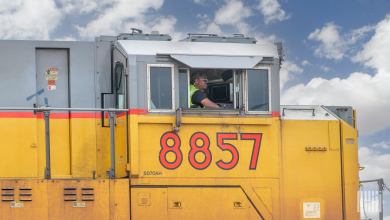
The Federal Railroad Administration submitted its proposed rulemaking on train crew staffing to the U.S. Office of Management and Budget for review.
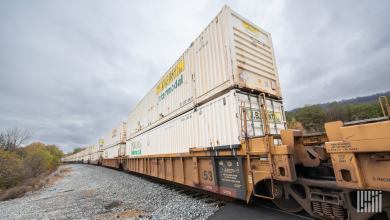
Intermodal rail might still face pressure from a loose truck market in 2024, but intermodal rail providers could see volumes grow longer term if they keep service humming, according to Breakthrough’s chief economist.

To view more FreightWaves infographics, click here
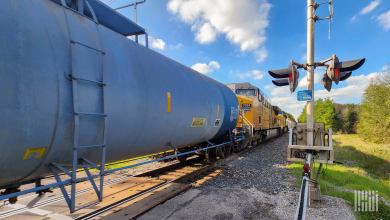
Election-year politics and the NTSB report on the East Palestine derailment are key factors in whether Congress will pass rail safety legislation in 2024, industry observers say.

Cargo volumes at the Port of New York and New Jersey were 7.5% higher than November 2019 but 11% lower year over year.
Labor peace was won at what will be higher costs for shippers and carriers.
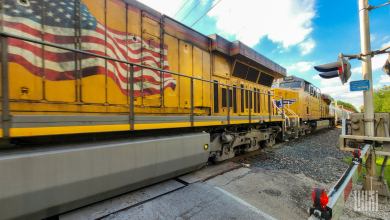
U.S. Customs and Border Protection has reopened the international border crossings at Eagle Pass and El Paso, Texas, according to the freight railroads affected by the five-day closure.

Parallel Systems recently gave a public demonstration of how its autonomous rail vehicle technology works.
The U.S. freight rail industry got schooled in 2023 on issues including the three R’s: rail safety, reciprocal switching and relationships.

Union Pacific wants customers to lobby Congress to get U.S. Customs and Border Protection to say when suspended freight rail operations in El Paso and Eagle Pass, Texas, will resume.
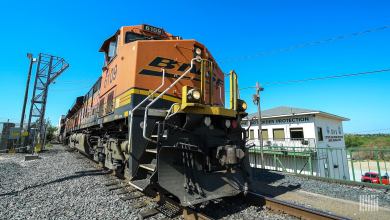
U.S. border officials on Monday suspended freight rail operations in El Paso and Eagle Pass, Texas, in response to a surge in migrants in the region.

New York becomes the 11th state to require freight trains to have at least two crew members.

The year’s five biggest U.S.-Canada cross-border supply chain-related stories are highlighted.
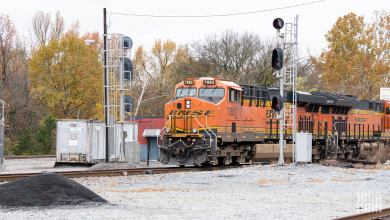
Two environmental groups say BNSF should do more to reduce deaths of grizzly bears being hit by freight trains on federally protected grounds in Idaho and Montana.

Intermodal rail can and should be a competitive transportation mode, provided that short-line railroads play a part and more investments go into developing intermodal hubs and insightful data sets, according to a report commissioned by the Environmental Defense Fund.

TE Management affiliate American Industrial Transport has completed its acquisition of the rail car assets of SMBC Rail Services.

Rail technology provider Wabtec is joining forces with Dutch company Intermodal Telematics to create telematics technology for rail cars.

In this fireside chat, FreightWaves’ chief economist Anthony Smith talks with Union Pacific’s Matt Gloeb about how collaboration between the railroad and truck carriers in the intermodal space can help customers reach sustainability goals.
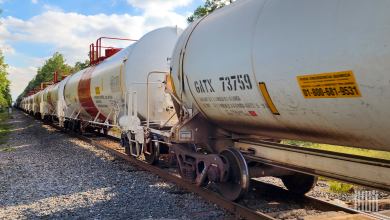
The Federal Railroad Administration has proposed that rail car manufacturers certify that their rail cars were made in countries that haven’t been flagged by the U.S. government for national security concerns. Two trade groups representing rail equipment manufacturers support this measure.