Weekly Market Update: Capacity abounds as volume flattens
Capacity is abundant even though volume is relatively strong. Carriers are having little trouble covering the available freight making it a shippers’ paradise in mid-January.
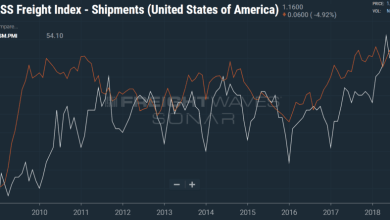

The falling Purchasing Managers Index tends to be correlated with the general freight market, the Cass Freight Shipment Index illustrates this. Is it time for carriers to pull back?
The third week of the partial Federal government shutdown is impacting U.S. agriculture. Without full funding, the U.S. Department of Agriculture (USDA) is not providing some real-time information, full financial support, or some critical services for farmers and ranchers.
The New Year has started off with a surprising amount of volume in the freight market. So far, capacity has been available to handle it. The tariff deadline extension may be providing a second wind.
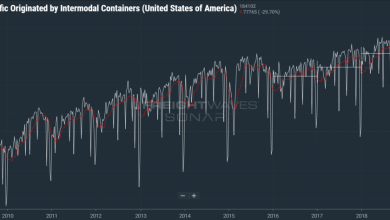
Record intermodal shipments on the rail for the second year in a row has deep implication for the trucking market into 2019. Trucking will benefit, at least partially, from Norfolk Southern’s latest decision.
Among news of poor performance in the Chinese economy, one of the most distressing signals for foreign retailers and manufacturers is Apple’s announcement on Wednesday that the company had reduced revenue expectations due to poor iPhone sales in China.
Manufacturing leads first-party logistics growth because of the sector’s long-established supply chains. Retail is the next-largest contributor to first-party logistics growth through the impact of e-commerce.
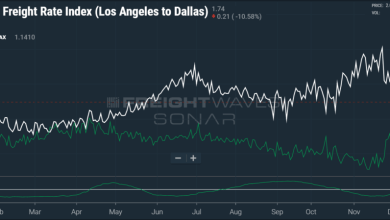
Carriers lower rates heading to the West Coast this year as inbound container volumes flood the ports.
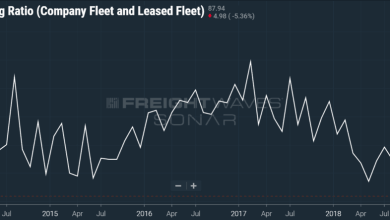
Carrier operating ratios continue to fall in October with a less volatile freight market.
FreightWaves adds a real time news widget with twitter feeds and up to the minute financial and transportation new reporting.
The freight market has softened significantly in the last few months, but it is not due to a drastic reduction in volume.
The Washington state port is retooling to handle bigger ships and heavier cargo. The transformation includes a large-scale mixed-use development featuring housing, hotels and office space.
Volume continues to slide but there was little change in the market over the past seven days.
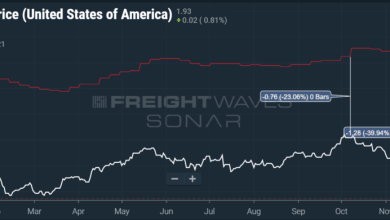
The big oil news of the week was OPEC deciding to cut production in an attempt to stop the price of oil from dropping further. Carriers should be happy with this in the long run but gained a short term boost to margins in the meantime.
Capacity is readily available in most regions of the country. Los Angeles has finally cooled off as the tariff deadline gets extended.
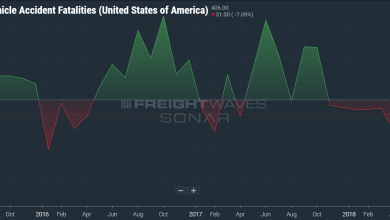
FreightWaves adds commercial vehicle accident injuries and fatalities in SONAR as well as adds regions to the TRI.
Two largest economies agree to halt hostilities through first quarter after a year of trade saber rattling.
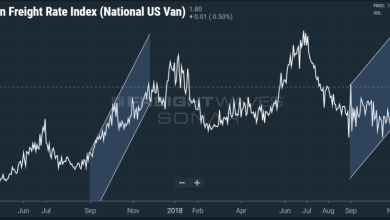
The spot market has been cooling over the past several months, but the players seem more uncertain than ever.