Port Report: Trump calls ceasefire in trade war with China as tariff threat now off table
Delay in tariffs comes after a week of talks in Washington with Chinese officials; but the threat certainly good for volumes coming into Seattle.
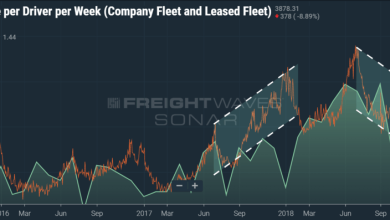

Increasing spot rates lead carrier revenues in 2018, will revenues start to fall now that rates have started to come down again?
The overall market remains relatively stable as volume dip below 2018 levels in two major markets. Spring is around the corner. Will freight volumes return with it?
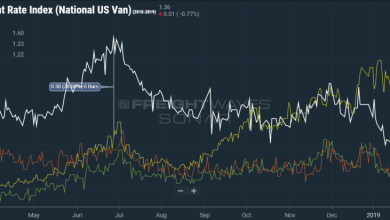
National spot rates have been flying high for the past year, but have only recently fallen under previous year values as illustrated on FreightWaves newest charting feature.
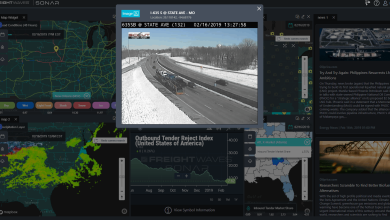
The newest release adds major weather data features, visualization and modeling tools, additional news features, and DOT highway cameras.
So far this February has been what we would expect. Does the normally slow month have any surprises up its sleeves?
FreightWaves adds agricultural truckload prices and numerous warehousing and real estate data points to SONAR.
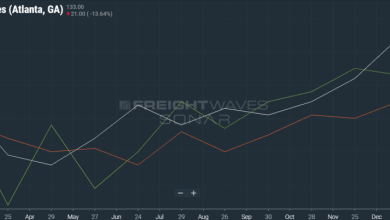
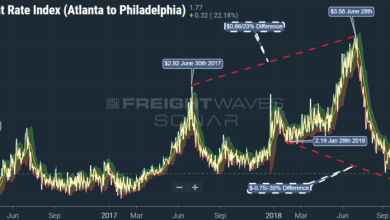
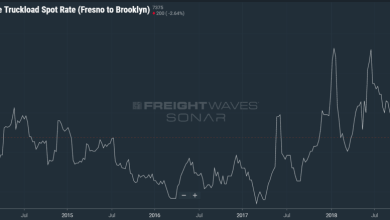
Atlanta to Philadelphia’s spot rate has hit its lowest point in 3 years. The absolute rates may be similar, but the freight markets could not be further apart.
Volumes and capacity remain flat through the first week of February. Has the freight market weathered the slowest part of the year?
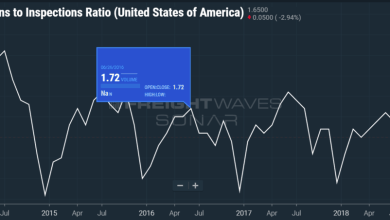
The key benchmark OTRI sounded the alarms about weaker markets, but other indicators were telling a different story.
FreightWaves adds agricultural truckload prices and numerous warehousing and real estate data points to SONAR.
The two Super Bowl teams and their fanbases are very different, just like their freight market identities.
The macroeconomy is slowing down to trend-line growth, but drivers of freight movement look worse.
Freight volumes recover as January closes. The artic air freezes the Midwest as the Chicago market heats up.
FreightWaves adds violations, fuel spread, and more rail data to SONAR platform
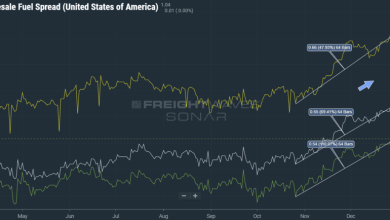
The DOE fuel price keeps sliding as wholesale or rack prices are increasing. This can have a negative impact to carrier margins in early 2019 after receiving the benefit of expanding fuel spreads in late 2018. SONAR’s newest index can help you monitor this.
FreightWaves is monitoring a number of trends that will impact the freight market in 2019. Digitization will play a key role in these trends as companies seek to optimize their supply chain processes.
Last week had the largest single day percentage drop in volume since March of 2018. Capacity remained stable as we ride out the winter doldrums.
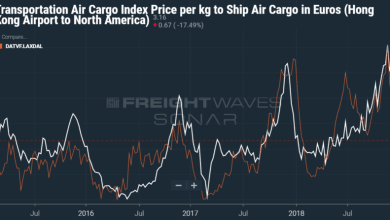
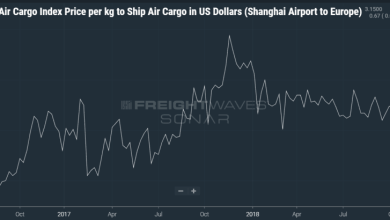
How can air cargo and dry van spot market rates be related? Could the movement of these two seemingly unrelated rates provide more evidence the market is slowing?
FreightWaves adds air cargo volume and pricing data to SONAR platform