How large companies can drive the zero-fatality future forward
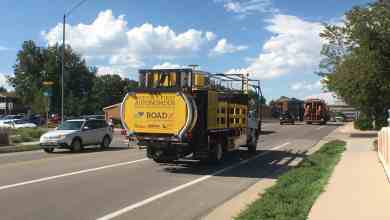
A world with zero fatalities caused by road accidents sounds pretty idealistic — but is it realistic? The communities around the world backing the Vision Zero initiative think so.
Last week, Volvo Trucks announced that it would soon be adding Apply CarPlay to its lineup as an optional package. More connected trucks will soon become commonplace, and maybe in the commercial transportation space, technologies such as this, Android Auto and WiFi will be welcomed additions.
Fleets outfitting their tractors with 6×2 axle are still finding benefits, but adoption of the configuration has been slow according to a North American Council for Freight Efficiency (NACFE) and Carbon War Room update to its 2013 Confidence Report on 6×2 axles.
This week kicked off a series of 16 customer and dealer events at Volvo’s new Customer Center here. It was one of several big news events for the company – the others being an update on its new VNR regional tractor model which was introduced in April, and the first unveiling of an updated VNL line.
According to a report in a German newspaper, Daimler has now been swept up in the emissions cheating scandals that have been raging across Europe in recent years.
As much of the world is progressing towards Industry 4.0, Japan is going a step further. In its recently released Growth Strategy 2017 report, the county puts technological achievements, such as autonomous trucks and drone deliveries, on the fast track as it seeks to develop Society 5.0.
A surprise national brake safety inspection day on May 3 netted nearly 12% of commercial vehicles inspected with brake violations, the Commercial Vehicle Safety Alliance announced this week.
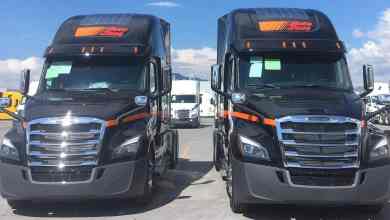
Calling it the “most innovative, most exciting trucks from Volvo in 20 years,” Volvo Trucks North America officially took the wraps of its updated VNL family of trucks.
When the U.S. auto industry came roaring back to life, it was a boon for carriers who made their business hauling autos and related products. But as sliding sales in 2017 show, nothing lasts forever. And it’s possible that the future is even murkier for carriers who rely on the auto business for their livelihoods.
Someday real soon, vehicles will self-diagnose themselves, order the repair parts, and maybe even replace the part themselves. Vehicle maintenance is already partially of the way there. but the U.S. Marines are going a step further.
Surprisingly, a new survey from SOTI has found that nearly 70% of transportation and logistics executives have not grasped the importance of rugged handheld mobile devices in the field.
Multiple reports have indicated that Walmart has threatened to withhold business from any trucking company that continues to haul goods for Amazon. Walmart has denied making any such threats, but the mere suggestion of it raises questions that carrier executives need to address.
Are you ready for electric vehicles? A new report from Bloomberg New Energy Finance (BNEF) says that electric vehicle (EV) sales will account for 33% of all light-duty vehicles on the road by 2040.
It’s so simple, that it’s somewhat surprising someone has already come up with the idea. Einride, a Swedish startup, has developed an electric-powered, self-driving box on wheels. The T-pod made its debut this week with a promise to revolutionize cargo movement.
Following a disappointing retreat in orders in May, Class 8 truck orders rose in June according to data just released. That reinforces the outlook for the remainder of 2017 as many of the orders are for fourth quarter delivery, according to FTR.
Shut downs of operating systems due to cyberattacks are complete handicaps for logistics companies and lead to significant amounts of lost business as well as productivity. But can they be prevented?
The trucking turnover rate at truckload fleets remains near historical lows, but it did tick up a bit in the first quarter of 2017, said the American Trucking Associations.
The Indian trucking market is not unlike that of the U.S. Technological change is happening, albeit a little slower in India, Numadic is one company that is trying to quicken the speed of change.
The Department of Transportation has revised and renamed its FASTLane program to “align [projects] with national and regional economic vitality goals and to leverage additional non-federal funding,” it said.
Blockchain is a technology that is rapidly growing in many industries, and its potential to disrupt traditional work flows in transportation is large. This graphic illustrates some of the potential areas where blockchain can be used to improve operations.