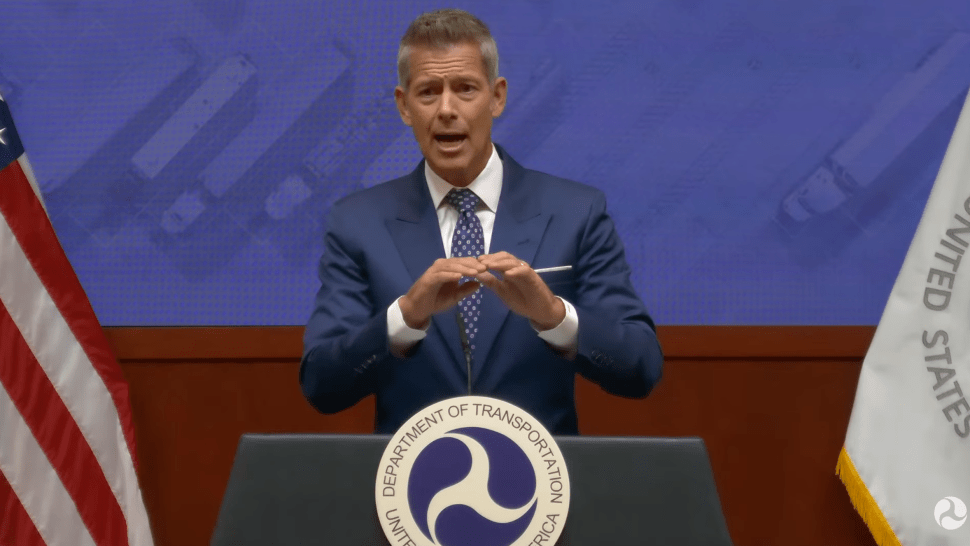
In his appearance on Fox News’ “The Will Cain Show” today, Duffy signaled a notable expansion in his enforcement strategy, pivoting from primarily holding trucking companies (carriers) accountable to also targeting shippers for enabling non-English-proficient commercial truck drivers. This move aims to broaden road safety measures amid ongoing crashes and debates on immigration and federal oversight.
English language proficiency rules have been a primary focus of the DOT secretary’s compliance crackdown.
This development represents a remarkable shift in compliance enforcement, putting shippers at risk of substantial penalties if they fail to ensure that the trucks arriving at their docks have compliant drivers.
It will also make it more difficult for freight brokerages to distance themselves from verifying truck drivers’ qualifications when arranging freight pickups. Currently, brokerages focus their compliance efforts on motor carriers, treating truck drivers as interchangeable. If new regulations impacting shippers are implemented, this will no longer be the case.
Enforcement will wreak havoc for carrier sales rep teams at freight brokerages, as they will be held accountable by their shipper customers for booking loads with unqualified drivers.
This will become even more challenging with the proliferation of AI agents and bots that enable truck drivers to appear proficient during phone conversations, though brokers will lack reliable ways to verify. That will require a much higher level of diligence from brokers but will also shift market dynamics toward large asset-based carriers that can ensure their employee drivers meet English qualifications and any other DOT mandates.
Key Statements from the Fox Interview
Duffy began by reiterating accountability for carriers but quickly shifted to include shippers—the entities loading cargo onto trucks. In the clip he shared on X, Duffy stated:
“A company can’t hire someone and then do so knowing that they can’t speak English. Huge problem. They should go through their own instruction course to make sure you have a well-qualified driver. And by the way, if you don’t do that, your insurance rates will go through the roof. So we’re going to hold them to account.”
He then extended this: “I also think we have to take a look at shippers, people who load up these rigs and send them across the country. There’s a lot of interaction between the shipper and the trucker. If you can’t speak English, those should be held to account. Say, listen, not going to put my load on that truck with that driver because they’re breaking the law.”
The chyron read “AMERICAN LIVES LOST IN ILLEGAL TRUCKER CRASHES,” linking language proficiency to public safety. Duffy argued non-compliance violates federal law and endangers lives, as drivers unable to read signs or communicate pose risks.
The X post garnered thousands of views, with users supporting the broader enforcement and suggesting mandatory weigh station checks.
Looking Ahead
As threats of funding cuts to non-compliant states persist, this pivot to shippers underscores evolving federal-state tensions and immigration enforcement. With pledges to prioritize safety, expect investigations across the supply chain. Duffy’s message: accountability now encompasses every link, starting with carriers and extending to shippers.
Brokerage Compliance Symposium
The day before F3. Every compliance issue you face - fraud exposure, carrier liability, FMCSA rules, cargo theft, insurance gaps - navigated by attorneys and operators defining best practices in a changing industry.
F3 Awards Dinner
The night before F3. FreightTech100 companies honored. FreightTech 25 and Shipper of Choice winners revealed live. Cocktail reception into dinner and live music - 300 industry leaders in one purpose-built room.
F3: Future of Freight Festival
Industry-defining keynotes, rapid-fire technology demos, and industry leaders networking in experiences across Chattanooga - plus the inaugural F3 Awards Dinner featuring the FreightTech and Shipper of Choice reveals.
The day before F3. Every compliance issue you face - fraud exposure, carrier liability, FMCSA rules, cargo theft, insurance gaps - navigated by attorneys and operators defining best practices in a changing industry.
The Signal at Chattanooga Choo Choo • Chattanooga, TN Register NowThe night before F3. FreightTech100 companies honored. FreightTech 25 and Shipper of Choice winners revealed live. Cocktail reception into dinner and live music - 300 industry leaders in one purpose-built room.
The Signal at Chattanooga Choo Choo • Chattanooga, TN Register NowIndustry-defining keynotes, rapid-fire technology demos, and industry leaders networking in experiences across Chattanooga - plus the inaugural F3 Awards Dinner featuring the FreightTech and Shipper of Choice reveals.
The Signal at Chattanooga Choo Choo • Chattanooga, TN Register Now