




By Chris Dupin
A bill to reregulate the rail industry has made little progress in nearly a year after it was unanimously reported out of the U.S. Senate Committee on Commerce, Science and Transportation with bipartisan support.
Legislation similar to the Surface Transportation Board Reauthorization Act of 2009 has yet to be introduced in the House, and in September committee Chairman John D. Rockefeller IV, D-W.V., held what he said would be a series of hearings.
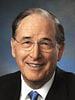
| Rockefeller |
Rockefeller expressed personal frustration over the lack of progress, saying early on he had a 'nice little meeting in a railroad car and it was all very pleasant and happy,' but that the industry had not met shippers halfway in trying to reach compromise.
'I think he was telling the railroads 'I am peeved ' and that you may have the ability to stall this legislation, but you will pay an enormous price' ' that was the message,' said shipper advocate Robert Szabo, executive director of the Consumers United for Rail Equity (CURE). He still believes Rockefeller's bill could pass in the lame duck session of Congress.
Referring to a committee staff report released just before the hearing, Rockefeller said it showed the Staggers Rail Act of 1980 has achieved its goal of restoring financial stability to the U.S. rail system.
The four major U.S. Class I railroads ' Union Pacific and Burlington Northern Santa Fe in the West; CSX and Norfolk Southern in the East ' 'are achieving returns on revenue and operating ratios that rank them among the most profitable businesses in the U.S. economy,' the report said.
While the railroads are investing record amounts into much-needed capital projects, the report said a doubling of dividends to shareholders and share buybacks 'undermine the railroads' argument that they still lack the income to invest in their long-term capital needs.'
Rockefeller accused the railroads of being disingenuous because they tell the STB 'they're barely making enough money to keep the lights on,' while to Wall Street 'tout their high profit margins and their power to dictate prices to their customers,' and to Congress say, 'they don't have enough money to invest in needed capital projects.
'This is all happening at a time when shippers all over our country are paying more than their fair share to transport their goods to their customers ' paying more because they have no other alternative, there is no competition,' Rockefeller
said.
Szabo called the staff report 'irrefutable.'
The Association of American Railroads, however, complained the staff report 'makes profits and corporate efficiency sound like dirty words. The reality is the railroad industry's return to financial health has resulted in private capital ' not taxpayer dollars ' getting turned back into building and maintaining the nation's rail network.
'Even during the worst recession in 80 years, America's freight railroads have kept investing, spending $21.8 billion of their own private capital in 2008 and $20.2 billion in 2009 to build, maintain and modernize the nation's 140,000-mile rail network that serves both passengers and freight.'
 |
| Elliott |
Elliott said the reauthorization bill would:
' Restore the STB's ability to initiate investigations.
' Enable the agency to send small disputes to a quick and inexpensive arbitration process.
' Authorize a budget that would allow the STB to become more proactive.
Elliott, noting it may take some time for the STB bill to pass, said, 'I don't want to sit still while important matters are in my power to pursue.' He said he was working to 'reinvent' the STB to be 'an engaged problem-solver, rather then a board that responds to a docket of filings and complaints.'
He said he wanted to 'revisit board rules on railroad industry competition including those that govern competitive access' when one railroad is seeking access to another's tracks at a terminal facility or at an interchange point.
CURE said that in the mid-1980s, the ICC ruled that interventions are only in the public interest when the agency finds monopoly abuse, which requires a company filing a complaint to prove a 'mini-antitrust' case. CURE said since that ruling, rail customers have not been successful with competitive access complaints at the STB.
'Those rules were adopted 25 years ago when the financial health of the industry was completely different than it is today,' Elliott said.
He also said it is time for the STB to 'revisit several of the board's exemption rulings that remove federal protections of reasonable service and rates from various shippers in the 1980s. At the time most of the shippers supported the exemptions, but many of those same shippers say now that these exemptions have outlived their usefulness.'
CURE added the 'current process includes excessive filing fees, no burden of proof on the monopoly railroad, and a requirement that the only unreasonable rate is the one that is higher than what it would cost the shipper to build its own railroad. Not surprisingly, rail customers rarely win.'
Elliott also told Rockefeller that he would like to review the level of filing fees, saying right now shippers have to pay a $20,000 fee to complain about an unreasonable practice or service.
When he was working to get the STB reauthorization bill through his committee, Rockefeller got Sen. Herb Kohl, D-Wis., to put on hold a bill that would eliminate antitrust immunity for the railroad industry. But Kohl appeared at the Rockefeller hearing, testifying that the railroad's immunity was 'outmoded and unwarranted,' and has resulted in higher prices for consumer and manufactured goods, food and electricity.
Brokerage Compliance Symposium
The day before F3. Every compliance issue you face - fraud exposure, carrier liability, FMCSA rules, cargo theft, insurance gaps - navigated by attorneys and operators defining best practices in a changing industry.
F3 Awards Dinner
The night before F3. FreightTech100 companies honored. FreightTech 25 and Shipper of Choice winners revealed live. Cocktail reception into dinner and live music - 300 industry leaders in one purpose-built room.
F3: Future of Freight Festival
Industry-defining keynotes, rapid-fire technology demos, and industry leaders networking in experiences across Chattanooga - plus the inaugural F3 Awards Dinner featuring the FreightTech and Shipper of Choice reveals.
The day before F3. Every compliance issue you face - fraud exposure, carrier liability, FMCSA rules, cargo theft, insurance gaps - navigated by attorneys and operators defining best practices in a changing industry.
The Signal at Chattanooga Choo Choo • Chattanooga, TN Register NowThe night before F3. FreightTech100 companies honored. FreightTech 25 and Shipper of Choice winners revealed live. Cocktail reception into dinner and live music - 300 industry leaders in one purpose-built room.
The Signal at Chattanooga Choo Choo • Chattanooga, TN Register NowIndustry-defining keynotes, rapid-fire technology demos, and industry leaders networking in experiences across Chattanooga - plus the inaugural F3 Awards Dinner featuring the FreightTech and Shipper of Choice reveals.
The Signal at Chattanooga Choo Choo • Chattanooga, TN Register Now