




HMM said Friday it had shaved its year-over-year net loss by $94 million.
South Korea’s largest container carrier reported a first-quarter net loss of 65.6 billion won ($55 million), a 63.2% improvement from the 178.5 billion won ($149 million) net loss in Q1 2019.
HMM was among the Asian carriers criticized this week for receiving government aid while their European counterparts were struggling without federal assistance during the coronavirus crisis.
A European Commission source told American Shipper on Friday that it was “aware of the South Korean state-driven policies designed to provide support to national companies in shipbuilding, shipping and marine equipment and, in particular, those policies falling under the Korean five-year plan for shipping industry revival.
“The commission is working on a white paper to investigate possible new tools to counter distorting impacts of subsidies granted by non-EU authorities and affecting the EU internal market,” the source said.
HMM attributed its year-over-year gains to cost-reduction measures, profit-oriented sales strategies and the profitability of its tanker business. “The tanker business resides in a relatively favorable environment given low oil prices and continued strong demand for floating storage,” the company noted.
HMM said its Q1 year-over-year operating profit had improved by 98.1% but was still a loss of 2 billion won ($1.7 million).
Container volume, however, dropped 18.7% year-over-year and was blamed on five weeks of supply-side disruptions in China after the coronavirus spread there.
HMM said despite the negative impacts from the spread of COVID-19, its performance was enhanced by the utilization of five very large crude carriers, the securing of high-yield cargo, and strong freight rates in the Middle East and India trade lanes.
Looking ahead, HMM said, “The knock-on effects of the COVID-19 pandemic still persist. Trade volumes are expected to be weakened as a result of demand-side impacts in the U.S. and Europe as well as [the] continued lockdown worldwide. Rising concerns over the U.S.-China trade tensions related to geopolitical risks also can intensify the situation.”
Formerly known as Hyundai Merchant Marine, HMM has a fleet of about 100 vessels. It said its megaships with capacity of 24,000 twenty-foot equivalent units (TEUs) “will be stably operated based on the seamless cooperation with THE Alliance members. And HMM will respond flexibly to market fluctuation in line with rationalization of service products being implemented by THE Alliance.”
HMM is a member of THE Alliance, a space-sharing agreement on major east-west container routes, with Hapag-Lloyd, ONE and Yang Ming.
HMM said in October it would issue a 660 billion won ($562.4 million) convertible bond and would use the funds for ship and equipment investment and to improve the company’s financial structure.
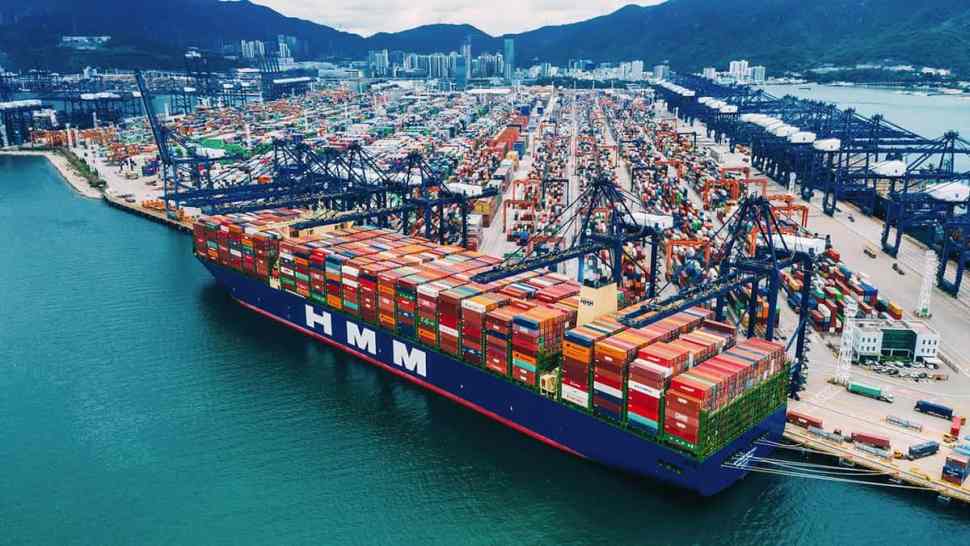
It deployed the first 24,000-TEU container ship, the HMM Algeciras, last month. It is the world’s largest container ship and the first of 12 massive, 24,000-TEU vessels HMM had said were scheduled to be delivered through September.
F3: Future of Freight Festival
Industry-defining keynotes, rapid-fire technology demos, and industry leaders networking in experiences across Chattanooga - plus the inaugural F3 Awards Dinner featuring the FreightTech and Shipper of Choice reveals.
Industry-defining keynotes, rapid-fire technology demos, and industry leaders networking in experiences across Chattanooga - plus the inaugural F3 Awards Dinner featuring the FreightTech and Shipper of Choice reveals.
The Signal at Chattanooga Choo Choo • Chattanooga, TN Register Now