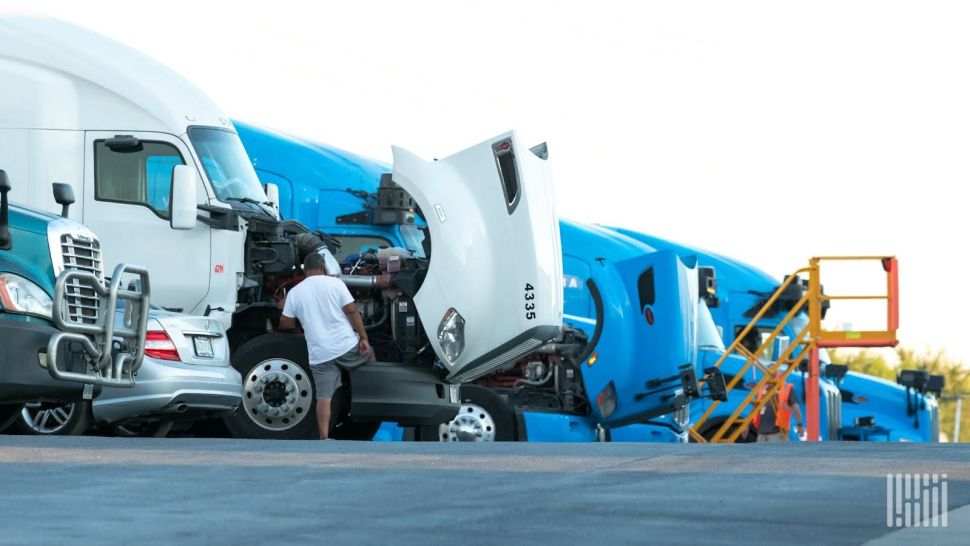
A transmission doesn’t just wake up one day and blow itself out. It wears down in silence. It warns you in whispers—until the whisper becomes a breakdown. Slipping gears. Delayed shifts. Rattles, vibrations, burnt fluid, rising temps—these are all clues. And if you catch them early enough, you save thousands. But if you wait until the truck won’t go into gear, you’re not doing maintenance anymore. You’re talking replacement.
And in today’s freight market, replacement is a death sentence to your week and your wallet. Expect $10,000–$18,000 in parts and labor for a full swap, and that’s before lost loads, missed revenue, and downtime can kill your business.
The good news? Transmissions rarely fail without warning. The bad news? Too many small carriers don’t know what those warnings look like — especially when it comes to the difference between a manual and an automated.
This article breaks down both transmission types, the symptoms you should be watching for, and how to bake preventive habits into your maintenance routine.
Manual vs. Automated – What You’re Actually Driving
Let’s start here: not all transmissions fail the same way.
Manual Transmissions
You’re dealing with a clutch, pressure plate, flywheel, and the transmission itself — a series of gearsets controlled by driver input. It’s simpler mechanically, but more dependent on driver behavior.
Common early signs of failure:
- Clutch slippage or chatter
- Difficulty shifting (especially into low or reverse)
- Grinding between gears
- “Walking” forward at idle while in gear with the clutch in
- A spongy, stiff, or inconsistent clutch pedal
Most of the early problems in manuals start at the clutch, not the gearset itself. If you’re adjusting your driving to “nurse” a sticky shift or grinding third gear and brushing it off as normal — you’re ignoring a repair that’ll snowball into a full rebuild.
Automated Manual Transmissions (AMTs)
These systems still use gearsets and clutches, but they’re controlled by actuators and computers, not your left foot. Think Eaton UltraShift, Detroit DT12, or Volvo I-Shift.
They’re more efficient but also more complex — and more expensive to repair. Most AMTs are rated for around 750,000 miles before needing extended service, but many fail sooner without proper fluid maintenance and heat management.
Common early signs of failure:
- Delayed engagement into Drive or Reverse
- Slipping under load with no pedal input
- Constant gear hunting or failure to shift appropriately
- Shifting “bangs” or loud clunks
- Transmission fault codes or gear selector lights flashing
With AMTs, you’re not just watching for mechanical issues — you’re also watching for electronic failures: sensors, clutch actuators, valve bodies, even corrupted software files. If something feels “off,” it might be the system recalibrating… or it might be the beginning of a $12,000 problem.
The First Red Flag – Fluid Never Lies
No matter the transmission, fluid is your first warning sign.
Transmission fluid does three jobs:
- Lubricates gears and bearings
- Transfers hydraulic pressure for shifts
- Cools the system
If that fluid’s breaking down, so is everything inside.
Here’s what to look for:
| What You See | What It Means |
| Bright red, no odor | Healthy |
| Brown, slightly burnt | Fluid aging, time to replace |
| Black, strong burnt smell | Overheating, poor cooling, possible damage |
| Bubbles or foam | Aeration or leak allowing air into system |
| Metallic shimmer or flakes | Internal gear or bearing wear – act fast |
Pro tip: Fluid condition is more important than fluid mileage. You don’t have to wait for your service interval — pull a sample every 25,000–30,000 miles and have it analyzed like you would oil.
Shifting Behavior – Don’t Dismiss “Driver Quirks”
Shifting is often where transmission problems show up first — and get ignored the longest. Whether you’re running a manual or an AMT, your hands, feet, and throttle tell you more than your gauges will.
Manual Clutch/Shift Red Flags:
- Clutch pedal has dead spots or uneven pressure
- Gear grinding that’s getting worse over time
- Gears feel “vague” or hard to find
- Gear pops out after engaging under load
Automated Red Flags:
- Long delay when selecting Drive or Reverse
- Slamming into gear at low speeds
- Gear selector “blinks” or won’t respond
- Unexpected shift timing (too early or too late)
- Excessive shifting even on flat terrain
Action step: Train your drivers (or yourself) to report any shifting change immediately. Early engagement issues can be fixed with recalibration or solenoid replacement — but if ignored, the entire transmission wears out trying to compensate.
Heat: The Silent Killer
You wouldn’t ignore an oil temp running hot — so don’t ignore transmission temps either.
Every 20°F above normal cuts transmission life in half. Let that sink in.
- Normal operating temp: 160°F–200°F
- Warning zone: 220°F and rising
- Critical: 250°F+ sustained — damage is happening right now
Most modern trucks track trans temp, but few drivers watch it. Tie it into your telematics and start logging peaks during hills, hot weather, or heavy loads.
AMTs run hotter by nature. So if you’re pulling 44k through the mountains on a hot day, you need to be watching trans temp just like you watch boost and oil pressure.
Noise and Vibration – Your Truck is Talking
If the truck starts sounding different, that’s not coincidence — it’s communication.
| Noise | Possible Issue |
| Whining or humming | Bearing or gear wear |
| Clunking at takeoff | Failing U-joints or mounts |
| Grinding | Synchro failure (manuals) or clutch pack wear |
| Vibration at load | Misaligned driveshaft or failing transmission mount |
Using Data to Catch It Early
Many ELDs and telematics systems track:
- Transmission temp
- Gear selection patterns
- Shift frequency
- Load percentages
You can pull monthly reports to spot early changes in behavior. For example:
- If shift frequency is up 15% over the last month on the same highways, something’s off.
- If temps are creeping up, you’ve got a fluid or cooling issue.
- If your driver is spending more time in low gear than usual, the clutch maybe losing bite.
Pair this with fluid sampling during PMs and you’ll catch 80% of transmission issues before they hit five figures.
What It Costs — and How to Avoid It
Let’s not sugarcoat it, here are some ballpark estimates:
| Component | Average Cost (Parts + Labor) |
| Manual clutch replacement | $2,000-$4,000 |
| Manual transmission swap | $7,000-$10,000 |
| AMT clutch actuator | $1,500-$2,500 |
| AMT full replacement | $10,000-$18,000 |
Prevention costs pennies on the dollar:
- $30 fluid sample
- $60 sensor
- $180 clutch adjustment
- $200 early solenoid replacement
Would you rather pay $250 now or $15,000 later?
Final Word – Build a Transmission Detection System
Don’t rely on feeling. Build a system.
- Check fluid weekly — color, level, smell.
- Listen for noises — grinding, whining, clunking.
- Monitor temps — tie them to your ELD or a simple gauge.
- Train your drivers — make them part of the early-warning network.
- Use your data — trends don’t lie.
Whether you’re running a 10-speed manual or a DT12 AMT, early detection protects your load, your truck, and your wallet. And for small carriers, you don’t have the luxury of letting your transmission “sort itself out.”
The signals are there. Learn to read them — and stop the bleed before it hits your bottom line.
Brokerage Compliance Symposium
The day before F3. Every compliance issue you face - fraud exposure, carrier liability, FMCSA rules, cargo theft, insurance gaps - navigated by attorneys and operators defining best practices in a changing industry.
F3 Awards Dinner
The night before F3. FreightTech100 companies honored. FreightTech 25 and Shipper of Choice winners revealed live. Cocktail reception into dinner and live music - 300 industry leaders in one purpose-built room.
F3: Future of Freight Festival
Industry-defining keynotes, rapid-fire technology demos, and industry leaders networking in experiences across Chattanooga - plus the inaugural F3 Awards Dinner featuring the FreightTech and Shipper of Choice reveals.
The day before F3. Every compliance issue you face - fraud exposure, carrier liability, FMCSA rules, cargo theft, insurance gaps - navigated by attorneys and operators defining best practices in a changing industry.
The Signal at Chattanooga Choo Choo • Chattanooga, TN Register NowThe night before F3. FreightTech100 companies honored. FreightTech 25 and Shipper of Choice winners revealed live. Cocktail reception into dinner and live music - 300 industry leaders in one purpose-built room.
The Signal at Chattanooga Choo Choo • Chattanooga, TN Register NowIndustry-defining keynotes, rapid-fire technology demos, and industry leaders networking in experiences across Chattanooga - plus the inaugural F3 Awards Dinner featuring the FreightTech and Shipper of Choice reveals.
The Signal at Chattanooga Choo Choo • Chattanooga, TN Register Now