




By Eric Kulisch
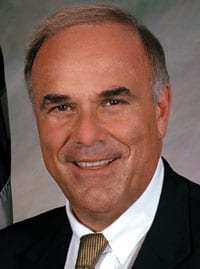
Pennsylvania Gov. Ed Rendell, perhaps the most forceful advocate for infrastructure development among elected officials, favors several of the prescriptions offered by the National Surface Transportation Infrastructure Finance Commission in late February.
(See the April issue of American Shipper for an in-depth review on the commission's report to Congress.)
In a speech at the U.S. Chamber of Commerce in early December, Rendell said viable options for funding transportation improvements include a short-term increase in the gasoline tax, lifting the ban on state tolling of federal roads and creating tax advantages for private investment in public assets.
Roads, bridges, water treatment facilities, electric grids, ports, transit systems and other social support structures are aging and operating beyond design capacity, jeopardizing the nation's competitiveness, quality of life and public safety, Rendell and other policy experts warn.
As the head of the National Governor's Association (NGA) and co-founder of the Building America's Future coalition, Rendell was omnipresent this winter on the airwaves, in meetings with congressional leaders and the incoming Obama administration and at policy seminars, arguing that the nation's long-term need to rehabilitate its infrastructure intersected with the immediate need for the government to spend money and create jobs to right the economy.
He has made infrastructure his top priority during his one-year term leading the NGA and outlined a vision for how states should reinvent policies and programs to address the twin problems of underinvestment and uncoordinated planning. Under his direction, the NGA plans to develop a set of best practices for states to follow for infrastructure development. In January 2008, Rendell, Gov. Arnold Schwarzenegger of California and New York City Mayor Michael Bloomberg, formed Building America's Future to galvanize elected officials around the importance of policies that increase investment in the core physical platforms of society.
| 'Every one of the G7 nations except the United States of America in the last 15 years has had massive infrastructure repair and revitalization programs. We haven't. We need one.' | |
| Gov. Ed Rendell. Pa. | |
'Every one of the G7 nations except the United States of America in the last 15 years has had massive infrastructure repair and revitalization programs. We haven't. We need one,' Rendell said at a press conference opening the NGA's annual meeting in mid-February.
Although the American Recovery and Reinvestment Act included about $100 billion (the number depends on how people define money for schools) for an array of infrastructure priorities, including $48 billion for transportation, it fell short of the $136 billion for ready-to-go projects requested by the nation's governors and the criteria for progress articulated by Rendell.
He argued that the stimulus package needed a huge dose of infrastructure spending if it were to make a difference, but also worried that lawmakers might shift their focus to other pressing priorities after providing a one-time infusion of funding for repairs and upgrades for roads, bridges, water treatment facilities and other social support structures. Nonetheless, he has called the economic spending plan a good down payment for the nation's infrastructure needs.
'The long-term needs exist even if the economy was purring,' Rendell said, pointing to a $1.1 trillion infrastructure investment gap over five years identified by the American Society of Civil Engineers. The organization has estimated that all levels of government will need to spend $2.2 trillion during that period just to maintain and upgrade existing infrastructure to working order. Governments would need to raise about $200 billion extra per year to make up the difference.
He also warned that poor implementation of the recovery funds for infrastructure would harm the effort to obtain necessary resources in the upcoming highway reauthorization bill.
'If we screw it up, if we politicize it, we will lose support for spending the type of money we need to do it right,' he said.
Congress and the Obama administration are trying to impose reporting requirements on state and local governments to track how they are spending stimulus dollars, but big-city mayors are already carping that they are not getting their fair share of road funds compared to outlying areas.
Some major U.S. cities had no project funding allocated to them at all based on state-submitted project lists and only about half of the money was targeted to the 100 largest metropolitan areas despite the fact they make up 78 percent of the nation's GDP, according to Bruce Katz, director of the Metropolitan Policy Program at the Brookings Institution.
And some states are taking advantage of ambiguity in the law to fund projects with questionable rationales because they are already on the drawing board and can be quickly started.
The country's ability to upgrade its infrastructure depends on bureaucratic and regulatory fixes as much as funding to speed up the glacial pace at which planned projects are approved, Rendell said.
Business leaders complain that it takes up to 14 years to complete transportation projects in the United States in large part because of the complex and slow approval process.
Rendell said the reconstruction of the collapsed interstate highway bridge in Minneapolis within 11 months of its collapse in August 2007 shows how the process can work if officials are properly motivated and abandon normal timelines. California similarly finds ways to quickly rebuild fallen overpasses following earthquakes and used an informal bid process, a shortened advertising period, and pre-qualified bidders to quickly repair a bridge damaged by fire from a gasoline tank truck accident in 2007. Bridges normally take two years or more to complete.
Rendell last year ordered that all requests for proposals for major bridges must be submitted within 30 days, cutting three to four months off Pennsylvania's construction delivery time. He wielded the cudgel of 'use it or lose it' to get the cooperation of contractors and bureaucrats accustomed to the slower pace of project management, warning that if the state didn't obligate federal grants and get projects going quickly enough the federal Department of Transportation could take back the money.
A year ago, the Pennsylvania Department of Transportation reopened a two-mile stretch of Interstate 95 less than 72 hours after discovering a major crack in a concrete support pillar because officials suspended all normal contracting procedures and crews worked around the clock to repair the damage.
'We violated every one of our bid requirements because you can't have the nation's super highway tied up for two or three weeks,' Rendell said. That type of urgency needs to be applied to infrastructure projects writ large, he argued.
The federal stimulus package contains similar quick-start requirements that half the money for transportation projects must be committed within 120 days or states and local governments risk forfeiting their share to other states that are ready to begin construction. The idea originated with the NGA as a way for governors to hold themselves accountable for not sitting on money until long-range projects can be developed.
Pennsylvania has adopted a 'fix it first' strategy that focuses the new federal dollars on repairing existing facilities because of their condition and the ability to quickly create jobs. The state leads the nation in structurally deficient bridges (6,000) because a large number of them are 75 years or older. The recommended life span for a bridge is 40 years. Since taking office, Rendell has more than tripled ' almost $1 billion per year ' the amount of money for bridge repairs as part of his Rebuild Pennsylvania initiative.
| | |
| 'We have to make judgments on how that money is spent outside of the conventional system. Experts should choose what projects to fund, not politicians.' | |
Speed is also important to counteract construction inflation, which has increased the cost of road-building materials by almost 40 percent during the past three years, Rendell said.
'It's another reason why we've got to start now. We cannot delay our infrastructure revitalization program because every year the bill goes higher and higher,' he said.
The former mayor of Philadelphia said his coalition has urged the Obama administration to review whether the timelines for conducting environmental impact assessments can be streamlined, and suggested that the federal government and states may need to hire more people to speed up the process. Agencies typically know the environmental impact of a project within 120 days, but there is no coordination among the multiple agencies that often conduct redundant reviews with multiple deadlines, and applications can languish without a direct sponsor moving them through the pipeline, according to people who have studied the matter.
'There's no reason you can't do an Environmental Impact Statement in three to four months,' Rendell said.
Advocates for faster reviews stress that they are only calling for the need to cut unnecessary red tape and not for taking short-cuts that compromise environmental requirements or sacrifice due diligence in planning projects.
Rendell and other pro-infrastructure officials at the Building America's Future coalition wanted the stimulus plan to create and fund a national infrastructure bank with federal seed money that can attract private investment and an independent board of experts that makes states and localities compete for money targeted at large-scale projects. Their wish was only partially realized with a $1.5 billion, merit-based transportation grant program.
But President Barack Obama's 2010 budget proposal released after enactment of the stimulus includes $25 billion over five years for an infrastructure bank.
Rendell said an independent entity that can conduct cost-benefit analyses is necessary to regain the public's trust that money won't be wasted on local pork barrel projects.
Thirty-three states have established their own infrastructure banks and provided more than $6 billion in financing so far.
Sens. Chris Dodd, D-Conn., and Chuck Hegel, R-Neb., and Rep. Barney Frank, D-Mass., in the last session of Congress championed legislation for an infrastructure bank that would issue bonds to finance projects of regional or national significance, but critics say the new entity wouldn't act like a real bank that requires borrowers to repay their loans with interest to sustain more projects but instead is another funding vehicle supported by tax dollars.
Supporters say that the entity, if properly structured, would use the money that currently goes into modal programs and be free to support projects in various ways, as would a private sector bank. It could raise $200 million to $300 million through bonds and become self-financing over time, according to Felix Rohatyn, the famed investment advisor and former ambassador to France.
'It would treat infrastructure like an investment and not a program,' he said.
'We have to move swiftly, we have to be creative, we have to create public confidence in what we do by stressing accountability and transparency in infrastructure development,' Rendell said at the NGA conference. 'We have to make judgments on how that money is spent outside of the conventional system. Experts should choose what projects to fund, not politicians.'
A major reform that would help sustain transportation funding over the long term is the creation of a federal capital budget that would insulate expensive public investment from the vagaries of the annual appropriation process where they must compete with defense, entitlements and other programs for regular outlays, Rendell said.
'No city, no county, no borough finances long-term investments in infrastructure out of their operating budget,' he said. 'Nobody would finance the purchase of paper clips the way you finance the building of a major interstate highway. It makes no sense.'
Adopting a federal capital budget has been debated in Washington for more than 35 years without much success because of worries by some that the process would be open to abuse as ordinary spending gets categorized as capital investment to protect it or get more favorable borrowing rates.
'If you had to pay for your house with money you've saved up front, how would you do it? If you don't treat it like a long-term investment you don't invest enough,' said Polly Trottenberg, executive director for Building America's Future, in an interview.
Rendell, who was blocked by the legislature from pursuing a $12.8 billion lease of the Pennsylvania Turnpike to investment bank Morgan Stanley to operate and collect tolls for 99 years and use the up front payment to fund transportation projects, said the state is now considering what he called a 'negative' public private partnership.
The concept turns on its head the typical concession model in which private investors pay a lump sum for the privilege of building and/or operating a public asset in exchange for the toll receipts. Rendell wants to build a high-speed light rail line between Schuylkill County and Philadelphia to ease the burden on commuters, but the project cannot attract any financing or federal earmarks because it doesn't meet federal cost-benefit criteria. The project is estimated to cost $1 billion to $3 billion.
The state plans to seek parties interested in financing and constructing the rail line and what annual subsidy they would require from the state for meeting its performance requirements.
To read Gov. Rendell's 'Infrastructure Vision for the 21st Century' go to www.subnet.nga.org/ci/0809/.
Brokerage Compliance Symposium
The day before F3. Every compliance issue you face - fraud exposure, carrier liability, FMCSA rules, cargo theft, insurance gaps - navigated by attorneys and operators defining best practices in a changing industry.
F3 Awards Dinner
The night before F3. FreightTech100 companies honored. FreightTech 25 and Shipper of Choice winners revealed live. Cocktail reception into dinner and live music - 300 industry leaders in one purpose-built room.
F3: Future of Freight Festival
Industry-defining keynotes, rapid-fire technology demos, and industry leaders networking in experiences across Chattanooga - plus the inaugural F3 Awards Dinner featuring the FreightTech and Shipper of Choice reveals.
The day before F3. Every compliance issue you face - fraud exposure, carrier liability, FMCSA rules, cargo theft, insurance gaps - navigated by attorneys and operators defining best practices in a changing industry.
The Signal at Chattanooga Choo Choo • Chattanooga, TN Register NowThe night before F3. FreightTech100 companies honored. FreightTech 25 and Shipper of Choice winners revealed live. Cocktail reception into dinner and live music - 300 industry leaders in one purpose-built room.
The Signal at Chattanooga Choo Choo • Chattanooga, TN Register NowIndustry-defining keynotes, rapid-fire technology demos, and industry leaders networking in experiences across Chattanooga - plus the inaugural F3 Awards Dinner featuring the FreightTech and Shipper of Choice reveals.
The Signal at Chattanooga Choo Choo • Chattanooga, TN Register Now