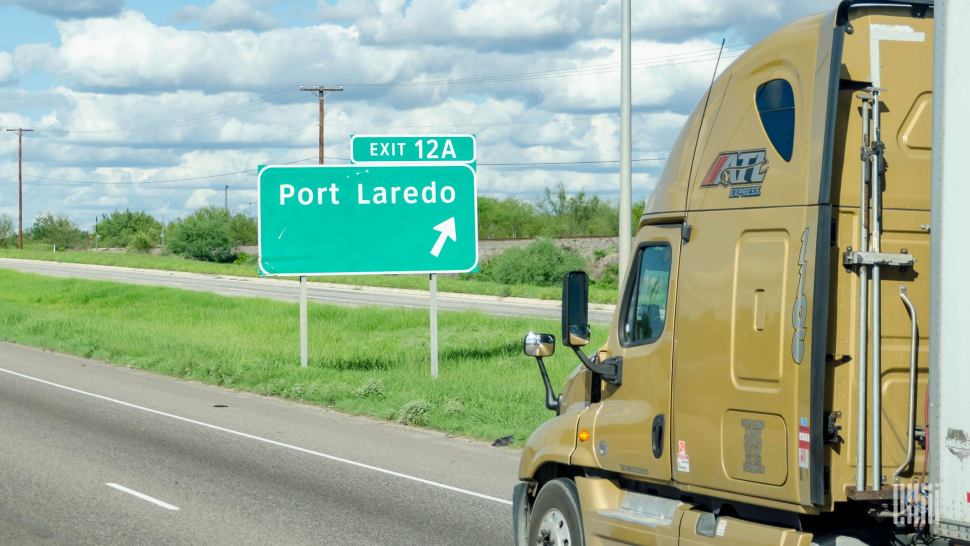
LAREDO, Texas — Cross-border trade stakeholders gathered in Laredo on Tuesday for the 9th Annual Modernization of Cross-Border Trade conference, where discussions focused on rising legal liability for brokers, evolving carrier-vetting standards, cargo security risks and preparations for the next phase of the U.S.-Mexico-Canada Agreement.
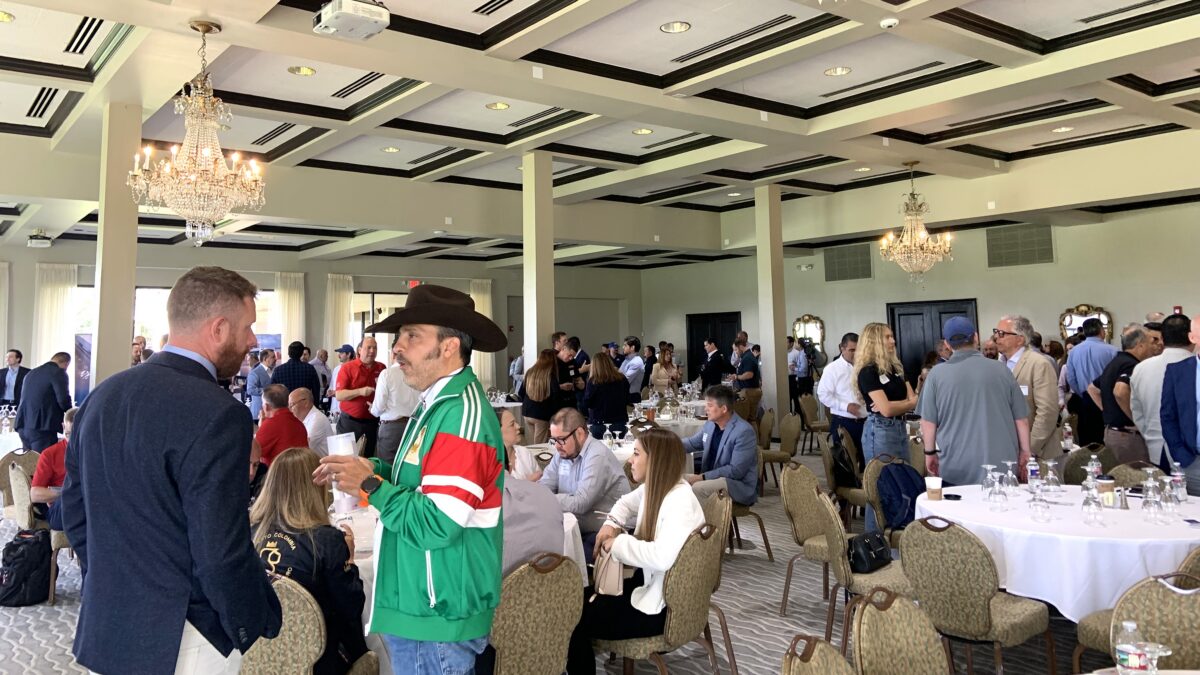
The event, hosted by Reliance Partners and Borderless Coverage, brought together more than 500 of the industry’s leading voices as U.S.-Mexico freight continues to face unprecedented regulatory and operational challenges.
Opening the conference, Jerry Maldonado, chairman of the Laredo Motor Carriers Association, highlighted the organization’s 10th anniversary and emphasized Laredo’s role as the leading inland port in North America.
“Laredo is the No. 1 inland port in the northern hemisphere,” Maldonado said, noting that freight transportation companies operating through the border city are directly affected by ongoing policy debates surrounding trade, transportation and logistics.
He also pointed to uncertainty surrounding upcoming USMCA negotiations but expressed confidence that the cross-border trade relationship would remain strong.
“We are very blessed as the [Laredo Motor Carriers Association] to have built strong relationships at a local level, at a state level, and at a federal level,” Maldonado said. “What does that mean for you? What does that mean for everyone here? Anything that you do that has to do with international trade, with logistics, with transportation, and you are here in Laredo, your load, your trailers, your customers, freight, goes through Laredo, it affects you.”
Mark Vickers, executive vice president of international logistics at Reliance Partners and founder of Borderless Coverage, said the conference was created to help industry stakeholders adapt to rapidly changing conditions in cross-border transportation.
“We modernize to make money,” Vickers said. “We want everybody to leave today super engaged on a number of topics.”
Among those topics were the U.S. Supreme Court’s recent Montgomery v. Caribe Transport II ruling, carrier-vetting requirements, cargo security, insurance trends and preparations for a potential USMCA 2.0 framework.
Vickers also pointed to long-term supply chain shifts resulting from the pandemic, including increased freight flows through Mexico and the Port of Manzanillo.
“There’s a number of geopolitical events that have kind of changed everything for us, and a lot of these changes are still from COVID, where the port congestion in Los Angeles was mitigated by U.S. companies bringing their Chinese freight through the Port of Manzanillo and trucking that up through Laredo to hit the U.S. market,” Vickers said. “That supply chain has stayed and that’s changed the way U.S. companies look at risk in Mexico.”
Supreme Court’s Montgomery ruling reshapes broker liability landscape
One of the most closely watched discussions of the day focused on the Supreme Court’s Montgomery v. Caribe Transport II decision and its implications for freight brokers.
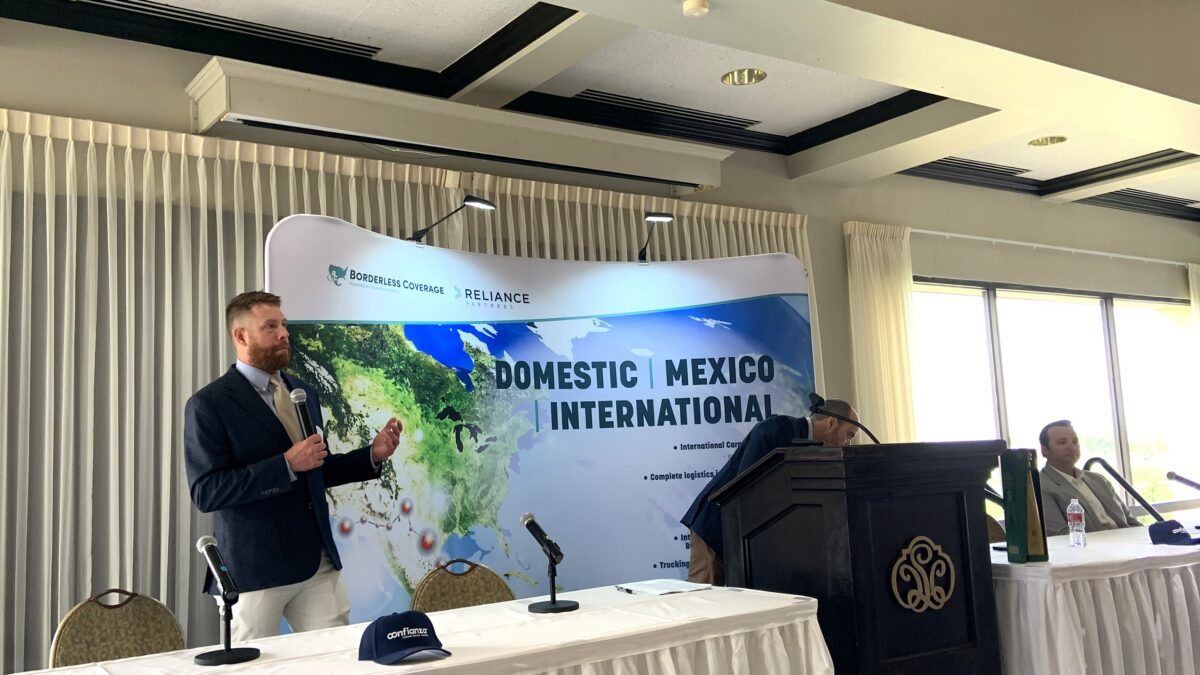
The panel, moderated by Thom Albrecht, chief financial and revenue officer at Reliance Partners, featured Jamie Cannon, senior vice president of logistics services at Reliance Partners, and Luca Winters, vice president for U.S.-Mexico cross-border logistics at Kuehne + Nagel.
Panelists said the ruling is already prompting insurance underwriters, brokers and shippers to reevaluate carrier-selection practices and liability exposure.
Cannon said insurers are scrutinizing broker-carrier agreements, standard operating procedures and carrier-vetting processes more closely than ever before.
“They’re looking at broker-carrier agreements. They’re looking at standard operating procedures for carrier vetting. They’re looking at what companies you’re using and whether you’re actually utilizing those systems,” Cannon said.
Winters said the decision elevates “reasonable care” from a compliance concept to a core business function.
“No longer are we in a position to say, as freight brokers, ‘I’ve done my minimum due diligence,’” Winters said. “Now we’re all going to have to become experts in how to mitigate risk.”
Panelists predicted that carrier-vetting practices will become increasingly standardized and technology-driven, with brokers expected to document decisions more thoroughly and demonstrate consistent adherence to internal procedures.
Cannon noted that underwriters are increasingly focused on documentation and consistency.
“Come up with a really good plan, document it, don’t deviate from it,” he said.
The discussion also touched on the growing role of technology, artificial intelligence and third-party vetting platforms as brokers attempt to navigate heightened legal exposure and mounting shipper expectations.
Panelists suggested that larger brokers with sophisticated compliance and vetting programs may gain market share as customers increasingly prioritize risk management.
Related: The Supreme Court Just Stripped Brokers of Their Biggest Legal Shield
Mexico carrier vetting moves to center stage
Another major panel focused on carrier vetting in Mexico, an issue that many participants said has become one of the most important risk-management tools in cross-border transportation.
Moderated by Carlos Sesma, senior partner at Sesma Sesma & McNeese, the panel featured Colton Sadler, chief legal officer at Steam Logistics, and Logan Pearce, head of claims and recoveries at Anova Marine Insurance.
Panelists said cargo theft in Mexico continues to evolve, with organized criminals increasingly relying on fraud, identity theft and digital impersonation schemes rather than traditional hijackings.
“We also have what we could say now is digital theft,” Sesma said. “Companies come into load boards, put their information up and start getting loads, and you never see your loads again.”
According to the panel, customers are no longer willing to accept traditional contractual language that shifts all responsibility once freight crosses the border. Instead, shippers increasingly expect brokers and logistics providers to demonstrate robust carrier-vetting programs and risk-management controls.
Sesma described carrier vetting as “the single most powerful risk management tool” available to companies moving freight between the U.S. and Mexico. Vetting can help mitigate operational, legal, compliance and cargo-loss risks while providing documentation that may prove critical during litigation or insurance claims, he said.
Sadler said carrier vetting in Mexico historically has been more difficult because of limited technology and fragmented data sources compared with the U.S.
“The biggest difference between vetting a U.S. carrier and a Mexican carrier is the technology available,” Sadler said. “Mexico’s a little bit behind with the U.S. on the technology side, but that’s changing.”
He also said that the Montgomery decision did not create new risks as much as it removed a legal defense that brokers had relied upon for years.
“The liability was always out there,” Sadler said. “What Montgomery did is we lost a defense.”
Pearce urged brokers, carriers and logistics providers to understand the specifics of their insurance coverage before losses occur, warning that many companies mistakenly assume cargo insurance will automatically cover every scenario.
“Know your coverage,” Pearce said. “Don’t just assume your insurance is going to handle it.”
Brokerage Compliance Symposium
The day before F3. Every compliance issue you face - fraud exposure, carrier liability, FMCSA rules, cargo theft, insurance gaps - navigated by attorneys and operators defining best practices in a changing industry.
F3 Awards Dinner
The night before F3. FreightTech100 companies honored. FreightTech 25 and Shipper of Choice winners revealed live. Cocktail reception into dinner and live music - 300 industry leaders in one purpose-built room.
F3: Future of Freight Festival
Industry-defining keynotes, rapid-fire technology demos, and industry leaders networking in experiences across Chattanooga - plus the inaugural F3 Awards Dinner featuring the FreightTech and Shipper of Choice reveals.
The day before F3. Every compliance issue you face - fraud exposure, carrier liability, FMCSA rules, cargo theft, insurance gaps - navigated by attorneys and operators defining best practices in a changing industry.
The Signal at Chattanooga Choo Choo • Chattanooga, TN Register NowThe night before F3. FreightTech100 companies honored. FreightTech 25 and Shipper of Choice winners revealed live. Cocktail reception into dinner and live music - 300 industry leaders in one purpose-built room.
The Signal at Chattanooga Choo Choo • Chattanooga, TN Register NowIndustry-defining keynotes, rapid-fire technology demos, and industry leaders networking in experiences across Chattanooga - plus the inaugural F3 Awards Dinner featuring the FreightTech and Shipper of Choice reveals.
The Signal at Chattanooga Choo Choo • Chattanooga, TN Register Now