Borderlands: US mulls terminating tomato trade agreement with Mexico

Borderlands is a weekly rundown of developments in the world of United States-Mexico cross-border trucking and trade. This week: The U.S. mulls terminating a tomato trade agreement with Mexico; Walmart opens a fulfillment center near Dallas; Saddle Creek Logistics is opening a distribution center in Arizona; and layoffs hit GulfMark Energy’s operations in Texas. 

US mulls terminating tomato trade agreement with Mexico

A monthlong comment review period undertaken by the Department of Commerce recently ended for a debate that centers around whether the U.S. should terminate a tomato trade agreement with Mexico.

With the comment review phase ending last Monday, the Commerce Department is expected to make a decision sometime in the next several months on ending the 2019 Tomato Suspension Agreement.

Tomatoes sold in the U.S. from Mexico are controlled by the U.S. Department of Commerce through the suspension agreement, which sets minimum pricing and regulates sales between growers and importers.

The debate centers around whether Mexico-based growers are dumping exported tomatoes into the U.S. at lower prices that undercut the domestic market.

In June, the Florida Tomato Exchange (FTE) requested that the federal government terminate the agreement, alleging that it has “failed to stop unfairly traded Mexican tomatoes from destroying the U.S. tomato industry,” Michael Schadler, the FTE’s executive vice president, said in a news release.

“It’s become clear that these agreements are simply not enforceable, at least when it comes to the tomato trade with Mexico,” Schadler said. “Suspension agreements might be an effective tool for products that can be kept in storage until market conditions improve, but for highly perishable items like fresh tomatoes, there is just too much incentive to evade the reference prices when markets are oversupplied.”

Florida growers have been pushing for more restrictions on Mexican-grown tomatoes for years. Since 1996, the U.S. and Mexico have negotiated five separate agreements regarding tomato imports.

In 2019, the FTE lobbied for stricter quality control on Mexican-grown tomatoes and more enforcement of import pricing.

As part of the 2019 agreement, Mexico-based growers agreed not to sell tomatoes below a reference price, a seasonably adjusted floor price at which Mexican tomatoes can’t fall underneath and still be exported to the U.S. 

The FTE argues that the 2019 Tomato Suspension Agreement isn’t working and wants the Commerce Department to impose tariffs on all Mexican-grown tomatoes.

While Florida tomato growers want tariffs, Arizona lawmakers and trade groups want the Biden administration to uphold the 2019 Tomato Suspension Agreement.

Lance Jungmeyer, president of the Nogales, Arizona-based Fresh Produce Association of Americas, said that doing away with the agreement would cost Arizona billions of dollars and lead to lost jobs, as well as result in higher produce prices for consumers across the country.

“To terminate the agreement would undoubtedly line the pockets of a handful of multi-million-dollar Florida growers, but the cost to America is one we cannot afford,” Jungmeyer said in a statement. “This agreement has been working for American consumers, companies, and communities for nearly three decades — we shouldn’t mess with success.”

A recent study from Arizona State University, the “Mexican Tomatoes: TSA-Tariff Analysis Report,” said terminating the agreement could impact the economies of Arizona and Texas, while limiting options and raising prices for consumers.

On Friday, NatureSweet also gave its support for preserving the Tomato Suspension Agreement. The San Antonio-based company is a grower, packager and seller of produce.

“The suspension agreement is critical to keeping specialty tomato varieties on American grocery store shelves,” Skip Hulett, vice president of general counsel for NatureSweet, said in a news release. “Nearly all of the grape and cherry tomatoes consumed by American families come from Mexico, where growing conditions are ideal for year-round production.”

Adding tariffs to imported tomatoes from Mexico could also affect trade flows in both Arizona and Texas.

In 2022, Mexico exported $2.7 billion worth of tomatoes to the U.S., according to the country’s Ministry of Agriculture and Rural Development.

The Laredo customs district in South Texas — which includes Laredo’s World Trade Bridge and the Pharr-Reynosa International Bridge in Pharr — accounts for the majority of tomato imports from Mexico, followed by the border crossing in Nogales, Arizona.

Walmart opens fulfillment center near Dallas

Walmart recently opened its third “next-generation” fulfillment center 15 miles about south of Dallas in Lancaster, Texas. 

The 1.5 million-square-foot facility will enable the retailer to fulfill online orders and will enable the retailer to fulfill more orders more quickly, Walmart (NYSE: WMT) said in a news release

The Lancaster fulfillment center is one of five next-generation facilities announced last year. The fifth facility was recently announced that will open in 2026 in Stockton, California. The facilities combine technology and machine learning with the aim of achieving faster shipping and delivery, while increasing Walmart.com order fulfillment capacity.

The Lancaster fulfillment center is creating up to 1,000 jobs. The retailer employs over 175,309 associates in the state, spending $90.3 billion with local suppliers in 2022 and supporting 255,379 supplier jobs across Texas, Walmart said.

Walmart opened its first next generation fulfillment center in 2022 in Joliet, Illinois. Other facilities include fulfillment centers in McCordsville, Indiana, and Greencastle, Pennsylvania.

Saddle Creek Logistics to open distribution center in Arizona

Saddle Creek Logistics Services recently leased a 570,080-square-foot industrial building in Glendale, Arizona, according to a news release.

Lakeland, Florida-based Saddle Creek Logistics Services specializes in warehousing, order fulfillment and transportation solutions for manufacturers, retailers and e-commerce companies.

The Glendale facility features 40-foot clearance heights, 87 dock doors for trucks and four large grade-level doors, a 190-foot concrete truck court and 132 trailer parking stalls.

“Saddle Creek continues to expand into new markets with an ever-growing client base,” Rob Pericht, Saddle Creek’s senior vice president of client solutions and operational development, said in a statement.

The Glendale facility will be Saddle Creek’s first in Arizona. The company has 53 facilities across 16 states.

Layoffs hit GulfMark Energy operations in Texas

The loss of a customer contract is leading to layoffs of 46 workers at four GulfMark Energy locations across Texas, according to a recent notice sent to state officials.

The layoffs include 34 truck drivers for the company at facilities in Gainesville, Bowie, Electra and Chico.

GulfMark Energy said the reduction in its workforce was “due to unforeseeable business circumstances, which is the recent loss of our contract in the Red River area of business.”

The company is also laying off 30 workers across three locations in Oklahoma. The layoffs include 21 truck drivers.

Houston-based GulfMark Energy is a marketer and transporter of crude oil and other products for customers across the U.S. The company has facilities in five states and operates 215 tractor-trailers and five barge terminals.

Click for more FreightWaves articles by Noi Mahoney.

More articles by Noi Mahoney

Universal Logistics’ Q3 earnings decline in ‘sluggish freight market’

Covenant Logistics sees Q3 revenue slip in weak freight market

Borderlands: Cargo theft trends changing as supply chains shift to border regions

FreightWaves’ Mary O’Connell discusses how to master cold chain fleet management.

Redig, South Dakota Post Office 57776

Redig South Dakota Post Office

The Redig, South Dakota Post Office serves ZIP Code 57776. Photo by Jimmy Emerson, some rights reserved. Photo shared under the Creative Commons License.

Redig Post Office
14695 US-85
Redig, SD 57776

Location at Google Maps

Intermodal’s gain is trucking’s loss

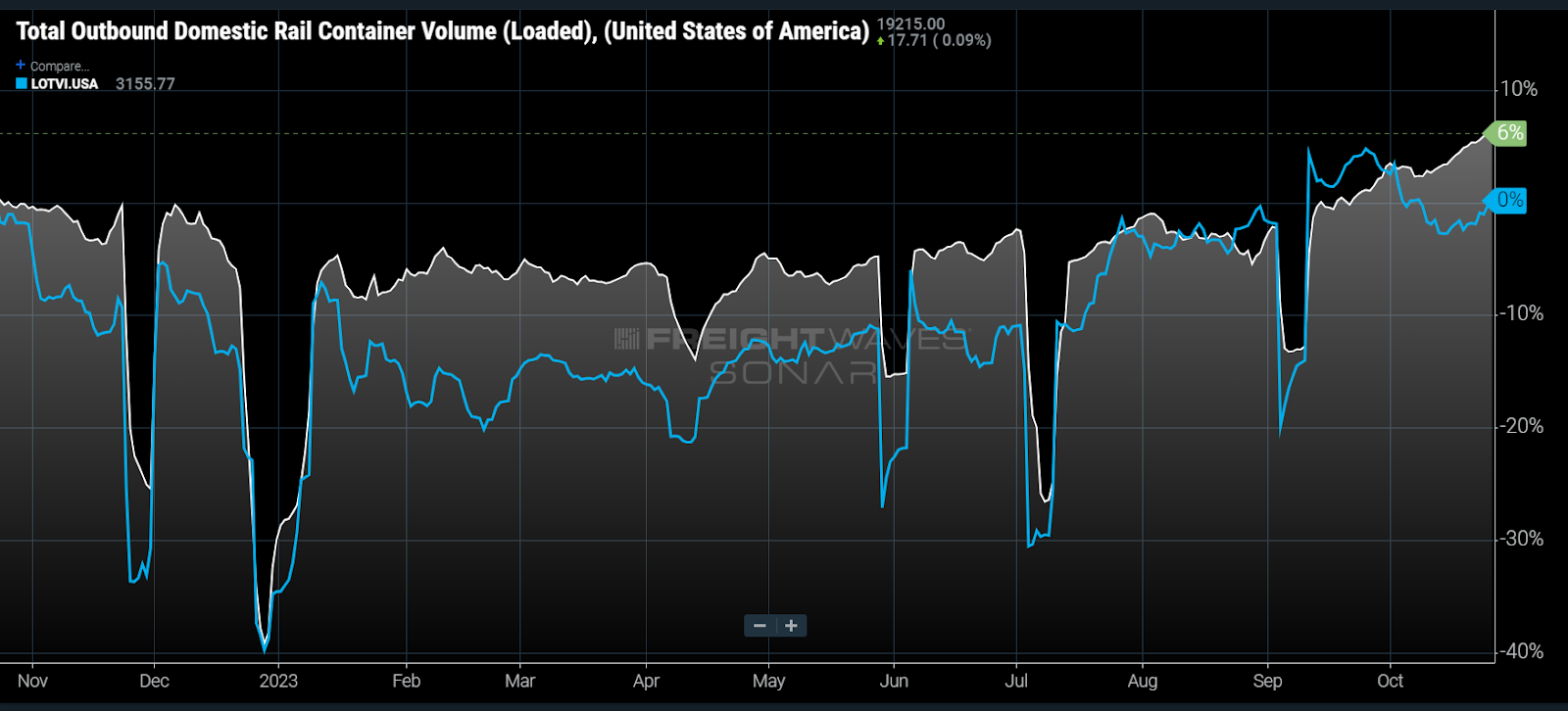
Chart of the Week: Outbound Domestic Loaded Rail Container Volume, Long Haul Outbound Tender Volume Index – USA SONAR: ORAILDOML.USA, LOTVI.USA

Long-haul truckload demand has moderated in October while domestic intermodal loaded container volumes have hit their highest levels since 2021. The implication is that shippers are converting truckloads to rail once again as service improves and rates fall. Rail’s resurgence could be another headwind to the beleaguered truckload market.  

It has been difficult to tell, but demand for freight has been on the rise over the past six months. Most of that growth has come in the form of long-haul freight or loads moving more than 800 miles. This freight is also extremely fungible with intermodal containers on the rails.  

This type of freight is also typically associated with imports as companies bring goods into the ports and warehouse them until they get moved closer to the end users in the nation’s consumption centers. The consummate example lane for this activity is from Los Angeles to Chicago, which is also the highest volume rail intermodal lane in the U.S.

The pandemic was considered a missed opportunity for many of the railroads as trucking capacity tightened and rates soared. Many expected the rails to gain new business and have sustainable growth coming out of this period. 

The exact opposite happened as the railroads were more of a victim of congested infrastructure in and around ports and rail ramps. The railroads are extremely efficient at getting freight between two rail heads, but the infrastructure at the beginning and end of the journey limits how quickly the freight can transition on and off the trains. 

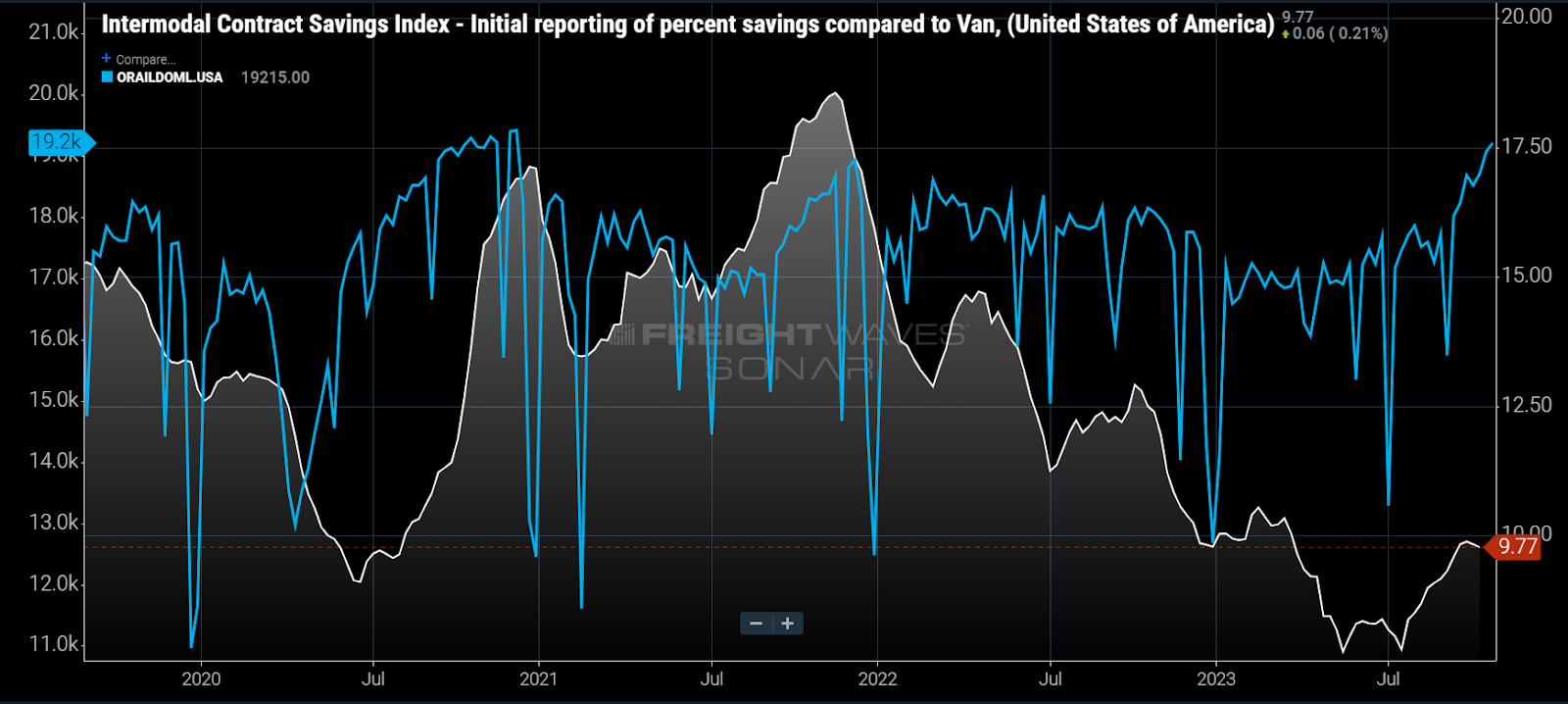
Truckload rates increased rapidly in 2020 and 2021, while intermodal rates were much slower. In late 2021, intermodal shipping on the rail offered over an 18% discount versus truckload but volumes for loaded domestic containers were down versus peak demand in 2020. Service was simply too much of an inconsistency.  

Overall freight demand plummeted in early 2022, closing the window for the rails to take advantage of the pandemic consumption boom. With truckload rates falling rapidly, the discount offered to ship via rail hit multiyear lows in June and July. After bottoming around 7.8% in early July, the intermodal savings index recovered to 9.8% in early October. 

During J.B. Hunt’s recent earnings call, EVP and President of Intermodal Operations Darren Field stated September had the best volume week ever as volumes improved throughout the quarter. Revenues were down 15% but volume was up 1% year over year. 

Even with demand improving throughout the year, domestic transportation markets remain burdened with abundant capacity. Even as the railroads take back some lost ground, intermodal rates remain in a deflationary state. 

Rail’s resurgence could add more downward pressure on rates in the truckload market, removing one more leg holding up capacity in the space. Ironically, this will help both trucking and rail in the long run by bringing the domestic transportation market back into balance.

About the Chart of the Week

The FreightWaves Chart of the Week is a chart selection from SONAR that provides an interesting data point to describe the state of the freight markets. A chart is chosen from thousands of potential charts on SONAR to help participants visualize the freight market in real time. Each week a Market Expert will post a chart, along with commentary, live on the front page. After that, the Chart of the Week will be archived on FreightWaves.com for future reference.

SONAR aggregates data from hundreds of sources, presenting the data in charts and maps and providing commentary on what freight market experts want to know about the industry in real time.

The FreightWaves data science and product teams are releasing new datasets each week and enhancing the client experience.

To request a SONAR demo, click here.

ArcBest prudent in approach to new freight opportunities

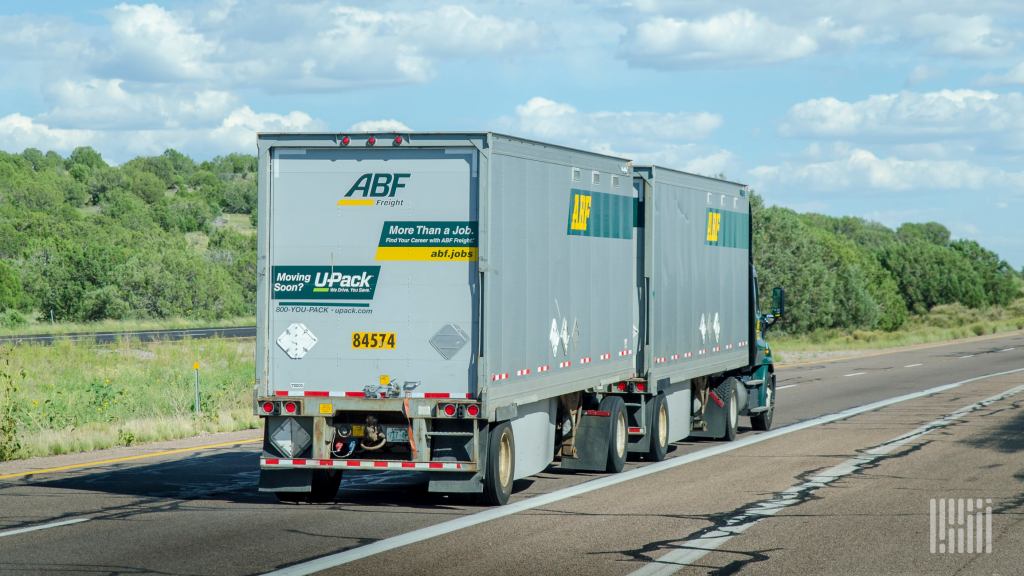
An ABF tractor pulling two ABF LTL trailers

The closure of Yellow Corp. is resulting in better operational performance at ArcBest. The capacity shakeup has led to improved freight selection and highlighted the cost management initiatives the company has pursued.

ArcBest (NASDAQ: ARCB) reported third-quarter adjusted earnings per share of $2.31 Friday before the market opened. The number was ahead of a $1.50 consensus estimate but $1.48 lower year over year (y/y). It excluded numerous one-offs like costs from a freight handling pilot, acquisition-related items and noncash impairments on some leases.

On ArcBest’s July call, when it appeared likely Yellow would fold, management said it would be prudent onboarding freight and that new business wins would need to be accompanied by appropriate yields and margins. Those efforts were visible in the company’s asset-based unit, which includes less-than-truckload operations, during the third quarter.

The segment recorded an 88.8% adjusted operating ratio, 350 basis points worse y/y but 400 bps better than the second quarter. Further, a new labor contract including a 13% wage increase in year one went into effect on June 30. Without the pay hike, the unit would have seen a 750-bp sequential OR improvement. By comparison, the unit usually sees no sequential change in OR from the second to the third quarter each year.

“We’re really targeting a freight profile that maximizes the profitability in our network,” CFO Matt Beasley told FreightWaves.

Improved freight mix and cost savings actions were the catalysts for the turnaround.

Freight mix began to improve late in the second quarter as ArcBest began moving more freight within existing accounts that also worked with Yellow. Shipments form core accounts have increased more than 20% since the second quarter, although the weight per shipment is lower than on the transactional loads it had been hauling.

However, familiarity with those customers led to improved efficiency and ultimately a better margin.

“We’ve certainly demonstrated that we are focused on making sure we’re doing the right freight at the right price with the right customers, which is evidenced in our results,” Beasley said.

The company exited the second quarter handling 19,500 shipments per day, a slowdown from the 21,000 daily shipments it moved in June. It moved 20,373 shipments in the third quarter and is currently targeting roughly 20,500 per day. That’s about a 5% increase from the second-quarter exit rate, but the profitability profile on those loads is much better.

The asset-based unit recorded a 6% y/y decline in revenue to $741 million in the third quarter. Tonnage per day was down 6% but revenue per hundredweight, or yield, increased 2%. Lower tonnage was the result of a 2% increase in daily shipments, which was offset by an 8% decline in weight per shipment.

Yields on LTL shipments were up by mid-single digits, excluding fuel surcharges in the quarter. Contract renewals and deferred pricing agreements came in 4% higher, and the company implemented a 5.9% general rate increase on base rate tariffs starting Oct. 2.

It took a similar GRI last year but this year’s increase took effect one month earlier.

Asset-based revenue was up 3% from the second quarter as tonnage declined 12% but yield jumped 16%. The yield metric includes fuel. Retail diesel prices increased more than 20% from the beginning to the end of the third quarter.

Most expense lines were up slightly as a percentage of revenue. However, rent and purchased transportation expenses were down 490 bps y/y and 340 bps lower than in the second quarter. Tech tools in the company’s cartage operations are helping as well as the mix shift back to core accounts, which usually produces better productivity metrics.

Asset-based revenue per day improved throughout the quarter. It was down 11% y/y in July but flat by September. So far in October, the unit’s revenue is up 5%, the combination of a 4% decline in tonnage and a 9% increase in yield. The yield metric was impacted by an 8% decline in weight per shipment during the month.

The unit normally experiences 100 bps to 300 bps of OR deterioration from the third to the fourth quarter. However, Beasley said it could improve by 100 bps to 200 bps this year given prior actions, which have produced a favorable start to the period.

ArcBest will remain disciplined in its approach to taking market share, but it definitely plans to grow.

The company shaved $10 million off the top end of its capital expenditures budget for 2023 to a new range of $270 million to $285 million. The plan allocates $60 million to $65 million for real estate projects. ArcBest has added more than 200 new doors to the network so far this year and plans to add 500 more by the first quarter of 2025.

The company’s asset-light unit, which includes truck brokerage, reported a 19% y/y decline in revenue to $419 million. Daily shipments were up roughly 4% y/y in the quarter, with revenue per shipment declining more than 20%. Lower revenue per load compressed margins, resulting in a $3.9 million adjusted operating loss in the segment.

So far in October, revenue per day is down 19% y/y as shipments are off 6% and revenue per shipment is down 18%. The company will continue to manage costs to the lower business levels.

Shares of ARCB were up 17.9% at 3:47 p.m. EDT Friday compared to the S&P 500, which was down 0.7%.

More FreightWaves articles by Todd Maiden

The best cover designs from American Shipper’s 1980s magazine issues

The global shipping publication American Shipper launched in 1974 with the goal to serve the needs of all players involved in international shipping, providing important information to shippers, carriers and third parties.

Founded by late maritime journalist David A. Howard, the magazine began as the Florida Journal of Commerce until Howard saw a need for a national publication focused on shipping. He relaunched the publication as American Shipper in May 1974. This was decades before the internet would take the publishing world by storm, so American Shipper was a monthly printed magazine for all things international shipping.

FreightWaves acquired American Shipper in 2019, and it serves the global shipping industry to this day — now in a digital capacity.

There is something to be said about the efficiency and convenience of online journalism, but what is lost are the creative and enticing cover images that beckon readers to open print publications’ pages. FreightWaves manages the archives of American Shipper and each week posts an article from the early days of the magazine as a flashback. In these archives, beautiful, funny and sometimes just plain weird cover images start off each issue.

We’ve compiled some of our favorites from the 1980s, the second decade of the publication in its print form.

The cover for the June 1980 issue of American Shipper. (Photo: American Shipper)
Similar to the flag made of money above, the cover shows someone literally patching up the globe. (Photo: American Shipper)
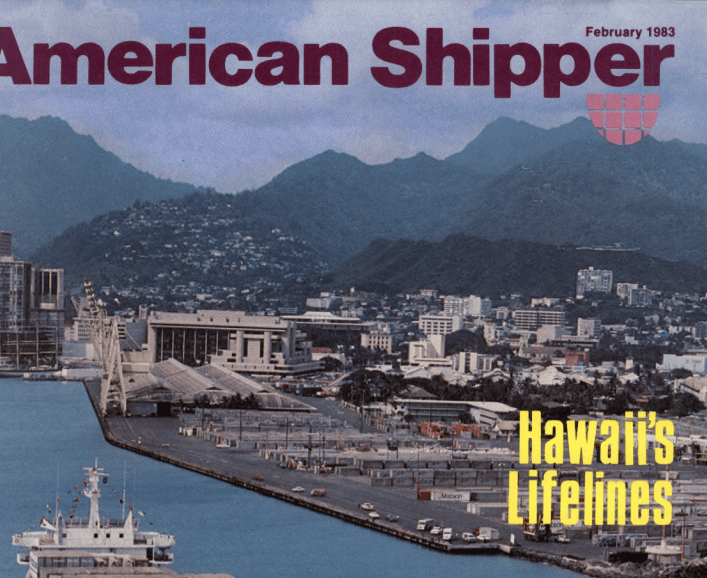
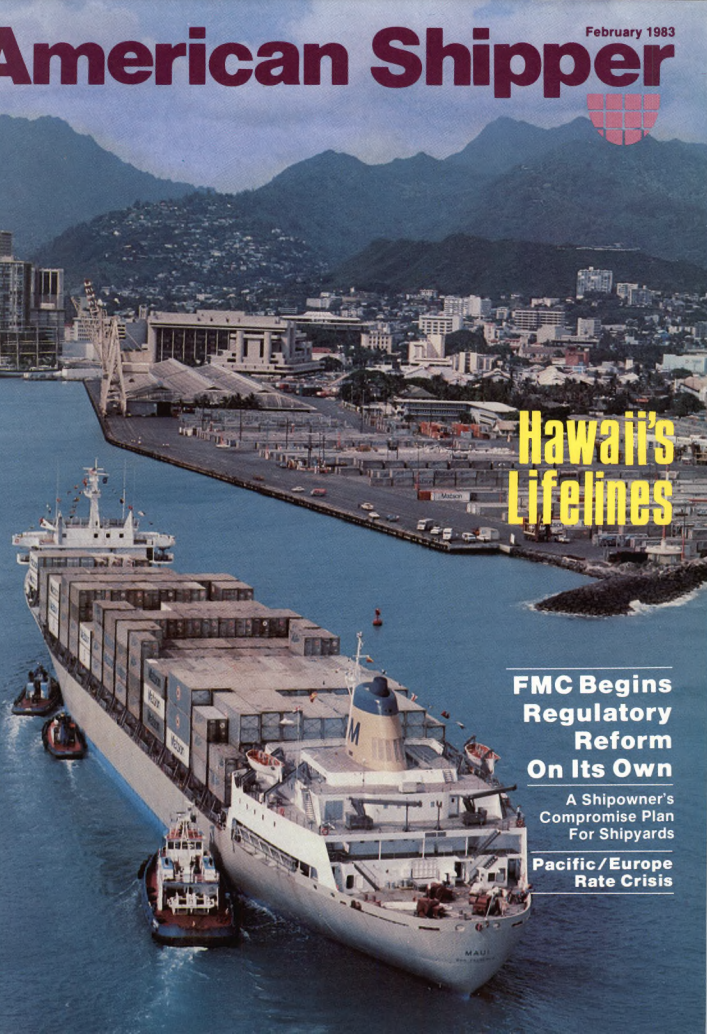
The beautiful Hawaiian backdrop caught our eye in this cover from February in 1983. (Photo: American Shipper)
It must have been a sweltering day on the ship in this cover image from the July 1983 issue. (Photo: American Shipper)
The beautiful Japanese landscape makes for beautiful cover image in the October 1984 issue. (Photo: American Shipper)

A funny take on the classic American Gothic painting for the May 1985 issue. (Photo: American Shipper)

The cover art from July 1985 depicting fractures in the industry. (Photo: American Shipper)

This cover art from September 1985 elicits laughs, as it features an actual lemon gussied up. (Photo: American Shipper)
Uncle Sam has accessories in this cover from October 1985. (Photo: American Shipper)

This beautiful illustration from the September 1988 also caught our eye. (Photo: American Shipper)

Analysis: How costly is Mack Trucks’ stridency with striking UAW?

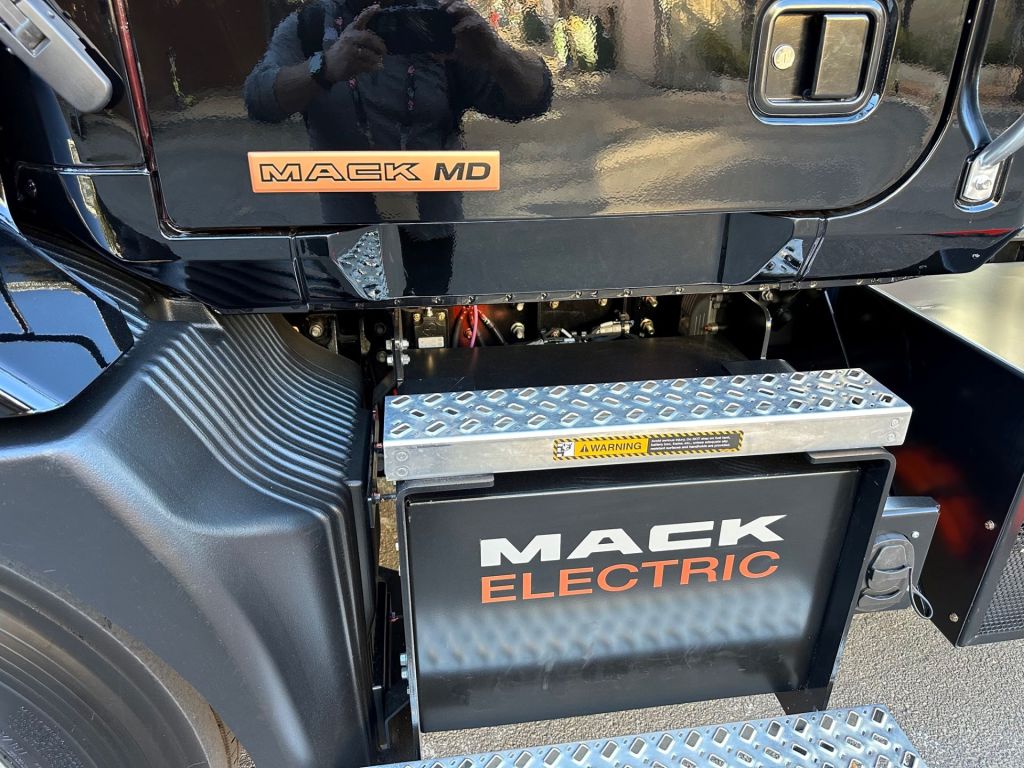
Mack MD Electric battery pack

Mack Trucks and the striking United Auto Workers have suspended negotiations. Mack risks taking a hit in its off-highway business versus sweetening a new master contract that union leaders endorsed but employees rejected.

The nearly 3-week-old strike by 3,900 UAW-represented workers in three states stopped truck production at Mack’s main assembly plant near Allentown, Pennsylvania. It also affects a remanufacturing facility in Pennsylvania and parts distribution centers in Maryland and Florida. 

An engine plant that supplies Mack and Volvo Trucks North America is located in Hagerstown, Maryland. The Mack contracts existed before Volvo acquired Mack in 2000. The company and UAW agreed to continue bargaining under that framework.

Volvo Trucks North America has canceled two shifts on Monday at its New River Valley plant in Dublin, Virginia. The company plans regular production the rest of the week, a Volvo Group spokesperson said in an email Saturday. A 12-day UAW strike at Mack in 2019 also cut into Volvo manufacturing because of a lack of engines.

Mack shares more details of rejected contract

In a statement Thursday evening, Mack said company and UAW bargainers reached tentative agreements this week on the four local agreements that were not ratified by UAW members on Oct. 8. “However, the most recent UAW leadership economic demands at the master contract level continue to be unrealistic.”

Mack is in a tough place. It is losing production — and revenue — every day the strike continues. But it is holding the union accountable to live with what local and international leaders endorsed before 73% of the workers voted down the tentative agreement.

Demand remains strong for the company’s products, which primarily target the off-highway, severe service and energy segments. Purchases of tractors for on-highway truckload carriers are softening amid a freight recession and higher interest rates.

“Mack stands by the economic terms of its Oct. 1 tentative agreement with the union. UAW leadership endorsed and called a ‘record’ contract for the heavy truck industry,” the company statement said.

Mack laid out more details of its rejected offer:

  • The average wage increase over five years would be 36%,. The average immediate wage increase for all covered employees is nearly 15%.
  • For nearly half the total workforce not yet receiving top-tier wages, the average increase over five years would be 55%. The average immediate wage increase would exceed 20%.
  • Most employees already at the top rate would receive an immediate wage increase of 10%, and up to 20% compounded over five years. The company says research shows top-tier Mack workers make above-market rates.
  • Premiums for the company’s health care coverage have not increased in more than six years despite a 66% increase in the company’s costs over the past decade. They would remain unchanged under the five-year agreement.

Gauging Detroit Three-UAW talks influence on Mack

To an unknown extent, the separate Mack master contract is being influenced by negotiations in a UAW strike that began Sept. 15. The union strategy of targeting specific General Motors, Ford and Stellantis plants has kept two-thirds of its 146,000 members working.

A tentative agreement with Ford reached Wednesday, including a 25% hourly increase over 4 1⁄2 years, appears richer than the Mack deal. Ford has 51,000 hourly workers and far higher revenue and profits than Mack. GM and Stellantis had not reached tentative agreements as of Friday afternoon.

The Detroit talks and a vocal socialist presence within the UAW at Mack appear to be emboldening local union leaders to push for more money and improved benefits to make a deal.

Mack leadership, which hoped to avoid being embroiled in the Detroit Three talks, also may have chosen stridency because it remembers that multiple tentative agreements between Volvo and the UAW were rejected by workers who struck Volvo’s New River Valley operations in Dublin, Virginia, for about five weeks in 2021.

At the time, it was hard to tell whether workers were angrier with their local union bargainers or the company. Volvo ultimately imposed terms of the third agreement, which received a split vote.

Editor’s note: Updates 4th paragraph with impact on Volvo Trucks North America production.

Mack Trucks fires back at striking UAW’s new demands

Mack Trucks and striking UAW resume talks Thursday

Commentary: How socialist agitating helped tank Mack-UAW deal

Click for more FreightWaves articles by Alan Adler.

Auction houses to liquidate Yellow’s tractors, trailers

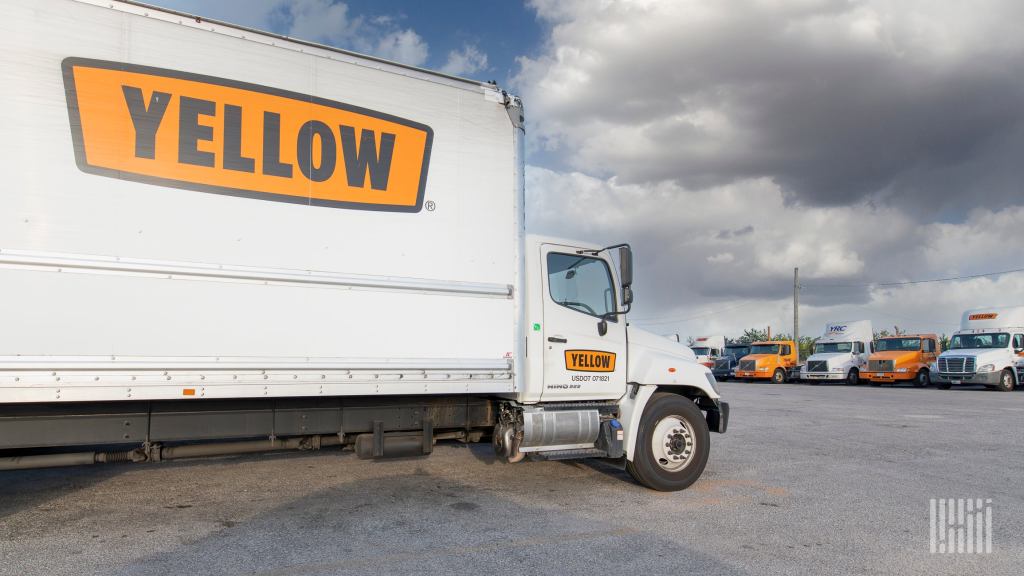
Parked Yellow trucks

A Delaware bankruptcy court approved an order on Friday allowing Yellow Corp.’s estate to sell its rolling stock through auction houses.

The estate entered an agreement with Nations Capital, Ritchie Brothers and IronPlanet on Oct. 16 to facilitate the sale of Yellow’s fleet. The court temporarily withheld approval to give the U.S. Trustee’s office time to file objections.

The court agreed with the Trustee’s office that an affiliate of one of the auction houses needs to certify “disinterestedness” and show that its interests are “conflict-free” to the interests of Yellow’s estate. However, Judge Craig Goldblatt said that the order should move forward as time is a consideration. He advised all parties that they are “proceeding at their own peril” and his decision could be vacated if a conflict arises.

A filing to seal the commission structures of the auction houses was withdrawn on Friday.

The decision opens the door for Yellow’s fleet to be liquidated. The former less-than-truckload carrier operated more than 60,000 units, of which it owned roughly 12,000 tractors and 35,000 trailers.

The disposal companies were chosen as Yellow no longer has the staff to move the equipment, or prep it and market it for sale. Prior filings showed the liquidators will provide free storage of the units, which had been estimated to cost the estate more than $10 million monthly.

The liquidation will include approximately 2,400 tractors and 3,500 trailers Yellow purchased using a portion of a $700 million COVID-relief loan from the U.S. Treasury. The Treasury is a secured creditor to the estate and expected to recoup more than $737 million in outstanding principal and interest as Yellow’s assets are sold.

A previous filing showed that both the Treasury and a committee of unsecured creditors were supportive of the use of liquidators. The process is expected to take six months.

Bids for Yellow’s 174 owned terminals are due by Nov. 9, with an auction to take place at the end of November if needed. Estes Express Lines’ $1.525 billion stalking horse bid was chosen as the base bid for the proceeding.

More FreightWaves articles by Todd Maiden

Saia took on big volumes, higher costs in Q3

Saia Inc. drank from an LTL fire hose in the third quarter, taking on huge volumes in the wake of Yellow Corp.’s demise and driving up its costs and operating ratio.

Investors chose to focus on the higher costs and not the record revenue and the increases in tonnage, shipments and yield per hundredweight. As of midday Friday, shares of the Johns Creek, Georgia-based LTL carrier were down 7.3% to $349.48 per share. 

Saia (NASDAQ: SAIA) reported third-quarter revenue of $775 million, a record for any quarter in its history. Shipments per workday soared 12.2%, led by an almost overnight surge in traffic following Yellow’s shutdown in late July. Shipments per workday in July alone rose 10% from June levels. 

Tonnage per workday rose 6.7% from year-earlier levels, while revenue per every 100 pounds transported, excluding fuel surcharges, rose 8.4% year over year (y/y). Revenue per shipment was up 3%. Diluted earnings per share of $3.67 was flat y/y but beat analysts’ estimates by 5 cents to 8 cents per share, depending on the source of the information.

The sudden volume spike required Saia to quickly add resources. It hired 1,000 employees in the quarter, 400 of them drivers. Wages and benefits rose 16% y/y from a combination of head count growth and a 4.1% average wage increase in July. Total operating increases in the quarter grew by 7.6% despite substantially higher labor costs, Saia said. It did not comment on how many, or if any, of the new drivers came from Yellow’s ranks.

As a result of the increased expenses, Saia’s OR — defined as the ratio of expenses to revenues — rose to 83.4% in the quarter from 82.7% sequentially and 82.4% in the third quarter of 2022. Company executives said that the ratio came down through the 2023 quarter as the company brought its costs and the higher revenue levels into better alignment. At its highest levels in the quarter, the OR had hit 86%. 

Saia typically experiences a 200 basis point OR deterioration in the fourth quarter. Executives said they hope the fourth-quarter degradation will be in the 150 to 200 basis point range.

Saia is also working to lessen its reliance on expensive purchased transportation and to replace rented equipment with its own assets, executives said. The company said it experienced a very short-term bump in volume following a cyberattack that hit rival Estes Express earlier this month.

President and CEO Fritz Holzgrefe said he was confident that Saia can eventually drive down its OR into the 70% range. He did not specify a time frame.

Shipment and tonnage growth remained strong leaving the third quarter and entering the fourth. Shipments in September rose 16% y/y, while tonnage grew by 9.7%. In October, shipments jumped 18.6% while tonnage climbed 8.4%.

Holzgrefe told analysts Friday morning that many Yellow customers were also using Saia, so the shipment migration was facilitated relatively smoothly. The amount of former Yellow business that Saia retains will depend on whether shippers are looking for low-quality service at cheaper rates or a superior service that may come at a higher price, he said, noting that those looking for the former will likely “move on.” 

Saia earlier this week announced a 7.5% general rate increase to take effect Dec. 4. Company executives said they have plenty of runway for firmer pricing during contract renewals as more shippers embrace the long-term value of Saia’s service. 

The company said it would consider bidding on Yellow’s terminals if it meets long-term network objectives. Saia has 197 terminals and is expecting to add its 198th by the end of the year.

Holzgrefe was cautious about the macro freight environment, saying it “remains uncertain.” He said that Saia has detected a bit of customer optimism but that the “waters remain choppy.”

Running on Ice: Indiana is the coolest place to be

Blue Truck on a sheet of ice over a blue background and Running on Ice Logo

Your latest info on all things cold chain

Hello, and welcome to the coolest community in freight! Here you’ll find the latest information on warehouse news, tech developments and all things reefer madness-related. I’m your controller of the thermostat, Mary O’Connell. Thanks for having me!

All thawed out 

(Photo: NewCold)

Lebanon, Indiana, is about to become the coolest place to be. Netherlands-based NewCold has opened one of the largest cold storage facilities in the world for a casual $300 million. NewCold specializes in food supply chain resilience. The new facility has over 100,000 pallet positions at opening, but phase 2 has begun and will add another 100,000 pallet positions come next summer. 

To improve the food supply chain, why was Lebanon the new hot spot? The local government was very helpful in locating space for the 150-foot-tall building and made setting up shop a breeze. Not only that but it turns out Indiana has become a major food hub. This new facility has automation at the highest scale.Through its advanced technology and processes, NewCold can do in 400,000 square feet what others need a million for. 

Jonas Swarttouw, executive vice president and chairman of NewCold in North America, said in a news release, “None of our warehouses shut down during COVID. That period underlined the importance of building resilience into the supply chain of leading food companies in the US. That’s aside from the positive economic impact, including over 250 high-quality employment opportunities, the Lebanon facility has created.”

Temperature checks

(Photo: Jim Allen/FreightWaves)

Drones in the supply chain is not a new concept. There have been a lot of drone pilot programs, especially in trials with direct-to-consumer goods. Well, it’s time for the cold chain to take to the skies as well. The pharmaceutical industry has taken to involving drone technology to get medicines to people. Drones are perfect for time-sensitive goods and most packaging solutions can work with them. 

For example, in remote places in Rwanda and Ghana, where roads can become impassable due to weather conditions, Zipline’s drone technology is helping hospitals get blood, medicines and anything they need to treat patients. 

An Air Cargo news article said: “Dr. Radhika Batra, founder and president of Every Infant Matters, explained that the industry was helping by finding and promoting innovative solutions to bridge the gaps in the supply chain, with drones being just one example. ‘There are 1.5 million children dying every year from vaccine-preventable illnesses and many more living with blindness and other disabilities that don’t need to be,’ she said.”

Food and drugs

(Photo: Business Wire)

Why bother with a trip to Flavortown when it can come to you? Guy Fieri is bringing Flavortown to the freezer aisle with his new line of frozen food. This new collection is available exclusively at Walmart. The first representatives of Flavortown are sweet and sour pork, cheesy lasagna with pepperoni, sloppy joe mac and cheese, and the cheesy chicken enchilada bowl. 

The Diners, Drive-Ins and Dives host has risen to mass popularity, particularly with Gen Z. It turns out Gen Z has a massive love for Fieri. His approachable nature and down-to-earth attitude have made him beloved by all. 

All this popularity has paid off because now I don’t have to leave my house to experience the glory that is Flavortown. I just have to walk to the freezer. 

Cold chain lanes

(SONAR ROTRI heat map)

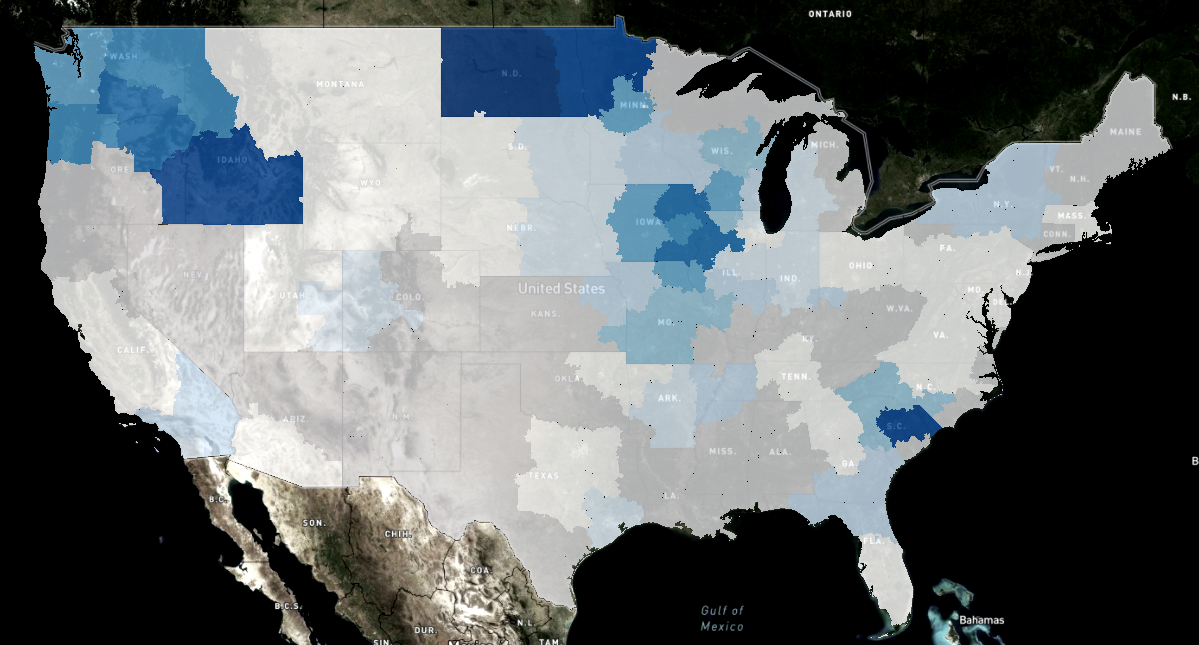
This week’s SONAR chart is the Reefer Outbound Tender Reject Index. The markets with the darker blue maps indicate there is a higher rate of tender rejections in that market. The Pacific Northwest and the northern Midwest are the areas with the most significant rejection rates. Bismarck, North Dakota, while a smaller market, brings home the top spot with reefer outbound tender rejection rates at 38.46%. Roughly a third of all reefer loads are rejected in Bismarck and Fargo, North Dakota (33.68%). As the produce and harvest season comes to a close in the North, reefer rejection rates will likely fall in the coming weeks to bring some of the capacity back to the market. 

Is SONAR for you? Check it out with a demo!

Shelf life

Fighting Food Inflation Through a Sustainable Supply Chain

Investors Have Stopped Feeding The Supply Chain

Convoy’s shutdown exposes the desperate state of trucking

UPS reports higher volume diversions due to labor unrest 

Trucking congestion costs hit record $94.6B

Wanna chat in the cooler? Shoot me an email with comments, questions or story ideas at moconnell@www.freightwaves.com.

See you on the internet.

Mary

If this newsletter was forwarded to you, you must be pretty chill. Join the coolest community in freight and subscribe for more at www.freightwaves.com/subscribe.

Universal Logistics’ Q3 earnings decline in ‘sluggish freight market’

Universal Logistics Holdings CEO Tim Phillips described the company’s third-quarter earnings performance as a “tale of two takes.”

The Warren, Michigan-based company’s total revenue in the quarter was $421.3 million, a 17% year-over-year (y/y) decline, but beat Wall Street estimates of $420 million.

The company posted earnings per share of 88 cents, missing analysts’ estimates of $1. Third-quarter EPS decreased 52% y/y compared to the same period in 2022.

“The third quarter was a tale of two takes: Our contract logistics group navigated late-quarter market disruption with outstanding performance, while headwinds continue to hamper our intermodal and brokerage segments,” Phillips said during the company’s earnings call on Friday following the release of the results after the market closed on Thursday. “Our truckload segment outperformed expectations with a strong showing from a specialized services group.”

Universal Logistics (NASDAQ: ULH) provides truckload, brokerage, intermodal and dedicated services in the U.S., Mexico, Canada and Colombia.

In the trucking segment, third-quarter revenues decreased 2.5% to $97.1 million, compared to $99.6 million for the same period last year. Universal’s trucking segment tallied 43,996 loads, compared to 50,614 in the same year-ago period.

While truckload volume was down in the quarter, the average operating revenue per load, excluding fuel surcharges, increased 13% y/y to $2,033. The number of tractors during the third quarter decreased about 2% y/y to 879, while the average length of haul fell 1.5% y/y to 388 miles. 

“Van and flatbed headwinds continued in the third quarter for our trucking segment,” Phillips said. “While core flatbed and van volumes remain a challenge, our variable cost structure model provided consistent returns.”

Universal’s third-quarter intermodal revenue decreased 44% y/y to $86.6 million, affected by lower import volumes on the West Coast, Phillips said.

“Intermodal in California operations continue to be a drag on the segment’s overall financial result,” Phillips said. “While we are confident in our continued effort to right-size and optimize the intermodal fleet, freight volumes and pricing will play a part in that equation. Losses in Southern California affected our overall EPS by 19 cents per share.”

Universal Logistics’ third-quarter revenue in its company-managed brokerage segment decreased 30.8% to $28.1 million, compared to $40.6 million for the same year-ago period.

“Company-managed brokerage dropped 30.8% … amid a sluggish freight market influenced by inflation and consumer spending that continued to drive down pricing,” Phillips said.

Phillips said the company is optimistic about freight-hauling opportunities improving in the Mexico cross-border automotive space, as well as loads in the Class 8 truck manufacturing market.

Universal Logistics is working with a customer that launched manufacturing operations in Mexico in October.

“Universal remains focused on the opportunities that Mexico presents as nearshoring trends have now elevated Mexico as the United States’ largest import trading partner,” Phillips said. “We are extremely excited about adding to our density in central Mexico. We were successful in obtaining new trucks and trailers to support the customer and expect this to be an entry into additional business in the region. The program will be over a five-week period and be supported by 40 drivers and 60 trailers. This new business is expected to generate approximately $6 million in annual revenue.”

Universal Logistics HoldingsQ3/23Q3/22Y/Y % Change
Operating revenue$421.3M$505.7M(16.7%)
Operating income$36.8M$48.5(47.3%)
Operating margin %8.7%13.8%(37%)
Trucking$97.1M$99.6M(2.5%)
Intermodal$86.6M$154.4M(43.9%)
Contract logistics$208.1M$209.5M(0.7%)
Company-managed brokerage$28.1M$40.6M(30.8%)
Adjusted earnings per share$0.88$1.84(52.2%)
Universal Logistics key performance operators. Revenue and operating income in millions.

Click for more FreightWaves articles by Noi Mahoney.

More articles by Noi Mahoney

Covenant Logistics sees Q3 revenue slip in weak freight market

Borderlands: Cargo theft trends changing as supply chains shift to border regions