How well are you using technology to reduce operating costs?

The logistics industry has been reshaped by a veritable technological revolution in recent years. Many fleets, however, are not taking advantage of the modern solutions designed to help them improve their safety and profitability.

New technologies are hitting the market daily, and these tools are capable of improving everything from driver selection to litigation outcomes. To experience these improved operational efficiencies, fleets — and their partners — just need to embrace the technology.

PCF Transportation is dedicated to helping its clients do just that. The company works with fleets to improve their operations — and mitigate their exposure to litigation — in a myriad of modern, tech-driven ways.

For example, PCF Transportation utilizes technology to analyze clients’ complete U.S. Department of Transportation violation history over the past two years. This allows them to quickly pinpoint vulnerabilities and spot drivers with repeat offenses.

“There is so much opportunity for our customers to use new technologies to help them manage their fleets,” PCF Transportation Practice Leader Todd Lykke said. “Just a few years ago, it would have been almost impossible to identify every violation and break down which trucks and drivers are having trouble.”

Once these issues are uncovered, fleets can work quickly to fix them. Often, that means having conversations with repeat offenders and offering customized training to fix identified problems.

In instances where drivers are unresponsive to training efforts, these technologies give fleets the evidence they need to terminate drivers who consistently create problems for the company. By identifying these drivers before a tragic accident occurs, fleets can protect themselves from nuclear verdicts.

“About 20% of drivers are creating 80% of the problems,” Lykke said. “If you’re a litigator and you can identify that the driver in an accident case has a poor record, it’s a slam dunk. Let’s not give the farm away. Let’s make it as difficult as possible.”

PCF Transportation’s tech-driven solutions are not just about identifying individual problem drivers, however. The company is also adept at helping fleets pinpoint — and resolve — systematic issues that may leave them vulnerable to increased litigation and unfavorable outcomes.

“We help identify the weak areas that a plaintiff attorney will identify and expose in court,” Lykke said. “Once we understand where the client is vulnerable from a litigation standpoint, we work on that issue.”

These weak areas could include poor driver selection and compliance practices, inadequate training programs, or outdated maintenance records. Fleets tend to fall into these negative habits in an effort to cut costs. In the end, this kind of neglect can end up costing companies a whole lot more than it saves them. PCF Transportation can help these fleets clean up their acts without breaking the bank.

In the spirit of keeping clients safe and up to date, PCF Transportation offers an annual safety and DOT compliance seminar. This event allows the company’s clients to have productive conversations with compliance experts at no cost to them.

The company also has a blog aimed at keeping clients informed about what is happening in the transportation industry — from nuclear verdicts to regulation updates — along with many other of their core industries.

These offerings align with PCF Transportation’s dedication to keeping its clients safe on the road and protecting them from nuclear verdicts. For the company’s efforts to be effective, however, fleet owners must also demonstrate a strong commitment to building — and improving — their safety programs.

“When companies buy into a safety program, it makes all the difference in the world,” Lykke said.

Despite the fact that companies often avoid creating robust safety programs on the basis of financial strain, fleet owners who dedicate their time, effort and resources to cultivating a culture of safety actually save more money in the long run.

Safe companies consistently benefit from competitive insurance rates, a benefit that cannot be overstated in an industry where sky-high insurance premiums have been known to drive fleets out of business.

Click here to learn more about PCF.

Mack Trucks and striking UAW resume talks Thursday

A strike by the United Auto Workers at Mack Trucks entered its second week Monday. Bargainers plan to resume talks Thursday.

It is not unusual for a strike following rejection of a tentative agreement to release built-up worker pressure. Mack has said nothing publicly since exressing surprise and dismay that 73% of the workers turned down the tentative five-year agreement on Oct. 8.

That agreement would have increased wages 19% over five years with a 10% raise front-loaded. It did not address cost-of-living adjustments (COLA) that workers say are critical to wages keeping up with inflation.

The UAW International agreed to forgo COLAs during the Great Recession in 2009. Restoring them is a major issue in an ongoing strike against the Detroit Three automakers General Motors, Ford and Stellantis that began Sept. 15. 

Currently, 34,000 of 146,000 UAW-represented autoworkers are on strikes at UAW-targeted Detroit Three plants. The union said it may strike any or all remaining plants depending on bargaining progress.

Mack Trucks strike affects plants in 3 states

The Mack strike coincides with but is separate from the Detroit Three strike. It affects six Mack and Volvo Group facilities in Pennsylvania, Maryland and Florida. Workers at sibling Volvo Trucks North America in New River Valley, Virginia, work under a separate four-year agreement. VTNA imposed terms of that agreement after a split vote on the third of three tentative agreements reached in 2021.

Mack’s medium-duty truck plant in Roanoke, Virginia, is also unaffected because it began operation after the last UAW agreement was reached following a 12-day strike in 2019. Workers there are not included in the master labor agreement.

It is unknown whether the UAW is seeking to bring Mack’s Roanoke operations under the master agreement and represent the 250 workers there. Mack Trucks North America President Jonathan Randall declined to discuss the strike Monday at the American Trucking Associations Management Conference and Exhibition in Austin, Texas.

The company begins regular production of Class 6 and 7 battery-powered medium-duty trucks in Roanoke in the fourth quarter in addition to diesel-powered models. Mack has about a 5% share of the medium-duty truck market. That’s ahead of internal projections for the 3-year-old plant. 

Mack expects to end the year with a 5.5% share of the medium-duty market, in line with its 2022 share, Randall said.

UAW employees will strike at Mack Trucks after rejecting contract

Commentary: How Socialist agitating helped tank Mack-UAW deal

Mack Trucks settles with UAW on longer agreement

Click for more FreightWaves articles by Alan Adler.

NTSB investigating deadly BNSF coal train derailment in Colorado

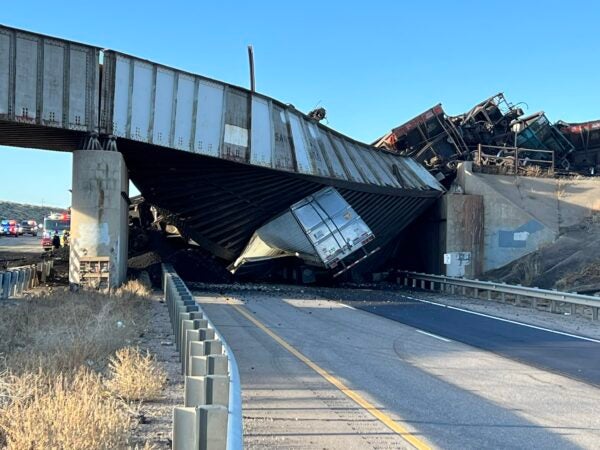
The National Transportation Safety Board is sending investigators after a BNSF coal train derailed this weekend at a bridge that crossed Interstate 25 in Colorado. The derailment, which caused coal and coal cars to spill onto the interstate, killed a truck driver, according to media reports. Images from the scene show the bridge partially collapsed.

The incident occurred at approximately 3:30 p.m. MT on Sunday, according to BNSF.

NTSB tweeted Sunday that the train derailed off a bridge that went over I-25 north of Pueblo near mile marker 106. The derailment blocked I-25 both ways, according to the Colorado Department of Transportation. According to a Colorado State Patrol tweet, drivers should expect an extended closure in the area because of the train cars and coal on the interstate.

Another tweet from the Colorado State Patrol contains a photograph in which a truck appears to be partially under the collapsed bridge. Media reports quote the Colorado State Patrol as saying that the truck driver was killed. Authorities have not yet appeared to release the name of the driver.

A photograph from the Colorado State Patrol’s tweet about the incident. (Photo: Colorado State Patrol)

BNSF (NYSE: BRK-B) said the cause of the derailment is under investigation, and personnel are on-site working with responding agencies to clear the incident.

Subscribe to FreightWaves’ e-newsletters and get the latest insights on freight right in your inbox.

Click here for more FreightWaves articles by Joanna Marsh.

UPS’ 2024 rate changes look similar to FedEx’s

Anyone who thought that UPS Inc.’s 2024 rate and surcharge adjustments would be distorted by the significant labor cost increases in the first year of its contract with the Teamsters union will be disappointed by next year’s rate table. 

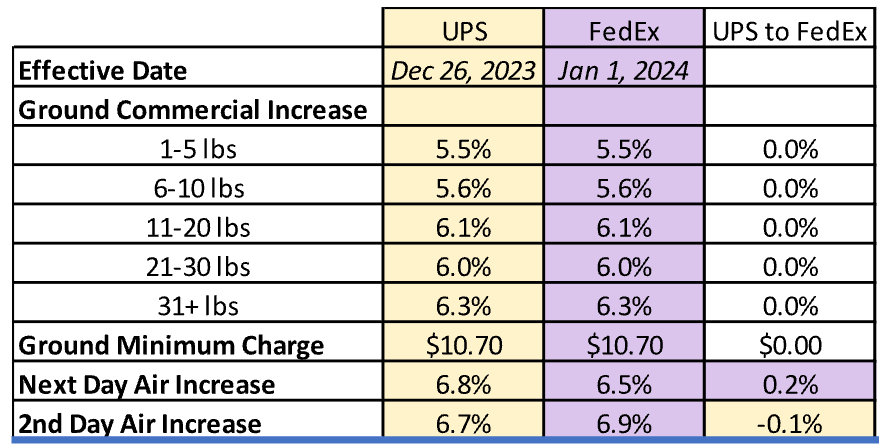
UPS’ (NYSE: UPS) 2024 rate breakdown, which the shipping giant made public late Friday, looks comparable to those published by rival FedEx Corp. (NYSE: FDX) more than a month ago. The carriers’ rate increases on ground commercial shipments are identical across the board, according to an analysis from consultancy Shipware LLC (see graphic below). The carriers’ minimum charge for a ground commercial shipment, which all shippers will pay regardless of any rate discounts they negotiate, is the same at $10.70 per shipment. UPS’ minimum charge increases range from 4.52% for its three-day delivery service to 7.91% for its next-day air service. 

Of 40 delivery surcharges identified by Shipware, 24 are identical between the two carriers. Of the 16 surcharge items that contain price differentials between the two, only four have differentials of $5 or more per shipment.

The carriers will also go to market with similar increases on shorter-haul traffic, shipments 600 miles or less that are priced based on seven delivery zones. Rates for both carriers will be at or below the 5.9% general rate increases (GRIs) both have already announced. Rate increases will be particularly muted for short-haul ground commercial traffic. Rate hikes will be roughly equivalent to the GRI for shorter-haul ground residential traffic that has become the majority of all parcel carriers’ traffic mix.

The lower rates on shorter-haul moves are likely a nod to the increasing competition from regional delivery carriers as well as Amazon.com Inc., (NASDAQ: AMZN) which has morphed its delivery operations from a national hub-and-spoke network to eight regions.

By contrast, rates on longer-haul shipments moving under UPS’ second-day air and three-day services will climb as much as 8%, based on Shipware’s analysis. In fact, most rates, regardless of the type of service, weight and distance, will either meet or exceed the 5.9% GRI.

Paul Yaussy, the Shipware executive who prepared the analysis, said FedEx and UPS will continue to demonstrate their “oligopolistic” pricing behavior they’ve exhibited over at least the past decade. Yaussy wrote that “there are very few differences between the two carriers’ most common services and surcharges.”

UPS’ five-year contract with the Teamsters union calls for 9% to 10% rate increases in its first year. That will be the steepest year-over-year hike over the contract’s duration. Given the timing of the rank-and-file’s ratification — which took place in late August — there was speculation that UPS would go to market with higher-than-normal rate increases for 2024 to offset its increased operating costs. The speculation was further fueled by the 25 business days that elapsed between FedEx’s published rate breakdown and UPS’, though FedEx did publish its increases earlier than usual.

Mixed meanings

UPS’ challenge in building its 2024 rate-setting strategy is to balance the need to boost yields with the desire to not alienate shippers whose volumes it is trying to recapture in the wake of the contract negotiations. About 1.1 million daily parcels were diverted to rivals in the weeks and months of often-volatile negotiations. UPS may have been willing to give up some yield on 2024 business in exchange for improving its chances to win back diverted parcels, according to Yaussy.

The impact of GRIs, even those with detailed breakdowns, is decidedly mixed. On the surface, GRIs mean little because they apply to noncontractual traffic that represents a fraction of all parcel business. However, they do serve as a benchmark of sorts for negotiations between shippers and carriers that are commonplace in the industry.

Yaussy cautioned shippers to focus on the bevy of costly surcharges imposed by both carriers. The combined cost of surcharges can collectively comprise as much as 40% of a shipper’s total annual parcel spend, according to industry data. At UPS, for example, only two of 37 surcharges listed by Shipware will increase by less than the GRI. Surcharges for Collect on Delivery (COD) and Residential Air delivery services will increase by 5.56% and 5.41%, respectively.

By contrast, shippers of large packages that require additional handling will face surcharge increases ranging from 18% to 21% depending on the service, according to Shipware’s analysis. Including rate and surcharge adjustments, shippers will face double-digit rate increases unless they succeed in negotiating the increases down or away, Yaussy said.

Yaussy also advised UPS shippers to be on the lookout for “hidden cost increases” from the carrier’s announcement of changes to the number of ZIP codes that could be hit by delivery surcharges, as well as any shrinkage in the number of ZIP codes aligned to Zones 2 and 3. The latter action could result in more deliveries falling into the Zone 3 bracket, thus resulting in higher rates, he said.

Yaussy said UPS shippers will not have visibility into the impact of these steps until the 2024 rates take effect. “Most shippers will not have the immediate ability to analyze these ZIP code changes, which has the potential to be a sneaky way for UPS to increase yield,” he said. 

Yaussy said he was unaware if FedEx was making similar moves, but that it would be too early to tell until its new rates take effect. UPS 2024 rates take effect Dec. 26. FedEx’s rates go into effect Jan. 1.

Flock Freight sees growth in pooling rates, potential of future scale

In the volatile landscape of a soft freight market, Flock Freight has weathered the storms. 

While the company has made tough decisions, including reevaluating the structure of its team to align with the dynamic demands of the market, leadership is looking forward to its transition in 2024 while harnessing the technological advancements it has made throughout 2023.

“Flock’s not immune to the market forces that everyone is facing. We are selling a differentiated platform and I think part of that challenge up to this point has been awareness and truly understanding what shared truckload represents,” Chief Operating Officer Chris Pickett told FreightWaves.

Pickett explained that while the company has pushed through this year’s market conditions, Flock Freight’s product, engineering and operations teams have focused on its Shared Truckload platform, “building thicker data sets which are ingested by increasingly sophisticated machine learning models which yield more accurate predictions which leads to more transactions.”

“Our pooling rates are 33% higher than they were when we began the year,” said Pickett. “This means that our success rate of finding freight that can be pooled has improved, leading to higher-quality service to both shippers and carriers.”

Recent strategic partnerships have aided the company’s ability to grow a greater pool of partial shipments. Flock Freight announced a multiyear integration partnership in September with transportation management system e2open, giving its shipper customers access to freight pooling technology. 

“We see this as the beginning of a new frictionless era of pooling millions of shipments across TMS platforms,” Oren Zaslansky, founder and chief executive officer of Flock Freight, said about the partnership. 

Flock Freight also integrates with Banyan Technology, Oracle and others, providing shippers that use these products another available mode to move their products. 

With these integrations and the company’s focus on the capabilities of its proprietary technology, Pickett said Flock Freight’s technology is now hitting critical mass, enabling it to drive down costs for shippers and bring better utilization to its carrier network.

“Now, how do we make it easier for both the demand side of the marketplace and the supply side of the marketplace to connect? With our carrier base, our digital engagement playbook is all about making it easier for them to find and book attractive loads. But once we locate and confirm available capacity, we want to be able to offer higher-paying shared truckload options in addition to the same one-pick, one-drop full truckloads they can find on other platforms. So we are really diving deeper into both sides of the marketplace and continuing to tweak our service offerings while also making it easier to do business with us,” he said.

Along with improvements on its overall available pool for freight, Pickett’s team has been using the data behind these pools to enhance its pricing tools. 

“Our pricing capabilities will adjust based on our freight in network. We can adjust our win rates around what rates were more likely to be declared by any given shipper. So we are constantly looking to build out core density, and if we see that we have a certain number of pools that are looking for a shipment with certain dimensions, across a specific geographic corridor, we can tune our pricing within that network.”

At the core of Flock Freight’s offering is a path to a more sustainable transportation industry. 

“We have had more discussions with chief sustainability officers over the last year than the average freight intermediary. We will start to see the new California rule [SB 253] come into play and I suspect we are going to have much more dialogue with some of the larger companies and their CFOs as they start to get their arms around possible SEC reporting too. I think this is just another example of the world that is coming our way,” Chief Financial Officer Pat Dillon told FreightWaves.

After a tumultuous year, the Flock Freight team is optimistic about how its technology is advancing and the future needs of the industry when it comes to its mode offering.

“Shippers have embraced shared truckload as a proven mode alternative to traditional less-than-truckload and full truckload and carriers are increasingly looking to Flock to help maximize the weekly revenue potential of their fleets. The mission now becomes making it as easy as possible to connect and transact with zero friction for both sides of the marketplace,” Pickett said.


E2open execs tout year-over-year subscription, EBITDA growth 

3 questions to consider before investing in AI

Commentary: In defense of the unicorns

Driver shortage myth; ATRI’s top industry issues; how seals work – WTT

On today’s episode of WHAT THE TRUCK?!?, Dooner is joined by FreightWaves’ Justin Martin to talk about a freight recession like none other. We’ll find out why one expert is saying the industry won’t normalize until 2025.

Is the driver shortage a myth? Rates and freight tender rejections sure say so. We’ll break down why this myth keeps getting perpetuated by the media.

Pay, parking and fuel prices top ATRI’s list of key issues. We’ll break down the latest list covering both carrier and driver concerns.

Cambridge Security Seals’ Claudia Coetzer teaches us everything we ever wanted to know about the humble world of seals.

Travelers’ Tim Drucker educates us on the difference between inland and marine cargo insurance.

Plus, toughest delivery locations; amusement parks for dads; unique sleep cabs; and Taylor Swift fans storm AMC.

Watch on YouTube

Visit our sponsor

Subscribe to the WTT newsletter

Apple Podcasts

Spotify

More FreightWaves Podcasts

Project44 continues to reshape industry through data-driven partnership with Google Cloud

The logistics industry is collaborative by nature, and project44 regularly embraces partnerships to create and improve data-driven solutions for their customers. Over the past few years, Google Cloud has become one of the company’s most impactful partners.

Project44 is well known for its impressive breadth — and depth — of visibility solutions. Google Cloud is known for providing an open cloud and next-generation AI tools that enable innovators across a wide range of industries to develop cutting edge solutions. Together, the organizations have been able to provide logistics companies with an integrated data source, encompassing shipment details, weather forecasts and real-time mapping insights.

Project44 first teamed with Google Cloud in 2020, united by a shared vision: optimizing supply chain visibility. 

Recently, Google Cloud launched its Industry Value Networks (IVN) initiative to increase collaboration efforts between itself and its partners.

The IVN initiative is initially focusing on key industries, including supply chain. Google Cloud’s ongoing partnership with project44 will expand and will be able to bring new innovative IVN solutions to market to serve our nuptial customers. 

According to a recent Google Cloud blog post, “Accenture and Google Cloud are working with project44 and NGIS to target multiple use cases such as increasing first-mile sustainable sourcing validation of commodity suppliers and bringing real-time transportation intelligence for supply chain resilience.”

Project44’s relationship with Google Cloud  is expected to continue providing supply chain customers with new levels of visibility and actionable insights through the combination of project44’s data and Google Cloud’s processing capabilities.

“What really excites me about the partnership is the fact that so many customers are trying to figure out what would happen to their supply chain if a certain scenario happened. And through this partnership, we’re able to model their supply chains and then you’re able to use the data that project44 brings to be able to do predictive modeling,” said Laurie Diekman, regional vice president of sales at project44. Last month, project44 was awarded the 2023 Google Cloud Industry Solution Technology Partner of the Year Award for Supply Chain & Logistics. The company earned this recognition for practicing a commitment to innovation and service while working to build a more connected and resilient supply chain.

Ultimately, the combined efforts of project44 and Google Cloud are creating the supply chain of the future.

Click here to learn more about project44 and Google Cloud.

Increasing velocity to market with micro-fulfillment

Getting products to their end destination as fast as possible has always been a top goal of shippers. Over the past five years especially, businesses have had a greater incentive to hasten speed to market. While e-commerce sales ballooned during the pandemic in 2020 due to consumers staying home and buying online, it continues to flourish now. In 2022, e-commerce sales surpassed $1 trillion in the U.S.

Ed Smith, VP of distribution and fulfillment at Averitt, sat down with FreightWaves’ Michael Baudendistel and Grace Sharkey to share some of the trends he’s noticing when it comes to micro-fulfillment and nearshoring, inventory levels and consumer spending, as well as how Averitt is staying agile for its customers through technology and continued growth.

Micro-fulfillment and nearshoring

Micro-fulfillment centers are key in accommodating growing volumes and expectations of quicker service. These facilities are strategically located close to end consumers to expedite services and reduce transportation costs.

With over 50 years in the business, Averitt is deeply versed in freight transportation and supply chain management. Recognizing its customers’ increasing need for faster deliveries, around five years ago Averitt stepped in to begin expanding its distribution and fulfillment network as a natural maturation of its less-than-truckload capabilities, which includes micro-fulfillment.

In addition to its main facilities in Dallas; Houston; Memphis and Nashville, Tennessee; Louisville, Kentucky; Atlanta and Savannah, Georgia; and Charleston, North Carolina, Averitt’s Distribution and Fulfillment Centers extend across the Gulf and East coasts to get products into the hands of consumers as quickly as possible. Paired with Averitt’s other main verticals — LTL, truckload, dedicated, integrated and global solutions — the transportation and logistics provider offers a wide scope of services.

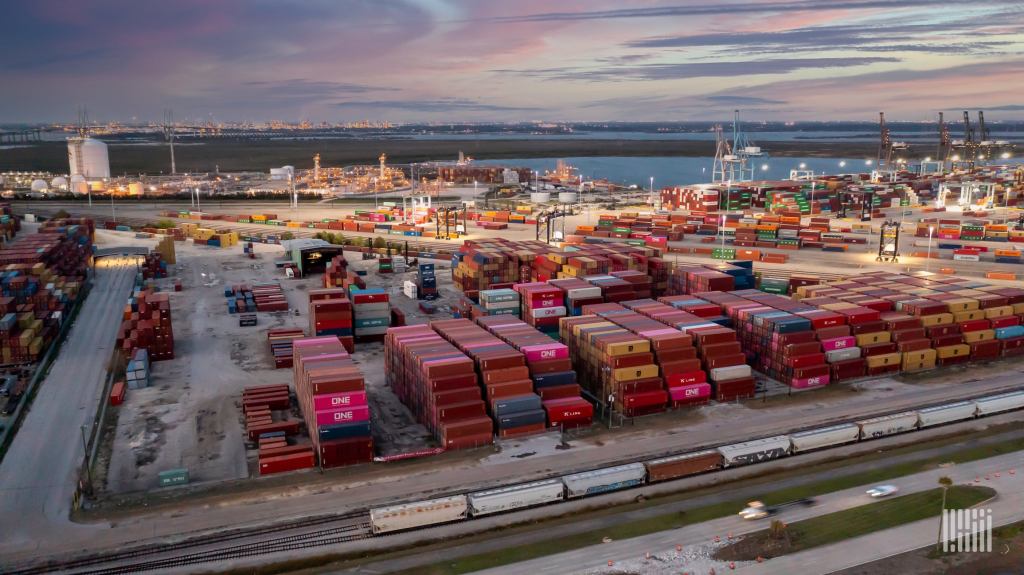
“We’ve got the infrastructure in place to grab [your] goods off the port, bring them into the warehouse/distribution model and send them wherever you need to,” Smith said.

Like micro-fulfillment, nearshoring has become an increasingly attractive strategy for shippers to provide a tighter grip on overall transportation and logistics, as well as control costs, Smith noted.

Averitt is well positioned to be a shipper’s single provider for cross-border logistics capabilities and a gamut of services including port-to-distribution center transport, distribution and fulfillment services, truckload, LTL, and final-mile transport. 

“From an international scope, Averitt, having all the facilities we have, strategically placed through that Southeast, gives [customers] an option to bring these goods in and for us to be able to handle it from A to Z, everything they could possibly need,” Smith added.

Inventory levels and consumer spending

While consumer spending has changed post-COVID, with discretionary items tending to sit more, Smith noted that necessity and small parcel inventory levels continue to flow.

“The one thing everyone’s looking at right now, and what we hear from the ports and cargo owners and retailers is everyone had a mini-peak season from an ocean standpoint, where they bumped up a little bit but they’re not over-ordering and over-allocating inventories just in case,” Smith said.

Looking ahead to peak season, it’s still unclear how consumers will react. Retailers want to see what consumer spend looks like from now until Black Friday, and what it looks like from Black Friday to Christmas, Smith said. This will provide a better gauge of what the market will look like post-Chinese New Year.

Technology and growth ahead

Data powers the decisions necessary to adapt to changing markets. This is why Averitt is focused on its key performance metrics and labor analytics, and business intelligence using AI to drive efficiencies and provide a better customer experience.

“Artificial intelligence is going to get bigger and bigger from a business standpoint. … From a business aspect, the more data we can capture on our platform that actually helps us understand where our costs lie, where our savings lie, what our customers are looking for, all of that turns to just an easier way to quote, understand and react to the ever-changing and quickly changing markets,” Smith explained.

As for growth, Averitt continues to expand its geographical locations based on customer needs and invest in those markets, especially in pockets of the Southeast.

“We are heavily looking at what looks like the best trend for us, and that’s based on years and years of experience, not just the 53 years in the LTL and transportation world, but also in the dedicated, integrated, international and now in the distribution platform,” Smith said.

To learn more about Averitt, click here.

Weekly NTI Update: October 16, 2023


Learn more at SONAR.FreightWaves.com

FreightVana’s new hire focuses on efficiency at the scaling startup

In the transformative world of logistics, when experienced people team up with smart technology, big changes can happen.

In an interview with Regan Daniels, vice president of product and revenue services at technology-enabled brokerage FreightVana, we explore her journey from customer service roles to technology-driven executive leadership. With over two decades of experience in logistics at industry giants like Werner Enterprises, Knight Transportation and SEND Transportation, Daniels’ evolution is a story of adaptability and a pursuit of efficiency.

FreightVana’s new hire, Regan Daniels. (Photo: FreightVana)

Daniels reflects on her early experiences in the industry, where the inefficiencies of disparate systems fueled her passion for technology. She outlines her primary focus on process improvement at the rapidly growing startup and offers advice to women in logistics and technology, encouraging them to embrace challenges, assert themselves and communicate strategically.

Questions and answers were edited for clarity and length.

FREIGHTWAVES: You began your logistics career holding customer service roles and in time, went on to master a number of technology-focused executive roles. What influenced that transition?

DANIELS: I’m customer-first always and I have always gravitated towards customer-facing roles. I’ve waited tables, I’ve worked in a hospital and I worked in day care. I get a lot of energy from that.

Early on, I loved the pace of being a broker. But in those early days when systems were new to our workflow, I had to enter one load into four different systems that each had their own function. I just thought this could hardly be less efficient and I could move more loads faster without systems. At the time, many were saying technology was going to change our world, but so far it was making the brokerage worse.

Our IT team was building a new transportation management system behind the scenes but not working with the operations teams on how to build it. For example, instead of language like “Book a carrier to a load,” they would say, “Add a resource provider to the tour.” They wanted me to train everyone to that, and I was like, this is not going to work.

I never in a million years thought about going into tech but at that point, I wanted to help marry some things up. I wanted to help what they rolled out be better. So I became very vocal about changes and learned how to communicate with teams in a different way because the hammer that we use in operations does not work in tech.

I was an aggressive learner, got busy and realized technology was for me. I have been enjoying it in terms of providing solutions that make things more efficient. It creates more space in the day to talk about things that computers can’t, and it allows us to dream big and come up with revolutionary ideas.

FREIGHTWAVES: What influenced you to join FreightVana as its new created role of vice president of product and revenue services?

DANIELS: Aside from just believing in the team, I really wanted to do something transformative. 

I turned 50 this year and I want to spend the next 15 years or so working on something really meaningful.

What I love about FreightVana is first and foremost, having assets was always a deal breaker for me for taking roles in this industry. I think if you don’t have the assets behind you, you have a little less influence on how business is done. That decision to invest in trailers, particularly the way this team has done it, is fantastic to me and visionary.

We also have proprietary technology that Don [Everhart, chief technology officer] I believe is going to transform the way our industry has conversations with shippers and will deepen partnerships.

I am stunned by what this team has already executed on so well.

FREIGHTWAVES: How will your industry knowledge and tenure help improve FreightVana’s imprint?

DANIELS: My initial focus is my superpower — creating efficiency.

In a startup, especially here, the pace at which they have grown has been incredible, but naturally, you are going create some inefficiencies.

My first focus will be on process improvement and fixing that. We have so much coming down the pipeline that we need to get better and do more faster. I have been brought in to create a different experience and help validate or question processes to help us continue to make better decisions and to continue to have healthy conversations that inspire growth.

We are still riding the success of FreightVana’s growth, and now we are buckling down and really focused on scaling.

FREIGHTWAVES: From your experiences, what advice would you give women in our space who have also found a love for operations and are interested in making a pivot into technology?

DANIELS: First and foremost, don’t give up on yourself even when you feel like you don’t believe it’s something you could take on. 

Sometimes women can be quiet about their passions because we feel like we have to have every single t crossed and i dotted before we eventually make a change, and I think that is what causes us to get passed up for the job.

There is also a need to understand your audience. If you are going to speak to a room of industry professionals, know what you are talking about. Make your points short: Think bullet points, not paragraphs.

Women need to speak up and we need to be firm in our stance.


3 questions to consider before investing in AI

FreightVana’s power-only brokerage going nationwide with more than 1,000 trailers this year

Net-Zero Carbon recap: Planting 1 tree per shipment