Truck electrification is much more than picking a charger

You can buy a charger for an electric vehicle from any number of suppliers. But it’s an incomplete purchase without knowing when the charger is operating, how much juice it can put out at a given time and whether or not it’s occupied.

“The last conversation I’m having is ‘Let’s pick the right hardware, how to deploy it cost effectively, and let me help you operate it so you get the SLA (service life agreement) you want,” Rich Mohr, ChargePoint Holdings Inc. senior vice president for North America, told me this week. “But I’ve got 10 steps before I get to that.”

ChargePoint grows fleet business with lessons from cars

Founded in 2007 and a public company since completing a reverse merger with Switchback Energy Acquisition Corp. in February 2021, ChargePoint (NYSE:CHPT), had an enterprise value of $2.4 billion and received $450 million in special purpose acquisition company proceeds. Revenue is growing but it is still losing money. 

ChargePoint recently signed deals to provide electric charging infrastructure for Isuzu Commercial Truck of America Inc. and electric vehicle chargers to support Ryder System Inc.’s purchase of 4,000 BrightDrop electric vans. The fleet business allows ChargePoint to leverage lessons learned in passenger vehicle charging, Mohr said.

Ryder System Inc. is purchasing 4,000 electric vans from BrightDrop, a General Motors subsidiary, through 2025. (Photo: Ryder System Inc.)

The company is not alone in building and selling a subscription-based charging ecosystem. Electric truck OEMs and a host of others, including utilities, offer consulting services.

Numerous startups like Flipturn Connect, recently profiled in Truck Tech, offer cloud-based systems to ease the transition to electric trucks.

“It’s not a software market  per se,” Mohr said. “It’s an integration market, helping [fleets] integrate these into their business. That’s where the biggest success has been.”

Hurry up and wait

Charger readiness becomes more important as the expected hockey stick of electric truck adoption arrives. It’s not here yet. With the exception of transit buses, Mohr said no medium- or heavy-duty electric trucks were registered in the last quarter. Passenger EVs accounted for 7.5% of sales in the second quarter, according to Experian.

“Every quarter ends up being a blip and then nothing, and then a blip and then nothing,” he said. “You’re seeing that in the medium- and heavy-duty [market], especially around the Class 8 manufacturers, and Class 5 and 6. It’s still very, very low volume.”

Daimler Truck North America (DTNA) CEO John O’Leary said in January that DTNA overbuilt capacity for electric trucks in 2022. But the realities of the post-pandemic heavy-duty market hampered by supply chain disruptions pushed OEMs to complete and deliver parts-shorted “red tag” diesel trucks as backlogs mounted from an inability to fully assemble new trucks.

The high cost of electric trucks — 2½ to three times the price of a diesel truck — was only one deterrent. Additional research and development and the fleets’ perception that the clock on regulations had plenty of time left also contributed.

“Why are you going to shift your labor over to that unless you really have the demand for the vehicles?” Mohr asked.. “No one’s kicking down the door to replace their entire fleet of diesel vehicles with electric vehicles.”

Clock ticks faster, and OEMs respond

OEMs have largely caught up with pent-up demand. They accepted orders for more than 30,000 diesel trucks in September. The California Air Resources Board requires 5% zero-emission Class 8 trucks for large fleets beginning in 2025. The Environmental Protection Agency follows with tough rule changes two years later.

“MD and HD vehicle costs will rise by between 12% and 14% as the EPA’s Clean Trucks regulation goes live in 2027,” Kenny Vieth, ACT Research president and senior analyst, wrote this week. “As such, we believe the OEMs will be at least partially successful in convincing customers to begin EPA ’27 pre-buying in 2024.”

The cost curve begins to come down as OEMs allocate more labor and production resources to electric vehicles. Daimler Truck hinted at a longer-range, faster-charging future for the Freightliner eCascadia when it revealed the eActros 600 from Mercedes-Benz Trucks in Germany on Tuesday.
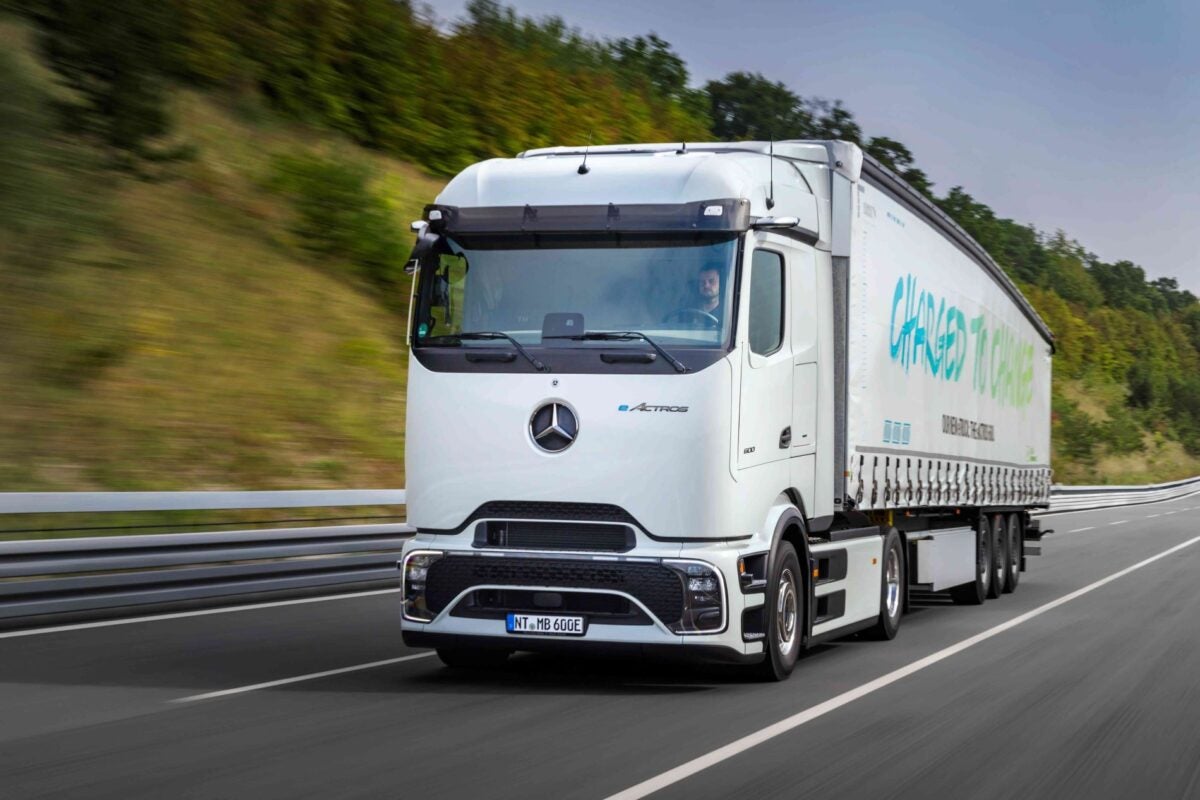
The eActos 600 from Mercedes-Benz Trucks foreshadows a longer-range, faster-charging Freightliner eCascadia due sometime around mid-decade. (Photo: Mercedes-Benz Trucks)

“I’m not worried about the slowness of the [electric] vehicles being delivered,” Mohr said. I’m expecting the technology to be at an OEM readiness and to be at a price point that is going to make sense in a TCO [total cost of ownership] mode. And I’m expecting manufacturing at volumes that are predictable.”

Mohr: Legacy manufacturers best bet for electric trucks

Mohr spent nearly two decades at Ryder before joining ChargePoint about three years ago. One thing he learned there was that for all the enthusiasm of new players in the trucking space, few succeed.

“In my old job, when I’m making a bet on a billion dollars worth of purchases for a fleet, who am I buying from?” he asked. “I’m buying from the companies that I have recourse with, that I have warranties with. You have to scale to a level to allow you to serve the bigger fleet companies in the U.S. to make a bet on those vehicles.”

That’s an ominous prediction for electric truck startups. Some like XL Fleet already have gone under. Legacy bodybuilder Shyft Group bought its assets. Shyft has developed its own electrified chassis for the new Blue Arc brand. Another example: BrightDrop, the stand-alone electric truck brand from General Motors, has resources that growth stage companies like Motiv Power Systems lack.

“Just on the diesel side of the business and the gas side of the business, I don’t have a track record for any of those smaller providers that survived long term,” Mohr said.
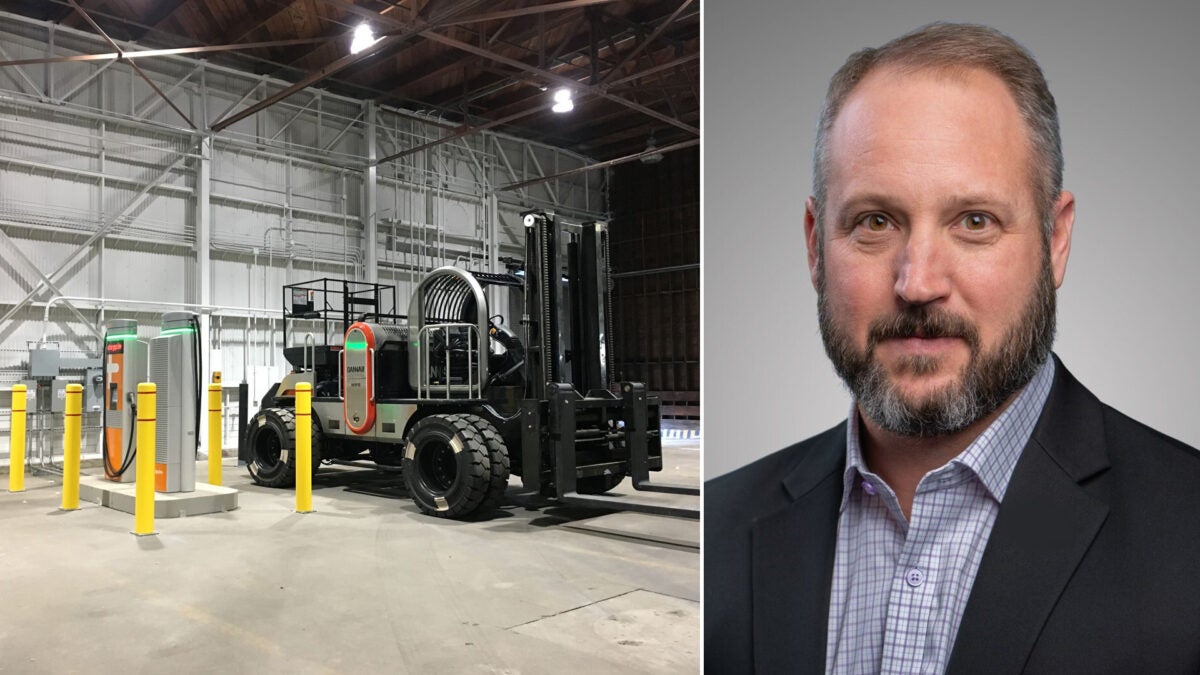
Rich Mohr, senior vice president at ChargePoint Holdings, says providing complete charging systems is more important than the equipment itself. (Photos: ChargePoint)

Briefly noted …

TeraWatt Infrastructure, a well-funded startup seeking to build out electric vehicle charging, has acquired two heavy-duty EV fleet charging sites in California’s freight-dense Inland Empire.

Ballard Power Systems has orders for a total of 177 hydrogen fuel cell engines from Solaris Bus & Coach, a leading European bus manufacturer.

Xos Inc. has been approved as a qualified manufacturer for the Commercial Clean Vehicle Credit, meaning its electric stepvans now qualify for federal IRA incentives.

Eaton Corp. will supply a so-far-unidentified commercial vehicle maker with its 48-volt programmable aftertreatment heater controller that electrically warms the catalyst.

The Shell Starship 3.0 with a Cummins 15-liter natural gas engine hauled a fully loaded trailer on an 840-mile loop throughout California.
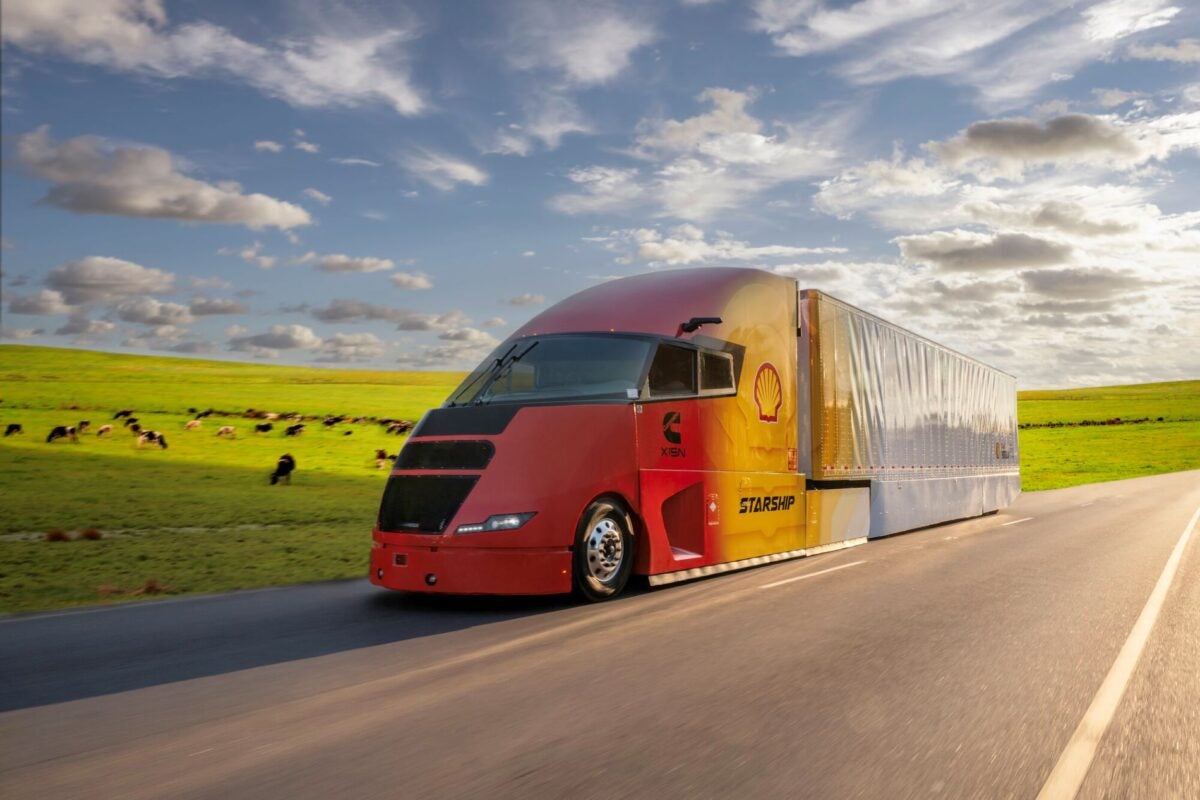
The Shell Starship 3.0 runs on a natural gas-powered Cummins 15-liter engine. (Photo: Shell)

Watch now: Platform Science CTO Jake Fields talks commercial vehicle digitization


That’s it for this week. Thanks for reading (and watching). Click here to get Truck Tech via email on Fridays. And catch the latest in major events and hear from the top players on Truck Tech, airing live at its new time — 3 p.m. Wednesdays — on the FreightWaves YouTube channel.

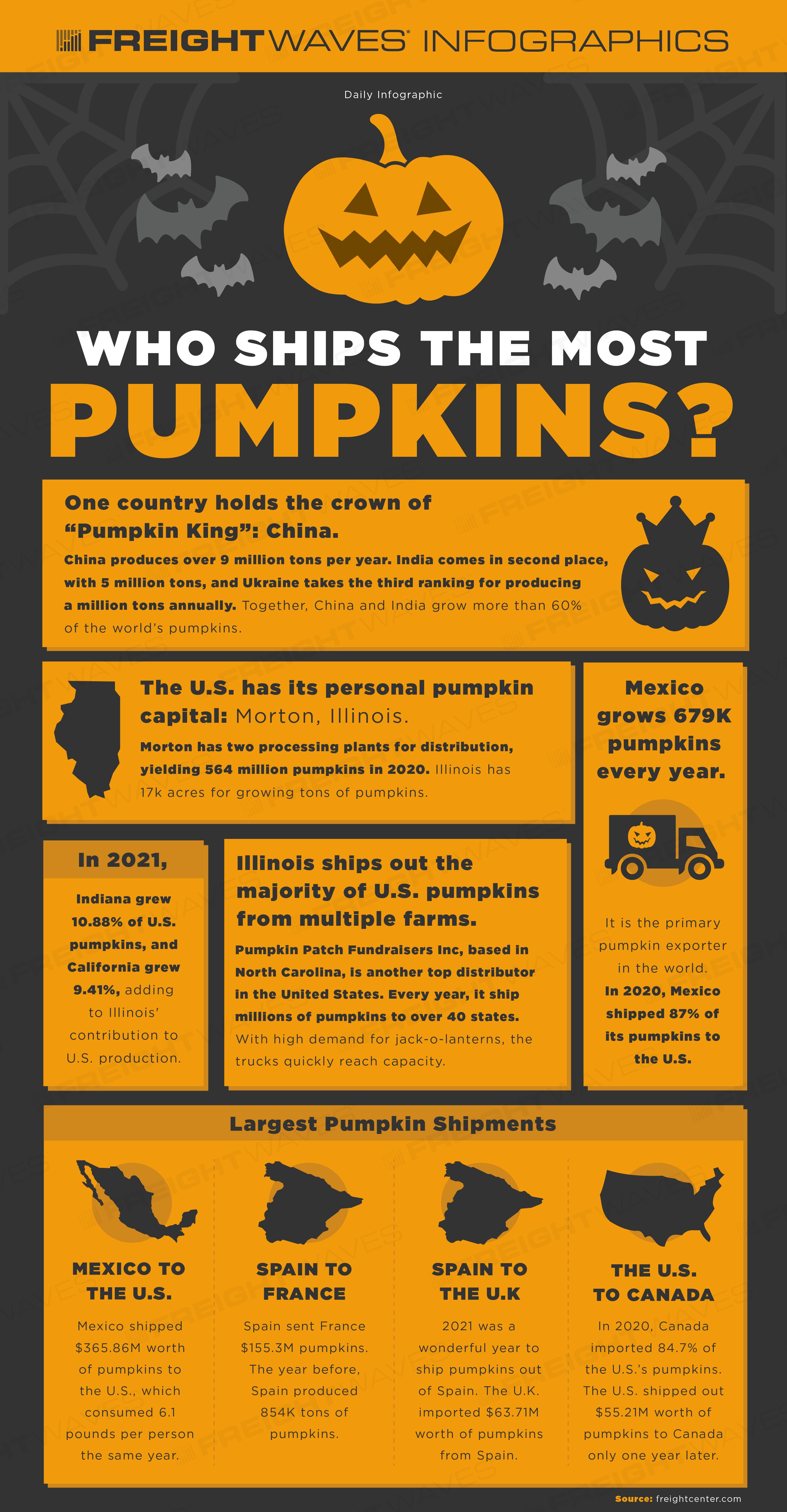
Daily Infographic: Who ships the most pumpkins?


To view more FreightWaves infographics, click here

How it’s delivered: Wing gives glimpse of a future with drone delivery

This story originally appeared on flyingmag.com

The suburbs of Dallas are buzzing.

About 210,000 now live in Frisco, to the northwest of the fast-growing Dallas-Fort Worth metroplex. But that’s not the buzzing I’m referring to, because accompanying that influx of residents are the first flights of a new technology: drones.

I spent last week in Dallas covering UP.Summit, an annual, invite-only gathering of some of the biggest movers and shakers in the transportation world. Among the attendees were senior U.S. defense officials, state and federal lawmakers, former presidents and prime ministers, and executives from some of the top firms in the industry.

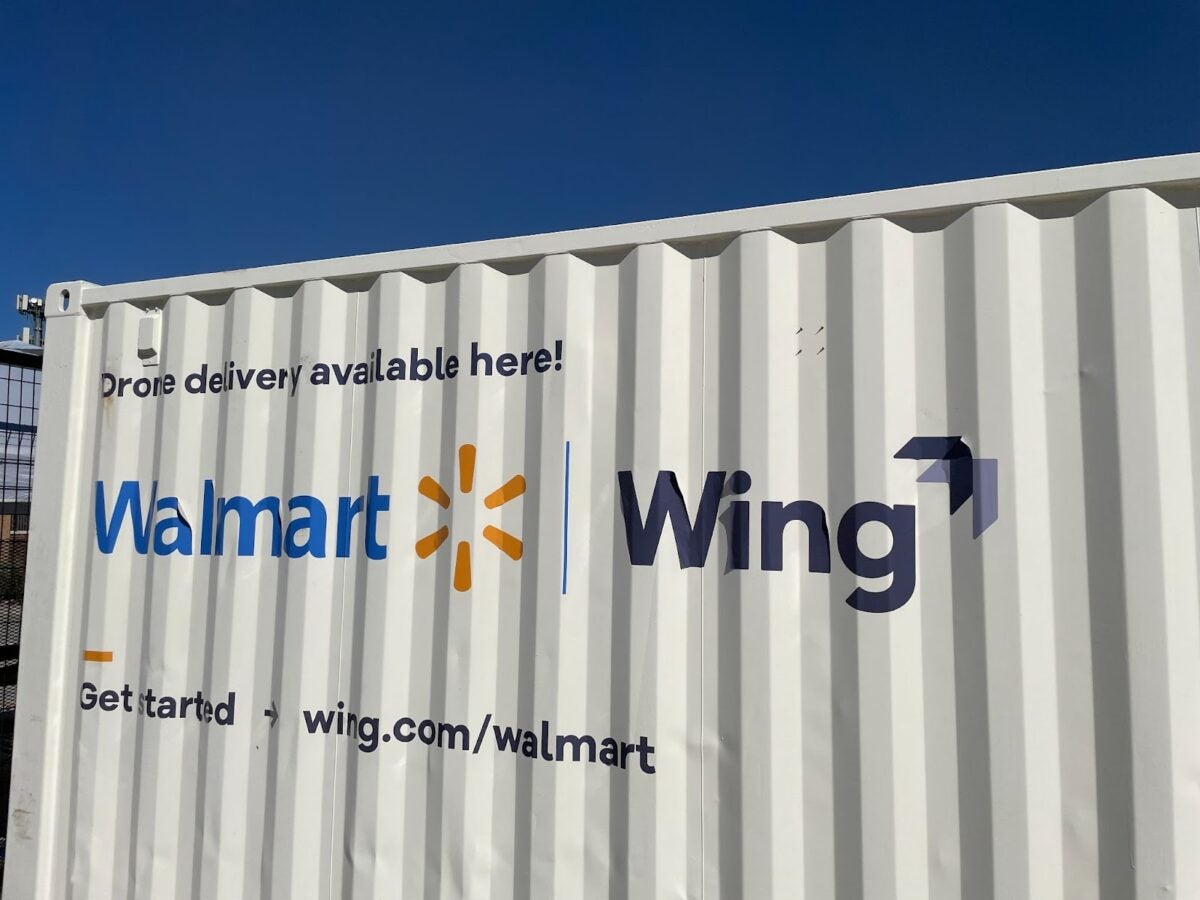
Adam Woodworth, CEO of Wing, fell into the latter group. At UP.Summit, Woodworth detailed the next phase of the company, which is owned by Google parent Alphabet. A large part of that road map relies on Dallas, where Wing last month launched drone delivery out of a Walmart Supercenter in Frisco. It plans to add a second store in the coming months.

A Wing spokesperson gave me an inside look at the company’s newest operation, complete with a simulated delivery to show how its drones take off, navigate, deliver and return to the Supercenter — all on their own. Read on to see exactly how Wing delivers, hear Woodworth’s vision for drone delivery and get an outlook on the service as it starts to hit the U.S. market.

The setup

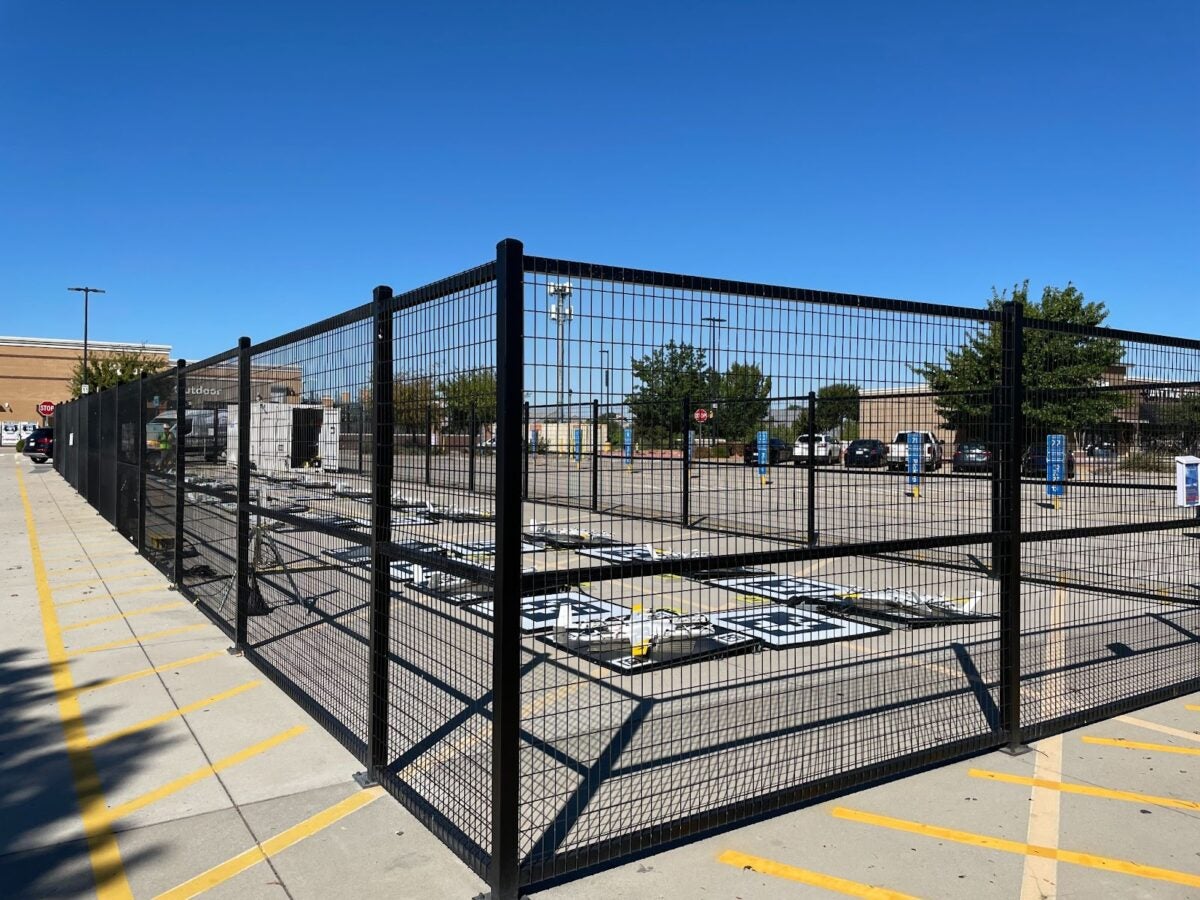
After listening to Woodworth speak, I hopped in an Uber and headed to Frisco, where I met a Wing spokesperson in front of the Walmart Supercenter at 8555 Preston Road. I didn’t see the operation at first. But upon closer inspection, I came across a small, fenced-in area in the parking lot. It took up just two rows of parking spaces and was about the size of a tennis court.

Wing’s operation out of a Walmart Supercenter in Frisco takes up just a tiny portion of the parking lot. (Jack Daleo/FLYING)

The spokesperson emphasized Wing’s ability to fit into Walmart’s framework seamlessly. After all, the largest retailer in the world needs the parking space for customers, and its associates don’t necessarily have the bandwidth to run a drone delivery operation. 

So, Wing keeps things compact and asset-light. Its store-to-door model, first launched in Australia’s Gold Coast region with grocer Coles, allows it to set up operations in the nooks and crannies of brick-and-mortar stores: in parking lots, on roofs or in unused space nearby. Meanwhile, all Walmart workers need to do is bring orders to the fenced-in service area.

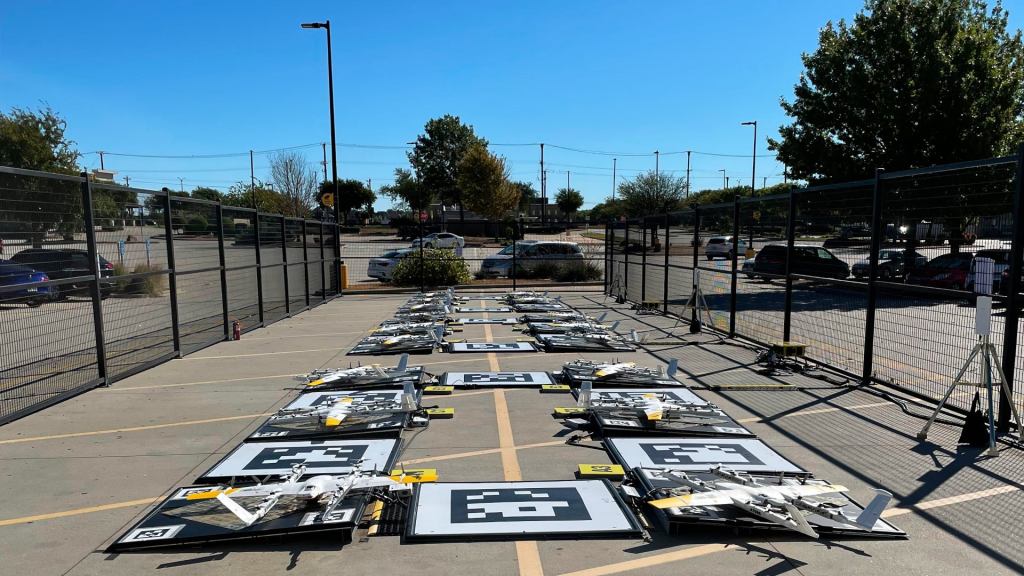
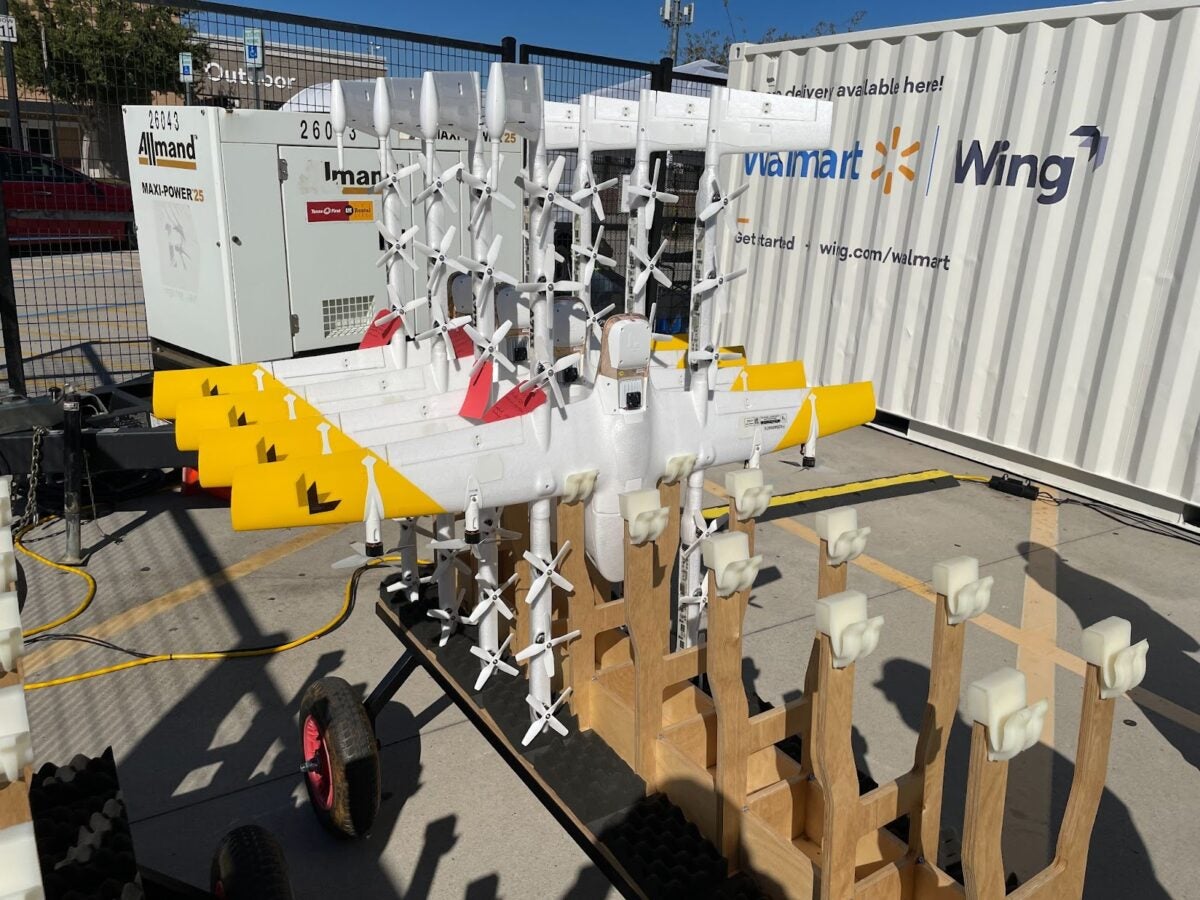
I arrived at the Frisco Supercenter just minutes before operations began at 10:30 a.m. CDT. A handful of employees were present. But they had little to do as 18 Wing drones charged on launchpads, performing routine maintenance checks on their own.

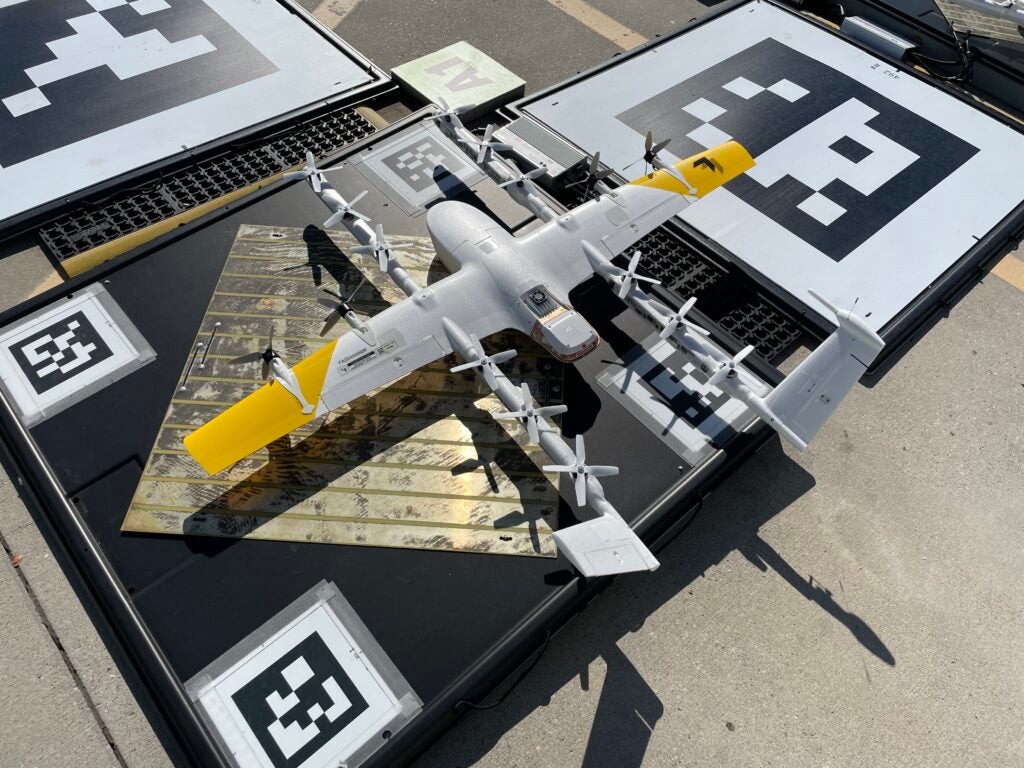
A Wing drone charges before a day of operations—QR codes (not present at customer locations) help guide it to the landing pad. (Photo: Jack Daleo/FLYING)

Even as orders started to come in, staffers — about five of whom were present at any given time — mostly just sat back and watched the drones do their thing. 

An automated flight planning and uncrewed traffic management (UTM) system charted the path of each suitcase-sized aircraft, accounting for factors such as weather, time of day and the presence of other objects in the airspace. The system also flags issues as they arise and responds to them as needed (such as by grounding a drone assessed to be unfit for operations, for example).

Ground support operators were on-site, as is the case at other Wing locations. Their job is simple: When a drone encounters an issue, it tells them exactly what the problem is and where it’s located and the staffer makes what is usually an easy fix. For more complex repairs, drones are set aside to be shipped to a dedicated facility. But there were no hiccups when I was present.

A Wing drone charges before a day of operations—QR codes (not present at customer locations) help guide it to the landing pad. (Jack Daleo/FLYING)

While there was also a pilot at the Frisco site, he was only there for me. The flights I witnessed were actually overseen from a Remote Operations Center in another Dallas suburb, Coppell, about an hour’s drive away.

That facility and another near Wing’s Palo Alto, California, headquarters control the company’s operations nationwide, including its service in Christiansburg, Virginia. Pilots at these centers are akin to air traffic controllers, watching dots on a screen.

All of that automation and remote oversight left Walmart associates with a simple task: Bring orders out to the drones. From there, a Wing order loader attached the payload to the drone’s tether, using a tablet to match it to the right aircraft.

Soon, staffers will have even less to do. Wing recently introduced the AutoLoader, a new piece of tech that will allow workers to leave containers out for the drones to pick up themselves. The company demonstrated the concept at UP.Summit, likening it to curbside pickup.

How it’s delivered

The Wing spokesperson simulated a delivery so that I — and now you — could see the whole process in action.

The order (a water bottle) was sent to the order loader, who waited for the drone to rise and release its tether before attaching a small, Walmart-branded container. Then the aircraft ascended and zipped off to its destination, a nearby staging area.

Initially, the buzzing was pretty loud. But it quickly faded into the background as the drone reached cruising altitude, making it difficult to hear unless you were listening for it.

A Wing drone lowers its tether for an order loader to attach a container. (Video: Jack Daleo/FLYING)

In the air, it cruised at 65 mph (56 knots) at roughly 200 feet, beyond the visual line of sight (BVLOS) of the ground crew. Because flights are preplanned, the drone accounted for how conditions such as wind would affect its battery. Still, onboard sensors kept an eye out for any unexpected changes, and the spokesperson said the drone could continue flying in moderate rain or even snow.

As we walked to the staging area, a countdown timer on the Wing app gave us an ETA. The spokesperson assured me this was exact, since the entire route was planned in advance. Sure enough, like clockwork, the drone emerged on the horizon on schedule, descending to about 25 feet before lowering the order to the ground with its tether. If pulled, the tether and payload would release and the aircraft would return to the parking lot.

A countdown on the Wing app estimated the delivery time down to the second. (Jack Daleo/FLYING)
Just six minutes after the order was placed, the drone returned to its landing pad in the parking lot. (Photo: Jack Daleo/FLYING)

Finally, water bottle in hand, I walked with the spokesperson back to the staging area, where the drone returned to the landing pad just six minutes after the order was initially placed. That’s far less time than a delivery driver would need to complete the trip. While the service is still relatively small, Wing envisions those same benefits for retailers nationwide.

Wing is not winging it

Some drone delivery companies have struggled to garner customers due to overly ambitious plans, premature launches, or some combination of the two. Wing, with its deliberate approach, is not one of them.

In the 30 or so minutes I spent at the Frisco Supercenter, I saw at least 10 organic orders come in from customers. Residents within 6 miles of the store can pick from over 1,000 items (the most popular being rotisserie chicken), including fragile items like eggs, since the container locks into place in the air to prevent swaying. Frozen foods such as ice cream are also on the menu, even in Texas, because delivery times can be as fast as three minutes.

The store — combined with another, unnamed Supercenter that will begin service later this year — is expected to serve about 60,000 households. And customers have been clamoring for Wing to add even more coverage in the region, according to the spokesperson.

Walmart and Wing offer more than 1,000 items to residents within 6 miles of the Frisco Supercenter.  (Jack Daleo/FLYING)

But Dallas is just the tip of the iceberg. Wing so far has completed more than 350,000 deliveries, with the vast majority happening outside the U.S.

The company got its start in Canberra, Australia, in 2019, expanding to the suburb of Logan and adding service in Helsinki later that year. To date, Logan is the company’s largest service — on some days, it handles over 1,000 deliveries, or one every 25 seconds. Partnerships with restaurants such as KFC have given its Australia business a boost.

Recently, Wing expanded operations in Queensland with property development group Mirvac and on-demand delivery provider DoorDash, which has an integration with the company’s service. Instead of using the Wing app, Queensland customers simply place their orders on DoorDash and select the drone delivery option.

In the U.S., operations are less substantial. Wing began serving Christiansburg, Virginia, in 2019, where one couple has received more than 1,200 deliveries. Outside Christiansburg and Dallas, it’s largely been limited to testing and demonstrations: A delivery of Coors beer and peanuts to Coors Field in Denver, the drop-off of a ceremonial tee-off golf ball for the Sports Illustrated Invitational and some testing near its Palo Alto headquarters and Hillwood’s AllianceTexas.

Wing is also partnered with Walgreens to expand store-to-door service in the U.S. and is working with Hillwood to prepare a special delivery facility at Frisco Station, a mixed-use development not far from the Supercenter.

Speaking at UP.Summit, Woodworth was bullish on Wing’s domestic prospects. He emphasized a few tricks the company has up its sleeve, such as the Wing Delivery Network philosophy it revealed last year. The decentralized, automated system will share resources across each of the company’s service areas based on spikes and lulls in demand. That way, Wing can send capacity wherever it’s needed, allowing it to service larger, more populated areas.

Woodworth also highlighted Wing’s Aircraft Library team, which develops new drone configurations based on components the company already uses. The idea is to help meet the unique payload, range or other requirements of its customers. Then there’s the AutoLoader, which figures to make matters significantly easier for store associates.

Combined with a small ground footprint, high levels of automation and APIs (like the one for DoorDash) to integrate drone delivery directly into customers’ sales channels, Wing’s new tools should push it toward offering a service that’s fast, cheap and good — not just two of the three — as Woodworth put it.

Walmart will certainly hope that’s the case. The retailer is looking to jump-start its drone delivery business, which it said has completed just 10,000 deliveries over the past two years. That’s despite operating a total of 36 hubs across seven states in partnership with DroneUp, Flytrex and Zipline, the industry leader in terms of sheer volume with 700,000 deliveries and counting.

According to McKinsey, Zipline and Wing are not the only key players in the space. It said more than 10 drone operators made at least 5,000 commercial deliveries in 2022, delivering nearly 875,000 packages (an 80% increase over 2021). And with 500,000 deliveries completed through the end of June, the company forecasts over 1 million by year’s end.

The majority of these are health care deliveries centered in Africa and the Asia-Pacific region, largely owing to Zipline’s dominance. But per data from McKinsey, North American market share is on the rise this year, while the European market is fading.

The North American market would get a lift from more clarity on BVLOS operations. An FAA committee began developing regulations in 2021, but there is still no final rule in sight. That could change with the passage of the House FAA Reauthorization Act, which calls on the agency to produce a BVLOS Notice of Proposed Rulemaking within four months of its effective date.

As things stand, Wing operates BVLOS under a Part 135 certificate, becoming the first drone delivery firm to obtain one in 2019. But the process is often expensive and lengthy, with Zipline, Amazon, UPS Flight Forward and Flytrex partner Causey Aviation Unmanned holding the only other approvals. 

The cheaper, shorter alternative is a waiver to section 91.113(b), which the FAA awards intermittently. Recently, Zipline, UPS and a few other firms successfully took this route. 

But a final BVLOS rule would allow Wing and others to scale, expanding current service areas and adding new ones in places spread out, hard to reach or obstructed by obstacles (such as tall buildings). It could also reduce costs by allowing drone firms to assign a single pilot to multiple aircraft, as Wing does, and offer customers a simpler path to sustainable operations as executives focus increasingly on ESG initiatives.

How Australia lost a war with emus

FreightWaves Classics is sponsored by Old Dominion Freight Line — Helping the World Keep Promises. Learn more here.

While numerous parts of the world are ensconced in tragic wars right now, a war in Australia’s past offers a stark distinction with some levity.

In 1932, a massive migration of emus wrought havoc on the country’s farmlands, deeply damaging the country’s wheat supply and more. Twenty thousand emus descended on Western Australia in migration, almost decimating farmlands that provided much-needed wheat and supplies to Australia.

Farmers were unable to stop them from eating their crops after the birds descended on their territory, which some say was rightfully the emus’. In desperation, the farmers continuously called on the government for help. They implored the government to send ammunition or take military action — most of them were ex-soldiers themselves, according to Scientific American

After World War I, veterans had nowhere to go and no jobs to fill, so the Australian government provided them with plots of land to farm. More than 5,000 soldiers took to Western Australia to try their luck at farming. But the area’s land was difficult to farm and after 1929 low prices resulting from the Great Depression put additional strain on the farmers. According to Scientific American, subsidies for wheat were promised but never fulfilled.

Now the emus had descended and things were worse. For those who are unfamiliar with the emu, it is a large flightless bird native to Australia. The species is even featured on the country’s Coat of Arms. Before 1922, it was a protected species. 

However, when the emus took over the farmland, they started to be seen as vermin. The soldiers-turned-farmers continued to beg for ammunition to help fight the birds, since they had difficulty obtaining it themselves during the Depression.

At the same time, the Australian government was under pressure to show that it was giving other World War I veterans something to do. So the idea to declare war against the emu in Western Australia arose. According to Australian Geographic the Seventh Heavy Battery of the Royal Australian Artillery was assigned the task, with Maj. G.P.W. Meredith as its commander.

The country set out to conquer the birds and save its merchant business, and it did so with machine guns.

As a major animal lover myself, I found the story hard to digest at first. But it gets humorous when it becomes obvious that the Australian army had failed against its flightless foe.

Despite being considered pests, the emus turned out to be incredibly resilient. They displayed remarkable speed and agility, making them difficult targets for the soldiers. They also proved to have difficult-to-pierce skin, leaving one soldier to say that they need to be shot in the back of the head with their mouths closed or through the front with their mouths open, according to an article in The Guardian.

As a result, the soldiers struggled to effectively reduce the emu population. Only a few dozen were dead the first day despite thousands of soldiers shooting at thousands of emus. Some soldiers claimed the emus had even elected leaders to facilitate evacuations.

The next day the Seventh Heavy Battery tried again and waited for thousands of emus to enter an area in range of a set up a machine gun. Thousands of birds swarmed the area, perfectly in range, but the gun  jammed. Quickly, the enemy caught on to the gambit and took off, successfully avoiding their human foes and relocating. Another strategy to mount a machine gun on a truck failed when the vehicle could not keep up with the birds, according to Australian Geographic.

Newspaper reports at the time make the war even more humorous, with reports of emus holding their territory firm.

“No treaty of peace has been concluded, and the emus remain in possession of disputed territory,” said an article in The Daily News from Perth on Nov. 9, 1932. “It is, therefore, expected that regular military operations will be followed by guerrilla warfare, which may continue for years and may be accompanied by stories of horrible atrocities. The emu commander is maintaining a studied silence as to his future plans, but it is understood that he is much impressed with the capacity for resistance shown by raw troops and confident that they will continue to uphold the best traditions of the race. He is credited with the intention to arrange for a suitable poem to commemorate the emu glory on the field of Campion.”

Some progress was made as the war raged on for two weeks. However, Meredith estimated even when they were successful, it cost 10 bullets for every emu taken down. Troops were eventually recalled. No human soldiers were killed. A total of 2,500 rounds of ammo was spent but only approximately 200 emus were killed.

After the soldiers returned home, federal labor parliamentarian A.E. Green was asked if the troops would receive a medal. He replied that any medals should go to the emus.

Regrouping, the government decided that the farmers would be given ammunition to fight for their own farms. After that, 57,034 emus were killed over the course of six months in 1934.

They even instituted a bounty on the emus in the decades that followed, which resulted in 284,700 killed in Western Australia from 1945 to 1960, and the crops were saved.

Luckily today, the emu population is stable and classified as “of least concern,” with about 600,000 to over 700,000 in population. They are again a protected species, although encroaching human activity is threatening some population areas.

If the story sounds too much like the plot of a movie, it is in fact true, but it will also be covered in two upcoming films. One short, risque comedic film, “The Emu War,” produced by Umbrella Entertainment, will premiere on Oct. 22. It takes some liberties with the plot line. A feature-length film is also in development, written by John Cleese, according to The Guardian.

FreightWaves Classics articles look at various aspects of the transportation industry’s history. Click here to subscribe to our newsletter!

Have a topic you want us to cover? Email bjaekel@www.freightwaves.com.

NTSB chair: Freight trains should also have image recording devices

The chair of the National Transportation Safety Board said a new federal rule requiring the installation of inward- and outward-facing image recording devices on all passenger trains should have included freight trains as well.

NTSB Chair Jennifer Homendy’s comments followed a Thursday announcement from the Federal Railroad Administration that the new rule is required by the Fixing America’s Surface Transportation Act. FRA also said the rule is in response to an NTSB recommendation aimed at enhancing safety in the passenger rail industry.

“While this is undoubtedly a step forward for passenger rail safety, FRA’s rule falls short of our recommendations in two ways — the first of which is by failing to require audio recorders for passenger trains,” Homendy said in the statement. “We’re also deeply disappointed the rule excludes freight rail entirely. In fact, FRA’s belief that the cost ‘could outweigh the safety benefits’ is an affront to every community that’s experienced a freight or freight-passenger rail disaster.”

Homendy’s statement also said NTSB has been recommending audio and image recorders in all locomotives for over a decade, based on NTSB’s findings that recorders might have helped the railroads, the workforce, the regulators and NTSB develop or reinforce safety measures. 

FRA said Thursday there are currently no plans to pursue a rule requiring that inward- and outward-facing recording devices be put on freight trains. Freight railroads have voluntarily installed these cameras on a widespread basis, according to FRA.

The Association of American Railroads told FreightWaves that “over the last decade, inward facing cameras have become nearly ubiquitous for Class I operations. Outward-facing cameras have been common for more than 20 years. These were voluntary railroad led efforts to help support and advance safety.”

But data from these recorders could “provide valuable information about the events leading up to and during an accident in determining why it occurred,” according to Homendy’s statement.

“Though many in the freight rail industry have opted to install recorders voluntarily, there’s absolutely no standard for the number of hours of data they must preserve after an accident,” Homendy said. “East Palestine is a striking example: instead of having 12 hours’ worth of in-cab video, as we’ve recommended, our investigators only have access to a 20-minute recording — not nearly enough to help us or the FRA identify critical safety improvements needed to prevent similar accidents from reoccurring.” Homendy was referring to the derailment of a Norfolk Southern train in East Palestine, Ohio on Feb. 3. The incident had received heightened attention because it involved the derailment of rail cars carrying hazardous materials.​

FRA’s rule for passenger trains requires locomotive video recording devices to be in operation while the controlling locomotive of a passenger train is in motion. Captured data must retain the last 12 hours of recorded footage at least, FRA said. 

“While video recorders cannot directly prevent accidents, they help maintain a higher standard of safety,” FRA Administrator Amit Bose said in Thursday’s release. “In addition, these devices play a vital role in post-accident investigations, providing valuable evidence that helps us understand the circumstances leading to the accident and take appropriate action to prevent similar accidents in the future.”

Subscribe to FreightWaves’ e-newsletters and get the latest insights on freight right in your inbox.

Click here for more FreightWaves articles by Joanna Marsh.

Once again California tells a court AB5 isn’t disrupting trucking in state

With the next freight-related legal battle in California centered on a request for a new injunction to block independent contractor law AB5 from being implemented against trucking, California is arguing that AB5 is not having an impact in that sector.

California’s attorney general’s office, in a recent filing in response to the amended preliminary injunction request by the California Trucking Association (CTA) and the Owner-Operator Independent Drivers Association (OOIDA), said that “the disruptions and burdens predicted by [CTA and OOIDA] have not materialized. Drivers are still driving. Ports are functioning. And packages and freight are being delivered across the state.”

If these arguments sound familiar, it’s because it’s the second time the state of California has made them. 

The AB5 law passed in 2019 has at its core the ABC test for determining whether a worker should be classified as an employee or a legitimate independent contractor. For trucking, it is the B prong of the ABC test that is problematic, as it says an independent contract is a worker who “performs work that is outside the usual course of the hiring entity’s business.” That can be a tough case to make for a trucking company hiring an independent truck driver. 

CTA and OOIDA first asked for a new preliminary injunction in January against implementation of AB5 in trucking. AB5 was implemented in trucking after a 9th Circuit appellate court in 2021 overturned a 2020 injunction handed down by Judge Roger Benitez in federal district court in the Southern District of California that had blocked AB5 in trucking and a subsequent June 2022 decision by the U.S. Supreme Court not to review that appellate court decision. 

CTA was the plaintiff in the original case. OOIDA was added as an intervenor in the case in September 2022. 

The need for a new filing comes after CTA’s and OOIDA’s amended request for an injunction brought in, among other things, comments by AB5 sponsor Lorena Gonzalez, a former state assemblywoman who is now a California labor leader. Those comments were cited by CTA and OOIDA as suggesting that trucking was singled out for AB5 enforcement when so many other industries were exempted from the law. 

The state’s attorney general’s office opposed the motion for a new injunction with some of the same arguments it made earlier: California trucking has not descended into chaos since AB5 became law of the land, or in this case, law of the roads.

The court hearing the case is the same federal district court for the Southern District of California that handed down the original 2019 injunction blocking AB5 from implementation of AB5 in trucking. Judge Benitez continues to oversee the case, which was never fully litigated. The only thing that has come out of it so far has been the injunction that was in effect for about 30 months but was killed by the 9th Circuit appellate court and the Supreme Court inaction. 

California has had several months since its last filing to add to its argument that AB5 has not disrupted trucking in the state. The weak freight market that the entire country has been experiencing helped support that argument. “In the time since the preliminary injunction was lifted, thereby allowing AB5 to take effect, California saw rate declines,” the state said. 

California also rejects any suggestion that AB5 would cut into the supply of trucks coming from smaller carriers — “nor have smaller trucking businesses been forced out of business,” the state wrote in its brief. “Since AB5 has gone into effect, small business trucking is growing faster (state’s emphasis) than before.”

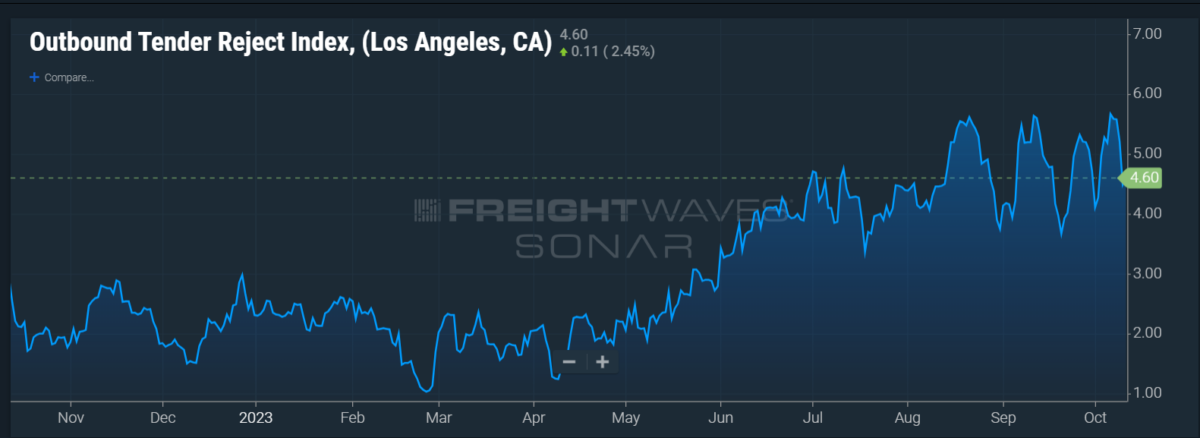
The Outbound Tender Rejection Index is a measure of trucking capacity. This chart from FreightWaves SONAR shows that while capacity has tightened in recent months, it remains at levels that reflect an excess capacity situation.

Citing documents contained in the 700-plus-page Request for Judicial Notice filed in the case, the state said that “previously misclassified truck drivers who are now classified as employees attested in sworn declarations that they saw no change to their type of work or how that work is performed.”

But it is the arguments about equal protection and potential “animus” from Gonzalez that were needed by the state to respond to the amended complaint. 

California said the exemptions from AB5, which at first glance appear to not follow any pattern — hairdressers got a break, so did surgeons — “was to avoid creating unnecessary uncertainty for workers long and lawfully classified as independent contractors” under the Borello test, a less stringent yet still demanding legal precedent that governed independent contractor law in California (and several other states) before the ABC test became the governing rule in the state.  

CTA and OOIDA do not make “any serious attempt to show that workers in the exempted professions are similarly situated to motor carrier drivers, as would be necessary to show irrational treatment for purposes of the Equal Protection Clause,” the state argued. The Equal Protection Clause of the 14th amendment of the Constitution was cited by CTA and OOIDA in the revised filing, arguing that the exemptions that passed over trucking amounted to a violation. 

In arguing against the “animus” charge, the state cited a Gonzalez statement that AB5 needed to be applied to trucking because drivers “act a lot like employees.” 

“Rather than demonstrate animus, this statement underscores the Legislature’s purpose in including motor carrier services in the long list of other industries that AB5 covers: to address worker misclassification,” the state wrote. “The Legislature was concerned that misclassification is rampant across the economy, and especially in particular growth industries, including — but far from limited to — the motor carrier industry.” 

It also quoted wording from a separate legal precedent that said “accommodating one interest group is not equivalent to intentionally harming another.”

“AB5 and its exemptions serve the rational, legitimate purpose of protecting workers against misclassification, while exempting industries and occupations in which workers have traditionally and properly been classified as independent contractors,” the state said in summing up its arguments.

A hearing on the arguments is set for Nov. 13 before Judge Benitez, who sits in San Diego. 

In other key arguments in the filing:

  • The original injunction blocking AB5 from trucking was handed down at the end of 2019 just as the law was going into effect in the state. CTA argued that provisions of the Federal Aviation Administration Authorization Act regarding trucking preempted AB5’s implementation, to which the lower court agreed. With that injunction dead, CTA and OOIDA raise the issue again in their request for a new injunction. CTA and OOIDA “have raised no new material arguments in support of the F4A preemption claim that were not already considered and rejected by the Ninth Circuit,” the state wrote, asserting that the finding by the 9th Circuit was “binding” because precedent precludes a court from “reconsidering an issue decided previously by a higher court in the same case.” 
  • California conceded that a company wishing to hire independent owner-operators as drivers by citing the business-to-business exemption has a tough bar to meet. But the state said it is ongoing. “Major California motor carriers seeking to hire independently contracted drivers under the B2B exemption are contracting with drivers who have formed their own corporations.” 

More articles by John Kingston

California Supreme Court to review rulings on constitutionality of Prop 22

15 states jump into California’s ongoing AB5 legal battle

AB5 3-ring legal circus: Full federal appeals court may hear Olson case 

Blue Yonder plans to acquire UK reverse logistics specialist Doddle

Arizona-headquartered supply chain management company Blue Yonder said Thursday it plans to acquire U.K.-based Doddle to bring the reverse logistics specialist’s capabilities to the U.S. market.

The transaction, terms of which were not disclosed, is expected to close around mid-November. Tim Robinson, who founded Doddle in 2014 and is its CEO, will stay on post-acquisition.

Doddle began life in the physical distribution world, establishing a network of 500 “out-of-home” parcel pickup and delivery locations throughout the U.K. and providing the enabling backbone technology. Over time, however, as customers’ digital demands grew across a broader distribution expanse, Doddle morphed into an exclusive IT provider for both forward and reverse logistics services. It no longer has a physical footprint in the U.K. 

While Doddle’s capabilities can be leveraged in markets in Europe, Australia and Japan, they will be focused primarily on the U.S. returns market, according to Mark Nordick, senior vice president and general manager of Global Logistics Service Providers, who said many U.S. retailers lack end-to-end returns visibility, a feature that Blue Yonder believes Doddle will bring to the table.

Doddle’s backbone will continue to be used to manage out-of-home operations and management for companies like Amazon.com Inc. and Australia Post, Blue Yonder said.

Blue Yonder, based in Scottsdale, Arizona, is a unit of Panasonic Corp., which acquired Blue Yonder in 2021. Formerly known as JDA Software, Blue Yonder scaled its operations through multiple acquisitions, including RedPrairie, i2 Technologies and Manugistics.

Canada invests CA$150M for new container terminal in Montreal

The Canadian government is investing CA$150 million (US$110 million) to develop a new container terminal at the Port of Montreal.

The funds will come from the government’s National Trade Corridors Fund, a program that expects to spend $4.6 billion from 2017 to 2028 on transportation-related projects aimed at bolstering Canada’s trade. The terminal itself will be built within the city of Contrecoeur, Quebec, which is about 40 kilometers upstream (24.9 miles) from the port’s existing facilities. 

The terminal will include a 675-meter-long (2,215-feet-long) dock, rail tracks that will connect to Canadian railway CN (NYSE: CNI), a container yard, an access road and operations and administrative buildings, according to Transport Canada’s Tuesday announcement. 

The new terminal, which Transport Canada said will help promote operational fluidity at the port, could increase the Port of Montreal’s capacity by 55%. The port’s website said the project, an expansion of existing facilities at Contrecoeur, could increase container capacity there to 1.15 million twenty-foot equivalent units.

The Port of Montreal overall handled 1.72 million TEUs in 2022. 

Construction on the terminal could start at the end of 2023, with the terminal’s commissioning slated for the end of 2026.

“The Port of Montreal is an economic driver for the province of Quebec and Montreal, and a key element of our national supply chain. By supporting the Port in its expansion project in Contrecœur, we continue our efforts to strengthen Canada’s supply chain,” said Canadian Minister of Transport and Quebec Lieutenant Pablo Rodriguez. “This is important so that we never again have to go through product shortages like we experienced during the pandemic, or the significant price increases that came along with them.”

Subscribe to FreightWaves’ e-newsletters and get the latest insights on freight right in your inbox.

Click here for more FreightWaves articles by Joanna Marsh.

US pulls trigger on Russian sanctions, blacklists 2 crude tankers

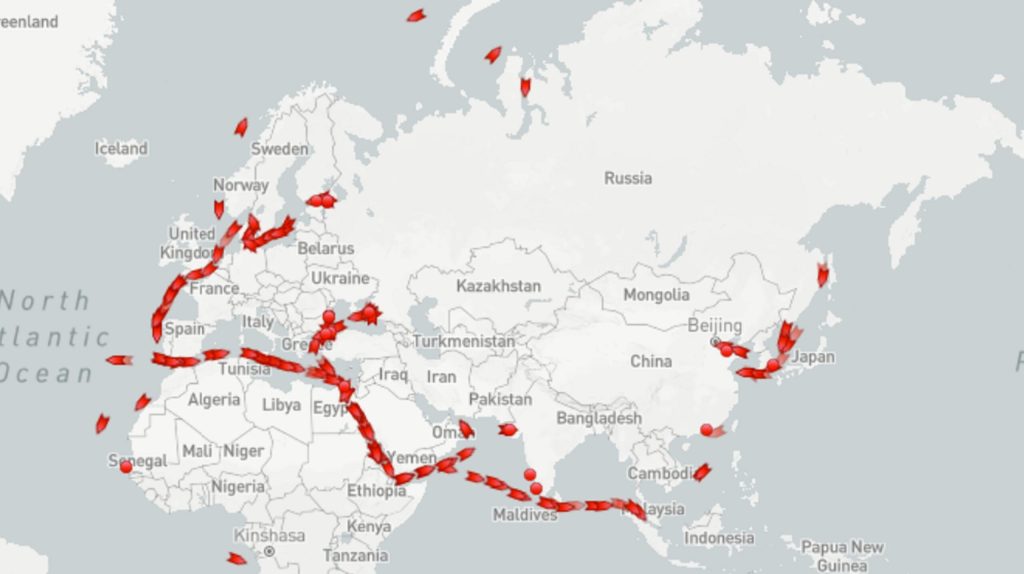
a map of Russian crude exports

It took a while but it finally happened: The U.S. Treasury Department has begun sanctioning tankers transporting Russian crude oil valued above the West’s price cap.

Since Dec. 5, 2022, the Group of Seven nations, members of the European Union and Australia have barred their countries’ marine service providers from working with tankers carrying Russian crude priced above $60 per barrel. Tankers carrying crude above the cap that use G-7, EU or Australian services have been threatened with sanctions.

The price cap was designed to allow Russian crude to continue to flow to world markets while simultaneously forcing Russian crude to be sold at a discount, curtailing profits to the Kremlin.

Skepticism on the price-cap scheme has been mounting for months, because Russian crude pricing was clearly above $60 per barrel and no punitive action was being taken.

The Treasury Department’s Office of Foreign Assets Control (OFAC) finally pulled the sanctions trigger on Thursday, blacklisting two tankers and their holding companies and sending a warning shot across the bow of the broader maritime industry.

“Today’s action demonstrates our continued commitment to reduce Russia’s resources for its war against Ukraine and to enforce the price cap,” said Wally Adeyemo, deputy secretary at the Treasury Department. He affirmed that the U.S. “will continue to take actions” to enforce the cap.

The U.S. announcement was accompanied by a joint statement and advisory from the “Price Cap Coalition,” comprising countries of the G-7 and EU, plus Australia.

Higher prices, higher volumes

Russian Urals crude breached the price cap in mid-July and has traded above $60 per barrel ever since. As of Wednesday, Urals crude loading in the Russian Black Sea port of Novorossiysk was at $76.42 per barrel, according to price-reporting agency Argus. Urals loading in the Russian Baltic Sea port of Primorsk was at $75.32 per barrel.

Russian ESPO crude loaded at the country’s Pacific port of Kozmino has traded above the cap ever since the sanctions policy was put in place over 10 months ago. It was at $83.70 on Wednesday, according to Argus.

(Chart: FreightWaves based on data from Argus)

“Given recent price movements, the Coalition is focusing on supporting compliance and enforcement of the policy,” the Price Cap Coalition said on Thursday.

Not only has Russia been getting higher prices for its crude, its export volumes have been rising. Revenues flowing to the Russian government are up on both price and volume.

According to Kpler, which uses ship-tracking data to gauge volumes, Russia’s seaborne crude exports have averaged 3.57 million barrels per day in October to date.

That’s up 14% from the recent low point in July, when monthly seaborne exports averaged 3.13 million barrels per day.

(Chart: FreightWaves based on data from Kpler)

2 tankers blacklisted

Traditionally, OFAC has not sought to regulate compliance by sanctioning a large number of companies all at once. Rather, it initially sanctions a small number of players with the expectations that others will fall in line, then gradually goes after more targets if behavior doesn’t change.

OFAC sanctioned the tanker SCF Primorye for transporting Russian Urals crude priced at over $75 per barrel from Novorossiysk, and the tanker Yasa Golden Bosphorus for transporting Russian ESPO crude priced at over $80 per barrel from a Russian Pacific port, presumably Kozmino.

The Treasury Department confirmed that both tankers “used U.S.-based service providers while transporting the Russian-origin oil.”

No U.S. individuals or U.S.-incorporated companies can do business with these vessels or their owners going forward. 

According to ship-information database Equasis, the 2009-built, 158,070-deadweight ton (DWT) SCF Primorye is managed by Dubai, UAE-based Sun Ship Management and flagged by Liberia, the world’s largest ship registry. The Liberian Registry is headquartered in Virginia.

The SCF Primorye previously sailed in the fleet of Russia’s Sovcomflot, according to data from MarineTraffic. Management of multiple Sovcomflot tankers was transferred to Sun in the wake of sanctions. The sanctioned tanker is currently owned by Dubai-based Lumber Marine.

Both the SCF Primorye and Lumber Marine have been placed on OFAC’s “blocked” list. Any entity that owns 50% of Lumber Marine or the ship is also blocked.

The 2007-built, 115,867-DWT Yasa Golden Bosphorus is managed by Turkey’s Yasa Tanker, insured by U.K.-based Britannia P&I and flagged by the Marshall Islands Registry, according to Equasis. The Marshall Islands Registry, the world’s third-largest ship registry, is managed by Virginia-headquartered International Registries Inc. (IRI).

The Yasa Golden Bosphorus was sold by trading group Vitol in 2019, according to MarineTraffic data. Its current owner is Turkey-based Ice Pearl Navigation Corp., which has been blocked by OFAC along with the ship and any company that owns 50% or more of either the ship or Ice Pearl Navigation.   

Click for more articles by Greg Miller 

Chinese lidar maker gets US patent infringement claim terminated

Hesai lidar point cloud

The International Trade Commission has terminated a patent infringement suit by an American lidar maker against a Chinese competitor. But the case will continue in federal court. 

San Francisco-based Ouster Inc. sued Shanghai-based Hesai Group in April, seeking to bar Hesai from importing certain autonomous vehicle technology to the U.S. The ITC did not address the merits of Ouster’s claim. The ruling lifts a stay on a federal suit Ouster filed in U.S. District Court in Delaware seeking an injunction and monetary damages against Hesai.

The ITC initially determined on Aug. 24 the claim should be terminated. The commission’s final decision came Tuesday.

“Hesai has always believed all of Ouster’s infringement allegations are baseless and lack merit. Hesai’s lidar products are independently developed, based on years of research and engineering investment, not stolen IP,” Hesai Group said in a news release Thursday.

Lidar is an object detection system that works on the principle of radar but uses light from a laser. Hesai is a global leader in the technology. Its customers include autonomous trucking developer Kodiak Robotics.

Ouster seeks freedom from agreement reached by competitor that’s now a subsidiary

The ITC decision allows arbitrators time to decide whether Ouster must arbitrate based on a 2020 patent infringement settlement between Hesai and Velodyne Lidar. Ouster purchased Velodyne in February.

“Hesai has fully abided by the agreement, but Ouster tried to escape its legal obligations,” Hesai said, adding that it welcomes arbitration.

Ouster claimed it was not bound by the previous patent cross-licensing agreement Hesai reached with Velodyne following a suit Velodyne filed in 2019 against Hesai and Suteng Innovation Technology Co. Ltd., also known as RoboSense.

Hesai claims Ouster spent $800,000 lobbying against it in Washington

Hesai agreed to pay Velodyne millions in upfront payments and ongoing royalties. Velodyne sued Ouster alleging patent infringement in June 2022. That case went away when the two startups announced their merger in November.

Hesai claimed Ouster has spent $800,000 since last year on lobbying instead to smear Hesai. 

“As a result of its failure to compete effectively in the lidar marketplace against Hesai and its continuing legal setbacks, Ouster is turning to political lobbying as its last resort. Ouster has been availing itself of the political and regulatory avenues by spreading xenophobic misinformation and proffering false claims through its lobbyists and media agents,” Hesai said.

Ouster declined comment on Hesai’s claim about lobbying.

In an Aug. 28 statement following the ITC’s initial determination, Ouster said it invented digital lidar technology and holds one of the largest patent families in the lidar industry. The company claims that after the market shifted toward its digital lidar, Hesai stole Ouster’s patented technologies and incorporated them into Hesai’s competing products.

“The global lidar industry relies on fair competition, and IP [intellectual property] must be protected,” Ouster CEO Angus Pacala said in a statement Thursday. “Lidar is a critical technology used across our nation’s infrastructure from traffic systems to the vehicles we drive. Critical technology needs to be trusted technology. And Ouster is dedicated to promoting the responsible and ethical use of lidar.”

Editor’s note: Updates with Ouster declining comment on lobbying allegation and adds quote from Ouster CEO.

Lidar maker Ouster sues China’s Hesai for patent infringement 

Has the lidar shakeout produced a winning combination?

Struggling lidar films Ouster, Velodyne announce merger

Click for more FreightWaves articles by Alan Adler.