Logistics M&A market looks brighter in 2024

This fireside chat recap is from FreightWaves’ 3PL Summit on Wednesday.

FIRESIDE CHAT TOPIC: M&A activity in 2023 and an outlook for 2024

DETAILS: Gaurang Shastri, managing director at Lincoln International,says logistics companies are looking to round out their service offerings with acquisitions that can keep customers in the fold. Lincoln International is an investment bank.

KEY QUOTES FROM SHASTRI: 

On M&A activity in 2023: “It’s pretty striking if you look at the slowdown that we saw last year with an 80% reduction in deal value and almost a third less transactions in terms of overall activity. But there were certain pockets within the sector where we continued to see activity, particularly led by strategics, who took advantage of a lot of private equity groups sitting on the sidelines, just given the challenges in terms of the interest rate environment and a higher cost of capital, where you did see some larger higher-profile deals get done. But certainly the rationale for those deals [was] much more airtight than what you may have seen in the past few years where everyone kind of was in this drunken frenzy if you will.”

On M&A’s future direction: “What we are seeing is that groups are being much more thoughtful in terms of where they’re spending their time in terms of M&A. There’s very little room for air, given the high cost of capital. And what we are hearing from a lot of our private equity relationships is that they are encouraged that it’s going to be a better environment to make deals in 2024 and moving into ’25. We’ve seen a lot of normalization in terms of the freight rates, a little bit more stability in terms of volumes, which should lead to a better environment and hopefully just a better alignment in terms of valuation expectations between sellers and buyers. One other interesting stat I’ll share with you which I thought was pretty alarming was in 2023, of the deals that went to market, less than a third of them actually got done. So there was a high rate of failure, oftentimes driven by either company performance, or more often than not just this gap in valuation expectations, which I think is starting to narrow, which should promote a better landscape to make deals happy.”

On what deal-makers are looking for: “While some of the acquisitions are being driven by increasing scale, the vast majority of activity we’re seeing is being driven by diversifying businesses. So having that volatility that a lot of the larger players in the market experienced over the last few years [has] taught very painful lessons, that it’s important to be able to diversify the business into areas that help soften and insulate the inherently cyclical parts of their business. So, for example, if you look at a lot of the shipping lines, they have moved very significantly into contract logistics and other value-added logistics in order to be able to not only provide a higher value prop to their customers, but importantly, provide more stability and higher margins in certain pockets. You’re also seeing some of the other more asset-light players in the space also recognize that in order to be more relevant and stickier with their clients, they need to invest behind the assets. It allows them to control more of the assets and provide more reliability of capacity. And while there is more capacity in the market today, we know disruption is going to be the constant theme within the supply chain.

“I do think we’ll continue to see a lot of interest and activity within the contract logistics market, … a ton of investment that goes into areas like health care and pharmaceutical logistics, as well as e-commerce. It’s a great time to consider investing within differentiated freight brokers that have really proven themselves in the downturn.”

3PLs can guide shippers through complexities of cross-border trade

This fireside chat recap is from the FreightWaves 3PL Summit on Wednesday.

FIRESIDE CHAT TOPIC: The future of cross-border freight and third-party logistics providers.

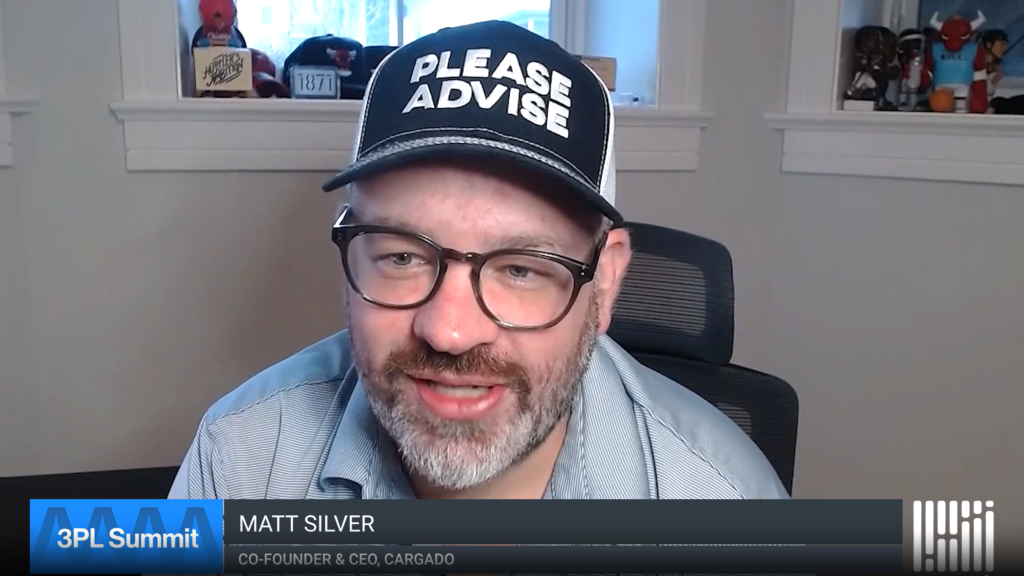
DETAILS: Cargado’s Matt Silver breaks down the changing role of 3PLs and how they can help shippers as more manufacturers move their supply chains to Mexico.

SPEAKERS: Silver, co-founder and CEO of Cargado, a FreightTech firm that is building software to simplify the cross-border shipping process, and FreightWaves’ Mary O’Connell.

KEY QUOTES FROM SILVER:

“You’re going to just continue to see a lot of benefits for companies to move to Mexico and out of Asia. I think it’s just going to continue to explode, and seeing that trade between Mexico and the U.S. was almost $800 billion last year, that’s going to keep growing. We’ll see that continue to skyrocket, especially as some of these massive plants like the Tesla factory in Mexico finally come to fruition.”

“The reason why you don’t see shippers completely focusing on just growing their capacity and going direct to the carriers is because a lot of them don’t want to deal with all those problems at the [Mexican] border. And a lot of carriers aren’t built to support a lot of the customer service side of things. So it’s more advantageous for the carrier to work through a lot of brokers, because they don’t have to deal with everything going on at the border besides turning in the paperwork.”

More articles by Noi Mahoney

Texas-based customs broker expands cross-border footprint

Shifting supply chains boost trade in California-Baja mega-region

Mass furloughs reported at BNSF Railway operations in 4 states

Truckstop’s Hutto sees Q4 truckload cycle inflection

Truckstop’s Brent Hutto at FreightWaves’ 3PL Summit

This fireside chat recap is from FreightWaves’ 3PL Summit on Wednesday.

FIRESIDE CHAT TOPIC: An overview of the truckload market.

DETAILS: The current capacity oversupply is likely to linger until the fourth quarter, said Brent Hutto, chief relationship officer at digital freight marketplace Truckstop, during FreightWaves’ 3PL Summit.

KEY QUOTES FROM HUTTO:

On the overall trucking environment: “We’re in just a normally adjusted economic bottom of the marketplace, and I don’t mean bottom like it’s terrible and nobody’s making a profit … . The marketplace has just adjusted down … and we’re just likely going to stay here for another few quarters before it adjusts back out.”

On changes in truck brokerage: “The average margin actually went up 1% from 2022 to 2023 … to 17%. Historically, brokers would not put a rate in there [but] almost 70% of brokers are now putting rates in their spot market loads … because they want to get a faster negotiation process.”

On a turnaround’s timing: “The trucking companies can’t operate at marginality with their profitability, so the marketplace will naturally lift back or you won’t get trucks to move things. That should start to happening in the fourth quarter this year.”

More FreightWaves articles by Todd Maiden

Qued aims to streamline, automate load scheduling for shippers, carriers

This fireside chat recap is from FreightWaves’ 3PL Summit on Wednesday.

FIRESIDE CHAT TOPIC: How automation is revolutionizing appointment scheduling

DETAILS: Qued President Tom Curee sits down with FreightWaves’ Thomas Wasson at FreightWaves’ 3PL Summit on Wednesday to discuss his cloud-based company’s new software offering, which streamlines and automates the load appointment scheduling process among shippers, 3PLs and carriers.

KEY QUOTES FROM CUREE: “We built our process out to give users visibility to the process. Automation doesn’t have to be a black box that they don’t know what’s happening, right? So we kind of open up that black box, and we build a lot of trust with them [customers].”

“So there’s a lot of different ways to build those connections. Again, APIs yes, they’re preferred. It’s a little bit easier for us to be able to navigate. But there’s a whole lot of other technologies that exist out there that sometimes you just got to be able to work with what is available to you and then build out from there.”

“Part of what we’re opening up to the community is being able to say, you may have a three-hour dwell time, but it’s because you’re taking a bad appointment and you just don’t have enough [information] to be able to actually see what happened these other times. There’s a lot of decisioning that can be done and education that can be done through the use of this data, but that’s something that we are actively engaging with our customers to do to give them better logic for that decision-making process.”

“This is an antiquated process that has been untouched for decades. And so when you really start to lean in and have conversations about the importance of appointments, it really changes the entire way that they begin talking about it.”

Evaluating FreightTech: Prioritizing business needs and user enablement

This fireside chat recap is from FreightWaves’ 3PL Summit on Wednesday.

FIRESIDE CHAT TOPIC: A guide on how to evaluate FreightTech products

DETAILS: In this fireside chat, Ryan Schreiber, chief growth officer at Metafora, dives into the critical considerations leaders must ponder when assessing their companies’ FreightTech requirements. He dissects the distinction between early and late technology adoption, pinpointing key business challenges. 

KEY QUOTES FROM SCHREIBER:

“Number one, you need to understand what business problem you are trying to solve. … Let’s say you’re looking for a capacity solution. Are you looking to drive automation around the capacity network you already have, or do you feel like you need better carriers to haul your freight?”

“There are a lot of companies that aren’t making [technology investment] choices right now, and those companies are the ones who are also wasting money on technology and who are not getting value in the benefits they expect to get from technology. They expect technology to solve all of their problems. They are not doing some of the foundational work and discovery necessary to get the benefits of technology. They are building random pieces of tech that don’t do them any good and not being intentional about their strategy. … I tell our clients all the time that any strategy can work — you just have to understand the limitations of that strategy and then invest around those limitations.”

“Your phone, your phone systems, as a 3PL is especially the single greatest source of information that you could imagine. And not for like, how many calls has someone made today, but getting specific on what that call was associated with. What vendor or customer was that call associated with? Why did that call happen? So when I talked earlier about focusing on user enablement before automation, this third-party data is a part of it. … If you can start getting focused on gathering this data in a tech-connected ecosystem, you can have better access to it. That is the absolute first step in AI readiness too.”


FreightTech experts: 2024 is the year for laggards to catch up

Navigating the brokerage landscape in 2024

The unsung FreightTech disrupters innovating supply chains

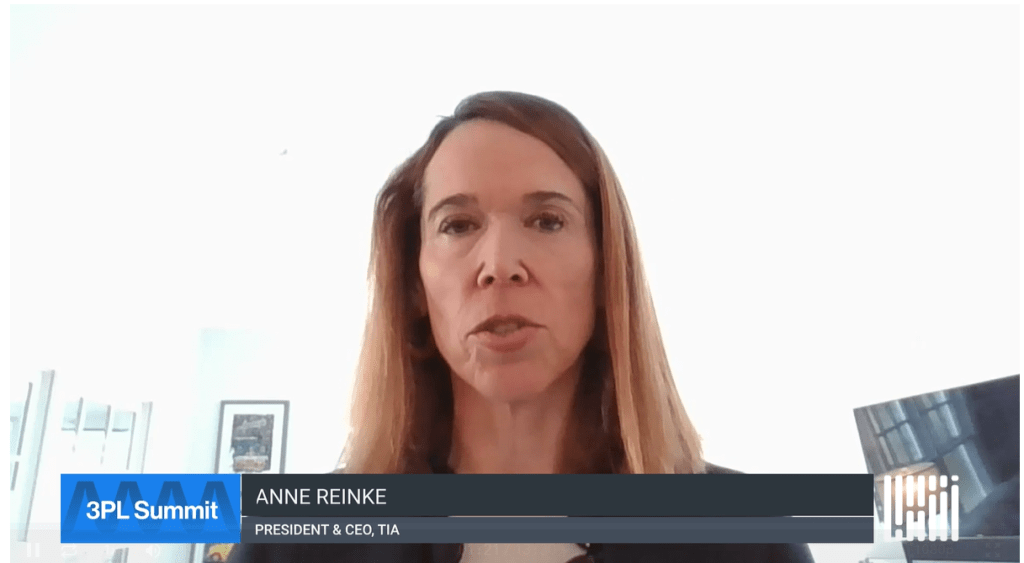
TIA chief: In tough times, strengthening broker-carrier ties is vital

This fireside chat recap is from FreightWaves’ 3PL Summit on Wednesday.

FIRESIDE CHAT TOPIC: How maintaining broker/carrier relationships is essential in a down market

DETAILS: Anne Reinke, the president and CEO of the Transportation Intermediaries Association, talks about the natural tension between brokers and carriers and how it can be overcome.

KEY QUOTES FROM ANNE REINKE:

“There’s always a level of distrust. So how you combat that in a down market is particularly interesting because brokers are suffering and carriers are suffering.” 

“I think that there are those in the owner-operator space who are willing to talk and want to have a conversation about it, and then there are those who are just committed to the distrust. Right now, gross margins for brokers are about 12% to 14%, and many brokerages that I know of are much less than that. And yet you have people who don’t believe it. That’s a tough place to be.”

“Some brokers are concerned about the carrier’s bottom line. They are concerned about giving them regular business, that they trust each other and that they work well together. So it’s incredibly valuable for a broker to have those kinds of relationships.”

Discussing combating fraud: “The last piece of this is sort of the hardest, which is the enforcement piece of getting state and federal actors really to start prosecuting.”

More articles by John Kingston

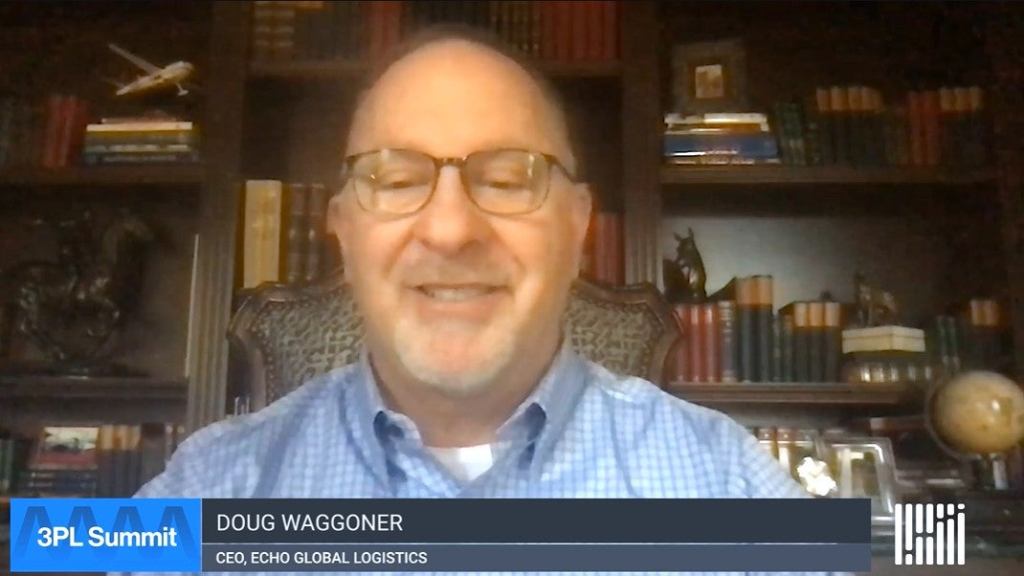
Echo Global Logistics CEO: Freight recession may ease by end of 2024

Doug Waggoner, CEO of Echo Global Logistics, said he believes the freight market has bottomed out, shed excess trucking capacity and could stabilize by the end of the year.

Founded in 2005 by Bradley Keywell and Eric Lefkofsky, Echo Global Logistics is a global provider of technology-enabled supply chain management services. Waggoner has served as CEO of the Chicago-based company since December 2006.

“The number of trucks is declining, so not only the number of carriers, but the number of trucks in the market,” Waggoner said during the keynote address at FreightWaves’ virtual 3PL Summit on Wednesday. “I think those are all good indicators for us to see that the excess supply of capacity is coming back in line with demand. In January, Echo had about 10% sequential volume growth. I think that’s a pretty good number.”

Barring unforeseen weather events or global disruptions, the freight market could begin to see an uptick in rates by the fourth quarter Waggoner said.

“As supply keeps coming out, we could be into a balanced market, which would stabilize the pricing,” he said. “Potentially, in the second half of 2024, we think we could see tighter market conditions. That would start to put pressure on prices and create some spot freight, which we haven’t had for a long time.”

Waggoner has been working in the commercial transportation industry for over 40 years, including stints at Yellow Corp.

“I’ve been doing transportation for a long time,” he said. “I started right out of college. I went into a management training program with an LTL carrier. I really spent the first half of my career in LTL trucking and worked in a variety of capacities, like sales, operations, marketing, IT, engineering. I actually spent a lot of time at Yellow Freight in their corporate office.”

When Waggoner started at Echo, the company had about 70 employees and $30 million in revenue. Today, Echo Global Logistics has over 2,000 employees and a network of more than 40,000 carriers. The company has about 30 offices around the country, offering freight brokerage and managed transportation solutions for truckload, partial truckload, less-than-truckload, intermodal and expedited.

Waggoner said Echo Global Logistics could be seen as one of the first disruptive tech-focused brokerage companies to enter the commercial transportation space.

“When I met the two founders of Echo, who are tech startup guys … they didn’t know much about transportation, but they thought it was a space where technology could make a difference,” he said. “In a sense, when we talk about disruptive technology brokerage businesses, Echo is really the original gangster brokerage that started back in 2005.”

Waggoner said one big development in the current freight market is the growth of manufacturing in Mexico, with firms either returning or expanding existing operations in the country.

“We’re actually expanding our Mexican operations,” he said. “I know others are as well. There’s been a move to pull manufacturing out of the Pacific Rim and put it into Mexico. I think that’s sort of an exciting opportunity. It doesn’t necessarily create more freight; it just creates freight moving in different lanes.”

Waggoner also touched on the freight and logistics’ industry’s sensitivity to issues such as severe weather.

“For those that have been in the industry for a little bit, we’ll think back to the fourth quarter of 2017 and we had a hurricane in Houston, and then we had a second hurricane in Florida,” Waggoner said. “The hurricane in Houston completely disrupted the national transportation network. Trucks could not get into South Texas, trucks could not get out of South Texas. It disrupted the balance of asset-based carriers and it literally took months for that to right itself.”

More articles by Noi Mahoney

Texas-based customs broker expands cross-border footprint

Shifting supply chains boost trade in California-Baja mega-region

Mass furloughs reported at BNSF Railway operations in 4 states

Freight volumes build at the Port of Savannah

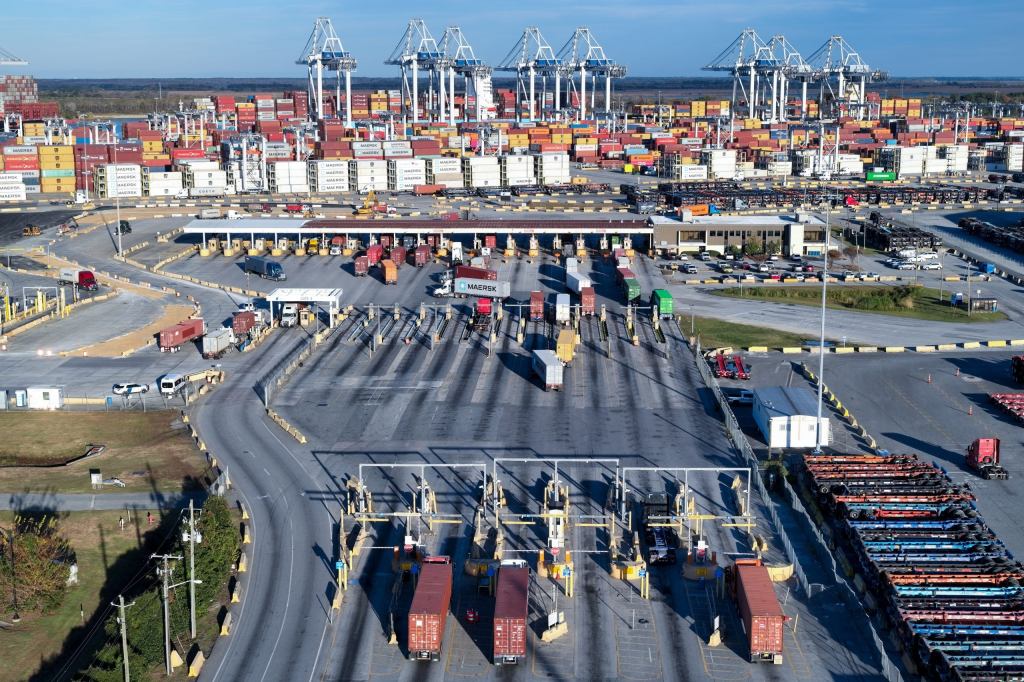
On Monday, Georgia Ports released February container volume numbers for the Port of Savannah: total throughput of 451,670 twenty-foot equivalent units, good for 14.4% year-over-year growth. Loaded imports totaling 219,000 TEUs were up 19% year over year, and loaded exports of 121,930 TEUs were 10% above February 2023.

To put the overall volume numbers into context, total throughput was higher than any month in 2023 or 2019; only the pandemic boom times saw higher numbers of containers flow through Savannah. February is typically one of the softest months of the year, and 2024’s February was stronger than the summer and fall peaks last year. Those trends point to growing momentum at the U.S.’s fourth-largest container port — momentum that should continue through March, according to container bookings data available in FreightWaves SONAR.

(The number of container bookings from all global ports bound for Savannah, by day of departure. Chart: FreightWaves SONAR Container Atlas)

The Mason Mega Rail Terminal at Savannah had its best February ever, with 46,890 intermodal lifts representing 39% growth year over year. That number includes imports and exports, loaded and empties, but we can break these numbers down further. Isolating the international container movements on intermodal rail outbound from Savannah shows a similar trend of growing volumes, although the beginning of 2021 saw volume levels that were even higher.

(The number of international 40-foot and 20-foot containers leaving Savannah on intermodal rail, displayed with a 50-day moving average. Chart: FreightWaves SONAR)

Notably, intermodal throughput at the port is still not close to its theoretical maximum of 2 million TEUs per year: The February run rate, annualized, comes out to approximately 561,000 TEUs per year. To generate the most conservative estimate, we could assume that each of the 46,890 intermodal lifts in February was a 40-foot container, or two TEUs; that’s still only 1.1 million TEUs, or a little over half of the Mason Mega terminal’s capacity.

Truckload capacity is tighter in Savannah than the rest of the country: Savannah’s outbound tender rejection rate registered a 5.62% compared to Atlanta’s 2.7% and the national average of 3.94%. Typically, major ports only experience rejection rates higher than the national average when they’re in the middle of a strong upward trend in volumes. In normal conditions, carriers tend to gravitate toward ports as reliable origins for loads, which depresses the number of rejections. Los Angeles, for instance, has a tender rejection rate of 3.15%, nearly 80 basis points below the national average.

Heightened flows at Savannah come as the country’s second-largest retailer, Target, reported Tuesday that its inventories are 11.9% lower than a year ago. Lower inventory levels imply future replenishment and increased demand for transportation services; in particular, lower retail inventories should predict higher loaded imports at container terminals and higher truckload volumes as that freight is moved through national distribution networks.

Similarly, in Walmart’s Q4 earnings call on Feb. 20, management reported lower inventory levels: Walmart U.S. inventories were down 4.5% year over year, and Sam’s Club inventories were more than 8% lower. Ultimately, that’s bullish for import numbers, and Savannah could very well see strong year-over-year growth in March, too.

TSA rule change provides regulatory relief to air logistics providers

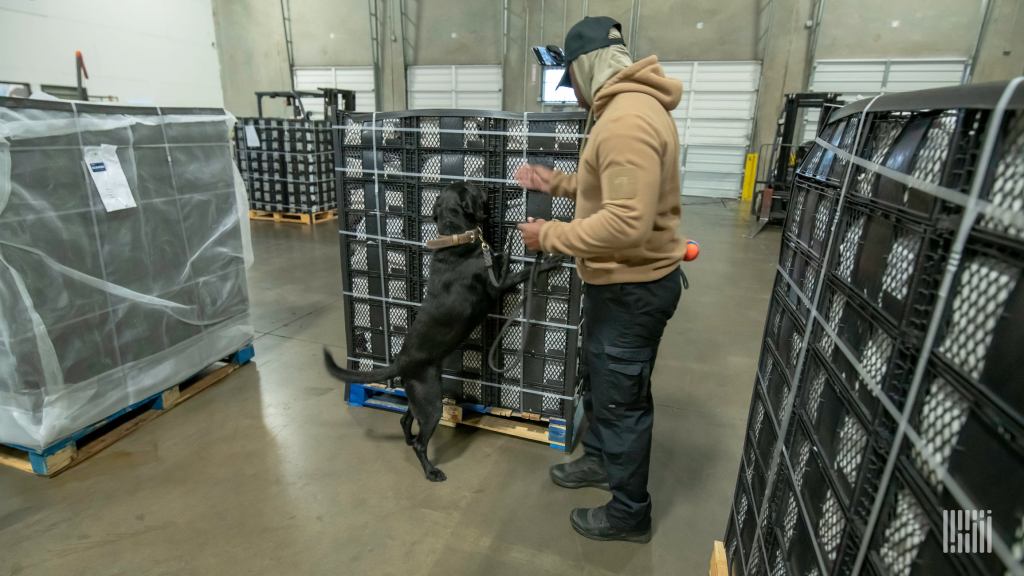
A man wearing a baseball cap leads a black dog through a warehouse during a cargo security inspection.

The Transportation Security Administration is easing the compliance burden on airfreight intermediaries by allowing the logistics businesses to submit applications renewing security credentials once every three years instead of annually, according to a recent regulatory notice.

The rule change, which takes effect on Monday, impacts about 3,800 indirect air carriers registered with the TSA. The companies receive and consolidate cargo from multiple shippers and tender them to various airlines for transport, as well as arrange ground transportation. 

The TSA said the change will save the industry about $5.5 million over 10 years in terms of work hours utilized but will not have a negative impact on aviation security. It will also reduce the administrative burden on the TSA itself.

Air forwarders are vetted by the TSA to make sure they are legitimate businesses and to determine whether any personnel pose a threat to transportation security. The logistics companies are required to implement approved security protocols to ensure no explosives or other suspicious material are in packages tendered to aircraft operators. They are responsible for educating and training employees on security procedures.

Under federal rules, indirect air carriers must annually renew their registration for the security program, which is a prerequisite for shipping goods by air.

The Airforwarders Association supported the rulemaking in written comments filed with the agency. It argued that the triennial renewal cycle coincides with the certification cycle for the Certificated Cargo Screening Program, which allows approved companies to inspect shipments upstream from the airport instead of leaving the task to airlines and causing backlogs.

“Aligning the renewal periods … allows TSA and indirect air carriers to derive cost efficiencies by reducing the administrative burden in processing renewals for each security program,” the AfA said.

The Air Line Pilots Association opposed the new registration schedule, saying that a change could reduce opportunities to discover evolving security threats and that high turnover rates among staff require TSA audits and training verification on an annual basis. The four hours per year it takes companies to file the renewal paperwork is not a meaningful burden on industry, it added.

“An effective air-cargo protective system must focus on the entire supply chain, discover opportunities for, and provide reasonable measures to prevent or interrupt malicious acts, not reduce the oversight and opportunities to discover evolving security threats. ALPA emphasizes that safety and security must not be compromised on the basis of economic relief and recommends that TSA refocus its attention on considering ways to increase aviation cargo security,” the union said in its submission.

The TSA responded that indirect air carriers are still subject to regular inspection and enforcement programs regardless of the renewal schedule.

Under the final rule, every air forwarder will be subject to at least one triennial comprehensive inspection, two targeted annual inspections in other years and possible supplemental inspections by the agency as warranted.

Click here for more FreightWaves/American Shipper stories by Eric Kulisch.

Sign up for the weekly American Shipper Air newsletter here.

Trade group wary of unfunded mandate to curtail fentanyl smuggling

Where live entertainment meets customs compliance

Daily Infographic: Rates are only the tip of the iceberg


To view more FreightWaves infographics, click here