




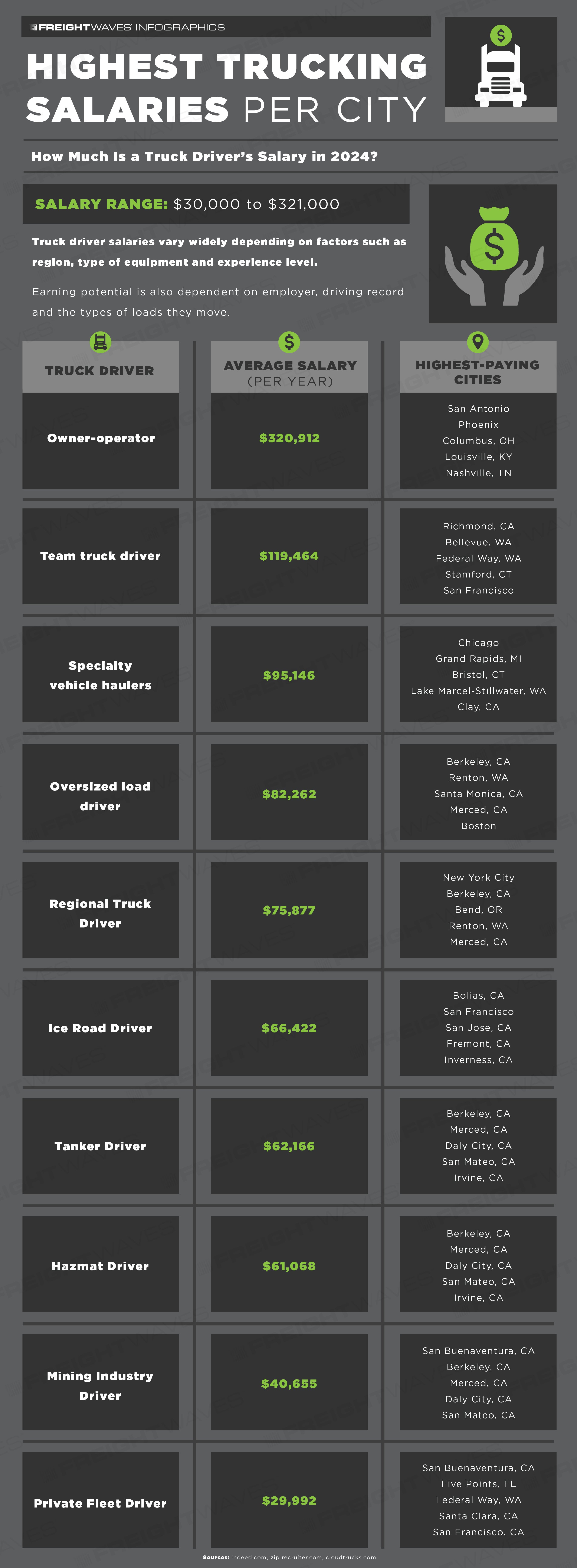
Daily Infographic: Highest trucking salaries per city


FreightWaves SONAR and e2open are pleased to announce a strategic partnership for mutual customers — a collaboration that will integrate FreightWaves’ industry-leading TRAC spot rate and contract rate data directly into e2open’s Transportation Management System (TMS).
With FreightWaves SONAR data integrated and available within the transportation planning features of e2open’s TMS, shippers will be able to reference the most up-to-date rate data in the industry as they make short-term and long-term planning decisions.
“We’re excited to make our market-leading SONAR data available to e2open’s customers in the system they use every day — their TMS,” said FreightWaves CFO/COO Spencer Piland. “E2open’s focused commitment to collaborative supply chain management aligns perfectly with SONAR’s mission to empower informed decisions. With the freshest, highest-frequency data available in the e2open TMS, mutual customers will be able to plan and react quickly to market volatility, driving positive impacts on their business.”
“Data-driven decisions are key for today’s supply chains, and part of being data-driven requires having contextual information at your fingertips. With SONAR incorporated into the e2open TMS, customers can leverage another layer of actionable intelligence, allowing them to have the proper context to optimize their day-to-day execution,” said Matthew Anderson, e2open’s VP, Specialty Products Business Unit.
Key benefits of the integration include:
● Real-time rate visibility: Shippers can view current spot and contract rates for specific lanes and modes, enabling informed negotiation and cost optimization.
● Data-driven carrier selection: Users can identify carriers with the most competitive rates based on FreightWaves SONAR’s market-leading data.
● Streamlined workflows: Seamless integration within e2open’s Transportation Management System eliminates the need to reference SONAR outside of the TMS and simplifies rate analysis.
This partnership marks a significant advancement in the quest for greater transparency and efficiency in the freight industry. With FreightWaves SONAR’s market-leading data at their fingertips, e2open TMS users are positioned to further optimize their transportation spend and gain a competitive edge in an increasingly dynamic marketplace.
FreightWaves SONAR is the leading provider of near real-time freight market intelligence for trucking, rail, ocean and air. SONAR empowers logistics professionals within insightful data and analytics to make better-informed transportation decisions. Learn more at sonar.www.freightwaves.com.
E2open is the connected supply chain software platform that enables the world’s largest companies to transform the way they make, move, and sell goods and services. With the broadest cloud-native global platform purpose-built for modern supply chains, e2open connects more than 480,000 manufacturing, logistics, channel, and distribution partners as one multi-enterprise network tracking over 15 billion transactions annually. Our SaaS platform anticipates disruptions and opportunities to help companies improve efficiency, reduce waste, and operate sustainably. Moving as One™. Learn more: e2open.com.
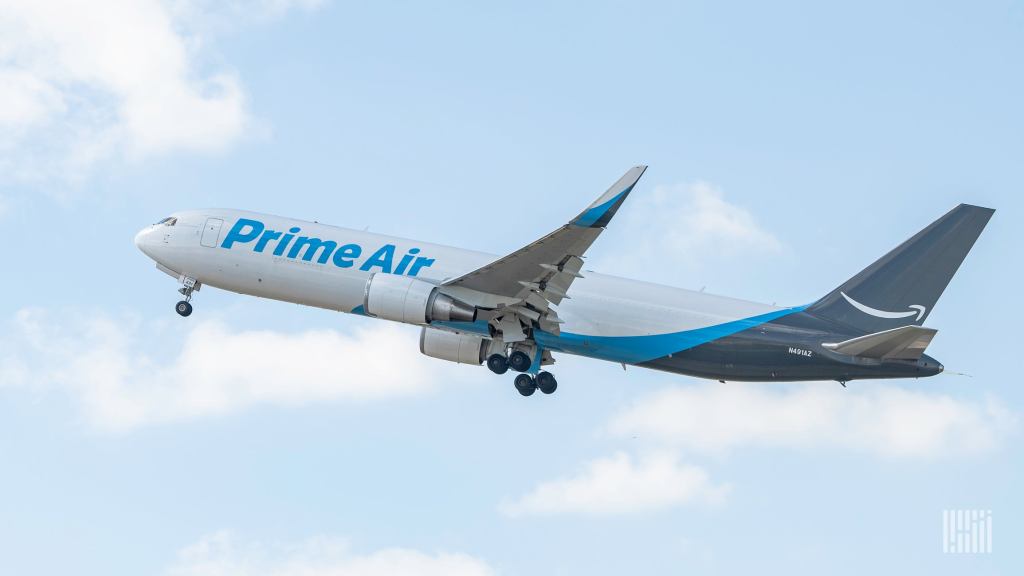
MEMPHIS, Tenn. — The chair of the pilots’ union at Air Transport International, the largest air carrier in Amazon’s delivery network, accused ATI management in an interview of dragging its feet on a new contract for hundreds of pilots until the existing transportation services agreement with the mega-retailer can be renewed in two years.
Amazon’s growing e-commerce business and how pilots are compensated at other airlines that provide outsourced airlift within the retailer’s rapid fulfillment network – not the soft market for general air cargo – should be the barometer for an improved labor contract, added Mike Sterling, chair of the ATI Master Executive Council and a Boeing 767 captain, in an interview.
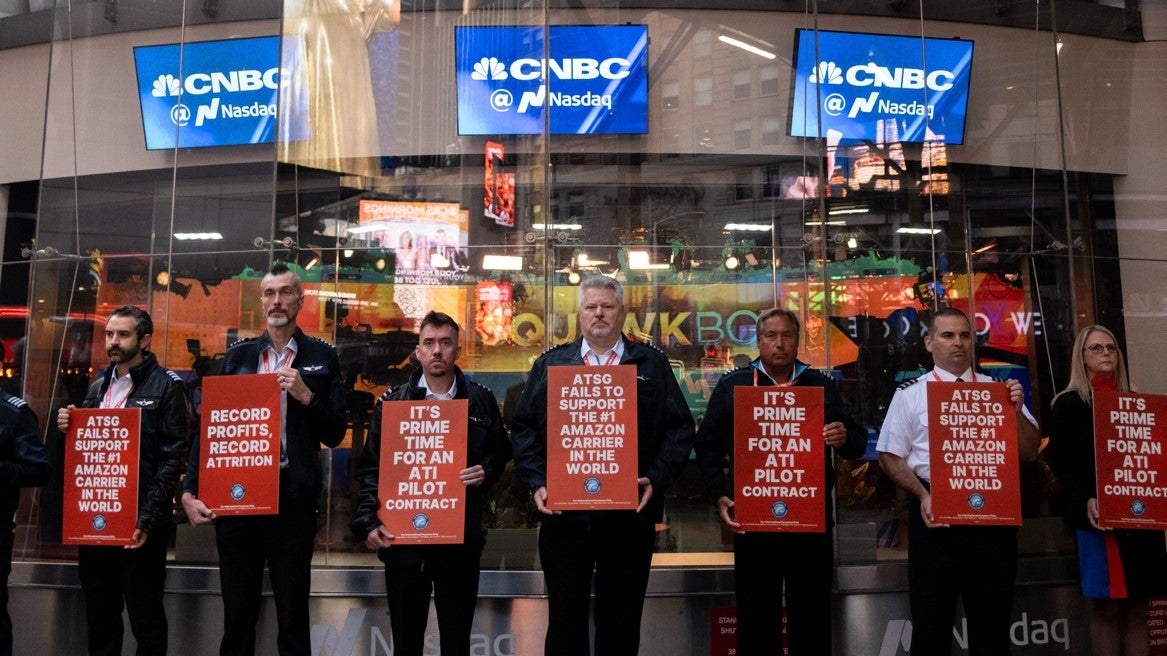
ATI pilots, represented by the Air Line Pilots Association (ALPA), last week asked the National Mediation Board to declare an impasse in contract negotiations and move the process to binding arbitration. The request is designed to clear the way for a potential strike against the company in a heavily regulated bargaining process. Talks, which have been underway for more than three and a half years, have broken down over pay, retirement benefits and work rules.
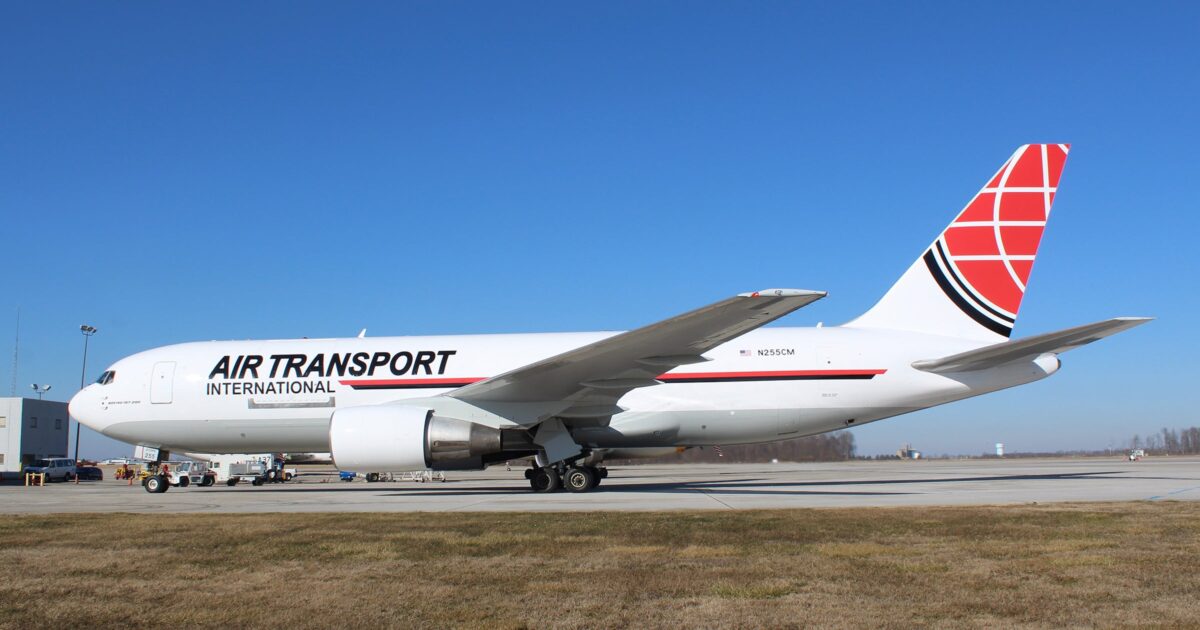
The subsidiary of Air Transport Services Group (NASDAQ: ATSG) operates more than 40 Boeing 767 converted freighters, according to database Planespotters.net. About 90% of the airline’s work consists of shuttling e-commerce packages to and from airports near Amazon warehouses across the nation for express delivery to customers’ doorsteps. It also flies four Boeing 757-200 combi aircraft, which can carry up to 42 people and 10 pallets of cargo, and one freighter for the U.S. Department of Defense.
“Based on our experience in negotiations, it appears that ATSG is actively delaying our agreement in an attempt to synchronize with a new air transport services agreement. We find this delay completely unacceptable as our current contract was amendable in March 2021. To impose an artificial deadline for negotiations is creating a toxic environment of pilot attrition and attraction-related problems,” Sterling told FreightWaves on Wednesday.
Management said during an earnings presentation last summer it didn’t expect to reach a labor agreement in 2023.
“In our proffer for arbitration with the National Mediation Board we emphasized executive comments made by ATSG, which clearly point to a delay posture and an impasse between the parties,” Sterling said. “Our pilots’ dedication, professionalism and commitment to deliver a fantastic product to Amazon is being eroded by the ongoing refusal by ATSG to reach an agreement.”
The interview took place here during a symposium organized by ALPA to discuss issues unique to pilots who fly freighter aircraft.
When passenger airlines face higher labor costs they can raise ticket prices and recoup the increase. ATSG lacks the same leverage with Amazon, which owns 20% of the company and has a reputation for using its market clout to get favorable pricing from suppliers.
ATSG negotiates terms of service with Amazon and determines the cost relationship with ATI, primarily hourly flight rates and aircraft lease rates. ATI rents most of its fleet from ATSG’s aircraft-leasing subsidiary and also subleases planes provided by Amazon.
“ATSG is the underlying force to reach an agreement. Pilot costs eventually are passed through in our block hour rates to our customers,” said Sterling. “ATSG has a responsibility to negotiate a market-based agreement, even though we work for ATI.”
The union branch chief dismissed suggestions that the timing for a large pay raise is bad because of the cyclical downturn in heavy airfreight, which is dominated by large business-to-business shipments, since the pandemic. Sterling said Amazon’s air network is geared toward the robust e-commerce sector and express delivery of lightweight packages to consumers, noting that Amazon posted solid results in 2023.
A strong holiday shopping season helped increase Amazon’s fourth-quarter North American retail sales by 13% year over year to $105.5 billion. The company said customers bought a record 1 billion items on its marketplace during the holiday season. Full-year sales for North America grew 13% to $353 billion. The online retailer last week said Prime deliveries in 2023 were faster than ever. More than 4 billion units were delivered by same-day or next-day service, a 65% increase from the prior year.
Sterling said ATI experienced a ramp-up in flight operations for Amazon in mid-November for the peak shipping season, as it normally does each year.
Doug Herrington, CEO of worldwide Amazon stores, in a blog post attributed Amazon’s delivery speed to the implementation of a regional rather than national fulfillment model, which shortened delivery distances, improved inventory placement and expanded the number of same-day delivery stations.
Transporting orders from in-region warehouses to local service centers minimizes the stops per package and reduces the need for air transportation. But customer deliveries over longer distances depend on Amazon Air. The online superstore has slowed the expansion of its 8-year-old air network as it matures and e-commerce demand normalizes following the COVID boom, but it has not cut flights or parked aircraft as have many all-cargo carriers, including FedEx and UPS.
According to Insider Intelligence, U.S. e-commerce sales were projected to reach $1.1 trillion in 2023, with 16.4% of all retail sales conducted online. The compound annual growth rate for retail e-commerce in the U.S. through 2027 is 11.4%, according to Statista.
“The thing that disappoints me the most is that Amazon is caught in some of the undertow of our discussions with ATSG,” Sterling said, adding that pilots delivered record reliability during the holiday shipping season and annually help generate more than $500 million in revenue for the holding company.
In November, union members authorized leaders of the Air Line Pilots Association to call a strike over stalled labor talks once such action becomes permissible under federal law.
The union says pilots are underpaid and overworked because of unfavorable crew scheduling, which resulted in 250 pilots leaving the airline last year. ATI has about 605 pilots, but maintaining that level has come at a high cost in recruiting and training.
“We’ve lost 18 of our pilots already this month. We’ve hired 15. So we’re at net minus three” for January, Sterling said.
ATSG contends it can’t afford top-scale compensation because margins in the all-cargo sector are much less than for passenger airlines and express delivery operators. The vertically integrated aviation firm has suffered from the sharp downturn in shipping demand that gripped the freighter industry for nearly 18 months, as airline customers cut back on flight requirements and others postponed taking new aircraft leases. Pilots benefit, the company adds, by being able to reach captain level — and the higher pay rate that comes with it — much faster at Air Transport International than at a major carrier.
Through three quarters of 2023, ATSG recorded adjusted earnings before accounting measures of nearly $432 million. The full-year adjusted profit was $631 million in 2022. No date for releasing fourth-quarter results has been announced.
A Boeing 767-300 captain at ATI with 12 years of experience earns $281.87 per hour compared to $297.65 at Atlas Air, another Amazon partner. At Delta Air Lines and FedEx Express, 12-year 767 captains respectively make $349.50 and $326.51 per hour, according to ALPA data. A new labor deal last year at Amerijet, a midtier cargo airline based in Miami, significantly boosted hourly pay for pilots in the same category to $301.84.
First-year ATI pilots earn about $68,000 per year, compared to $88,000 at FedEx and $107,000 at Delta, which agreed to a new pilot contract in 2023.
Sterling said ATI pilots want a contract similar to one their counterparts at Hawaiian Airlines received last year. Hawaiian is a new entrant to the all-cargo sector after agreeing in late 2022 to operate 10 Airbus A330-330 widebody freighters for Amazon. It began operating a single cargo jet in October and Amazon is scheduled to provide eight more used aircraft this year once they have undergone a passenger-to-cargo conversion.
The four-year pilot contract at Hawaiian Airlines hikes pay nearly 33% on average, raises company retirement contributions and increases schedule flexibility, putting compensation within the ballpark of that at carriers such as FedEx, UPS and Delta.
Hawaiian likely wouldn’t have agreed to the new pay-and-benefits package if Amazon wasn’t comfortable with how that would impact the price of its service, Sterling said.
“They’re [Hawaiian executives] not going to negotiate a pilot contract that puts them substantially in the hole,” the union chief said. “The passenger operation is not in a position to subsidize cargo, so they’re looking at this as a profit center.”
Amerijet, Sterling added, also serves as a good benchmark for a contract. “Our proposals are significantly under FedEx and UPS. We just want to get halfway there.”
Management considers the union’s proposal as above the market basis.
“At the end of the day, you’ve got to have a contract that works for both sides. So if you’ve got the union side asking for FedEx or UPS wages or industry-leading, and that’s not in the cards from what we get from our customers, then that’s just not something we can agree to. So the key is finding a happy middle ground between their demands and our needs to keep things on the rails,” CEO Joe Hete said during an earnings call on Nov. 7.
One substantial sticking point involves vacation usage. Under current rules, aviators aren’t paid if approved vacation time falls on an off-duty day. Before the start of the year, pilots reserve two to four weeks of vacation, depending on seniority, which they can split in half. Pilots bid for flight hours in two-month increments. They could get a schedule that calls for working every other week, which means they will get one week of paid vacation and no money for the second week that was designated for normal rest.
“We see our pilot group lose 34% of their vacation to days off. It secures a day off, but it doesn’t come with pay as a benefit,” Sterling said.
A heavy workload is also diminishing quality of life, according to the union.
“ATI started using some more advanced crew optimization software a few years back and has packed our schedules tighter than ever. One of the reasons is that we don’t have enough pilots to have schedules that are a little bit more flexed out” while also guaranteeing minimum flight hours and complying with federal duty limitations, Sterling explained.
“You’ll continuously move yourself around the clock [with] day-night transitions. So you’re flying daytime one day and the next night you’re going out at 1 or 2 in the morning. And the next day you’re doing daytime flying again. The pilots at carriers like FedEx tend to be part of the daytime [package sortation] or part of the nighttime sort. They don’t tend to roll from one to the next.
“We have contract language that says they’ll minimize this to the extent practicable. Obviously, it’s not strong enough because they’re not minimizing it. And so, you have to start with the first part of the problem, which is staffing levels. Our staffing levels were reduced, partly for economics, to get the pilots on the property to do more than they had been previously. And then you deal with rampant attrition and a hard time attracting pilots. It kind of traps you in that loop. And it’s tough flying.”
Sterling estimated it would take a pilot cohort that was 10% larger to provide more consistent scheduling.
With such a tight labor pool, ATI is hiring inexperienced pilots who can be awarded captain slots during initial training if there is an opening and they are on the seniority list, he told FreightWaves.
“And then, the overall flight time experience has gone to absolute minimum levels. We’re seeing single-engine, fixed-gear pilots coming to work and transitioning to a 767,” Sterling said. “That’s a big leap.”
A pilot graduating from a single-engine turboprop, like a Cessna, would normally first progress to a small regional jet.
“To go from a single-engine aircraft with no gear handle to a 767 [with retractable landing gear], and the sophistication of that operation is asking a lot of that pilot,” Sterling said. “They could have never been above 10,000 feet in their career. And the speed of operations is just dramatically higher.
“Our training failure rate has risen dramatically. They either wash out or need a lot more training. And our training review boards are up 400% over the last two years.”
The committees, which are standard at every airline, meet as needed to discuss the progression of pilots who are experiencing difficulty completing training and recommend any remedial training that may be necessary.
“That means the people we’re hiring are not moving through the training pipeline like we would have seen in the past,” the pilot leader said. “At ATI, if you do two training review boards in your process, they’re probably going to discontinue your employment. Just last week, probably five pilots went out the door that didn’t complete training from being hired in the fall. So, it’s very expensive. But when you’re hiring pilots that don’t have a proven background, then that’s going to be the result.
“Aviation looks like baseball to me,” Sterling continued. “You start playing single A ball and work your way up to double A and every once in a while a guy jumps right from high school to the majors. That person is really talented. It’s the same thing in aviation. I went through the stepping stones. That’s the normal progression. And they’re just skipping all the intermediate clubs, you know, going right to the big show.”
In a statement provided to FreightWaves, ATSG said it “looks forward to ATI and its pilots’ union reaching an agreement that allows ATI to deliver service while being competitive in the market. ATI continues to attract and hire candidates that exceed the standards set forth by federal regulations. The safety and reliability of ATI has remained consistent during more than 40 years of airline operations.”
Getting to the point where workers can exercise their right to strike remains an uphill climb.
Collective bargaining for airlines is governed under the Railway Labor Act, which is much more restrictive than general labor law.
Under federal rules designed to prevent work interruptions in critical interstate commerce, workers are prohibited from striking and companies from locking out workers until a lengthy series of bargaining steps, including federal mediation, are completed. The federal mediator has the power to hold the parties in mediation indefinitely. ATI and the pilots’ union have been working with a mediator, who reports to the board, since late March.
Before a strike can take place, the National Mediation Board must first decide that additional mediation efforts would not be productive and offer the parties an opportunity to arbitrate the dispute before a special panel. If either side declines the arbitration, both parties enter a 30-day “cooling off” period, after which the parties can engage in self-help — a strike by the union or a lockout by management.
Arbitration in the airline industry is rare because both sides must agree to it. And, the NMB historically has been very reluctant to open the door to potential strikes, which airlines often use to their advantage in negotiations.
There is one more catch: The law allows the president to create an emergency board to investigate a labor dispute and issue a report within 30 days if the parties reject binding arbitration. That is followed by another 30-day period to consider the board’s recommendations and reach an agreement. If no agreement is reached at the end of the second cooling-off period, the parties may take action.
ATSG last week announced the retirement of ATI President James O’Grady, who led the airline subsidiary since 2016 and held a variety of roles in the corporation over a 40-year career. His replacement is Chief Operating Officer Mike Betson. Prior to joining ATI in 2021, Betson was vice president of industrial engineering for UPS.
Click here for more FreightWaves and American Shipper articles by Eric Kulisch.
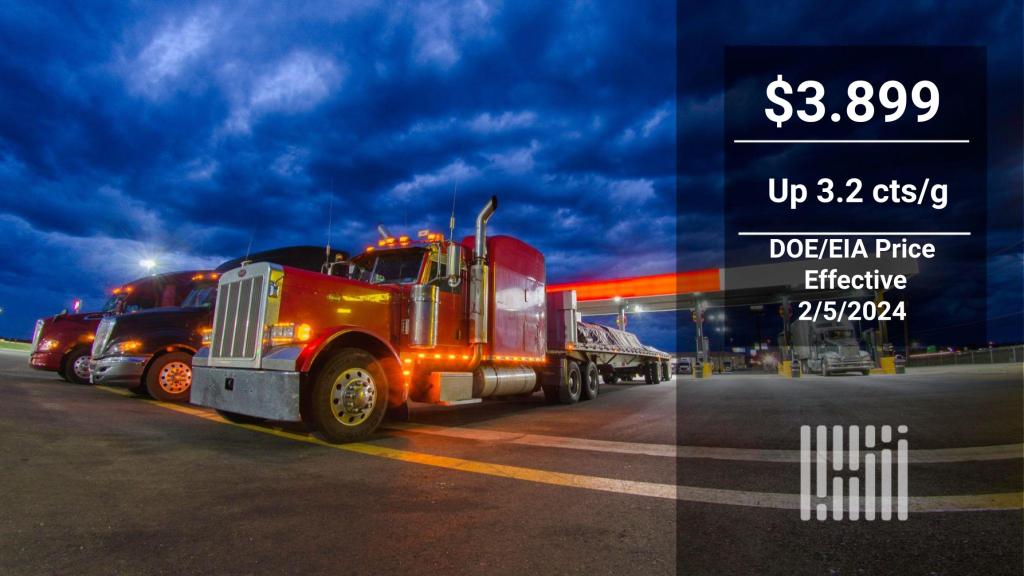
After months of almost steady decline, diesel prices are showing signs of having hit a bottom, at least relative to crude prices.
The weekly average retail diesel price published by the Department of Energy/Energy Information Administration, used as the basis for most fuel surcharges, rose Monday by 3.2 cents a gallon to $3.899. It marked the second consecutive weekly rise in the price. It also was the first time since the weeks of Sept. 11 and Sept. 18 that two consecutive gains were posted.
Prices have risen now in four of the past seven weeks. However, the increases have been relatively muted. Combined with the three decreases in that stretch, the end result is that the DOE/EIA diesel price has barely risen during that time. On Dec. 18, the price came in at $3.894 a gallon, just a half-cent less than Monday’s price.
That strength isn’t coming from the crude market, which continues to languish. While crude benchmarks rose Monday, its settlement just under $80 a barrel is down $2.86 per barrel in just four trading days.
But ultra low sulfur diesel on the CME commodity exchange has fallen at a slower rate. It settled Monday at $2.7248 a gallon, an increase of 6.48 cents, though it is down from a recent high of $2.8434 on Jan. 26.
Those movements mean that the spread between crude and ULSD has strengthened, particularly on Monday. That spread rose to roughly 86.8 cents a gallon Monday, up almost 5 cents. On Jan. 24, the spread was about 77.6 cents a gallon.
There are other signs of diesel strength. Spreads between the CME price for ULSD and the price of diesel at key physical trading hubs have been widening, according to DTN.
Diesel barrels on the Buckeye Pipeline, a key artery that runs between the East Coast and Pennsylvania and Ohio, were 45 cents per gallon below the CME ULSD price on Jan. 26.On Monday, DTN reported that spread at minus 11 cents per gallon.
In Chicago, a minus-13-cents-per-gallon differential had tightened sharply since a minus-57-cents-a-gallon spread on Jan. 29.
The all-important Gulf of Mexico market also has strengthened, though not by a large amount. DTN reported the spread today at minus 6.65 cents a gallon, down from minus 8.75 cents a gallon on Jan. 29.
But differentials have been little changed in the New York Harbor and Los Angeles markets.
The weakness in crude markets Monday, even as ULSD was rising, was likely tied to two factors.
First, Saudi crude prices for March, released on Sunday, were neutral to slightly more aggressive. Significant reductions in the Saudi price formulas in January (for barrels sold in February) triggered a significant sell-off. The prices that came out over the weekend were mostly unchanged, but where they did not hold steady, they were slightly lower, by an amount that could not be described as aggressive.
Second, the dollar has been strengthening. The DXY index, considered the most important measure of dollar strength, has risen from just under 103 late last week to almost 104.5 Monday. Oil prices tend to move inversely to the strength of the dollar.
More articles by John Kingston
Plan to replace I-81 in Syracuse with urban boulevard gets court win
BLS says fewer truck transportation jobs in ’23 than first estimated
New Jersey hikes truck insurance minimum to $1.5 million, higher than most states
A recent round of U.S. and British strikes on Houthi targets in Yemen raise fresh questions about the impact of container shipping in the Red Sea, as shippers continue to seek alternative means of navigating the crisis.
The strikes, which were conducted on Saturday, spurred threats from Houthi leaders and a warning from Jake Sullivan, national security advisor to President Joe Biden, that any direct response by Iran — rather than through the Houthi rebels it backs — “would be met with a swift and forceful response from us.”
Container shipping fundamentals have tightened as trade continues to be diverted from the Red Sea. Prior to the attacks, roughly 28% of container ship volumes passed through the Suez Canal, per analysis from Bank of America.
Now, those volumes are down 90%.
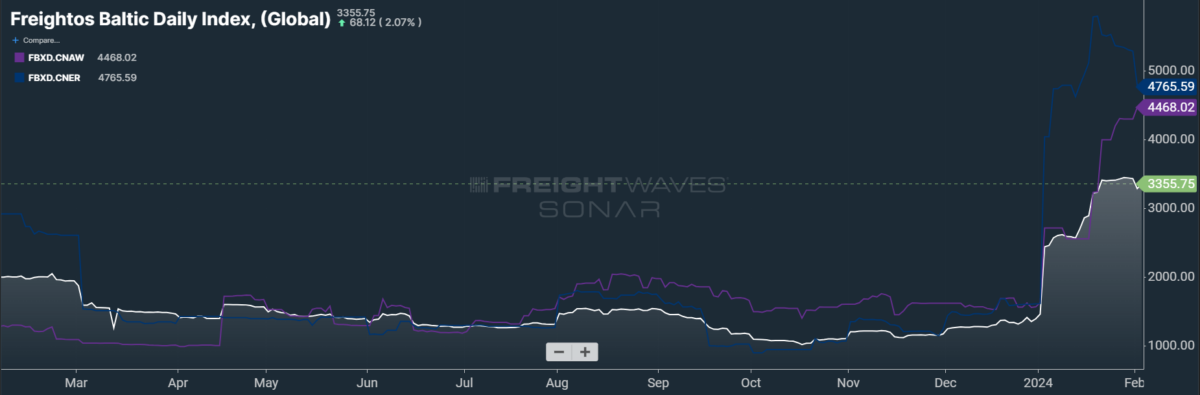
In mid-January, the Freightos Baltic Daily Index (FBX) for China-Europe rates peaked at nearly $5,800 per forty-foot equivalent unit — a staggering gain of 260% since the start of 2024. Similarly, the Drewry World Container Index saw container rates from Shanghai to Rotterdam, Netherlands, spike nearly 200% over the last week of December.
Yet, despite the aforementioned rising tensions and increased military actions, these rates have already begun to dwindle.
For one, some Chinese exporters have elected to avoid lengthy (and costly) reroutes around Africa’s Cape of Good Hope. Instead, these exporters are shifting to land transportation along the China-Europe Railway Express.
Dimerco, a Taiwanese logistics provider, reported a 30% increase in January for such rail volumes compared to the same period last year. With the costs of transporting goods along this rail network comparable to elevated ocean spot rates, the shift to intermodal has already proved significant enough to budge the needle.
Geopolitical strife aside, the recent growth in container rates out of China was largely caused by the cyclical rush to push exports ahead of the country’s celebration of Lunar New Year. This demand has already slowed ahead of this year’s holiday, which commences on Saturday and lasts for two weeks.
After the holiday, when manufacturing plants and port facilities come back online, some analysts argue that markets will have adjusted to the current state of affairs.
Lars Jensen, CEO of consultancy Vespucci Maritime, wrote in an online post that “we are getting past the peak of service disruptions” and that the Lunar New Year lull “will provide the necessary backdrop to fully normalize operations in the new round-Africa setup.”
Still, others argue that the Red Sea disruptions will have an enduring impact on the profitability of container shipping companies.
Jefferies analyst Omar Nokta estimates that capacity utilization among container ships has risen from 78% before the Red Sea crisis to 87%, which has “taken liners from a market with limited pricing power to one with meaningful pricing power.”
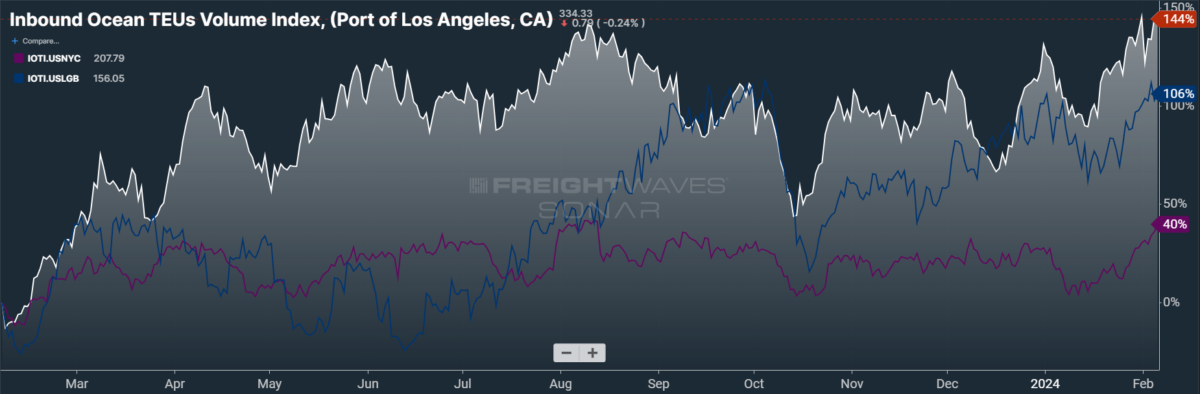
Ports along the US West Coast are seeing major growth relative to their East Coast counterparts. Over the past year, bookings at the Port of Los Angeles have risen 144% while bookings at the neighboring Port of Long Beach have risen 106%.
These ports suffered a long period of protracted congestion, labor insecurity and an increased focus on supply chain resilience that prompted shippers to become less reliant on a single gateway.
But with trade routes to the East Coast struggling against the turmoil in the Panama Canal — which has been plagued by ongoing droughts — and the Red Sea, the West Coast has regained its former appeal. The issue of labor was also resolved last year, when the International Longshore and Warehouse Union ratified a six-year contract with the Pacific Maritime Association.
Accordingly, bookings at the Port of New York and New Jersey are up only 40% over last year — dwarfed by the more-than-doubled growth at major West Coast ports.
This trend is expected to persist well into 2024 by many in the industry, including warehousing giant Prologis. Prologis previously predicted that the current freight recession would come to an end this year, spearheaded by growth in Southern California’s ports, warehouses and distribution centers.
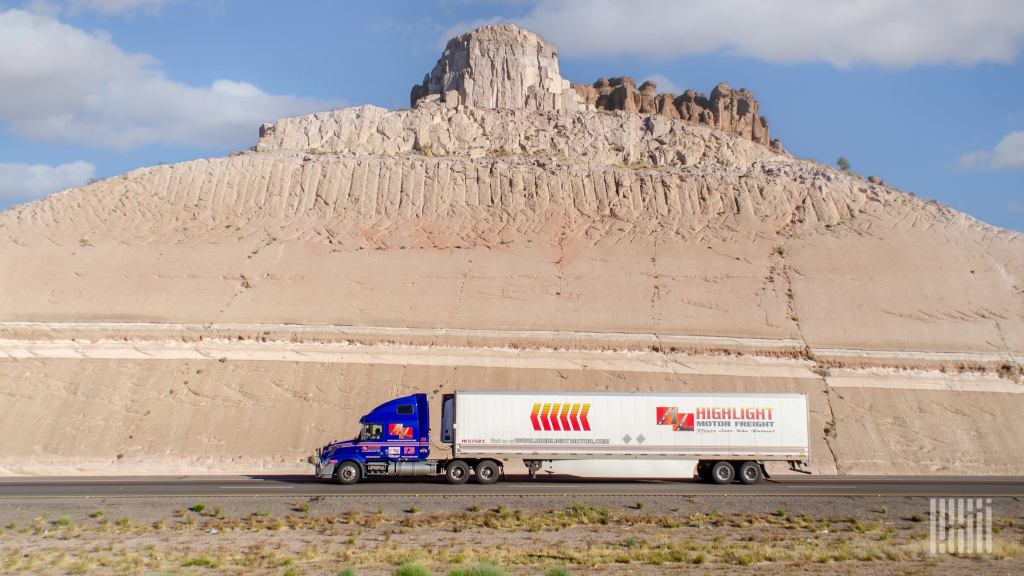
Quarterly data from U.S. Bank, one of the largest processors of trucking invoices in the country, could suggest a balance between supply and demand is on the horizon.
The two key outright numbers produced by the U.S. Bank Freight Payments Index are for shipments and spend. Both declined relative to the third quarter. The Shipments Index value was 95.0, down 10.9% from the prior-quarter figure of 106.6.
The Spend Index was 233.9. That was down just 1.4% from the previous quarter but down 13.5% from the corresponding quarter of 2022. The Spend Index does include diesel spending, which U.S. Bank said was 15.5% less than a year earlier, based on its data.
In what might be considered the most accurate summation of the current market, the U.S. Bank commentary said: “As shipments volumes contract, it results in too many trucks chasing too little freight.” But the bank also noted that given that the Shipments Index was down 10.9% and the Spend Index dropped just 1.4% relative to the third quarter, that variance is “suggesting that the market may be moving closer to balance between supply and demand.”
The difference in those numbers, with spending down less than shipments, “suggests that there were some reductions in freight capacity in the industry, keeping costs higher,” the bank wrote. “Motor carriers, especially those exclusively in the spot market, have been under tremendous pressure between falling freight rates and rising costs.”
The U.S. Bank Index differs from some other indices in that it is a chained index. Other indices that start with a base of 100 at a certain point reflect changes that are relative to that base. But as U.S. Bank describes it, a chain index number for a three-month period “represents that quarter’s volume in relation to the immediately preceding quarter.”
“Our index shows the change in velocity and direction of the shipments and spend,” a U.S. Bank spokesman said in an email to FreightWaves. “The comparison to the previous quarter shows a drop or rise in the amount of change. The YoY comparison just gives an idea of how activity in the market has progressed from the velocity it had last year.”
The U.S. Bank Freight Payment Index uses the invoices processed by the bank as its basis for calculations. According to the bank, “the source data is based on our highest-volume domestic freight modes of truckload and less-than truckload.” It is also seasonally and calendar-adjusted.
U.S. Bank said in its commentary on the numbers that shipment volumes had declined during the final quarter of the year because of retailer destocking.
“As businesses worked to reduce inventories, they required fewer truck shipments,” U.S. Bank said. “Furthermore, shelf destocking reduces total economic activity; the reduction in inventory, once completed, will no longer be a headwind on the freight supply chain. Bringing inventories into balance will be better for motor carriers in the months and quarters ahead as retailers and other businesses will require additional products to be delivered by trucks and can’t simply pull from existing inventory.”
U.S. Bank also breaks down the data regionally. While there were differences in the rate of change in the five regions the bank tracks — Northeast, Southeast, Southwest, Midwest and West — the direction of the changes were negative for both spend and shipments in all five regions, except for the spend figure in the Midwest, which was up 1.2%, and spend in the West, which rose 0.2%.
The Southwest was one of the weakest performers, with the Shipments Index down 18.2% from the third quarter and the Spend Index down 2.7%.
“Retail and home sales fell during the first half of the fourth quarter, weighing on truck freight volumes,” the bank said in its commentary. “Additionally, cross-border truck transportation continued to grow, but at a slower pace during the fourth quarter.” It cited federal data that said inbound trucks from Mexico were up just 3.2% from the third quarter and 2.2% from a year earlier.
For the other regions:
West: Shipments down 2.9% from the third quarter, spend up 0.2%. “Many trends have negatively impacted freight on the West Coast over the last several quarters,” the bank said in its commentary. “Mexico has supplanted China as the United States’ largest trading partner, which has squeezed import volumes coming into West Coast seaports. However, the good news is during the final quarter of the year, import volumes at West Coast seaports improved overall, especially compared with a year earlier.”
Midwest: Shipments down 8.6%, spend up 1.2%. “This region has seen lower freight volumes in recent history for many reasons, including soft manufacturing, changing consumer spending and weaker housing activity.”
Northeast: Shipments down 9.4%, spend down 2.5%. The bank cited several reasons: lower consumer spending in the New York metropolitan area, nonauto retail sales declining in the Philadelphia region along with reduced manufacturing, and lower restaurant and clothing sales in New England.
Southeast: Shipments down 14.5%, spend down 4.1%. The combination of consumers spending more on experiences, and cooling, albeit still solid, labor markets put some downward pressure on retail spending in the region last quarter.
More articles by John Kingston
Plan to replace I-81 in Syracuse with urban boulevard gets court win
BLS says fewer truck transportation jobs in ’23 than first estimated
New Jersey hikes truck insurance minimum to $1.5 million, higher than most states
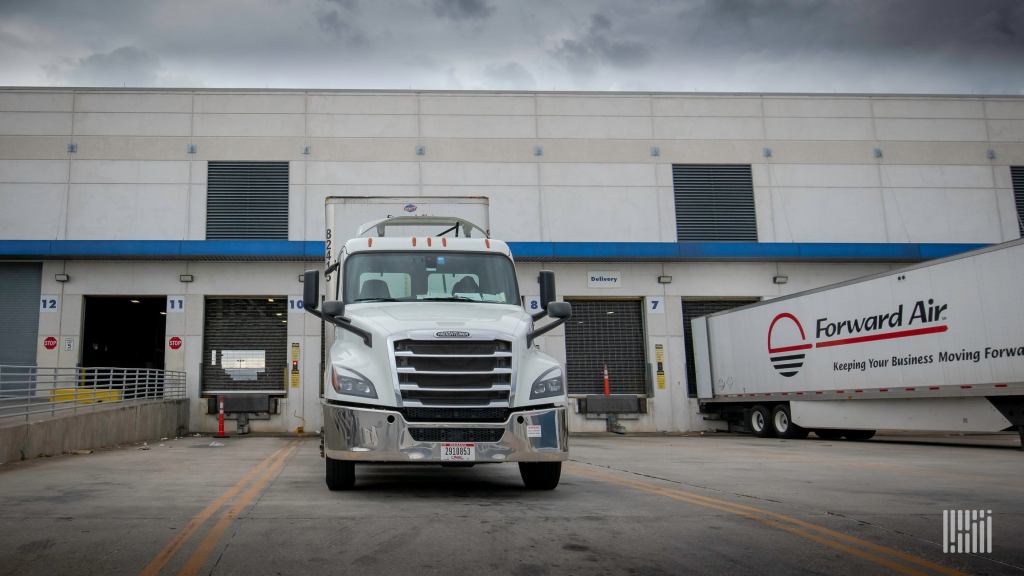
Forward Air provided January volume trends on Monday, its first update following a controversial merger with Omni Logistics. It appears the combined company may not include several executives from Omni.
FreightWaves has learned some members of Omni’s senior leadership team separated from Forward shortly after Omni CEO JJ Schickel had “chosen not to continue as an executive at Forward.”
“One important goal of the integration process is to ensure we have the best organizational structure and right leadership team in place in order to achieve our shared ambitions,” a spokesperson from Forward told Freighwaves. “That inevitably means there will be some changes. For those who will not be continuing on the next leg of Forward’s journey, we are grateful for their contributions and wish them well as they pursue other opportunities.”
The statement said given the scale of the transaction, “those details will take time to work through” and it is “committed to keeping our team informed as we make important decisions about our company’s bright future.”
Omni’s executives, including Schickel, were still displayed on Omni’s website on Monday.
Forward (NASDAQ: FWRD) previously said it plans to provide more details on financial targets, the management team and board composition on its fourth-quarter call scheduled for Feb. 22. Analysts will likely have questions regarding the integration of Omni now that some of the individuals that ran the company’s daily operations are no longer there.
The merger was announced on Aug. 10 at a $3.2 billion purchase price with closing to occur a few weeks later. However, a group of shareholders filed for injunctive relief in September, claiming they should have been allowed to vote on the transaction. That briefly delayed the closing. Other investors also chimed in voicing concerns, seemingly making Forward’s board and management team rethink the business combination.
Among complaints from shareholders were the high debt load required to buy Omni and a perceived change in control of the company as Omni and its private equity backers would hold more than one-third of the equity, four board seats and Schickel would become president.
Omni filed suit to force Forward to the closing table at the end of October. However, before opening arguments were heard last month in a Delaware court, the parties came to terms.
In the end, the transaction closed five months after it was announced and at a roughly $2.1 billion price tag. The cash portion of the deal was reduced from $150 million to $20 million and the equity stake declined from 37.7% to 35%. A big difference in the closing price, however, was a more than 55% decline in Forward’s share price since the deal was inked.
October, November … January?
Forward’s January update showed tonnage in its expedited segment, which includes less-than-truckload operations, increased 9.2% year over year (y/y) during the month with weight per shipment increasing 9.8%. The combination implies daily shipment counts were off slightly. Revenue per ton mile increased 1.9% y/y excluding fuel surcharges.
Forward previously disclosed a 5.5% y/y increase in tonnage for the first two months of the fourth quarter, with shipment weights 11% higher. Revenue per ton mile was up 1.8% y/y in the two-month period.
Glaringly omitted from the update was the company’s metrics for December. Forward normally provides two-month updates intraquarter followed by full-quarter results one month after the period closes.
“We continue to improve on the three metrics that matter most to us — increasing tonnage, refining freight quality and maximizing revenue per shipment,” said Forward Chairman and CEO Tom Schmitt in a news release.
He also said the company is making progress on the integration faster than expected.
“We have executed the first phase of the operational synergies ahead of schedule, folding Omni linehaul into the Forward Air network, which led to higher than 20 percent year over year pounds per day increase in the most recent week,” Schmitt continued.
The company’s fourth-quarter call may also provide an update on the vacant role of president, which was previously held by Schmitt.
Shares of FWRD were under pressure again on Monday, down 3.1% at 12:49 p.m. EST. The S&P 500 was off just 0.3% in comparison.

On episode 678 of WHAT THE TRUCK?!?, Dooner is joined by The Tenney Group’s Spencer Tenney to talk about their annual logistics and supply chain M&A report. With the number of companies available to purchase hitting a 10-year high, it could be an electric market. We’ll find out what deals worked, which didn’t and what trends will define ’24.
How do you haul monster loads? BlackBox Logistics’ Will Hopkins talks about the art and logistics of trucking gigantic pieces of equipment.
The Honorable Jim Sanborn believes that for supply chain tech to matter it has to make life easier. We’ll find out what solutions he likes and if he thinks the Scheduling Standards Consortium will drive innovation.
Hippix Logistix’s Andrei Hippix stops by the studio to introduce his company, talk about his journey from being an expedited driver to becoming a founder, and paying out over $3 million to drivers.
Plus, the Grammys were brought to you by a truck; Apple Vision Pro hits the streets; Tesla Semis’ chip haul; and ordering a house on Amazon.

The February 2024 “State of the Industry Report” — presented in affiliation with Ryder — shares an in-depth overview across the trucking, maritime and intermodal markets, as well as what to expect in the coming weeks. The data contained within the report provides breakdowns of capacity, volumes and rates as we enter into the first quarter.
In this report, you will find:
• Winter weather provided a short-term upward move in tender rejection rates, leading to an upward bump in spot rates.
• The truckload market continues to see volumes outperform last year’s levels, but it remains oversupplied
• The intermodal market is under pricing pressure as the discount provided compared to dry van rates is historically low.
• The Red Sea conflicts have put upward pressure on ocean spot rates, but likely won’t impact the actual flow of goods from China to the U.S.
• The consumer has remained resilient as retail sales increased in December and the labor market is still relatively strong.
Download the complimentary report today to access the full insights.
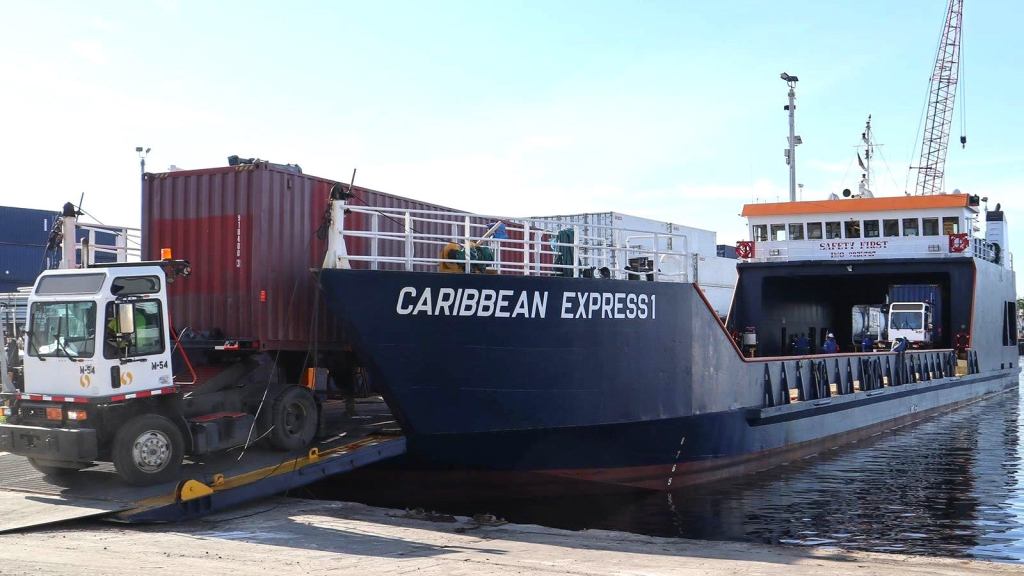
Seacor Holdings continues to sell off assets in its shipping sector, most recently divesting Seacor Island Lines, its Caribbean container transport business.
The deal with King Ocean Services Ltd. includes nine specialized, shallow draught vessels and more than 1,500 containers and chassis. Terms of the transaction were not disclosed.
Based in Fort Lauderdale, Florida, Seacor Island Lines serves about 30 stops across the Bahamas and Turks and Caicos islands, transporting a range of containerized and refrigerated cargoes as well as breakbulk and heavy equipment via weekly liner and charter services.
Seacor Holdings acquired Seacor Island Lines, formerly G&G Shipping, in 2011.
“Seacor Island Lines not only vastly enhances our existing platform by adding new end-markets and marine and shoreside infrastructure, but also augments our team with highly qualified transportation and logistics professionals,” Jose Da Costa Gomez, King Ocean’s president and CEO, said in a news release.
Miami-based King Ocean Services specializes in marine transportation and logistics solutions to about 50 destinations across the Caribbean and the Americas. The company also offers in-house trucking, consolidation and terminal operations. King Ocean Services is currently the largest container operator in Port Everglades, Florida.
The sale of Seacor Island Lines is the third transaction Seacor Holdings has made in recent months. In September, Seacor Holdings offloaded its Gulf of Mexico towing subsidiary, Seabulk Towing, followed by selling its inland shipping unit, Inland River Transport Holdings, in October.
Seacor Holdings also announced a joint venture with maritime and logistics services provider Crowley in September, with the two companies integrating their liquid energy and chemical transportation vessels and related services into a new, independent provider, Fairwater Holdings LLC.
Fairwater includes 20 oceangoing, articulated tug-barges and 11 tanker vessels. The joint venture will provide crewing and technical management for an additional 21 third-party-owned vessels.
Fort Lauderdale-based Seacor Holdings is a subsidiary of American Industrial Partners, a New York-based industrial-focused private equity firm.
FBI alleges Mexican cartel, Canadian truckers part of drug ring
4 things to know about the ‘Take Our Border Back’ convoy
Mexico’s truckers plan nationwide strike against cargo theft