Is the Red Sea effect on container shipping being overblown?

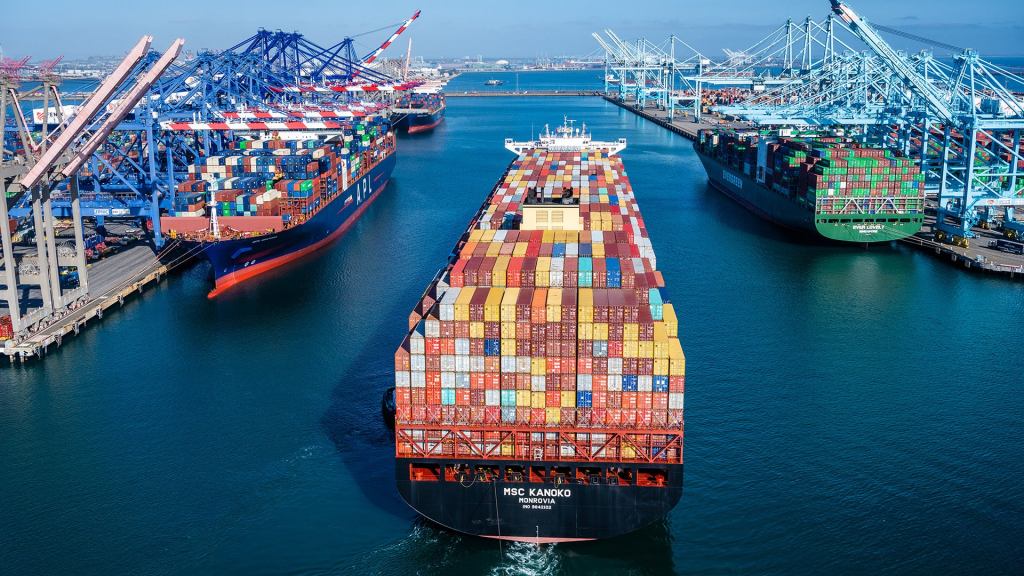
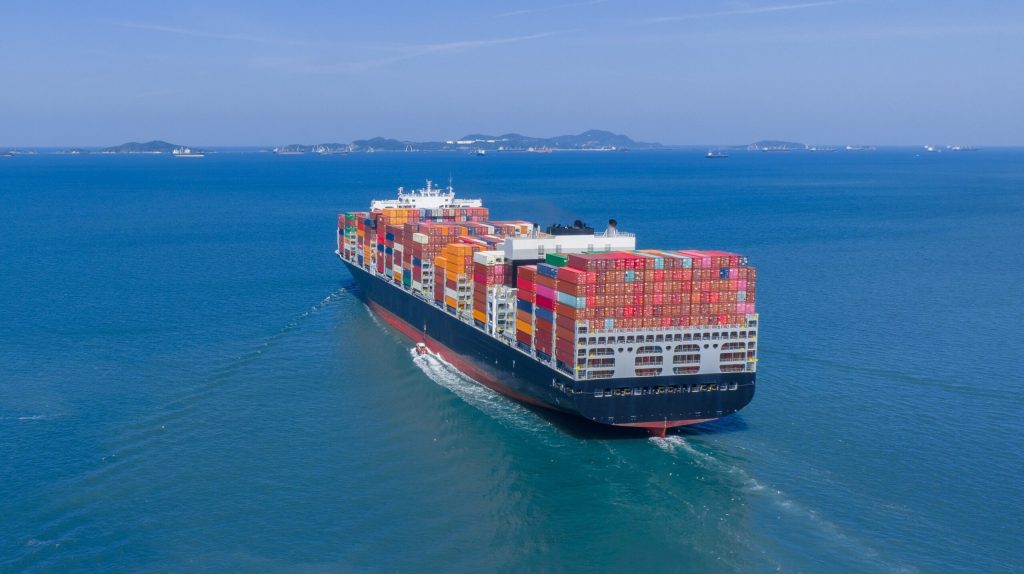
a photo of a container ship

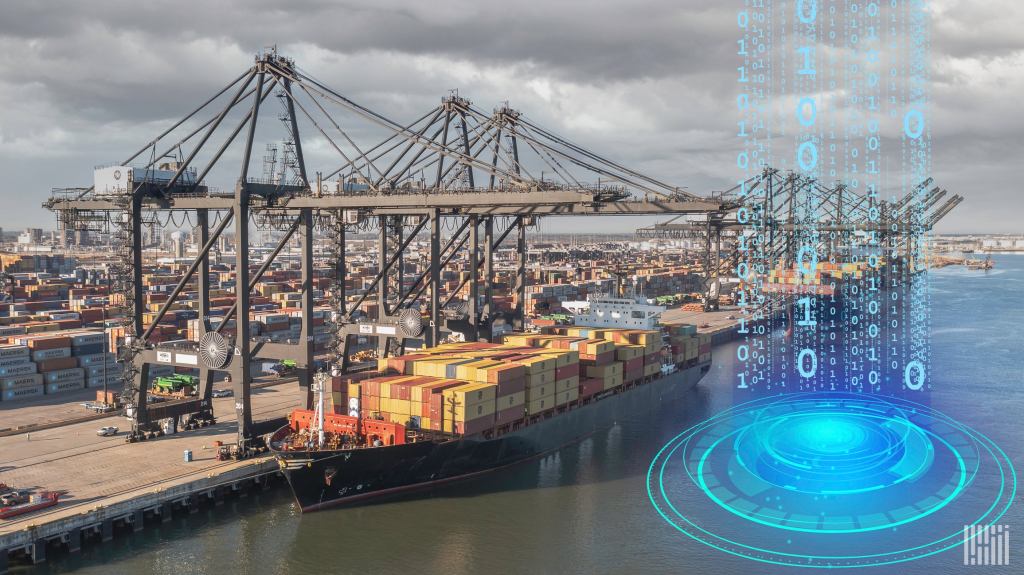
No one disputes that the Red Sea crisis is massively diverting containerized goods around the Cape of Good Hope. But opinions widely diverge on how serious this is for global supply chains, consumers and economies.

On one end of the spectrum, there’s the view that the Houthi attacks will stoke inflation, cause major goods shortages and have a material effect on Western economies, while container lines, previously expected to sink under the weight of excessive newbuilding deliveries, will turn into cash machines.

On the other end of the spectrum, there’s the view of respected shipping consultancy Drewry, which laid out a far more sober scenario during a presentation on Tuesday.

“The market globally is so heavily oversupplied that it has ample cover for disruptions such as this,” maintained Simon Heaney, Drewry’s senior manager of container research.

“Yes, more ships are needed to maintain weekly service [due to longer voyages around the Cape]. But there is ample spare capacity from the idle fleet, from the newbuilds that are coming in thick and fast, and from existing tonnage in other oversupplied trades that can be transferred across.

“While having too many ships is generally a bad thing for container lines, in this case, it is providing quite a lot more resilience to cope with disruptive events,” he said.

“Clearly, you can’t just pick up ships and move them where you want to. It will take time to reposition ships, so the pinch is going to be the worst in this initial stage. But we think things will ease once Red Sea diversions become part of the longer-term planning by carriers.”

Spot rate jump partially due to timing

“Rates in affected trades will remain elevated for the duration of the crisis, but they won’t go so high as to stoke inflation,” predicted Heaney.

Referring to the Middle East conflict in general, he said, “The impact on the world economy, if any, is going to come from higher energy costs rather than higher freight rates. We’ve not yet seen this materialize, but this could change, obviously, if the situation in the region escalates and oil prices increase dramatically.”

According to Philip Damas, head of Drewry Supply Chain Advisors, the huge jump in spot rates following the Houthi attacks was partly related to timing. Red Sea diversions happened to coincide with a period of high demand as importers sought to load cargoes prior to the February Chinese New Year holiday break.

“The initial shock was due to ships being in the wrong place or out of schedule. But the second point is that the timing was really unfortunate. Ship capacity was tight because many companies were trying to import from China before the Chinese New Year closure. This timing made the bottleneck worse. There was frankly a bit of a panic in China, with everybody trying to get their containers out, and with a shortage of box equipment for exports.

“The short-term dislocation was painful and worrying, but we can already see a softening of spot markets and the situation sort of normalizing,” said Damas. “There will not be a capacity crunch after March or April because the ships will be back in operation where they are needed,” he maintained.

Supply will still outpace demand

Drewry estimates that diversions around the Cape affect around 30% of global container ship capacity, with those diversions increasing transit times by an average of 30%. This equates to a 9% reduction in global capacity.

That, in turn, lowers the year-on-year growth rate in effective capacity.

The consultancy previously estimated that effective capacity would surge 9.3% in 2024 versus 2023 due to newbuilding arrivals, with port throughput (demand) rising 2.3%  —  a major imbalance. 

Taking diversions into account, it now estimates effective capacity will grow by 5.3% and demand will rise 2.4% — still a big imbalance.

Drewry publishes a supply-demand index, with 100 points equating to supply-demand balance. Prior to the Red Sea crisis, its index outlook for 2024 was at around 75. Running the numbers again to account for the diversion effect, the index rises to 77 if diversions last for the first six months of this year and 81 if they last all year.  

Thus, the Red Sea effect on capacity “barely moves the needle,” said Heaney. “It’s not going to flip the overall overcapacity story.”

Comparing Red Sea crisis to supply chain crisis

Current container trade dislocations come at a time when memories of the supply chain crisis are still fresh. Some media reports have started to compare the impact of the Houthi attacks to the COVID-era disruptions.

But according to Heaney, “The current situation is only partially comparable to the pandemic. During lockdowns, we saw a huge surge in demand for containerized goods, which, when coupled with disruptions across every link of the supply chain, sent shipping costs into orbit.

“These days, demand is much more pedestrian. You don’t have the government stimulus. Spending patterns have reverted back to services.”

As opposed to the case in 2021-2022, “there is now a surplus of ship capacity and you don’t have the widespread supply chain snarl-up we had back then.”

That said, port congestion is an important bellwether to watch.

“The deterioration of port productivity was a major reason why rates went into orbit during peak COVID. There is a definite risk that these off-schedule ship diversions will cause ships to cluster upon their arrival, which could lead to port congestion and more equipment shortages.

“It’s our view that liner networks will recalibrate to account for diversions, but clearly, we need to keep a close watch on that.”

Click for more articles by Greg Miller 

Kenco to close facility in Indianapolis

Third-party logistics provider Kenco Logistic Services said it will close a facility in Indianapolis, a move that will affect 110 workers.

Chattanooga-based Kenco filed a notice with state authorities on Jan. 19, according to state records. The facility is expected to close on March 19.

Under the Worker Adjustment and Retraining Notification Act of 1988, most employers with 100 or more employees must provide notification 60 calendar days in advance of planned closings and mass layoffs of employees. 

The company gave no reason in its filing for its decision to close the facility.

Red Sea cargo diversions could affect 2024 holiday shipping

Port of L.A. Pier 300

The current spike in shipping costs caused by ocean carriers routing away from the conflict in the Middle East could seep into longer-term rates if the federal government waits too long to help mitigate potential backups at U.S. ports, according to retailers.

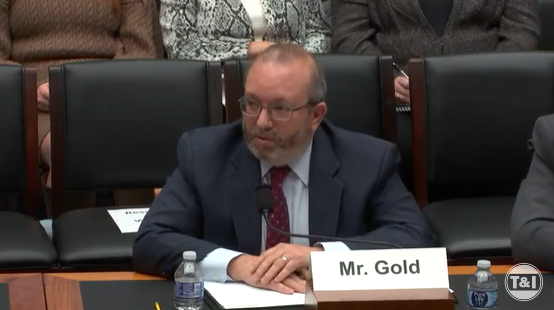
“While many are focusing on the current situation, more challenges will be created the longer these disruptions continue,” said Jonathan Gold, vice president of supply chain and customs policy at the National Retail Federation, testifying on Capitol Hill on Tuesday.

“The federal government needs to start paying attention to these issues now to help avoid significant congestion in the coming months.”

NRF’s Jonathan Gold testifying on Tuesday. Credit: House T&I Committee.

Gold told lawmakers at the hearing — called by the U.S. House Transportation & Infrastructure’s maritime subcommittee and titled, “Securing Shipping Against Threats in the Red Sea” — that he is concerned about the effect that long-term disruptions in the region will have on annual contract negotiations his members will soon be entering into with the ocean carriers.

“We do not want to see rates similar to the pandemic, which could impact inflation,” he said.

At the same time, Gold said his members are making decisions now regarding back-to-school and holiday import shipments, and are looking to shift those containers back to the West Coast ports after having shifted them away from the West Coast congestion and backups that occurred during the pandemic.

“We need to make sure that our ports, terminals, railroads, harbor truck drayage providers and warehouses are ready for the increased cargoes. We are already hearing that the dwell times are starting to tick up on the rail side.”

More congestion buildup could begin in the next four to six weeks, Gold warned. “Efforts need to be made now to convene the right stakeholders to plan accordingly.”

The congestion on the West Coast sparked by the pandemic that occurred in 2020 and 2021 led to several efforts by the Biden administration to help improve goods movement into and out of the U.S., including the Freight Logistics Optimization Works (FLOW) initiative.

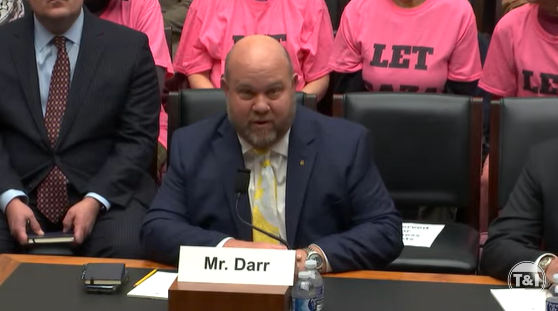
MSC’s Bud Darr testifying on Tuesday. Credit House T&I Committee.

Headed up by the U.S. Department of Transportation, FLOW coordinates and processes container shipping data from ocean carriers, railroads, trucking companies, shippers and others to allow transportation companies to better anticipate potential congestion issues.

The effort, Budd Darr, executive vice president of maritime policy and government affairs at container ship operator Mediterranean Shipping Co., testified at the hearing, “is a pretty good attempt to try and open up some more visibility with the hope that we can project forward patterns much better. It’s an example of a genuine public-private partnership that I think deserves some recognition.”

Addressing the rising costs that shippers have experienced as result of ship diversions away from the Red Sea, Darr noted that containerized goods are “not all affected equally. The higher value goods are, relative to their volume, that goes into a container, the much less affected they are” by potential price increases. “We’re not seeing anywhere near the price excursions in the open market that we did during the pandemic.”

But Darr conceded during the hearing that long-term shipping strategies — and their cost implications — could be upended by the current geopolitical crisis.

“We will adapt. We will make it work. We will meet the world’s commerce needs. That’s what we do,” Darr said. “But it may not look like it does today. And what we’re learning through the initial six weeks of adaptation of our networks is, maybe we’re going to call different places than we called before. Maybe we’re going to shift volumes for transshipment to different hubs than we did before. Maybe we’re going to avoid the Suez Canal altogether, and all that may come from that as far as stability in the region goes.

“All of those things are possible — I can’t paint exactly the picture. I can assure you we’ll meet the need, but it will be more expensive. There will be costs associated with that.”

Click for more FreightWaves articles by John Gallagher.

Norfolk Southern’s weak Q4, deteriorating OR draw Wall Street criticism

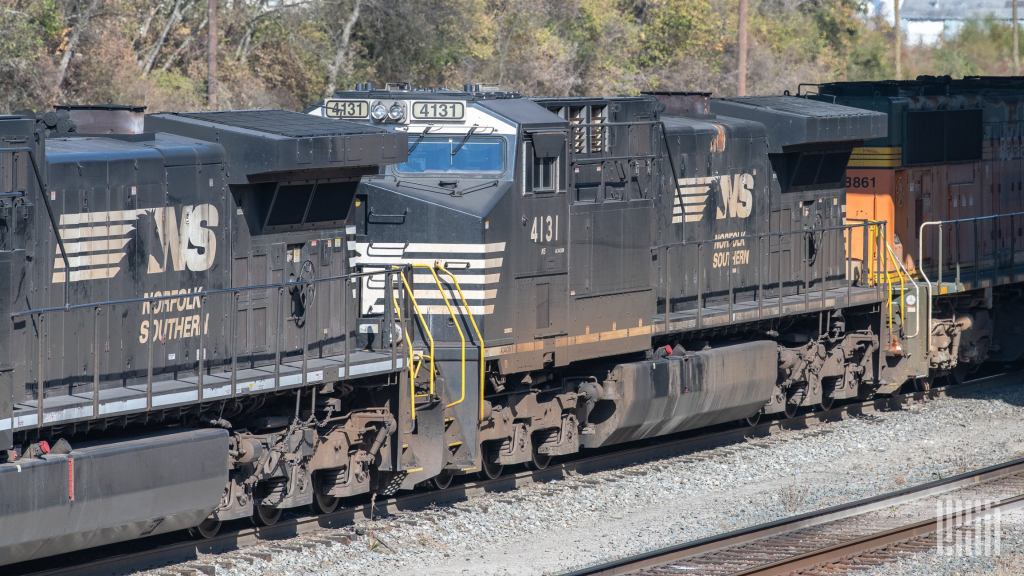
Fourth-quarter 2023 earnings and a projection for its prospects in 2024 have led to at least a pair of Wall Street downgrades of the prospects for Norfolk Southern’s stock price.

The bottom-line numbers for Norfolk Southern (NYSE: NSC) were that it posted net income in the fourth quarter of $527 million versus $790 million in the corresponding quarter of 2022. Its operating ratio for the fourth quarter of 2023 was 73.7%, a significant deterioration from the 63.5% it posted a quarter earlier.

NS’ quarterly earnings report and the subsequent earnings call with analysts did not mollify Wall Street critics, two of whom took quick action: TD Cowen and Morgan Stanley (NYSE: MS) cut their ratings on the East Coast-focused railroad, Cowen to market perform from overperform, and Morgan Stanley to underweight from equal weight.

Bank of America Merrill Lynch kept its buy rating, but reduced its earnings-per-share estimates for this year and 2025.

NS stock was trading at about $242.50 at the close Thursday. Earnings were released Friday, and the stock price immediately plummeted to about $227. The intraday high Tuesday was $237.75. 

The irony is that in the past three months, Norfolk Southern stock has had a good run, up about 26.8%, per Barchart data. But for both the last month and the full year, it’s essentially flat.

In its comments to analysts, Norfolk Southern CEO Alan Shaw said the company was targeting OR improvements of 100 to 150 basis points per year for the next three years. And the end result of that, according to several analysts clearly disappointed by that pace of change, is that NS would still have a lower OR than its peer Class 1 railroads.

On the earnings call Friday, Amit Mehrotra, the head of the transportation research team at Deutsche Bank, was blunt about the disappointment analysts felt about a projection they did not see as particularly aggressive.


“If we look at the three-year plan, I think if you ask every railroad in North America, they tell you that they also would expect to improve margins by 100 basis points to 150 basis points a year from where we are today,” Mehrotra told Shaw, according to a transcript of the call. “So, I guess the negative implication of that outlook is that you’re not actually narrowing the gap, you’re just improving your position from where you are, but the gap actually stays intact.”

In a similar vein, Bank of America Merrill Lynch analyst Ken Hoexter, discussing the three-year projection for reforms to have their full impact, said on the call: “I’m still surprised by that time frame. Should seem like there’s still moves that would get you that leverage a bit quicker, I guess, just compared to some moves we’ve seen on some other rails.”

Shaw, in response to an analyst question about the pace of change, said the three-year projection is “not an end point.”

“We have talked about continuous productivity improvement as one of the three components of our balanced strategy of safe service, continuous productivity improvement and smart growth,” Shaw said.

In the Morgan Stanley downgrade, the transportation research team led by Ravi Shanker noted that the Norfolk Southern earnings missed consensus forecasts. Adjusted EPS for the fourth quarter was $2.83, below a consensus forecast of $2.87.

Morgan Stanley said the shortfall “was similar to other rail prints in the quarter.” Guidance for 2024 on volume and cost inflation “was also consistent with what we have heard from other rails thus far.”

But as Morgan Stanley noted, given that NS was the worst-performing stock in 2023 of all the Class 1 railroads, analysts had hoped that Norfolk Southern would “drive the rail mean reversion trade going into 2024 (noting the big three-month surge in the price) given the easy comps once the February 2023 Ohio accident was lapped and given very negative sentiment on the Street around the name in 2023.”

Morgan Stanley’s report also focused on the OR gap with other railroads. As a point of comparison, Norfolk Southern’s OR north of 70% stands in stark contrast to the 60.9% posted by Union Pacific (NYSE: UNP) and the 64.1% at CSX (NASDAQ: CSX).

TD Cowen’s Jason Seidl was scathing in his review. “If they just hit … the high end (of the 100-150 points per annum) every year for the next three years, NSC’s OR would still be below where [CSX] was in 2023,” Seidl wrote. “We do not view new financial guidance as closing the gap with competitors as management suggested given both other Class 1s are expected to see margin improvement off a much lower (better) 2023 base.”

Investors “[have] been looking at NSC’s lagging OR as a potential for easier and better rate-of-change as well as stronger operating leverage when volumes returned,” the Morgan Stanley report said. “While all rails that have reported thus far likely disappointed on 4Q operating leverage (or lack thereof) despite improving volumes and implied constraints in 2024, the fact that NSC’s OR gap vs. peers actually grew, the more removed we have been from the Ohio accident, leaves the management team with more heavy lifting to do.”

NS did use the occasion of the earnings release and the analyst call to say it planned to cut management head count by 7% “to help offset increases in critical operating areas.” The railroad came under heavy criticism after the East Palestine, Ohio, derailment, with accusations that it had cut too deeply into operating and safety expenses; the head count cutbacks do not include any reductions in staff out on the railroad.

Shaw, in response to another analyst question, said the company was “entering the third year of a freight recession, and with the investments that we’ve made in safety and service that are delivering meaningful results, it’s clear that our cost structure is too high for our revenue base entering 2024.”

That view on costs was similar to what was expressed by TD Cowen in its downgrade of NS stock. “While the U.S. Class I rails struggle to find the next growth lever for top line growth, NSC’s cost structure should continue to notably underperform its peer group for this year,” TD Cowen wrote.

More articles by John Kingston

EBITDA at TriumphPay, its key metric, turned positive in Q4

Teamsters rack up late-2023 wins, stage significant strike in ’24

Court rules CRST team drivers must be paid for some hours in sleeper berth

Rail gets high-tech upgrade moving into 2024

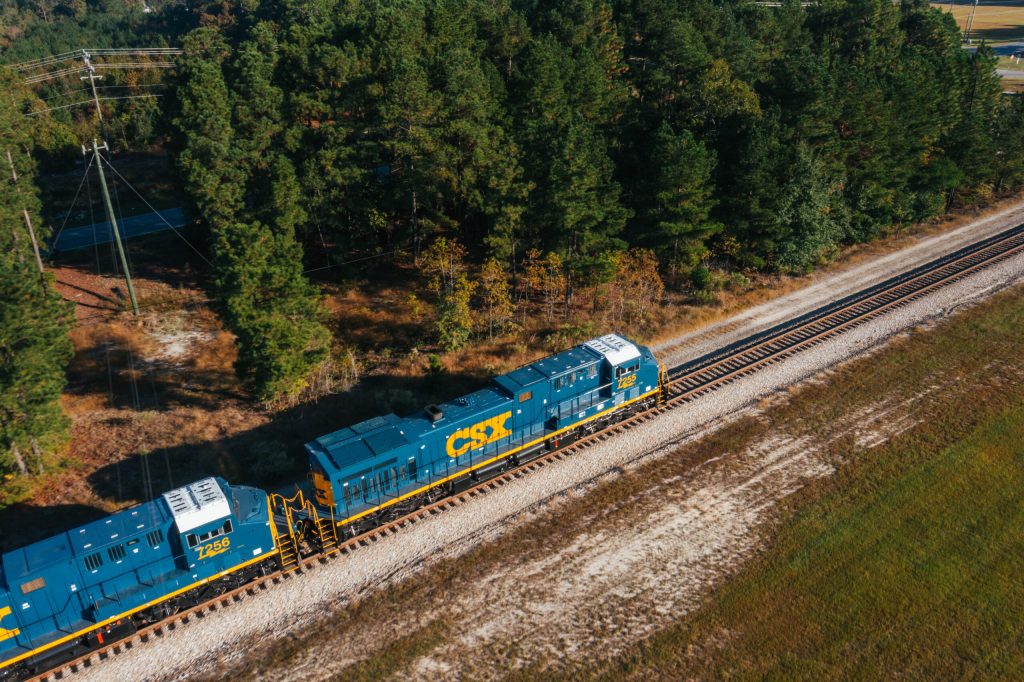
Rail is often characterized as one of the more “old school” transportation options, but recent developments in the space have challenged that narrative. Railroad giant CSX, for example, is dedicated to investing both financial and human capital into a myriad of emerging technologies. 

“Over the past year, we continued a multi-year modernization plan for our ShipCSX customer service platform, adding new tools and functions,” according to Kevin Boone, CSX Executive Vice President and Chief Commercial Officer. “We also pursued projects introducing alternative fuels for locomotives, advanced GPS shipment tracking, and upgraded wayside defect detection systems.”

Growing these solutions allows CSX to offer an improved customer experience while simultaneously reducing carbon emissions and enhancing safety – creating a comprehensive winning scenario.

Each of the company’s ongoing technological investments benefits shippers, either directly or indirectly through improved service and sustainability.

Improvements to the ShipCSX platform, for example, make it easier for shippers to conduct business with CSX by introducing more advanced business tools, better shipment management features and greater transparency into the location of shipments on the rail network. 

At the same time, the company’s new carbon calculator helps shippers achieve their sustainability goals by enabling them to calculate potential carbon savings associated with rail. This means CSX customers can visualize the future ecological impact of their shipments before they ever leave the warehouse. 

Other new and upgraded safety technologies are aimed at protecting freight and preventing incidents that may delay service, all supporting shippers’ operational and customer service goals.

“We’re able to provide more transparency into the supply chain than ever before, and we’re developing new products to provide a more seamless shipping experience for rail customers,” according Boone.

CSX continues to make these high-value tech investments at a time when shippers are eager to take advantage of economic, environmental and safety advantages of rail. By modernizing the way rail works, CSX is making it easier than ever for shippers to embrace rail and access those advantages.

“CSX’s industry-leading service performance, combined with improved customer service tools and systems, is providing service reliability comparable to trucks but with the advantages of rail,” Boone said.

CSX is also introducing new service solutions that combine long- and medium-haul rail with first-mile/last-mile trucking to provide dock-to-dock freight delivery, further bridging the gap for shippers hoping to utilize more rail options in 2024. 

Additionally, the company is hoping to make rail more accessible by making it easier than ever for expanding companies to find new properties already located near railroads.

“We’re using technology to help customers locate rail-served properties for new facilities, and we’re investing in our intermodal terminals, TRANSFLO bulk transloading facilities and warehousing options to further meet customer needs and provide the most efficient, cost effective and sustainable supply chain solutions,” according to Boone.

CSX has made it clear that its commitment to technological evolution is just getting started. 

“Leveraging technology for transformation is one of the three pillars of our long-term strategy, along with fostering an inclusive workplace culture and growing the business by continually delivering a better customer experience,” Boone said. “We will continue to allocate a significant portion of our annual capital budget to technological innovations that enhance safety and make it easier for customers to do business with us.”

For example, CSX is currently nearing completion of a project to consolidate its pricing and rating documents into a single modern pricing infrastructure. 

The company has also rolled out a program called InnovationX with dedicated development funding that invites employees to submit innovative ideas. So far, more than 300 ideas have been submitted, and 13 have advanced to proof-of-concept testing. Several are already being implemented.

Click here to learn more about moving goods with CSX

Ghost jobs haunt the market

people gathered around a desk of computers. Check Call news and analysis for 3pls and brokers

Welcome to Check Call, our corner of the internet for all things 3PL, freight broker and supply chain. Check Call the podcast comes out every Tuesday at 12:30 p.m. EDT. Catch up on previous episodes here. If this was forwarded to you, sign up for Check Call the newsletter here.

In this edition: The evolution of ghost jobs that are hiring but really aren’t, and a deal finally closes and moves forward. 

ICYMI, last week on Check Call we had Kevin Kull, senior vice president, sales and operations, at Pallet Trader. We got into the pallet marketplace world and what it takes to bring familiar tech to a world that has been living in the tech Stone Age for decades. New episodes come out every Tuesday wherever you get podcasts and also on YouTube. 

A disturbing trend has emerged among those looking for jobs: no success. I’m not talking about, oh, I applied for like five jobs and didn’t hear anything back. Oh no. We’re in the hundreds. About five minutes on social media will show countless people and the number of jobs they applied for — like 850 for this one person on TikTok.

Job seekers have even gone so far as to use AI to apply for jobs that are using AI to screen resumes and applicants. It’s a wild rabbit hole that THOUSANDS of videos are made about.

Just wait. It gets better. Most of these positions people are applying for are ghost jobs and I’m not talking about a job as Casper and his band of friends. Ghost jobs are job openings to “keep the talent pool warm.” Basically they’re hiring but not really. They just want to have people around and “at the ready” when it comes time to actually hire … someday. 

It’s anticipated that 57% of Americans will be looking to change jobs in 2024, according to a GOBankingRates survey and also some LinkedIn research.

That brings us to the supply chain and 3PL world, where the average employee turnover, well, it leaves a lot to be desired. Supply chain as a whole is known for high turnover: looking at you, brokerages.

According to the Society for Human Resource Management, it costs an average of six to nine months of employees’ salaries to replace them. For example, someone making $60,000 a year costs about $30,000-$40,000 to replace, not to mention any losses in revenue the company sustained as a result of the employee’s absence.

People want to leave, hiring is a nightmare, and job hunters are exhausted from applying for hundreds of fake positions. What next? 

The easiest thing is to keep employees. That means employee engagement surveys need to be real and not just an attempt to pressure workers into saying they’re happy when in reality they’re burned out and need a break. Working to be flexible with people, whether it’s hybrid work, flexible hours, atypical benefits that employees are excited about — something like that is so much easier than paying and onboarding new workers.

Since it’s the beginning of the year and there is seemingly no shortage of layoffs coming, just be better about intentionally hiring. And enough of the “keeping a warm talent pool.” Just treat people like people and not numbers. You’ll make a mistake or two on some wrong hires, but don’t make everyone else suffer for that. It’s 2024. Let’s have adequate staffing again.

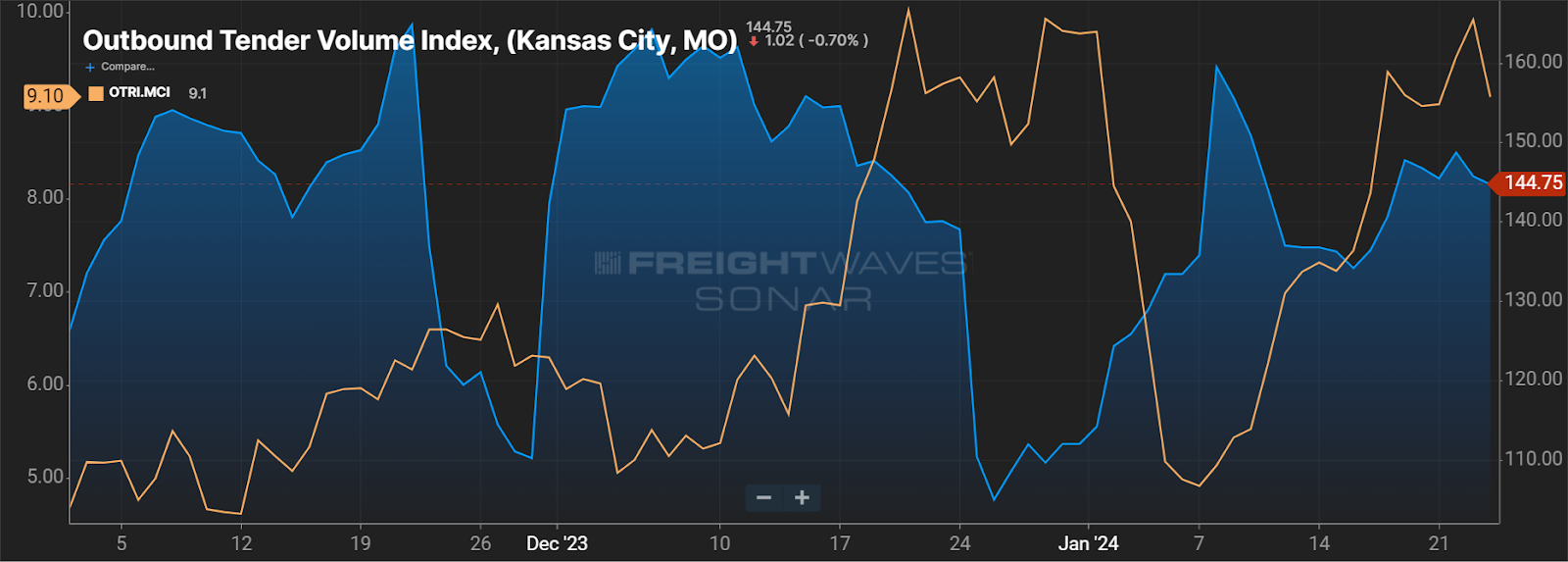
SONAR Tickers: OTVI.MCI, OTRI.MCI

Market Check. Kansas City, Missouri, has seen outbound tender rejections drop 103 basis points week over week. Rejections have dropped to 9.1%, indicating the beginning of a slightly inflated spot rate market. While outbound tender rejections remain volatile, outbound tender volumes have leveled out as the month comes to a close. Volumes are up 6.08% w/w. Given that capacity has slightly begun to tighten, Kansas City isn’t yet a market that carriers should be sending all excess capacity to as rates aren’t that lucrative. However, a carrier that finds itself ending in the market might have an easier time getting out.

Who’s with whom? In this case, it’s more like who isn’t with whom. Omni Logistics CEO J.J. Schickel is not joining the combined Forward Air-Omni Logistics as an executive. Schickel will remain a shareholder of the now-joined companies. Forward Air and Omni Logistics have been battling over their merger for months as the original deal was made in August 2023

Amid investor pressure, Forward Air was attempting to terminate the agreement then Omni filed a lawsuit. The deal was finally settled this January, and the two shall become one company, despite the rocky beginning.

FreightWaves’ John Kingston’s article notes, “Forward Air’s stock has been pummeled since the acquisition as investors believe their holdings are being excessively diluted. According to data from Barchart, Forward’s stock is down 28.4% in the last month, 35.2% in the last three months and 55.5% in the last year.”

The more you know

Attacks on ships in the Red Sea are disrupting global trade. Here’s how it could affect what you buy

Why it still feels like a recession for many — FreightWaves

Logistics-Tech Startups Face Uncertain Future as Freight Slump Continues 

US Air Force turns to quantum computing for military logistics

Borderlands: Continental AG announces $90M manufacturing facility in Mexico

Carriers can reduce legal, financial risk with more frequent MVR monitoring

Trucks on the highway

Many carriers pull their drivers’ motor vehicle records (MVRs) to check for violations and privilege suspensions just once a year. This means that, in some cases, a driver could lose driving privileges for up to 364 days before a carrier ever finds out.

This “same time next year” approach to MVRs doesn’t work in the carrier’s favor. While FMCSA has issued minimal requirements surrounding MVR checks, carriers doing only the bare minimum are creating and perpetuating visibility gaps that leave their fleets vulnerable.

FMCSA requires carriers to run MVR checks when a driver is hired and at least annually thereafter. Additionally, the agency requires drivers to self-report any loss of driving privileges to their employers. 


These monitoring requirements apply to a wide range of employees, including:

• CDL, non-CDL and nonregulated vehicle drivers.
• Part-time drivers.
• Leased independent contractors.
• Mechanics who test drive commercial vehicles.
• Operators of any vehicle hauling passengers.
• Delivery vehicle drivers.

The problem is that drivers may not self-report violations and loss of privileges to carriers in a timely manner. This opens the door to a plethora of legal, financial and safety issues.

Drivers’ willful failure to report a loss of driving privileges is not the only issue carriers should be aware of. Both CDL and non-CDL drivers can have their privileges revoked due to unpaid child support, and CDL drivers can lose them due to lapsed medical certificates. In these scenarios, it is possible that the drivers themselves are not aware of the lost privileges. 

At the end of the day, the burden falls to carriers if their drivers fail to report violations and penalties throughout the year. In the event of an audit — or a court case — carriers cannot use ignorance as a defense. 

“Carriers unaware of loss of driving privileges are at greatest risk of a nuclear verdict,” said J. J. Keller Sr. Editor of Transport Management, Mark Schedler. “The driver should not have been driving a commercial vehicle due to either disqualification or unmet hiring criteria, and the carrier will be held liable.”

Beyond the courtroom, carriers take on a multitude of other risks when choosing not to regularly monitor the status of their drivers. Those risks range from affected safety ratings and higher insurance rates to lost business and tarnished reputations. 

Thankfully, companies can reduce risk and increase retention with more frequent monitoring.

How can carriers mitigate risk?

There are a wide range of proactive measures carriers can take to reduce their risk of having an unsafe driver on the road.

Ongoing MVR monitoring

Keeping a close eye on record changes is the foundation of a proactive driver management approach. Carriers can do this in a few different ways. The right choice for an individual carrier will depend on its size, internal bandwidth and financial position.

• Pull service — Carriers must access and be able to interpret the complex list of status codes and dates of changes to the driving records.

• Push service — Carriers receive alerts for changes to driver records.

• Third-party service — This takes the bulk of the work off the carrier’s plate. The provider must comply with Fair Credit Reporting Act consent and notification requirements. Pre-adverse-action notices should be sent to drivers to advise that the use of a third-party-provided report may affect a hiring or retention decision.

Utilize MVR finds to address driver behavior

Not all negative finds on a report should automatically lead to driver termination. When less critical — but still concerning — issues show up, carriers should step in and ensure corrective action is taken before a full-blown pattern of problematic behavior is established. 

Taking a proactive approach to correcting issues ultimately leads to less risk and improved retention for carriers. To make the process as simple as possible, carriers can utilize solutions like J. J. Keller’s MVR Monitoring Service, which includes corrective action training.

Create company policies with other best practices 

When a carrier moves from reactive to proactive MVR monitoring, putting official policies and best practices in place to support that change is essential. By providing a clear framework, carriers set their employees up for success.

Some examples of best practices include:

• Score MVRs — Assign severity points to violations and events on MVRs to assess risk.

• State the goal of the monitoring program — For example, to get drivers back on track, save a career and prevent crashes and citations.

• Define when coaching, refresher training and other corrective actions must take place.

• Assign an in-house expert or engage a trusted third party to avoid misinterpreting licensing authority MVR codes for status changes/suspensions or violations.

• Include nonregulated drivers (not just CDL and non-CDL commercial drivers).

Click here to learn more about J. J. Keller.

Vizion partners with Dun & Bradstreet on risk management offering

Supply chain visibility provider Vizion announced Tuesday it has released a new product to provide customers with live tracking and risk management capabilities. 

The new tool, TradeView, is made available through a partnership between the company and Dun & Bradstreet, which will be providing its own supply chain data to be leveraged with Vizion’s global shipment data.

“Our industry needs ESG [environmental, social and governance] transparency mapped across supplier networks and product value chains. TradeView breaks new ground in addressing these needs through unprecedented live monitoring and access to novel datasets. Vizion, in collaboration with Dun & Bradstreet, is excited to bring a truly differentiated solution to market,” said Vizion CEO Kyle Henderson in the release. 

According to Vizion, the tool is designed to help supply chain actors from a wide array of sectors, including port and terminal operators, logistics providers, drayage companies, railroads, and retail providers, make better business decisions. 

Through the collaboration with Dun & Bradstreet, the tool empowers government workers, commodity traders and individuals in capital markets to enhance their economic forecasting capabilities.

Vizion’s last solutions release was its Intermodal Rail Tracking in June. This feature focuses on the often-overlooked movement of containers from vessels to inland destinations, providing transparency on events like last free dates and available pickup dates to help shippers and logistics providers avoid access charges.

The company has not had to raise capital since 2022, when Samsung led the $14 million Series A round with participation from Maersk Growth and Value Stream Ventures. 


Flexport plans to lay off 20% of workforce, say insiders

Optym lands strategic investment from industry backer Venture 53

FreightTech experts: 2024 is the year for laggards to catch up

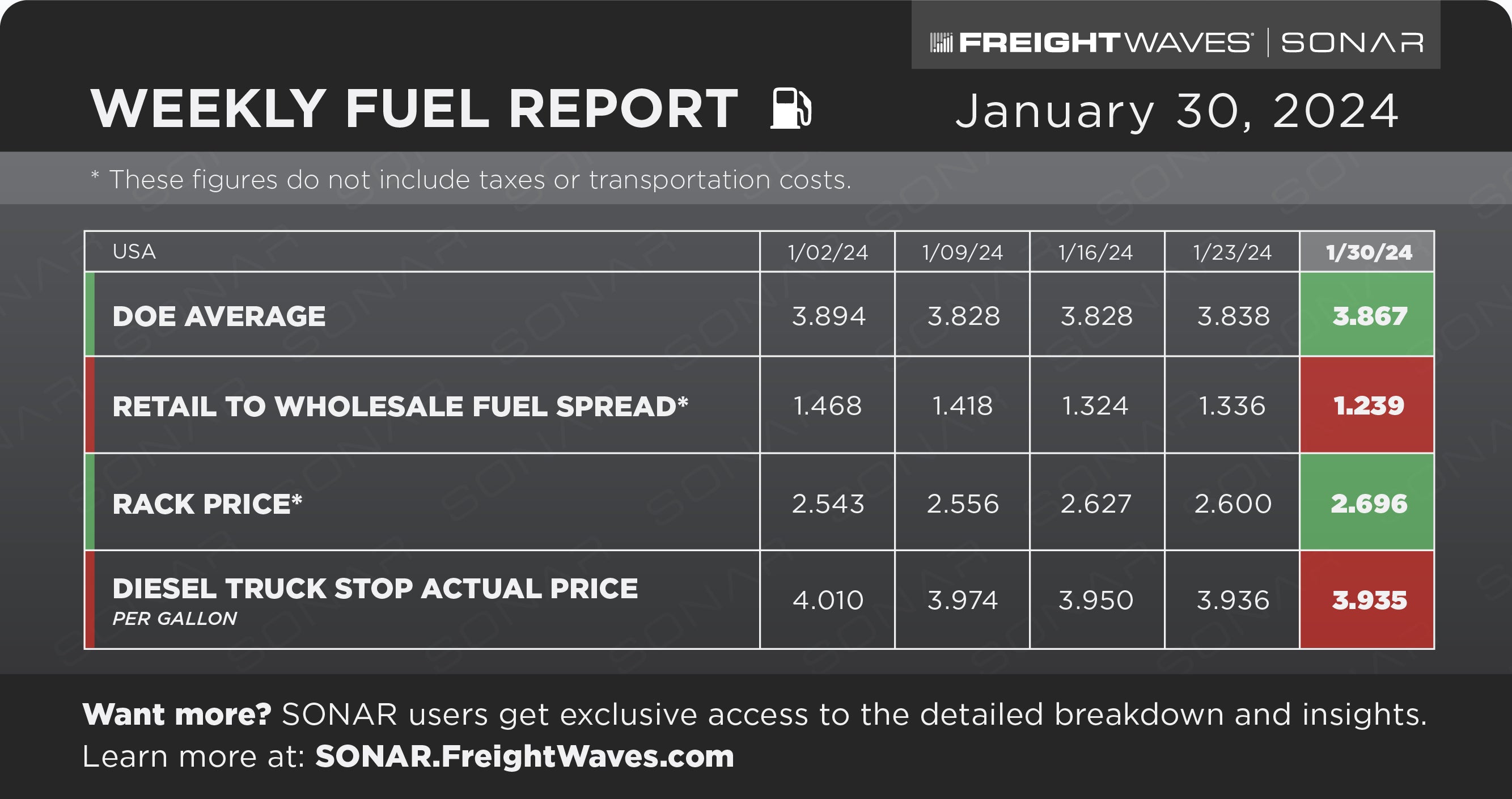
Weekly Fuel Report: January 30, 2024


Learn more at SONAR.FreightWaves.com

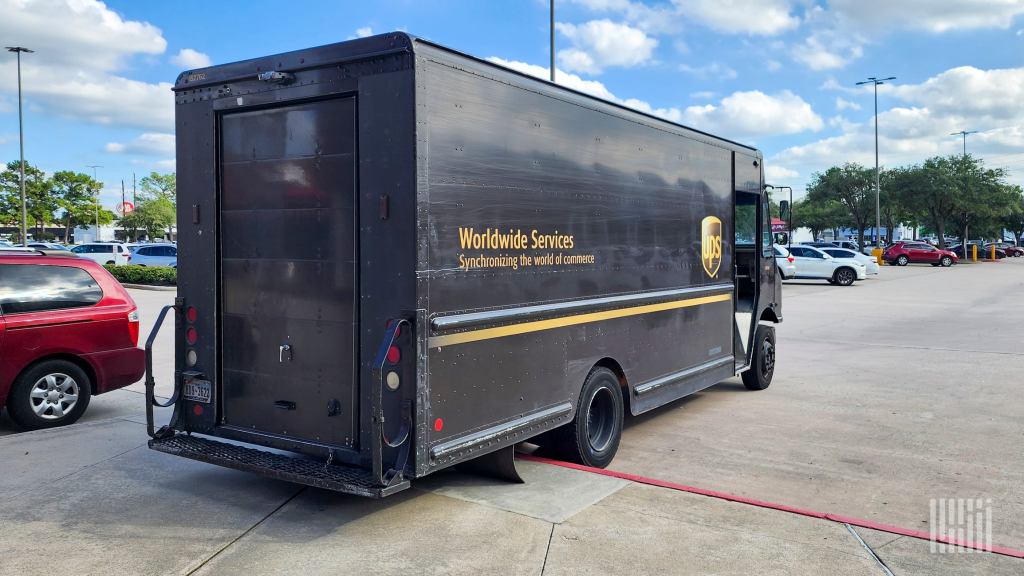
UPS to cut 12,000 jobs, may sell Coyote brokerage unit

UPS Inc. said Tuesday that it will explore strategic alternatives for its struggling truckload brokerage business, Coyote Logistics, including a possible sale. In addition, UPS said it will cut 12,000 full- and part-time management and contract jobs this year as part of a new initiative called “Fit to Serve.”

UPS paid $1.8 billion for Chicago-based Coyote in 2015 as part of what CEO Carol Tomé, who was on UPS’ (NYSE: UPS) board at the time, said was a strategy to expand the Atlanta-based giant’s portfolio. However, UPS didn’t “fully understand” the heavily cyclical nature of Coyote’s business, which has manifested over the past eight years, Tomé told analysts Tuesday morning.

Coyote was generating about $2 billion in annual revenue when it was acquired, Tomé said. During the pandemic, revenue swelled to nearly double that. Since then, revenue has dropped considerably, she said, without providing details. 

Like all freight brokers, Coyote has experienced top- and bottom-line difficulties as demand has slowed and rates collapsed. It has gone through multiple rounds of layoffs since the start of 2023, the latest coming in mid-January 2024.

Transportation is a notoriously cyclical business, but Coyote apparently has become too volatile on the top and bottom lines for management’s liking. Tuesday’s disclosure harkens back to the sale three years ago of UPS Freight, its former less-than-truckload business, which was also cyclical and didn’t fit with the UPS network as Tomé envisioned it. Canadian firm TFI International Inc. acquired the unit for $800 million and rebranded it as T-Force Freight.

The projected layoffs, which will affect less than 3% of UPS’ workforce of about 495,000, is expected to save the company about $1 billion in 2024, executives said. About 75% of the layoffs are expected to occur in the first half of the year, executives said. The reductions will not impact unionized employees.

The jobs will not return even as volumes recover, UPS said, adding that the reductions are part of what the company said would be a new way of working. 

The first half is expected to be challenging, with the current quarter the tougher of the two, UPS said. The company will be navigating through difficult comparisons with the first quarter of 2023, and will also have to manage through a continued weak macro environment and higher labor costs from last year’s Teamsters union contract.

UPS expects revenue and margins to stabilize throughout 2024 as labor costs abate and U.S. and international demand improves. Still, UPS does not expect dramatic year-over-year gains in revenue and projects a decline in operating margins. UPS forecasts 2024 revenue of $92 billion to $94.5 billion, up from $91 billion in 2023. Adjusted operating margins are expected to come in between 10% and 10.6%, down from 10.9% in 2023.

The year just past was “difficult and disappointing,” in Tomé’s words. Revenue dropped 9.3%, and adjusted operating profit fell 28.7%. In the fourth quarter, revenue fell to $24.9 billion from $27 billion. Revenues and operating profits were down across all three units.

On a positive note for the company, its fourth-quarter results were an improvement over the low-water mark in the third quarter. For example, average daily volume in the U.S. jumped sequentially by 30% as the company won back volumes diverted to rivals during contract negotiations, captured new business and benefited from the seasonal holiday delivery peak.

UPS said it has recovered about 60% of all diverted volumes, much of that from shippers that sourced delivery services from multiple carriers, including UPS.

Shares of UPS were down more than 8% in the first 90 minutes of trading Tuesday.