Morgan Stanley upbeat on CN’s 2024 growth expectations

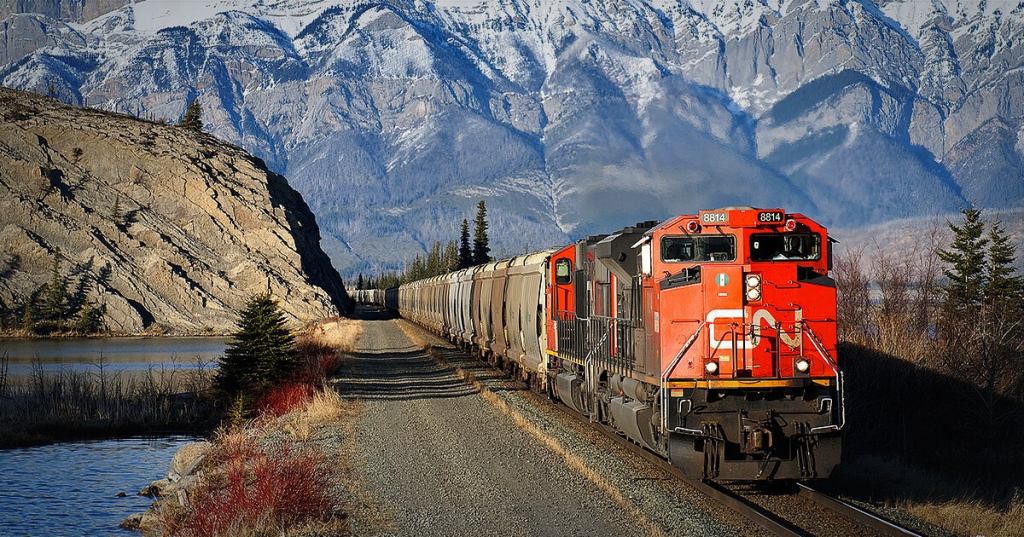
Canadian National Railway Co. (CN) on Tuesday reported revenue of CA$3.28 billion ($2.4 billion) in the fourth quarter and adjusted earnings per share of CA$2.02. 

CN (NYSE: CNI) beat analysts’ expectations of EPS of CA$1.99 and revenue of CA$3.25 billion. For the year, the company reported revenue of CA$12.47 billion and profit of CA$4.17 billion, or CA$6.32 per share.

“These are the kind of results we can be very proud of in a challenging environment,” Tracy Robinson, CN president and CEO, said in a call with analysts on Tuesday. “We said last quarter that we’ve seen the bottom in volumes and this has played out as we expected. … Now there remain question marks on the economy as we move into 2024. We’re expecting continued improvement as the year progresses.”

The Montreal-based railroad expects full-year EPS growth of 10% in 2024. CN reiterated its longer-term financial perspective and continues to target annual EPS growth in the range of 10% to 15% over the 2024-26 period.

CN said growth in 2024 should be driven by increasing volumes, pricing above rail inflation and incrementally improving efficiency, according to a news release.

The fourth-quarter and full-year results left analysts from Morgan Stanley optimistic. They said the railway’s projected 10% growth “compares well versus [its] rail peers.”

“We acknowledge that January faces very difficult comparables and there are a few cost headwinds to overcome, but operating leverage when volumes return, a solid pricing outlook and buyback assistance should more than offset, in our view,” Morgan Stanley said in a note after the results were reported. “We will see how conservative this guide is probably by mid-year but 10% earnings growth in this challenging macro is not to be taken for granted, especially when we believe U.S. rail peers are likely to have a much harder time getting there.”

Morgan Stanley said while CN’s intermodal segment struggled “on the international side due to lingering port strike effects and domestically due to weaker retail volumes,” it was offset by strength in bulk and merchandising shipping.

CN posted revenue ton miles (RTMs) of CA$61 million during the fourth quarter, a year-over-year increase of 2%. For the full year, RTMs decreased 1% to CA$232 million.

CN said it expects forest products shipments to stabilize to pre-pandemic levels with a gradual recovery. Shipments of grain should be more normalized toward the end of 2024 and into 2025, the company said.

“CN noted optimism about construction end markets,” Morgan Stanley said. “They also anticipate more frac sand and liquefied gas shipments due to increased drilling in Northeast British Columbia. Crude shipments should also be supported by a positive forecast for Canadian production overall as well as the startup of the Trans Mountain Pipeline.”

Another positive has been CN’s Falcon Premium service, which launched in April. The service has produced steady cross-border volumes, company officials. Falcon Premium is a service among CN, Union Pacific (NYSE: UNP) and Mexico’s Ferromex.

The goal of Falcon Premium is to create an intermodal service connecting eastern and western Canada with Chicago to rail terminals throughout Mexico.

“It’s been a very exciting product we’ve had with our partners at [Ferromex] and Union Pacific,” Derek Taylor, CN’s executive vice president and chief field operations officer, said on the call. “We’re consistently delivering on the published transit time with our customers, and we look forward to continuing to grow that here in 2024.”

While CN officials said Falcon Premium momentum is solid, they stated it will be “very slow growth off the truck market.”

“CN said they are working with their partners to grow Falcon Premium, management noted they

will be going after truck business when the bid cycle starts up in the first quarter of 2024 and that they ‘hope to see some solid growth’ through the rest of the year,” Morgan Stanley said.

More articles by Noi Mahoney

Nearshoring forecast to boost US-Mexico trade in 2024

Venture capital continues to flow into FreightTech startups

Mexico top US trade partner in November, Laredo No. 1 gateway
Commentary: Looking inside Paccar’s humble record streak

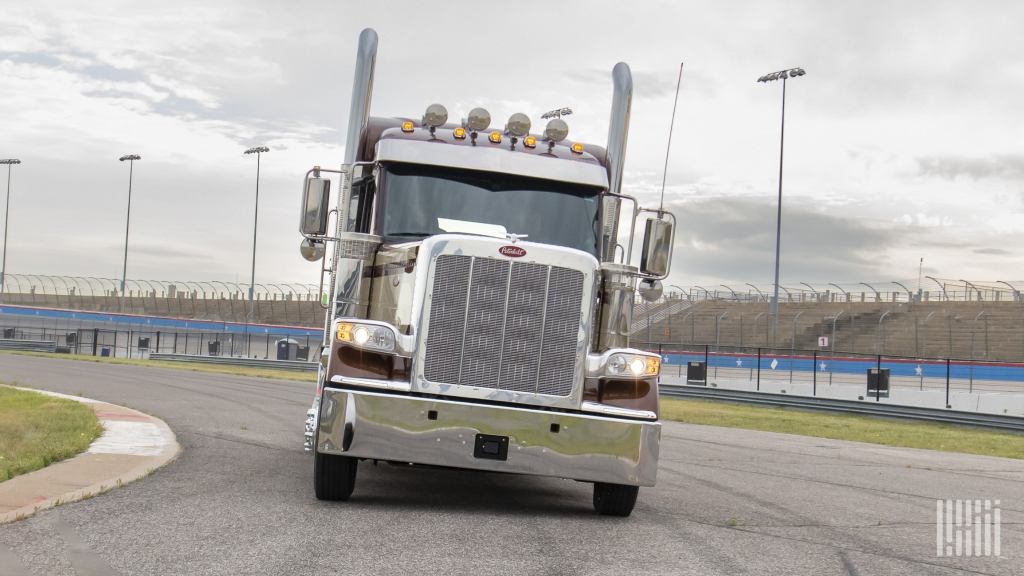
Peterbilt Model 580 on track at Texas Motor Speedway

Paccar Inc. CEO Preston Feight could be forgiven for taking a victory lap celebrating the truckmaker’s 85th consecutive year of net profits.

No forgiveness needed. The company’s leader since 2019 declined to brag. That’s not the Paccar way. Humility, consistency and conservatism rule the day in Bellevue, Washington, where suit and tie is common attire even in a business culture that has come to eschew such formality.

In the company’s earnings release on Tuesday, Feight thanked the 31,100 global employees at Paccar’s three brands: DAF Truck, Kenworth and Peterbilt. He regularly calls them out for their performance. The release also pointed to 85 consecutive years of net profit and a streak of dividend payouts that stretches to 1941.

Paccar CEO Preston Feight

Humility on display

Several analysts on the company’s earnings call Tuesday offered Feight obligatory “great quarter” comments before seeking answers to questions they hoped would help tweak their economic models toward ending an extended streak of underestimating Paccar’s revenue and earnings performance.

Feight typically acknowledges those sentiments in the same perfunctory manner in which they’re offered. It was a little different this time.

“Well, first of all, thanks for the comment on the year,” he told Angel Castillo of Morgan Stanley. “I think our team deserves an incredible amount of credit all around the world for the wonderful performance.”

Acknowledging but deflecting praise is as close to celebrating as Feight came.  

Bonkers 2023 results

Record results nearly across the board included $35.1 billion in consolidated revenue from trucks, parts and financial services, a 13.1% after-tax return, and income of $4.6 billion. Paccar delivered 109,000 Kenworth and Peterbilt trucks in North America. DAF delivered a record 63,000 trucks in Europe and other global markets.

Even the analysts who didn’t offer compliments had some influence on investors who drove  Paccar shares to a near-record close of $101.01. Since a 3:2 split a year ago, Paccar shares have been on a tear, rising from $67.48 to a 52-week high of $102.20. The intraday price Wednesday was $101.30.

Analysts badly botched their estimates for Paccar’s Q4 results, The consensus by investor site Seeking Alpha predicted $2.21 per share on revenues of $8.3 billion. Paccar beat the per share number by a whopping 49 cents. A miss of a few pennies sometimes registers as notable.

Such inaccuracies can suggest poor company guidance. No one points to that with Paccar, which has beaten EPS estimates 88% of the time and revenue estimates 100% of the time over the past two years.

Winning equation: New trucks, parts sales and financing

So, how does Paccar do it? 

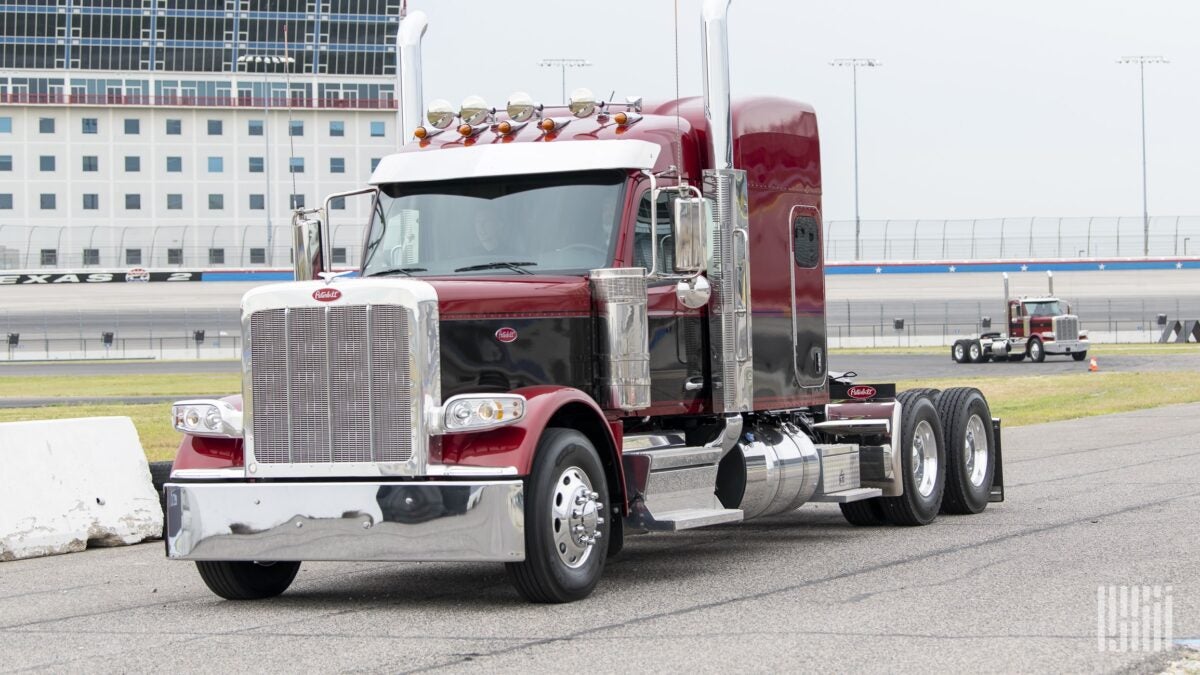
An almost all-new product lineup at its three brands is a factor. The latest makeover, the Class 8 Peterbilt Model 589, enters production this month in Denton, Texas. It replaces the venerable long-nose Model 389 that had such a following that about 200 of them showed up at a celebration outside of the Texas Motor Speedway in May where the Model 589 debuted.

The Peterbilt Model 589 debuted in May as the successor to the venerable long-nose Model 389. (Photo: Jim Allen/FreightWaves)

“We have refreshed our entire product lineup in the last few years,” Feight said. “We have really high-performing products that are delivering excellent results to the customers.”

Paccar trails only market leader Daimler Truck North America in sales, which rose 4% in 2023, below expected levels but better than parent Daimler Truck AG’s 1% overall unit sales gain. Sales of International-branded trucks from Traton Group subsidiary Navistar rose 9% to 75,500 in 2023. Volvo Group reports its Q4 results Friday.

Paccar Parts leverages ordering and inventory processes to speed deliveries. Its growing global footprint includes a $91.5 million investment in a 240,000-square-foot parts distribution center in Massbach, Germany. Its 20th PDC brings total dedicated space to more than 3.3 million square feet. Paccar Parts reported a 19.4% gross margin in Q4 and sees only a slight pullback in Q1.

More of the same

Feight said a 15% to 20% pullback in equipment sales in Europe where DAF Trucks operates is likely for this year. Unlike others expecting a downturn in North American truck equipment orders, Feight is upbeat.

“As far as the slowdown in orders, I’m not sure I can recognize that in our major North American markets,” he said. “We see good order intake and good visibility.” Q1 build slots are gone, and Q2 is filling up.”

As Muhammad Ali said: “It’s not bragging if you can back it up.”

Paccar Q4 sales, profit records overwhelm analyst estimates

Peterbilt kicks out the jams to introduce Model 589

Peterbilt reveals major redesign of flagship Class 8 Model 579

Click for more FreightWaves articles by Alan Adler.

Shipping fallout from Red Sea crisis spreads to product tankers

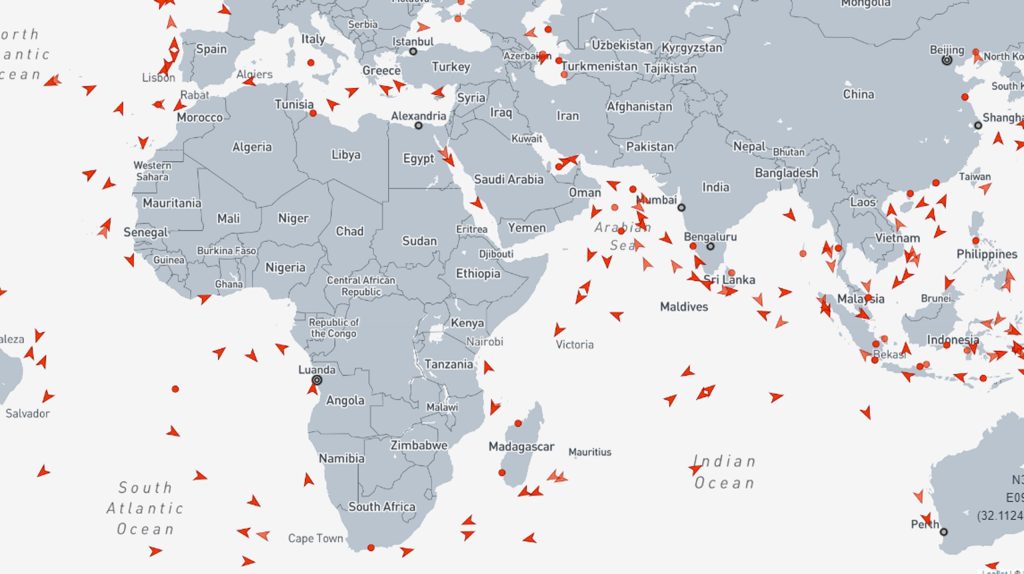
map of product tankers

With no end in sight for the Red Sea crisis, detours around Africa’s Cape of Good Hope are soaking up even more vessel capacity and pushing up spot rates across multiple shipping segments.

Freight fallout began with container ships. It is now significantly impacting product tankers — the vessels that transport gasoline, diesel, jet fuel, naphtha and other petroleum products.

Larger product tankers that do long-haul runs are diverting around Africa in increasing numbers. These ship types include LR1s (with capacity of 55,000-79,999 deadweight tons or DWT) and LR2s (80,000-119,000 DWT).

Extended transit times for long-haul product tankers are having the knock-on effect of hiking demand for regional replacement shipments using short-haul vessels known as MRs (25,000-54,999 DWT).

Fuel prices are being effected, as well. “The current halt of east-to-west diesel flow through the Red Sea and Suez Canal has already pushed diesel prices in Europe higher, with further increases expected as deliveries slow due to vessels rerouting around Africa,” said Frode Mørkedal, shipping analyst at Clarksons Securities, in a client note.

Tanker rates ‘definitively seeing upward pressure’

Evercore analyst Jon Chappell said in a report on Wednesday, “Longer voyages as more tankers bypass the important Red Sea/Suez Canal chokepoint will further add to ton-miles [volume multiplied by distance], potentially causing vast disruption to trade routes and adding more potential upside to spot rates that are already supported by strong fleet utilization.”

According to Deutsche Bank analysts Amit Mehrotra and Chris Robertson, “Container freight rates were one of the first to move on the Red Sea disruption, but we are now definitively seeing upward pressure on both mid-sized crude tanker and long-range and medium-range product tanker rates.”

According to Eirik Haavaldsen of Pareto Securities, “As it stands today, no product tankers look set to use the Suez Canal during the first half of February — and this will imply near-zero middle-distillate arrivals from the Middle East Gulf and India to Europe during that time.

“Since the EU ban on Russian cargoes in Q1 2023, these imports have been in the 800,000 to 1.1 million barrel-per-day [b/d] range, and we are consequently going to either see significant stock draws or the need for replacement cargoes.

“So far, we have seen an increase in [EU] diesel imports from the U.S., which have reached 350,000-400,000 b/d so far in January versus 100,000-200,000 b/d last year,” said Haavaldsen.

Product tanker rates near cyclical highs

Spot rates for modern-built (2015 or later) LR2s averaged $84,800 per day on Wednesday, up 132% year on year (y/y), according to data from Clarksons.

LR2 rate gains are being led by the Middle East Gulf-Europe route — the trade directly affected by Houthi attacks in the Red Sea — with modern-built LR2 spot rates on this route now averaging $92,100 per day.

“Product tanker rates have continued to gap up,” said Jefferies analyst Omar Nokta on Wednesday. “LR2s in particular have broken out. With the vessels fixed to the European market most likely to divert around the Cape of Good Hope, many of these will be laden for longer and lead to an even tighter balance in the coming weeks.

“Current LR2 earnings are approaching highs seen during this cycle,” said Nokta, noting that they are just below average highs of $90,000 per day briefly reached in December 2022.

Rates for modern-built LR1s averaged $61,600 per day on Wednesday, according to Clarksons, double rates a year ago. The Red Sea situation is “providing a catalyst for the spike in [LR1] rates,” said ship brokerage BRS on Monday.

Rates for modern-built MRs were at $45,600 per day, up 84% y/y, according to Clarksons.

BRS noted that the Red Sea restrictions for LR tankers “lift MR utilization … as Asia and Europe turn to short-haul trades to cover up for their shortfall in longer-haul arbitrage inflows.”

Product tanker stocks don’t reflect rates yet

The Red Sea crisis has pushed up stocks of U.S.-listed product tanker owners, yet these equities have not risen to the same extent as freight rates.

Shares of Ardmore Shipping (NYSE: ASC) rose 5% on Wednesday and were up 15% year to date (YTD). Scorpio Tankers (NYSE: STNG) was up 4% Wednesday, 14% YTD. Torm (NASDAQ: TRMD) rose 1% Wednesday, 18% YTD.

“In the equity market, valuation does not reflect recent rate improvements or the prospect of a stronger market in 2024,” wrote Mørkedal on Monday. “We believe that product tanker equities offer excellent risk/reward because little of the ongoing strength has been priced in.”

Click for more articles by Greg Miller 

Covenant Logistics predicts gradual freight market recovery

Truckload carrier Covenant Logistics Group beat fourth-quarter expectations for profit and revenue, “despite the lingering weakness in the overall freight environment,” according to Tripp Grant, executive vice president.

Chattanooga, Tennessee-based Covenant (NASDAQ: CVLG) reported fourth-quarter earnings after the market closed Tuesday. Company officials held a conference call to discuss the results with analysts on Wednesday.

The transportation services provider reported adjusted earnings per share of $1.07 for the fourth quarter and total revenue of $273.9 million, beating Wall Street predictions of $1.03 and $214.5 million, respectively.

“As challenging as it was, 2023 was a pivotal year for Covenant. We were able to demonstrate the durability of our improved business model by achieving the second-best adjusted earnings per share in company history, while setting the stage for future growth and improvement through the creative acquisitions of Lew Thompson & Son Trucking and Sims Transport,” Grant said during the call.

In April 2023, Covenant acquired Huntsville, Arkansas-based poultry hauler Lew Thompson & Son Trucking, for $100 million. The business is part of Covenant’s dedicated segment, which saw revenue decline 6% year over year (y/y) to $78.6 million.

“The Lew Thompson & Son Trucking operation continues to perform well with near-term opportunities to meaningfully grow the business and the first quarter of 2024,” Grant said.

Covenant plans to add about 100 trucks to the Lew Thompson operation during the first quarter of 2024 as the company is seeing more customer movements in the segment, officials said. 

“We’re excited about the momentum we have with Lew Thompson, both the legacy Lew Thompson team and some of the team committed from legacy Covenant, to go out there and help grow that business in a manner that Lew Thompson has not done in the past,” Grant said. “He’s grown his business pretty much organically and in his region; we’re offering the capital and the people to help grow outside of that region.” 

The company operates four business segments: expedited, dedicated, warehousing and managed freight transportation.

Covenant posted total freight revenue of $240 million during the quarter, a 6% y/y decrease from the same period last year. 

Truckload revenue was $184 million in the fourth quarter, a 7.2% y/y decline, while averaging 77, or approximately 3.5%, fewer tractors compared to the same quarter of 2022.

Grant said the company sees the market recovering slowly over the next several quarters.

“Based on the conversations we’re having, and based on the data that we’re observing, I don’t think it’s going to be an immediate light switch type of thing,” Grant said. “I think it’s going to be … a market that gradually turns the lights on.”

Chairman and CEO David Parker said the freight market is bottoming out but he is hopeful the only place to go is up. 

“I think we are bouncing on the bottom and hopefully we’re about to bounce off the bottom,” Parker said. “When you are creating value for customers, there’s low-single-digit rate increases to be had. We’ve signed a good number of those, but then the folks that are in really commoditized environments are really still trying to squeeze the last amount of blood out of the turnip kind of deal. So it’s kind of a mix of what we’re seeing out there right now.”

During the fourth quarter, Covenant increased its quarterly dividend and repurchased approximately 5% of the company’s outstanding stock at a weighted average price of $34 per share.

Is freight market recovering; project44 vs. FourKites; cargo theft up 57% – WTT

On episode 673 of WHAT THE TRUCK?!? Dooner is talking to FreightWaves’ Donny Gilbert about if truckload markets are in recovery. We’ll look at the data driving your freight. Gilbert also tells us what lanes are paying the most right now.

The Armchair Attorney Matthew Leffler breaks down the defamation case between project44 and FourKites.

FreightWaves’ Alan Adler looks at the new Volvo VNL; Nikola’s delisting notice; Kodiak’s new deal with Ryder; the Detroit Lions’ Cinderella season; and more.

FreightWaves’ Justin Martin brings the trucker’s perspective to the latest issues this week, including a spike in cargo theft; the Zyn crackdown; prepping a semitruck for winter; health benefits of roller dogs; Canadian trucker in lockup; and more.

Watch on YouTube

Subscribe to the WTT newsletter

Apple Podcasts

Spotify

More FreightWaves Podcasts

Tech battle: Samsara sues Motive Technologies for patent infringement, false advertising

Updated to include a statement from Motive CEO Shoaib Makani.

Fleet telematics provider Samsara Inc. filed suit against rival Motive Technologies in federal court Wednesday, alleging Motive, formerly KeepTruckin, copied and used its proprietary technology, engaged in false and misleading advertising and created fictitious accounts to gain access to Samsara’s connected vehicle platforms.

In the 94-page lawsuit filed in the U.S. District Court for the District of Delaware, Samsara claims Motive, a dashcam and GPS provider, based much of its product line and its business strategy on “routinely stealing Samsara’s technologies and fraudulently accessing Samsara’s platforms,” the company said in a statement. 

Over a four-year period from 2018 to 2022, Samsara claims Motive employees covertly viewed Samsara’s dashboard, which the company describes as the “epicenter for all the data collection and reporting across all Samsara products — Fleet Telematics (VG Series), Fleet Safety Cameras (CM Series), and Asset Tracking” on its website.

Late Wednesday, Motive CEO Shoaib Makani responded to the allegations lodged by Samsara.

“Samsara’s allegations and associated campaign against Motive are meritless,” Makani said in a statement to FreightWaves. “They are a result of Samsara’s inability to develop competitive AI technology and the fact that they are losing customers, especially large Enterprise accounts, to Motive. This courtroom tactic is an attempt to limit competition and we will fight these baseless accusations to the fullest extent.” 

Samsara (NYSE: IOT), a developer of the connected operations cloud, was founded by Sanjit Biswas, the company’s CEO, and John Bicket, who serves as its CTO, in 2015. The two met as graduate students at the Massachusetts Institute of Technology. 

In a statement, Samsara claims it was forced to file suit against San Francisco-based Motive after more than a year of urging Motive’s leadership and board of directors “to cease their unlawful activities.” 

Samsara raised $805 million in its initial public offering in November 2021 after pricing shares at $23 each, the top of the proposed range. The company’s valuation is around $12 billion. 

San Francisco-based Samsara has more than 2,200 employees worldwide and has more than 20,000 customers in the energy, food and beverage, construction and manufacturing and transportation industries.

Samsara’s data platform applications offer video-based safety, vehicle telematics and apps and driver workflows. 

In a founders’ note about the lawsuit, Biswas and Bicket claim they discovered a comprehensive years-long campaign by Motive to copy Samsara, “from our patented technologies down to our company mission statement,” while investigating a third-party benchmark report, which was paid for by Motive, about its products in 2022. 

“Specifically, Motive’s senior management team, including its CEO Shoaib Makani did everything from creating Samsara customer accounts under fictitious names, to accessing our systems, to calling our support lines to solicit information about our platform.”

(Photo credit: Samsara)

The lawsuit includes a screenshot of video footage of a Samsara device claiming to show Makani and Jairam Ranganathan, Motive’s chief product officer, “studying Samsara’s products.” 

Motive is embattled in a legal fight against another safety and fleet technology provider Omnitracs, which filed suit against the telematics provider in October. The lawsuit centers on 11 patents Motive allegedly copied from Omnitracs.

Do you have a news tip to share? Send me an email or message me @cage_writer on X, formerly known as Twitter. Your name will not be used without your permission.

Click for more articles by Clarissa Hawes.

FreightWaves’ Noi Mahoney contributed to this report.

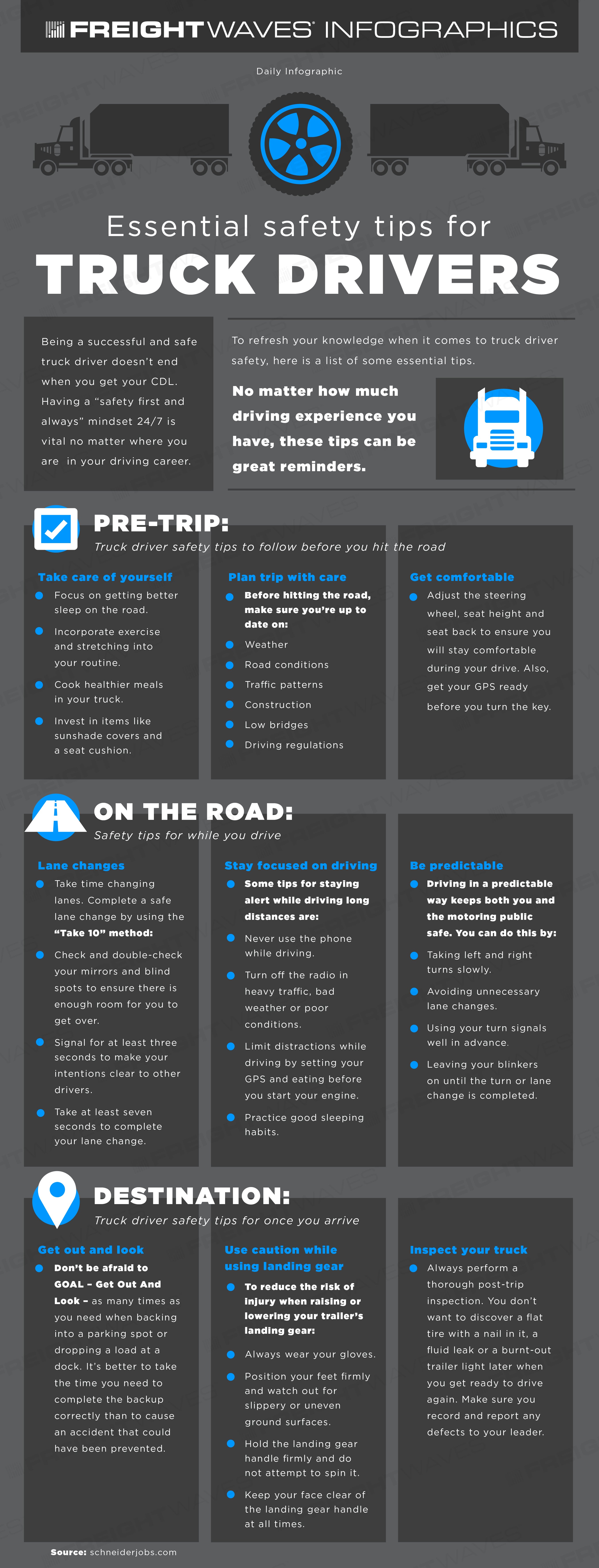
Daily Infographic: Essential safety tips for truck drivers


To view more FreightWaves infographics, click here

Trucks are getting smarter, and truck drivers aren’t happy about it

trucking

Elmer Bontrager, a Kentucky-based truck driver, doesn’t mind his overly helpful big rig. But he knows it has its limits. 

Bontrager’s semi-truck wants to alert him whenever it seems like he’s going to mess up. The problem is, the truck isn’t always correct. A weigh station, for example, might have a stop sign where the truck only needs to stop if another light is red; his know-it-all truck might want to stop anyways. Or, his truck may confuse tire tracks or cracks in the pavement with lane markings, or believe a trash can on the side of a curvy rural street is a car he’s about to smash into. The techy truck, provided to him by his employer, can’t distinguish between a threat and a routine blip. 

“[T]he technology doesn’t always work as intended,” Bontrager, who lives in a small town in southwest Kentucky, wrote in an email to FreightWaves. “I think technology works best in an environment where everything is rational, which is probably the case in a computer program or even in a computer simulation. Unfortunately in the real-world operational environment  decisions are made and actions are taken by humans, and humans very often make irrational decisions and take irrational actions.”

So-called advanced driver-assistance systems have become ubiquitous in trucks over the past 10 years, said Suman Narayanan, director of engineering of Dailmer Trucks North America’s Automated Technology Group. These technologies monitor if a driver is abiding by lane markings, keeping appropriate distance from the vehicle ahead and other key driving activities. Narayanan said the technologies have the “potential to mitigate accidents,” but they are “not a replacement for highly attentive and well-trained driver.”

These trucks are not taking over the job of driving, but these features certainly may result in drivers who relax their attention. In turn, fleets are increasingly installing inward-facing cameras to monitor whether truck drivers are paying attention while driving. Motive, one such provider of AI-powered, driver-facing cameras, says fleets enjoyed 57% fewer accidents within four months of deploying Motive cameras and a 30% reduction in accident-related costs.

“You see a lot of fleets installing cameras,” said Annette Sandberg, a transportation safety consultant and former administrator of the Federal Motor Carrier Safety Administration. “A part of it is, ‘Listen, you still have to be paying attention.’ Let’s say a car spins out in a lane beside you and all of the sudden it’s in front of you. From a fleet perspective, while they expect the system to catch that, they also want to see that the driver is doing everything they can to avoid that . … They still expect the driver to be able to understand and address that appropriately.”

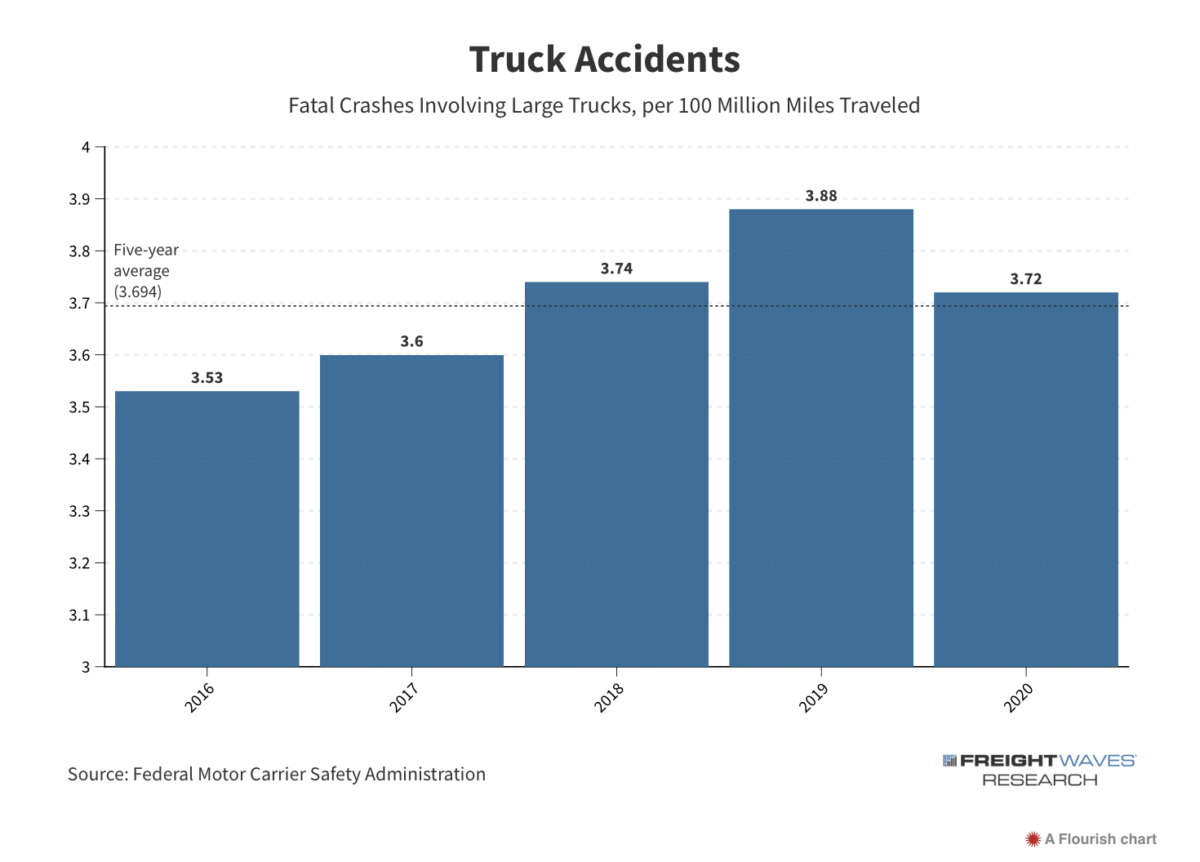
Some of that increased surveillance is required by federal regulations; since 2018, trucks are required to be outfitted with an ELD that ensures drivers are hewing to hours-of-service laws. Interestingly, since that mandate, fatal crashes involving large trucks have actually increased. Speeding violations have also increased during that time. 

As trucks become more advanced, the surveillance of drivers will likely increase. That makes some drivers question why the technology is getting introduced in the first place. 

“About half of our fleet is new enough to have these ‘safety’ features,” truck driver Benjamin Reed, who drives for a family-owned fleet based in Wisconsin, wrote in an email. “My experience (and that of my colleagues) has been that these systems are quirky, unreliable, and unpredictable, regardless of who manufactured them or what type of vehicle they’re installed in. I believe that the recent push to replace competence with computers is a very bad idea.”

The ‘mushy middle’ problem might be driving more truck driver surveillance

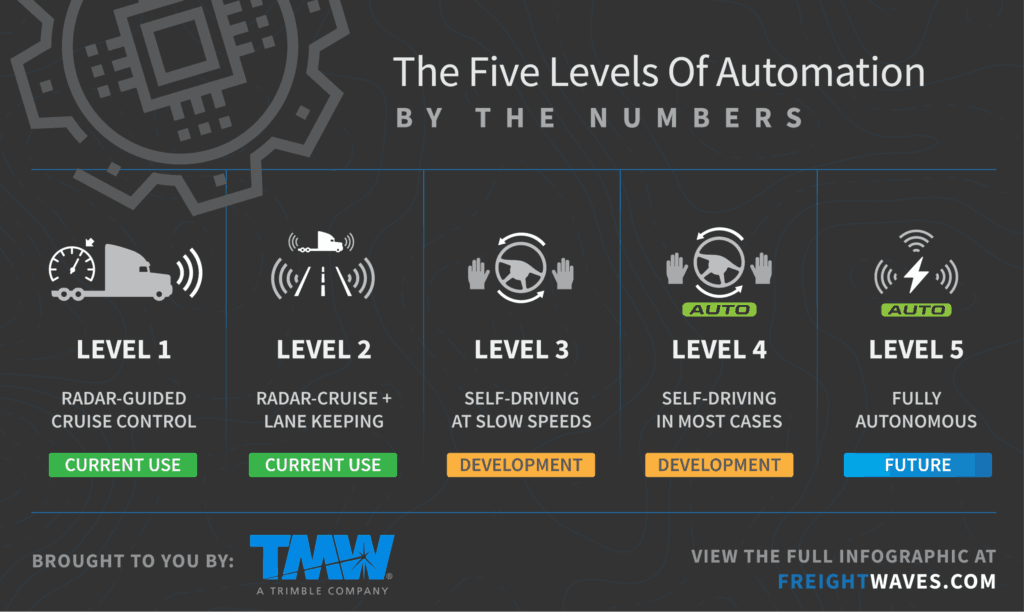
There are five levels of automation. Most passenger drivers have experience with Level 1, with features like adaptive cruise control, and perhaps Level 2, where the vehicle monitors lane keeping.

In both commercial and passenger driving, Level 3 is unlikely to be broadly adopted. It’s costlier than the less advanced systems but still requires fleets to keep a driver in the truck.

What’s more, it greatly contributes to an issue called “passive fatigue.” Many studies have shown that when drivers don’t really need to do anything, they’re more likely to zone out. The robot truck, in these cases, is able to handle the bulk of the truck driving job — namely barrelling down a highway at a legal speed. Humans are expected to quickly intervene, however, in the case of a potential collision.

“The more technology assists in driving the truck the less the driver has to focus on driving and because of that I think it can actually have an adverse effect on safety,” Bontrager said.

One study found that passenger drivers in an automated vehicle driving simulator were pretty, well, bad at quickly responding in the event of a crash. About a fifth didn’t do anything when their automated vehicle swerved toward a closed highway exit. Another study found that drivers began showing facial signs of fatigue during an automated driving simulation after about 15 to 35 minutes of driving, and responded more slowly to a takeover request than drivers using a traditional system. Several other studies have indicated that driver attention fades while behind the wheel of a semi-autonomous vehicle.

It’s not clear if this has a direct correspondence to the trucking world, where drivers are decidedly not in a simulator. Narayanan said proper training of truck drivers for using these new systems is key. 

Some technology providers don’t want to deal with the ‘mushy middle’

The issue of passive fatigue is why some startups in the driverless trucking space are ignoring the lower levels of autonomous driving. They’re seeking to jump right into a fully driverless solution. Representatives of Gatik, Aurora and Kodiak Robotics all told FreightWaves they’re only developing driverless technology — though well-trained safety drivers are still behind the wheel of these trucks.

“You need to take a lot of steps to ensure that the driver continues to stay engaged,” said Don Burnette, founder and CEO of Kodiak. “We would prefer to avoid all of that complexity altogether.”

Richard Steiner, vice president of government relations at Gatik, said regulators have shared their own concerns about the lower levels of automation.

“When you have vehicles which involve partial automation, are the drivers trained to understand what that partial automation really entails and really means?” Steiner said. “Do they know that they are ultimately entirely responsible and should act as the driver? Do they understand human factors, and how that interplay really plays out? Do they understand automation’s place in all these things?”

These startups intend to have truly driverless trucks regularly running freight in the coming years. As of today, neither company is running particularly long hauls. Kodiak trucks currently operate from Dallas to Houston, Oklahoma City and Atlanta. Gatik trucks operate up to 300 miles round-trip.

That ma be concerning news for America’s 2.2 million truck drivers. But for now, many appear more concerned about the encroaching surveillance into their workplace — the truck where they eat, sleep, work and so on. Some have reported success in rebuffing driver-facing cameras.

“We do have dashboard cameras in our fleet, but no driver-facing cameras,” said Reed, the Wisconsin-based truck driver. “That particular subject has come up only once at my current company and the owner met with fierce resistance at the mere mention of them. The general opinion was that the day they make an appearance at our company is the day we leave en masse-expressed in language hardly suitable for print and at a volume appropriate only for a Space Shuttle launch.”

What do you think? Email rpremack@www.freightwaves.com. Don’t forget to subscribe to MODES.

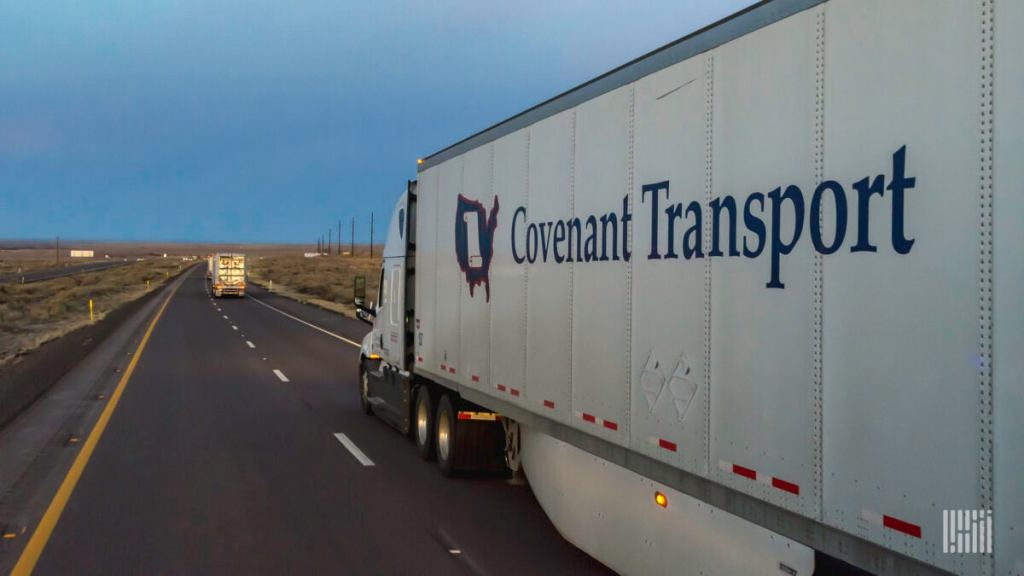
Covenant Logistics optimistic despite 7.4% drop in Q4 revenue

Covenant Logistics Group reported adjusted earnings per share of $1.07 for the fourth quarter Tuesday after the market closed, a 22% year-over-year (y/y) decline.

Covenant’s total revenue in the quarter declined 7.4% y/y to $273.9 million, with the carrier citing weaker freight conditions in the truckload market despite strategic planning that yielded positive results, said David Parker, Covenant chairman and CEO.

“Despite the challenges that come with a soft freight market, our team found a way to be successful in 2023,” Parker said in a news release. “We achieved our second-best adjusted earnings per diluted share in company history while improving the durability and diversification of our business through our acquisitions of Lew Thompson and Son Trucking Inc. and Sims Transport Services.”

Chattanooga, Tennessee-based Covenant’s (NASDAQ: CVLG) fourth-quarter EPS and revenue beat Wall Street predictions of $1.03 and $214.5 million, respectively.

The transportation services provider posted total freight revenue of $240 million during the quarter, a 6% y/y decrease from the same period last year. Combined truckload revenue was $184 million in the fourth quarter, a 7% y/y decline.

The company operates four business segments: expedited, dedicated, warehousing and managed freight transportation.

Freight revenue per tractor per week decreased 8% y/y to $5,344 during the fourth quarter.

Revenue in the expedited truckload segment decreased 6.5% y/y to $84.4 million, and dedicated segment revenue dipped 6% y/y to $78.6 million.

Covenant’s managed freight segment saw revenue of $65 million in the fourth quarter, a decrease of 14.5% from the same time last year. The warehousing segment had revenue of $24.6 million during the quarter, a 16% y/y increase.

Parker said the company does not anticipate the freight market to recover in the short term.

“As we look to 2024, we do not see anything in the first half of the year that would indicate a near-term recovery of the freight market,” Parker said. “In the first quarter, we expect our revenue and earnings to decline, reflecting normal seasonality and the temporary headwinds of severe inclement weather conditions, year over year rate reductions in our expedited segment and incremental costs associated with a large new customer startup within our dedicated segment.”

Covenant will hold a conference call to discuss results with analysts at 9 a.m. Wednesday.

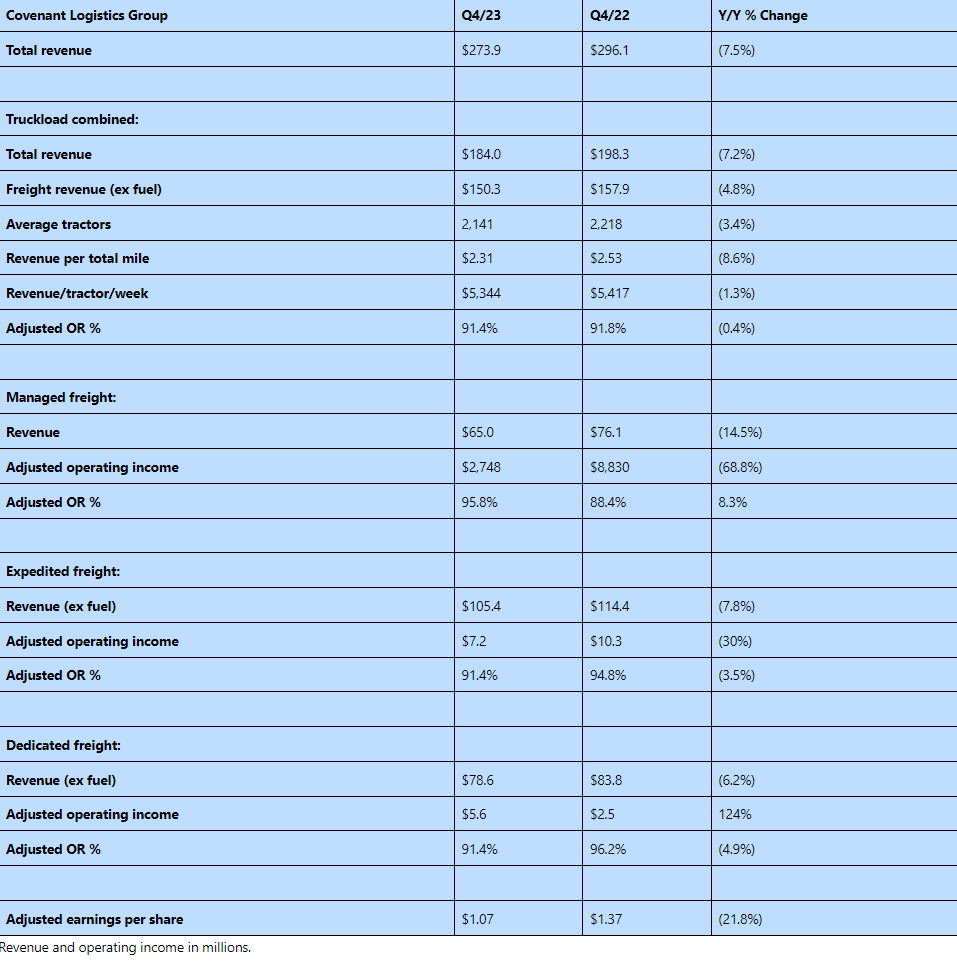
Covenant Logistics GroupQ4/23Q4/22Y/Y % Change
Total revenue$273.9$296.1(7.4%)
Truckload combined:
Total revenue$184.0$198.3(7.2%)
Freight revenue (ex fuel)$150.3$157.9(4.8%)
Average tractors2,1412,218(3.4%)
Revenue per total mile$2.31$2.53(8.6%)
Revenue/tractor/week$5,344$5,417(1.3%)
Adjusted OR %91.4%91.8%(0.4%)
Managed freight:
Revenue$65.0$76.1(14.5%)
Adjusted operating income$2,748$8,830(68.8%)
Adjusted OR % 95.8%88.4%8.3%
Expedited freight:
Revenue (ex fuel)$105.4$114.4(7.8%)
Adjusted operating income$7.2$10.3(30%)
Adjusted OR %91.4%94.8%(3.5%)
Dedicated freight:
Revenue (ex fuel)$78.6$83.8(6.2%)
Adjusted operating income$5.6$2.5124%
Adjusted OR %91.4%96.2%(4.9%)
Adjusted earnings per share$1.07$1.37(21.8%)
Revenue and operating income in millions.


EBITDA at TriumphPay, its key metric, turned positive in Q4

Triumph Financial put it right at the top of its fourth-quarter earnings report: Its TriumphPay division, which combines its traditional quick pay services with the “open loop” invoice processing known simply as “the network,” was EBITDA-positive in the last three months of 2023.

In his lengthy note to shareholders, Triumph (NASDAQ: TFIN) CEO Aaron Graft said the milestone had been achieved one year ahead of schedule “despite a freight recession.”

Graft said several factors contributed to the trucking-focused bank’s earlier-than-expected success on earnings before interest, taxes, depreciation and amortization. As recently as the third quarter of 2023, EBITDA margin at TriumphPay was negative 15%, and Graft said the company was on track for a positive report by the end of 2024. The actual EBITDA margin in the quarter was reported at a rounded figure of zero; the actual figure was $36,000.

Graft said the “interest rate environment” helped offset the weak freight market. Revenue produced by the “float,” the time between receiving revenue and needing to pay it out — when it can earn a small return — has “grown materially” at TriumphPay because of an increase in float balances as well as the more favorable direction of interest rates. “We acknowledge that and take no credit for it beyond being ready to react to the market opportunity,” Graft wrote. But he added that “many other metrics” contributed to the improved EBITDA profitability.

He noted that since the first three months of 2022, the invoices processed by the TriumphPay network (which are not the same thing as the invoices factored by Triumph’s more traditional factoring business, Triumph Financial Services) have been falling in size, but total TriumphPay revenue has been rising “rapidly.”

“Revenue growth in TriumphPay was particularly strong in the back half of 2023, as new clients came on board and new sources of revenue were implemented,” Graft said. The end result, he added, is that fee income in the company’s Payments segment, which includes TriumphPay, was up 40.6% for 2023 compared to 2022. Year-on-year comparison for the fourth quarter recorded a gain of 60.8%.

“To put a point on this discussion, we expanded revenue, added relationships, improved the network during the worst freight recession since the Great Financial Crisis and we achieved positive EBITDA,” Graft wrote in his letter. “This was an impressive year for TriumphPay.”

Other key numbers at TriumphPay: The number of invoices processed was 13.2%, and total payment volume was up 16.7% to $24.9 billion. Broker clients accounted for $21.3 billion of that, with the remainder attributable to shippers.

It can be difficult at times to fully understand the capabilities of the open loop network that was created in 2021 with the acquisition of HubTran. Graft sought to make it more digestible in his letter: “Network transactions and the fees we generate … are most similar to fees investors see in a Visa/Mastercard payments network,” he wrote.

The road to positive EBITDA was also helped by limited growth in expenses. Triumph reported an increase of just 1.5% sequentially from the third quarter for noninterest expenses.

Part of the story TriumphPay has been telling the investment community has been the growth in top brokerage clients using the network to bridge the payment process between shipper and carrier. The onboarding process is not short, so Triumph will often tout by name new brokers who come on board. In the fourth quarter, it was Coyote Logistics that was cited as the most significant 3PL signing up for the network.

Graft’s letter said TriumphPay now has three of the top five brokers, six of the top 10 and 55 of the top 100. Ten new unidentified brokers were added to the network besides Coyote during the quarter. Four new factoring companies also were added, the Graft letter said.

At Triumph’s more traditional factoring business, the average invoice factored climbed slightly to $1,781, up $9 sequentially. Year on year, it was down $220. 

But in a sign of an improving trucking market in 2024 so far, Graft’s letter said the average invoice factored in January so far was $1,839. The improvement in the quarter and so far in January comes even as diesel prices continue to decline, which impacts the size of a factoring invoice. 

“Carrier capacity continues to leave the market, albeit at a slower pace than expected,” Graft wrote. He also noted that his view on the strength of the freight market is unchanged: “It is going to be a tough year,” he said.

Triumph Financial also used the occasion of its earnings to announce a new product, LoadPay, a service mostly aimed at smaller carriers built on an acquisition it made of a broker payments platform in the first quarter of 2023 from Truckstop.com. 

Specifics on when LoadPay will be launched were not disclosed, and Graft conceded he needed to be somewhat vague on LoadPay’s operating features.

In his letter, Graft said smaller carriers often find themselves in a squeeze to have adequate working capital but that “digital wallets” like LoadPay, developed by the growing fintech sector, can help bridge that gap.

What Graft described as “power users” will be “incentivized to sell LoadPay the same way issuing banks are incentivized to sell Visa or Mastercard.” That is a reason why LoadPay will have separate branding from TriumphPay.

“Power users” are brokers and the factoring companies that service carriers, Graft said.

“Incentivizing power users makes us a network of networks as every freight broker and factor has a network of carriers with whom they regularly communicate,” Graft wrote. “Involving them in the distribution of LoadPay gives it the highest chance of success.”

More articles by John Kingston

Wells Fargo lowers stock rating amid wait for TriumphPay’s profitability

Triumph’s Graft: The concept is proved, on to producing revenue

TriumphPay records progress on profitability in tough quarter